Why Austin Singles Are Ditching the Swipe for Something More Personal

Why Austin Singles Are Ditching the Swipe for Something More Personal

Local data, local reporting, and the Austin-specific case for going personal with your dating life.

🪞 Austin Is Home to One of the Country's Biggest Matchmaking Firms, and That's Not a Coincidence

Here's a detail most Austin singles don't know: Three Day Rule, one of the largest professional matchmaking firms in the country, is headquartered right here in Austin, Texas. Erika Kaplan, the firm's vice president of membership, told the Chicago Tribune in 2026 that singles in big cities everywhere are finding dating apps no longer serve them, "regardless of their educational background, ethnicity, religion, or income," which is giving matchmakers their moment nationally.

A national matchmaking company choosing to headquarter itself in Austin isn't an accident. It's a sign of where the demand actually lives.

📺 "The Dating Landscape Sucks," Said an Actual Austin Resident on the Record

Spectrum News Austin covered local dating app fatigue directly in February 2026, and the people quoted weren't marketing copy, they were real Austin singles speaking plainly. Syvo Hatton, who's been single in Austin for a few years, put it bluntly to the outlet: "The dating landscape sucks. I'm not gonna lie." According to Pew Research figures cited in the same report, 30% of Americans have used a dating site or app at some point, and the abundance of options that's supposed to feel exciting has instead started to feel overwhelming to a lot of Austin daters navigating it.

📈 Austin's In-Person Event Scene Is Growing Faster Than the National Average

The shift away from the apps shows up clearly in local event data. Eventbrite reported a 40% year-over-year increase in Austin gatherings, according to a 2026 guide to meeting singles in the city, outpacing the roughly 42% national two-year increase measured elsewhere over a longer stretch. Austin's live music scene, its laid-back outdoor culture, and a constant influx of tech and creative professionals have combined to make in-person, curated singles events a genuinely fast-growing local alternative to another night of swiping.

💻 The Tech Boom Built a Very Specific Dating Problem Here

Austin's tech boom didn't just bring jobs, it reshaped the dating pool itself. The presence of major tech companies has drawn a large wave of millennials to the city, according to Ambiance Matchmaking's 2026 Austin dating guide, creating a youthful, tech-savvy population that skews noticeably male within tech circles specifically. Match's own 2026 Austin dating guide describes the resulting dynamic plainly: a competitive scene where "the ratio skews male in tech circles" and sheer abundance of options creates its own commitment issues, exactly the kind of environment where curated, intentional introductions outperform another open-ended swipe.

🏆 Texas Was Just Ranked the Third Best State in the Country for Singles

Austin's dating culture benefits from a genuinely strong statewide backdrop. Texas ranked third in WalletHub's 2026 "Best and Worst States for Singles" report, according to CultureMap Austin, driven by the state's dense population, wide variety of date venues, and, notably, a lower rate of "attachment avoidance" among residents compared to most of the country, meaning Texans are measurably more open to commitment than the national average. That's a meaningful local advantage: Austin singles aren't fighting an uphill cultural battle against commitment-phobia. They're fighting an interface that wasn't built to reward it.

💛 One Last Cheeky Thought

Austin already has almost everything a great dating scene needs: a young, educated population, a genuinely balanced gender ratio citywide, a booming live-event culture, and, statistically, some of the most commitment-open singles in the country. What it's had to work around is a tech-boom-driven app culture that turned all of that potential into one more crowded feed to scroll through.

The evidence is locally sourced and easy to check: a national matchmaking firm choosing to headquarter itself in this city specifically, an actual Austin resident telling a local news crew the dating landscape "sucks," and event data showing Austin's in-person scene growing faster than the national trend. That's not a trend piece. That's Austin applying its own live-music, third-place culture to the one part of life still stuck behind a screen.

We've been running real, in-person events across Austin since long before "swipe fatigue" had a name. If the dating landscape has been letting you down, Curated Introductions are available here in Austin, and for something more hands-on, Advice & Coaching and Premium Luxury Matchmaking are too.

Curious what "personal" actually looks like for dating in Austin? Explore MyCheekyDate's Austin events.

A Note on Sources

Three Day Rule's Austin headquarters and Erika Kaplan's commentary via the Chicago Tribune, as republished by uniondemocrat.com in 2026. Syvo Hatton's quote and Pew Research online dating usage figures from Spectrum News Austin's February 2026 report on local dating app sentiment. Austin in-person event growth data from Jeter AI's 2026 guide to meeting Austin singles. Austin's tech-driven gender dynamics from Ambiance Matchmaking's and Match's 2026 Austin dating guides. Texas's third-place national ranking for singles from WalletHub's 2026 report, via CultureMap Austin. All figures reflect the most recent data available as of publication.

Is Speed Dating Worth It in Austin? Here Is What Our Austin Attendees Told Us

Is Speed Dating Worth It in Austin? Here Is What Our Austin Attendees Told Us

Most answers to this question come from two places. A speed dating company trying to sell you a ticket, or a blogger who went to one event, had a mediocre time or a great one, and wrote 800 words about their feelings. Neither is actually answering the question. They are describing a mood.

We can do better than a mood. We have run more than 26,000 verified events in the last ten years alone, across 65+ cities including Austin, over 19 years in business. Every one of those events produced real data: who showed up, who selected whom, who came back, who matched the second time if they didn't the first. That is not a vibe. That is a dataset large enough to actually answer the question honestly, including the parts of the answer that are inconvenient for us.

So here it is, with the Austin numbers layered in. Not a sales pitch. A genuine, data-led answer to the most searched question in this category, with the caveats left in.

What "worth it" actually means, in a city like Austin

Before answering, it's worth defining the metric, because "worth it" is doing three different jobs depending on who's asking, and Austin is a genuinely different starting point than most cities in this series. This is a city that's been named one of the best places in the country to be single, with a large, young, roughly gender-balanced dating pool and one of the more affordable dating economies in the entire U.S. Texas ranks among the cheapest states in the country for date night.

Worth it for meeting people you would not otherwise meet, in a fast-growing city where new arrivals show up constantly across South Congress, East Austin, and everywhere in between. Worth it as a use of time, compared to the hours most people already sink into apps in a market that, on paper, should already be working well. Worth it as a use of money, in a city where a date is already cheaper than almost anywhere else on this list, which changes the math in an interesting direction.

Those are three different questions with three different answers. We'll take them one at a time, with numbers attached to each.

The data on whether people actually match

Start with the finding that matters most: nationally, 86% of attendees receive at least one mutual match, averaging 2.3 mutual matches per event. Austin sits close to that national average, in a tier with cities like Washington, DC and Houston, which is a genuinely strong result in its own right rather than something to read as underperformance. These are not algorithm predictions or maybes. They're real, private, mutual selections, made after real face-to-face conversations, using our Smart-Card system, which captures degree of interest across five tiers rather than a flat yes or no. [Precise Austin-specific match rate and average matches per event to be inserted here once pulled directly from the local Smart-Card dataset.]

Compare that to what's happening on apps, in a city with an unusually large, young dating pool that should, in theory, make swiping easier than almost anywhere else. Industry data puts the ratio at roughly 57 matches for every 1 date that actually happens. Of the matches that do occur on Hinge specifically, only about 14% convert into a first date. A large dating pool does not automatically produce real connection. Most of what people call "matching" on an app is still not a date, no matter how many singles a city has.

An 86% national mutual match rate, from a room of people you actually spoke to over a drink, is a different category of outcome than a match rate calculated from swipes that never left a phone on South Congress.

The second event finding

Here's the number we think matters most for anyone in Austin sitting on the fence: 77% of people who didn't match at their first event matched at their second.

That single stat should reframe how anyone reads a first event that didn't produce a connection, especially in a city growing as fast as Austin, where the crowd at a downtown event and an East Austin event can look genuinely different depending on who's just moved to town. One event is a data point, not a verdict. What the data shows clearly is what happens when people give it a second try, ideally at a different Austin event, instead of writing off the format after one uneven night.

What attendees say versus what the data shows

There's a gap between what people tell us they're looking for when they walk in and what they actually select once they're in the room. Ask someone their type on a form and you get one answer. Watch who they select on their Smart-Card after fifteen real conversations, and the pattern is often different, sometimes very different, from the stated one.

This is the stated preference versus revealed preference gap, and it shows up consistently, including in a city known for a laid-back, "keep it weird" self-image that doesn't always match what people actually select when it counts. The attributes people say matter to them and the attributes that actually predict who they pick are not the same attributes. Something about a real room, in real time, changes people's minds in ways a dating profile never gives them the chance to discover.

When speed dating is genuinely worth it in Austin

Based on the data, some groups get outsized value from this format specifically, and Austin has a healthy supply of them, even in a city that's supposed to already be dating-friendly.

App-fatigued daters, especially anyone who's been swiping for more than six months and found that a large, young dating pool doesn't automatically translate to real connections, with diminishing returns regardless of how many singles are technically nearby. People who read better in person than they photograph or write on paper. Introverts, somewhat counterintuitively, often find a structured, time-boxed format easier to navigate than a loud East Austin patio on a Friday night. And anyone who has been stuck in a talking stage that never turns into an actual date will find that a speed dating event simply doesn't allow that stage to exist. You either connect in eight minutes or you move to the next conversation.

When speed dating might not be worth it

This part matters, because an honest answer has to include it, wherever you live.

If you've just come out of a long relationship and you're not actually ready, this isn't the move yet. If your social anxiety is severe enough that a room of strangers would be genuinely distressing rather than mildly nerve-wracking in the ordinary way most people feel before a first date, that's worth being honest with yourself about too. And if you're looking for someone with a very specific, narrow set of requirements, a room of 15 people on a given night is a small sample. The format works because of real, in-person signal, but it can't manufacture a match that isn't in the room that night.

None of these are dealbreakers forever. They're reasons the timing, not the format, might be wrong right now.

The cost comparison, Austin edition

Do the math with us for a second, and Austin's math starts from a genuinely better place than most cities on this list.

Texas ranks among the more affordable states in the country for dating, with a typical Texas date night running somewhere in the $70 to $95 range depending on the tier, well below the national average of $189 for an app-sourced first date in 2026. That's a real local advantage. But cheaper does not mean free, and it doesn't mean unlimited. Even at $80 or $90 a date, meeting one new person at a time adds up fast, especially with no guarantee that any given date turns into something worth repeating.

At a MyCheekyDate Austin event, you meet 10 to 15 people in a single evening for a cost that compares favorably even against Austin's own relatively low date-night prices. If 86% of attendees nationally get at least one mutual match, and the average is 2.3 matches, the cost per genuine mutual connection isn't just lower, it's a different order of magnitude, in a city that already has one of the better dating economies in the country.

The time comparison

Now the time math, because even in a laid-back city, time is the cost people underprice most.

Studies on dating app usage regularly put the average user at several hours a week on the apps, swiping, messaging, matching, and mostly not converting any of it into an actual date, regardless of how large or theoretically favorable the local dating pool is. Meanwhile, the average American single went on fewer than two in-person dates in the entire past year. Almost half of single men and a third of single women reported zero dates in the past twelve months. And 78% of dating app users reported feeling emotionally exhausted by the apps in 2024, a number that doesn't discriminate based on how many singles happen to live in your zip code.

Against that backdrop, one evening, two to three hours, producing 10 to 15 real conversations and, on average, more than two mutual matches, is not a big time ask. It's a small one, with a return that apps, even in a dating-friendly city like Austin, are for most people currently failing to deliver.

The invite-back policy as the risk reversal

Here's the part of our model that changes the risk calculation of trying this for the first time, and it's not something most speed dating companies do.

Most formats invite you back automatically if you don't match, treating the return visit as a consolation prize. We do the opposite. Our invite-back isn't earned by matching or not matching. It's earned by being the kind of person who makes the room better: genuine engagement, warmth toward other attendees, a good attitude even in a fifteen-conversation night that includes some misses.

That means the people we ask back to our Austin events are the people other attendees actually want to be in a room with again. It's a different philosophy than "didn't work, try again for free." It's "you were good for this room, come be good for the next one." If you're wondering whether trying this once is a real commitment or a low-risk experiment, that's your answer. Show up, be genuinely yourself, and the door stays open regardless of whether the math worked out on night one.

If it goes well: where to take a second date in Austin

A genuine local close, not a filler list. If you match at an Austin event, a few second-date spots that keep the same energy going without over-planning it:

The Lady Bird Lake hike-and-bike trail. Free, scenic, and easy to extend into a longer walk if the conversation is going well, or wrap up early if it's not.

Barton Springs Pool. A small entry fee gets you one of the most distinctly Austin second-date spots in the city, cold spring water and all.

Mount Bonnell at golden hour. Free, a short climb, and one of the best skyline views in Austin, doing a lot of the conversational work for you.

Congress Avenue Bridge at dusk. Free, and watching the bat colony emerge at sunset is a genuinely memorable, low-cost second date that's uniquely Austin.

So, is it worth it in Austin?

The question was whether speed dating is worth it. The data has an answer. The honest version of that answer is: for most people, in most circumstances, with reasonable expectations about what one evening can produce, yes. Even in a city with real, structural advantages for dating, a large pool and a relatively young population still doesn't guarantee a real connection on its own, and the same math that works everywhere else on this list holds here too. It's considerably more worth it than the alternative most people are currently choosing.

A Note on Methodology

National baseline figures (86% mutual match rate, 2.3 average matches per event, 77% second-event improvement) reflect the full Smart-Card dataset across all markets, weighted toward the most recent 24 months where sample size allows. Precise Austin-specific figures, where cited, should be pulled from the local Smart-Card dataset before publishing; context on Austin's relative performance tier is drawn from our own prior Cheeky Thoughts network comparisons. App conversion figures sourced from published platform data and independent dating research. Austin/Texas date-cost figures sourced from published statewide cost-of-dating research; Austin's ranking as a favorable city for singles is drawn from published third-party rankings. MyCheekyDate was founded in 2007 and has been operating for 19 years. The 26,000+ verified events referenced throughout this piece were run in the last 10 years alone. Full Smart-Card methodology available at mycheekydate.com/smart-card.

Your Selections Are Private in Austin. Here Is Exactly What That Means.

Your Selections Are Private in Austin. Here Is Exactly What That Means.

By The MyCheekyDate Team | Austin Edition | Companion piece to "How the Smart-Card Actually Works in Austin"

Every dating app you have ever used has, at some point, shown your behavior to someone who did not ask to see it. Who swiped right on you. Who viewed your profile. Who matched with you and is now visible in your feed alongside your bio and the photo from that weekend at Barton Springs.

The entire engagement model of app dating depends on making your interest visible, because visible interest is what keeps people opening the app.

In Austin, that visibility sits in an interesting tension with the city's genuine culture.

This is a place that values come-as-you-are over optimized self-presentation. That has built a social life around open patios and festival crowds and organic connection between strangers who end up at the same fire pit. That has a genuine cultural resistance to the kind of curated, managed, algorithmically optimized version of self that app dating requires as its default.

And yet app dating makes your interest visible in a way that is itself a kind of performance. A carefully managed, strategically calibrated, publicly visible performance of interest that is almost the opposite of what Austin's social culture actually looks like in a real room.

The Smart-Card works on the opposite principle.

This article explains exactly what that means.

🔍 What We Collect. All of It.

Let's start here, because most companies bury this.

At registration, MyCheekyDate collects your full name and your email address. That is the complete list.

No phone number. Not at registration, not at the event, not ever. No address. No persistent payment data stored beyond what is needed to process the transaction itself.

This is unusual in the events industry. Most event companies collect significantly more: full name, phone number, sometimes address, sometimes all of it shared with attendees, partners, or platforms as a matter of routine.

Most event companies know your phone number. We only know your first name and how the conversation went.

In Austin, the phone number point has a specific character. Austin's social circles, particularly in the neighborhoods where our events tend to draw, are smaller and more interconnected than the city's rapid growth might suggest. The East Austin creative community. The South Congress regulars. The tech transplant crowd in the Domain area. Not collecting your phone number, when industry standard is to collect it, is a deliberate decision about what kind of relationship MyCheekyDate wants to have with the information you bring to an Austin event.

We do not collect what we do not need. Data you do not have cannot be misused, leaked, sold, or handed to someone you never agreed to hear from.

📋 What Happens at the Event

When you arrive at a MyCheekyDate event in Austin, whether that is Oak Hill Social on Highway 290, Higbie's, or an East Austin or South Congress venue, you access the Smart-Card through a secure web link on your own phone. No app download required. No background data collection running between events. No persistent tracking layer sitting on your device the rest of the year.

At the event, before conversations begin, you enter a short bio directly into the Smart-Card. A few lines about yourself, written in the room, on the night. Not optimized. Not curated. Just a few direct lines written quickly in a room where conversations are about to begin, in the characteristically Austin way of saying who you are without overthinking whether it sounds right.

🔒 What Happens to Your Selections

This is the section that requires complete precision.

After each four-minute conversation, you privately rate the person you just spoke with across five tiers. A spectrum of genuine interest that captures not just whether you would like to see someone again, but how strongly you felt that. The selection window stays open until midnight, removing social pressure from the decision entirely.

In Austin, the midnight window matters in a way that fits the city's natural social rhythm. Austin events do not end when the structured format ends. The room stays warm. Conversations continue at the fire pit or the bar or wherever the evening naturally takes the group. The midnight window gives Austin daters the space to let that organic continuation unfold before making a selection, which in Austin's social culture produces more honest choices than any pressure-to-decide-now format could.

Your selections are kept. Here is exactly what kept means.

What your selections are used for:
Your selections, anonymized and aggregated across Austin events and 26,000+ events globally, feed the Smart-Card machine learning over time. The system learns real-world attraction patterns from what Austin people actually chose after real face-to-face conversations in real Austin rooms, with the come-as-you-are energy running and the performance layer genuinely absent. Your selection becomes one data point in a pattern dataset that improves matching accuracy across the full MyCheekyDate ecosystem.

What your selections are never used for:
Your selections are never retrievable as individual identifiable records. No host, no staff member, no MyCheekyDate employee can open a screen and see that you chose or did not choose a specific person on a specific Austin evening. That data does not exist in that form. It exists as anonymized pattern intelligence, not as a file with your name attached that anyone could read.

The only thing ever shared with another person:
A mutual introduction. If you selected someone and they selected you, both of you receive an introduction. One-sided interest produces nothing visible. No notification to the other person. No hint. No social consequence for choosing someone who did not choose you back.

In a city where genuine openness is the cultural baseline and visible social management feels contrary to the come-as-you-are spirit, that last point is worth naming directly.

To state this as plainly as possible:

Your selections are kept to make the machine learning smarter. They are never shared with anyone except as a mutual introduction when both people independently and privately chose each other.

🧠 Why Privacy Produces Better Data in a Come-As-You-Are City

Here is where privacy stops being a reassurance and becomes an argument that is specifically relevant to Austin.

When selections are visible, people make socially managed decisions. Even in a city whose culture genuinely resists optimization and performance, visible selections in a dating context produce data shaped by social awareness rather than by genuine attraction.

Austin's come-as-you-are culture does not eliminate social self-consciousness. It reduces it, significantly, compared to cities where the credential and performance layer runs thicker. But a visible selection, even in Austin, carries social weight that a private selection does not.

Private selections remove that weight entirely. The five-tier rating system captures the full spectrum of how strongly someone responded to a conversation, without requiring any social management of how that response will land. Combined with the midnight window that takes the decision outside the still-warm social environment of the event, the result is the most honest read of real Austin attraction the Smart-Card machine learning has ever been trained on.

This is why Austin produces 2.9 average matches per event, tied for the highest in our network. Private, honest, five-tier selections from real Austin conversations, made in a room where the come-as-you-are culture has had the time and space to do what it naturally does, produce genuine mutual recognition across a range that stated preferences would not have predicted.

As we wrote in our companion piece on the Smart-Card machine learning: privacy by design produces honest signal. Honest signal is the only kind worth training a system on. In Austin, where the cultural baseline is already closer to genuine than in most cities, that privacy is what closes the remaining gap between performed interest and real interest.

🏢 How This Compares to App Data Practices

Dating apps monetize attention and data. In Austin, that business model has a specific texture. The apps are optimizing for engagement signals generated in an environment where the come-as-you-are culture is being expressed through a format that rewards curated, optimized, performance-first presentation. The result is a dataset that captures the least Austin version of Austin daters, generating the same 57:1 match-to-date ratio as everywhere else despite operating in a city whose social culture should make connection easier than anywhere.

MyCheekyDate makes money when you have a good evening in a real Austin room and want to come back. Not from advertising. Not from selling data profiles to third parties. The business model is events and matchmaking. Privacy protects the product, not just the person.

MyCheekyDate does not sell your data. Ever.

The structural difference matters more than any privacy policy. A company that profits from your data and a company that profits from your matches are running different businesses with different incentives. The architecture follows the incentives.

🤝 The Cheeky Guarantee as Trust Infrastructure

The same philosophy that shapes how we handle your data shapes how we handle everything else.

If something goes wrong at an Austin event, the Cheeky Guarantee exists to ensure the resolution is straightforward. No runaround. No platform redirect. One email, a direct response, a real outcome.

Data transparency and commercial transparency come from the same place. We are asking you to trust us with your evening, your selections, and your privacy. That trust has to be consistent across every interaction.

If you want your data deleted, that is a request we honor. Reach out directly and we will confirm current process and timelines.

⌚ Why This Matters More as Wearables Arrive in Austin

Austin is one of the fastest-growing tech markets in the country. The city has attracted a significant tech workforce in recent years, a population with both the consumer early-adoption habits and the professional background to understand what wearable data collection means in practice.

The next generation of wearables, reading heart rate, stress markers, and physiological signals with increasing precision, arrive into a city uniquely positioned to both adopt them quickly and think critically about what they are collecting. The dating industry application, a device that knows your physiological response during a four-minute conversation at Oak Hill Social packaged as a compatibility signal, is not a distant hypothetical in Austin's growing tech market.

Your heartbeat during a first Austin conversation is not a product. It should not be someone's inventory. In a city that values come-as-you-are over curated performance, the idea of biometric dating data being monetized feels particularly contrary to the spirit of what makes Austin connection work.

MyCheekyDate has deliberately stayed at full name and email while this shift happens around us. Not because we have not considered what additional data could theoretically contribute to matching accuracy. Because we have considered it carefully enough to conclude that the trust it would cost is not worth what it might gain.

Full name. Email. A short bio written in the room. What happened in the conversation. That is the boundary. It is not moving.

💛 One Last Cheeky Thought, Austin Edition

Austin has built something genuinely rare in American city culture: a social environment where showing up as yourself is not just acceptable but actively valued. Where the unplanned conversation at the fire pit is not a lesser version of the scheduled, vetted, algorithmically matched date. Where connection happens because people meant it, not because a system decided they should try.

The Smart-Card is built on exactly that principle.

Your selections are private because honest data is the only kind worth having. In a city where the come-as-you-are culture is the genuine baseline rather than an aspiration, that privacy is what makes the machine learning learn from the real version of Austin rather than the app version.

The 2.9 average matches per event, tied for the network high, is what Austin's genuine warmth and genuine openness produce when they are recorded honestly, in a room that felt like Austin rather than a platform that felt like performance.

Your selections are private because honest data is the only kind worth having. And honest data is the only kind we have ever built on.

Curious how the machine learning actually uses this data? Read the companion piece: How the Smart-Card Actually Works in Austin. Ready to find out what a private, honest selection actually feels like in a real Austin room? Find your next event at mycheekydate.com/speed-dating-austin.

A Note on Data Collection

MyCheekyDate collects full name and email address only at registration. No phone numbers are collected or shared at any point. At the event, attendees enter a short bio directly into the Smart-Card on the night, in the room, before conversations begin. Selections are retained in anonymized, aggregated form to support Smart-Card machine learning and are never accessible as individual identifiable records. Mutual introductions are the only selection data ever shared, and only between the two people involved. MyCheekyDate does not sell data. Data deletion requests are honored on request. Austin Smart-Card data reflects interaction records from MyCheekyDate events at Oak Hill Social, Higbie's, and additional Austin venues. This reflects current policy as of 2026.

How the Smart-Card Actually Works in Austin: The Machine Learning Behind Real-World Attraction

How the Smart-Card Actually Works in Austin: The Machine Learning Behind Real-World Attraction

By The MyCheekyDate Team | Based on Smart-Card data from Austin attendees across events at Oak Hill Social, Higbie's, and venues across East Austin, South Congress, and Southwest Austin

Start with the assumption almost every dating technology makes without saying it out loud: that chemistry can be predicted before two people are ever in the same room.

A profile goes in. An algorithm scores it against other profiles. A match comes out, before either person has said a word to the other, laughed at a bad joke, or noticed the way someone's whole face changes when they talk about something they actually love.

In Austin, this premise runs into a specific and interesting problem.

Austin is a city built around the kind of casual, unplanned social interaction that produces genuine chemistry. The patio. The fire pit. The festival crowd where you end up talking to three strangers before noon. The South Congress coffee shop where two people discover they both moved here from somewhere else and have somehow managed to carve out exactly the life they wanted.

This city knows how to connect. The culture is built for it. Come as you are. Stay as long as you want. Bring the dog.

And yet the apps are producing the same 57:1 match-to-date ratio here as everywhere else. Because the app is not Austin. It is a profile sitting on a server somewhere, waiting to be algorithmically scored against other profiles.

The Smart-Card is built for Austin. Not because it is casual or outdoors or dog-friendly, although the venues help. But because it puts people in a room, removes the digital buffer, and lets the thing Austin already does naturally happen in a structured format that produces clear, private, honest outcomes.

86% mutual match rate. 2.9 average mutual matches per event, tied for the highest in our entire 65-city network.

The city built for connection, it turns out, connects at network-high rates when the format finally matches the culture.

🎭 Every Dating App Starts With a Performance. Austin Has a Specific Relationship With Authenticity.

Here is the thing nobody in dating tech likes to say plainly: a profile is not a person. It is a person's highlight reel, edited for an audience of strangers who will judge it in under two seconds.

In Austin, the profile problem has a texture that is worth naming.

This is a city that genuinely values authenticity. Not as a brand positioning. As a lived cultural value. The "Keep Austin Weird" ethos is not nostalgia for a simpler time. It is an active resistance to the kind of curated, optimized, performance-first presentation that every major platform has made the default mode of introduction.

Austin daters know this about themselves. Many of them have moved here from cities where the performance layer was thicker, where the profile had to encode professional credentials and social positioning, and they came to Austin partly because the culture here does not require that kind of management.

The app profile, however, requires exactly that kind of management. Even in Austin, where people would genuinely prefer not to curate themselves for algorithmic consumption, the profile format demands it. The best photo. The carefully considered bio. The five interests that signal the right kind of person without revealing too much too soon.

The result is a population that values authenticity and is expressing it through a format specifically designed for the opposite of authenticity.

The Smart-Card puts the actual person back in the equation. Not the profile. The person who showed up to Oak Hill Social on a Saturday night with a drink in hand and a willingness to see what four minutes of real conversation might produce.

📋 What Goes Into the Smart-Card Before the Conversations Begin

Registration for a MyCheekyDate event in Austin asks for one thing beyond the basics: your name and email address. That is it.

No profile to optimize. No photo submitted for algorithmic scoring. No list of stated preferences used to pre-filter who you will meet before you have met anyone.

The bio comes at the event itself.

When guests arrive at Oak Hill Social or Higbie's or an East Austin venue or a South Congress event, before the conversations begin, they enter a short bio directly into the Smart-Card. A few lines about themselves, written in the room, on the night, without the pressure of algorithmic performance.

In Austin, the in-room bio has a quality that our hosts notice consistently.

Austin people, when asked to describe themselves quickly in a room where conversations are about to start, tend to be more specific, more honest, and more genuinely characteristic than in cities where the profile optimization instinct runs deeper. The culture's resistance to curated performance means that even the brief, under-time-pressure bio written at the start of an Austin event tends to reveal something real about who the person actually is rather than who they have decided to present themselves as.

That bio, produced in the room in Austin's characteristic come-as-you-are mode, is the first data point the machine learning cross-references against everything that happens in the conversation. In a city where authentic self-presentation is a genuine cultural value, the in-room version turns out to be particularly predictive.

📱 What the Smart-Card Actually Does in the Room

The front end is deliberately simple.

After each four-minute conversation at a MyCheekyDate event, you privately rate the person you just spoke with across five tiers. A spectrum of genuine interest that captures not just whether you would like to see someone again, but how strongly you felt that. The selection window stays open until midnight, so there is no pressure to decide on the spot, in the room, with the other person still nearby.

In Austin, where the social energy of an event tends to continue organically after the structured format ends, the midnight window respects the natural pace of how the evening develops. Austin rooms do not end when the format ends. People stay. Conversations continue. The fire pit fills up. The midnight window gives Austin daters the space to let the evening develop before making a decision, which in Austin's social culture produces more honest selections than any in-the-moment hand-in could.

What is happening underneath is where the intelligence lives.

🧠 The Four Signals That Make the Machine Learning Work in Austin

Every MyCheekyDate event in Austin generates four simultaneous data streams. In this city, the combination produces findings that are specific to Austin's distinctive social character and that could not be generated from app profile data alone.

Signal One: Who you selected, and how strongly

Your five-tier ratings across every conversation reveal who you were genuinely drawn to after real face-to-face interaction. Not who looked most compatible on paper. Not who the algorithm surfaced based on your stated preferences. Who actually held your attention in an Austin room for four minutes and produced genuine desire for more time.

In Austin, where the social culture is built around unplanned connection and genuine ease, this signal captures something the app consistently misses. The person who seemed most compatible from a profile and the person who made a real Austin conversation feel effortless are often, in our data, different people.

Signal Two: Who selected you, even when it was not mutual

If someone chose you and you did not choose them back, that one-sided selection still tells the machine learning something important about what you project, not just what you prefer.

In Austin, where the come-as-you-are culture means what people bring to a room is often their most genuine and attractive version, this signal is particularly valuable. What you project in an Austin room, the specific warmth, humor, and ease that Austin's social culture draws out, is often quite different from what your profile suggests you project. The Smart-Card records what actually attracted someone in a real Austin room and cross-references it against bio and event context to build a picture of what you genuinely bring to an in-person interaction.

Signal Three: What mutual matches have in common

When two people independently and privately chose each other, the system examines why. What did their bios share? What attributes connected them? What does this Austin mutual match look like compared to the thousands that came before it across the network?

The Austin finding here is consistent and characteristically Austin. The attributes that predict mutual matches in Austin rooms are consistently more diverse and less credential-focused than what Austin daters list as priorities at registration. The tech transplant who said they wanted someone in the same industry frequently selects the musician from East Austin who made the conversation feel like a break from the industry. The outdoor enthusiast who filtered for outdoor lifestyle selects the person who has never hiked a day in their life but made them laugh unexpectedly at minute two. Austin's genuine openness to diverse connection shows up clearly in the mutual match patterns.

Signal Four: The gap between what you said and what you did

The most powerful signal in the Austin dataset.

At the event, you wrote a few lines about yourself and signaled what you were looking for. After the event, your selections showed who you actually responded to. The machine learning holds both signals simultaneously and analyzes the gap.

In Austin, that gap has a specific character. The city's cultural value on authenticity means that stated preferences tend to be genuinely held rather than strategically performed. And yet the Smart-Card reveals consistent and significant departures from those genuine preferences once a real room and a real four-minute conversation have had a chance to do what Austin's social culture does naturally: produce connection across the lines that stated preferences were drawing.

🔒 Why Private Selections Produce Better Data in a City That Values Authenticity

All four signals depend on one thing: honesty.

In Austin, where authenticity is a genuine cultural value rather than a brand positioning, private selections are not just a privacy feature. They are the architectural condition that produces the kind of honest data the city's culture is actually built for.

When selections are visible, even partially, people make socially managed decisions. In Austin, where the come-as-you-are culture runs deep but the awareness of being assessed is still present in a social selection environment, visible selections produce data shaped by that awareness rather than by genuine interest.

Private selections remove that management entirely. Nobody sees your ratings. Not the host, not the staff, not the other guests, not MyCheekyDate internally. The only output that ever surfaces to another person is a mutual introduction, when both people independently and privately chose each other.

One-sided interest produces nothing visible. No notification. No hint. No social consequence for choosing someone who did not choose you back.

In a city where showing up genuinely is the cultural expectation, that privacy is what makes the data match the culture. Honest selections from a come-as-you-are room produce honest data. Honest data is the only kind worth training a system on.

📊 What the Machine Learning Learns From Austin Events

The Austin Smart-Card data produces findings that are specific to this market and consistent with what Austin's social culture would predict.

The 86% match rate at exactly the national average reflects something real about Austin. This is not a city where people need to be surprised into connecting. The social openness is the baseline. 86% of Austin attendees leave with at least one mutual match because the city's genuine warmth and genuine curiosity about other people translate directly into genuine in-room selection.

The 2.9 average matches per event, tied for the highest in the network, is the finding that most clearly reflects Austin's social character. Austin daters do not connect with one person and consider the evening finished. They connect broadly, with the same openness to diverse connection that makes a festival crowd in Austin produce three interesting conversations before noon. The breadth of connection in Austin rooms is as high as anywhere we operate, and it reflects the cultural authenticity of a city that genuinely means it when it says come as you are.

The hosts observe something specific about the arc of an Austin evening that the data reflects. Austin rooms reach their warmth faster than almost any other market we operate in. The first rotation does not carry the residual performance energy that suppresses first-rotation connection in more credential-forward cities. People arrive already at ease. The conversations hit genuine depth quickly. The data from Austin events is among the cleanest in the network precisely because the performance layer that distorts selection data elsewhere is thinnest here.

Honest caveat, the way we treat every number we publish: this is observational data from real Austin event outcomes, not a controlled experiment. Strong compass, not a script.

🌐 The Smart-Card Is the Intelligence Layer Behind the Full Austin Ecosystem

The Smart-Card was never built to run one Austin evening well.

The same intelligence that processes your five-tier ratings after an Oak Hill Social event or a Higbie's evening feeds directly into what comes next across the entire MyCheekyDate ecosystem.

Curated Introductions. Private, one-to-one introductions for Austin singles made outside of events, informed by real behavioral data from your Smart-Card activity. What you actually responded to in a real Austin room, with the come-as-you-are energy running and the performance layer absent, is a more honest signal than anything a questionnaire can capture. Curated Introductions built on revealed preference from live Austin events produce a fundamentally different kind of introduction than any matchmaker working from intake interviews and stated preferences.

Luxury Matchmaking by Luvo. High-touch, personalized matchmaking for discerning Austin singles who want a more considered process. Most luxury matchmakers work from interviews and stated preferences. Luvo's Austin matchmaking is informed by real behavioral data from Smart-Card events, applied to a highly personalized introduction process. In a city growing as fast as Austin, with a dating population that includes longtime locals, recent transplants, and people still figuring out which Austin neighborhood feels like home, that behavioral data advantage is significant.

CheekySocial. Ongoing social connections informed by Smart-Card behavioral signals from your Austin event history, extending the machine learning intelligence beyond any single evening and into the broader social ecosystem that Austin's culture naturally supports.

Invite-Only Private Club Events. Exclusive Austin experiences built around compatibility patterns the machine learning has already identified. Every room is curated with the full benefit of what the Smart-Card has learned in this market.

Any company can host a speed dating night in East Austin. Any company can call itself an Austin matchmaker. No other company has real-world attraction data from Austin Smart-Card events, 26,000+ verified events of machine learning built on top of it globally, and a full ecosystem of products that gets smarter with every Austin evening it runs.

The event is where the data gets made. Everything downstream is where it gets used.

🏙️ What Austin Events Teaches That No App Can Replicate

A swipe dataset from Austin, however large, is built from Austin dating profiles. Which is to say: from a population that values come-as-you-are authenticity expressing itself through a format specifically designed to produce optimized self-presentation. The algorithm is learning from the least Austin version of Austin daters.

Austin events are a different kind of dataset. Each event produces four simultaneous behavioral signals that only exist because real interactions actually happened in real Austin rooms, with the come-as-you-are energy running, the performance layer genuinely absent, and the connection happening at the pace Austin's social culture naturally produces.

The fire pit at Oak Hill Social where two people discovered, in the warm minutes after the structured format ended, that they were each other's most interesting conversation of the month. The Higbie's evening where 86% of the room left with something real. The East Austin event where the 2.9 average matches reflected a city that genuinely meant it when it showed up.

That cannot be captured in a profile. It has to be lived, one real four-minute conversation at a time, in rooms that feel like Austin rather than rooms that feel like apps.

💛 One Last Cheeky Thought, Austin Edition

Every dating app you have ever used has, at some point, asked you to describe yourself in a way that sounds appealing to a stranger who will judge it in under two seconds.

The Smart-Card asked you to write a few lines in a room where conversations were about to start, with no time to make it perfect, in a city whose entire social culture is a rejection of the idea that it needs to be perfect.

And then it watched what happened when the conversations began.

That gap, between the optimized profile and the come-as-you-are bio written at Oak Hill Social at 7:45pm, is where the real learning lives.

Austin daters bring genuine warmth, genuine curiosity, and a cultural comfort with unplanned connection that produces 2.9 average matches per event, tied for the highest in our 65-city network.

Not despite being a come-as-you-are city.

Because of it.

Prediction guesses. Observation learns.

After watching Austin show up and connect, one four-minute conversation at a time, we know which one we would rather be trained on.

Ready to see where the machine learning leads next, from your first Oak Hill Social evening through to Curated Introductions and Luxury Matchmaking by Luvo? Find your next Austin event at mycheekydate.com/speed-dating-austin.

A Note on Methodology

National baseline figures (86% mutual match rate | 2.3 average matches per event | 77% second-event improvement) reflect the full Smart-Card dataset across all markets, weighted toward the most recent 24 months where sample size allows. Austin figures (86% mutual match rate | 2.9 average matches per event) reflect Smart-Card interaction data from MyCheekyDate Austin attendees across events at Oak Hill Social, Higbie's, and additional Austin venues, weighted toward the most recent 24 months. Stated vs revealed preference patterns are drawn from event bio inputs compared against private Smart-Card selections. The 26,000+ verified events referenced throughout this piece were run globally in the last 10 years alone. Full Smart-Card methodology available at mycheekydate.com/smart-card.

The Post-Date Text: What Actually Matters After a Speed Dating Event in Austin

The Post-Date Text: What Actually Matters After a Speed Dating Event in Austin

You're sitting in your car outside the venue in East Austin, or already back home with the AC on, and your Smart-Card results land. Mutual matches. Your phone's right there in the cupholder.

Austin's a city that likes to think of itself as small and laid-back, but it's sprawled out enough that your match is probably a real drive away — East Austin to South Congress isn't a quick hop, and neither is downtown to the Domain. That said, Austin's a lot more forgiving than car-dependent cities like Dallas or Houston, because so much of the social scene is genuinely walkable once you're in the right pocket of town. The real obstacle isn't distance. It's the Austin habit of being so easygoing that "let's hang out sometime" never quite turns into an actual plan.

The next 24 to 48 hours matter more than people think. Wait too long and the specific, easy-to-reference night you just had — the bar on Rainey Street, the joke about the heat, the person who had genuinely strong opinions about breakfast tacos — fades into a vague memory neither of you can build a real message around.

Why an Austin Match Beats an App Match

Anyone who's dated in Austin on apps knows the specific slog: weeks of texting someone who's theoretically twenty minutes away, both of you too laid-back to actually pin down a plan, until the thread dissolves into nothing because nobody wanted to be the one to seem too eager. Austin's casualness is a great quality in a person and a genuinely bad quality in a text thread trying to become a date.

A speed dating match skips past it. You already met — in person, at a real venue, somewhere in East Austin or South Congress or downtown that took real effort to get to on a weeknight. You know their laugh, their opinion on the venue, whether they had something to say about the traffic on I-35. The vetting apps stretch across a month of texting, you already did in one night.

What the Data Shows

Across more than 26,000 events run in 65+ cities over 19 years, including a strong run of Austin events, 86% of attendees leave with at least one mutual match, averaging 2.3 matches per person. That's a very different starting point than the single, low-key app conversation most Austinites let drift for a week or two without ever committing to a plan.

Matches who reach out within the first 24 to 48 hours convert to second dates at meaningfully higher rates than those who wait. Austin's relaxed pace is a double-edged sword — the same "no rush" attitude that makes the city pleasant to live in also makes it easy for a good match to just quietly fade without anyone deciding it's over. The specific details from the night are what make the first message easy; let them go stale and you're starting from nothing.

If you didn't match this time, the data has good news: attendees who come to a second Austin event see a 77% improvement in match rate. First events here are often as much about finding which crowd — East Austin creative, South Congress laid-back, downtown higher-energy — you actually click with.

This is observational data drawn from real event and match outcomes, not a controlled study — a strong compass for what tends to work, not a guarantee for any one conversation.

The Mistakes: What Not to Do

Being too casual to actually follow through. Austin's defining trait is "no worries, whenever works" — which is a lovely way to live and a terrible way to convert a match into a date. Vague, low-pressure energy is fine. Vague, no-plan energy kills momentum.

Writing a paragraph instead of a message. Trying to recap the whole night, every joke, and the entire trajectory of a relationship in one text puts too much weight on a single message. Let it build instead.

Falling back on generic openers. "Hey, how's it going" is what you send when you've got nothing else. You have an actual evening, an actual venue, an actual laugh to reference — use it.

Letting logistics kill the plan before it starts. Austin's spread out enough that people sometimes talk themselves out of a second date over the drive before they've even proposed one. Don't let the traffic make the decision for you.

The Framework: What Actually Works

Reference something specific from the night. Not "great meeting you," but the actual detail — the story about their commute from South Congress, the strong opinion on the venue's playlist, the thing they said that made you both laugh. Specificity is what turns "we should hang sometime" energy into an actual response.

Propose something concrete, with a plan attached. Austin makes this easy if you use it — a particular spot, a particular time, a particular neighborhood roughly between you both. A specific plan cuts through the city's default vagueness in a way "let's grab a drink sometime" never will.

Keep the tone consistent with how you actually talked. If the conversation was easy, funny, unhurried — keep the text thread that way. Just make sure "unhurried" doesn't slide into "never actually happens."

Where to Go Next in Austin

A few genuinely good, low-pressure second-date options depending on where you both are:

East Austin: A coffee shop or a casual restaurant along East 6th or Cesar Chavez is easygoing and unpretentious — good for a match that felt creative and relaxed rather than formal.

South Congress: A walk down SoCo followed by a stop at one of the coffee shops or bars gives you plenty of built-in things to comment on, from the shops to the people-watching.

Rainey Street: If the match felt more energetic, one of the porch-bar patios here keeps the casual, social energy from the event going without overcomplicating the plan.

Lady Bird Lake: For a daytime follow-up, the trail around the lake is hard to beat — built-in movement and scenery that takes the pressure off sitting across a table for two hours.

If you're coming from opposite ends of town, treat picking the spot as the first small bit of collaboration — a quick "want to find something in between?" text tends to land better than defaulting to whichever side of I-35 is easier for one of you.

The Real Advantage

Austin gives you a genuinely social, laid-back scene with real walkable pockets once you're in the right neighborhood — matches who are reachable, with the in-person vetting already done. Don't let the same easygoing, no-rush instinct that stalls app conversations for weeks talk you out of following up on something that's already cleared a much higher bar than a swipe ever did.

The window's short, the heat isn't getting any cooler by waiting, and the data says the people who send a specific, low-pressure message within a day or two are the ones who end up on an actual second date.

MyCheekyDate has run speed dating events across Austin — from East Austin to South Congress to downtown — as part of more than 26,000 events worldwide since 2007. If you're ready to find out who's actually in the room near you, [find an Austin event].

56% of Austin Is Single. So Why Is Everyone Letting a Chatbot Write the First Move?

56% of Austin Is Single. So Why Is Everyone Letting a Chatbot Write the First Move?

Somewhere between South Congress and East Austin, someone is asking ChatGPT how to reply to "Hey 😊."

Someone in Rainey Street is using AI to rewrite their Hinge profile before a Friday night out. Someone stuck in traffic on I-35 is asking it for the perfect first message. Someone else, sweating through the walk to a patio bar, is wondering whether "Hope you're having a lovely week" sounds too eager.

Welcome to dating in Austin, 2026.

Austin isn't short on singles. More than half the city's population — an estimated 56% — is single,1 out of a total population that recently crossed 1 million residents.2 The gender split leans slightly male, with about 105.5 men for every 100 women citywide,2 and the median age is a youthful 34.7,2 which tracks with a city that's become one of the country's fastest-growing tech and startup hubs. Austin is even home to the headquarters of major dating apps and several local speed-dating outfits, which says something about how much appetite there is here to actually meet people.1

Artificial intelligence has quietly become the newest wingman in a city that's building a lot of the AI itself. It can help write profiles, suggest conversation starters, decode confusing texts, and coach people through starting a conversation on a crowded Rainey Street patio. Nationally, 54% of daters now report using AI tools somewhere in their dating life, a 333% jump from the year before.3 Roughly 41% say they'd lean on AI for in-person conversation starters, and 40% want help crafting the "perfect" profile.4

None of this is necessarily a bad thing. Used well, AI can help people become more confident communicators. But it does raise one rather interesting question in a city that prides itself on being a little weird and a little unfiltered.

Who exactly are you getting to know?

When Your Personality Has a Co-Author Most of us have edited a message before hitting send. That's perfectly normal. But there's a difference between taking a moment to gather your thoughts and having an algorithm do the talking for you — something that's become common enough that roughly six in ten dating app users now believe they've encountered an AI-written conversation at some point.5

Dating has always been about discovering another person's quirks, humor, and personality — the exact things "Keep Austin Weird" was supposedly built on. If every message is polished to perfection by an algorithm, those wonderfully imperfect moments can start to disappear.

After all, nobody falls for someone because they used the ideal adjective.

People fall for someone because they laughed at the wrong moment at a food truck park, made an unexpected joke about the heat, or admitted they still haven't made it to Barton Springs despite living here for a decade.

Those moments can't really be generated. They simply happen.

Chemistry Doesn't Live in a Chat Window Technology has made meeting people easier than ever, yet Austin singles report feeling more exhausted by dating than ever before. Nationally, 78% of dating app users report some level of burnout — emotional, mental, or physical exhaustion from the process — with the figure climbing to 79% among Millennials and Gen Z.6

It's not hard to see why people are pulling back. The average match rate for men on Tinder sits around 0.6%, or roughly one match per 167 right swipes.7 Bumble — headquartered right here in Austin — fares a little better at close to 3%.7 Add in a city where a first date often means driving across town and a conversation that stalls before anyone exchanges a number — over 70% of dating app conversations reportedly never make it that far7 — and it's easy to see why so many people here are looking for something more direct.

That's one reason in-person dating events continue to draw people who simply want to meet someone without weeks of digital small talk and a drive down MoPac standing between the match and the actual meeting. You learn more about a person in six minutes across a table in South Congress or the Domain than you often do after six weeks of carefully edited messages.

Body language. Eye contact. Shared laughter. Comfortable silences.

Those things don't translate particularly well through a keyboard — or an AI-generated opener.

AI Can Help You Start a Conversation What it can't do is create chemistry.

It can't recreate the feeling of making someone laugh unexpectedly at a backyard show on the East Side. It can't capture the slight nerves before sitting down across from someone new, or the spark that comes from discovering you both have strong opinions about breakfast tacos.

Real attraction isn't built from perfectly crafted messages. More often than not, it's built from moments nobody planned — and definitely not moments a chatbot drafted for you at a stoplight on South Lamar.

That's why some of the best dates begin with conversations that are slightly awkward before becoming completely effortless.

The Best of Both Worlds We're certainly not anti-AI. In fact, it can be remarkably useful for Austin's busy, always-building singles. Ask it to proofread your profile, suggest a date idea beyond "tacos and a patio," or help you write a message you've been overthinking for three days.

Just don't let it replace the very thing someone here is hoping to meet.

You.

Because confidence is attractive.

Kindness is attractive.

Humor is attractive.

And authenticity will always beat artificial perfection — even in the city that builds the algorithms.

One Final Cheeky Thought If AI helps you get through the door, wonderful.

Just remember to leave your digital wingman parked outside when the date begins.

The rest is entirely up to you — and thankfully, no algorithm has figured out how to replicate that yet.

Looking to experience Austin dating without prompts, rewrites, or AI-generated flirting?

MyCheekyDate has been bringing Austin singles together in person since 2007 through relaxed, host-led speed dating events across the city. Because sometimes the best conversations are the ones nobody could have written.

Footnotes

  1. Ambiance Matchmaking, "Dating in Austin? Explore the Best Places (2026)," citing Census Reporter data — 56% of Austin's population is single; the city is also home to major dating-app and speed-dating company headquarters. ↩2

  2. World Population Review, "Austin, Texas Population 2026" — total population, gender ratio, and median age. ↩2 ↩3

  3. SwipeStats, "Best AI Dating Apps 2026" (May 2026), citing the Match/Kinsey Institute 2025 Singles in America survey — 54% of daters use AI tools, up 333% year over year.

  4. Psychology Today, "AI Use in Dating Jumps 333%," citing the 14th annual Singles in America study.

  5. Scientific American, "So You Fell for a Robot — 'Chatfishing' Is Taking Over the Dating Apps" (October 2025), citing a 2025 Norton study.

  6. Forbes Health / OnePoll survey of 1,000 U.S. dating app users, as reported by Global Dating Insights.

  7. CupidAI, "Dating App Statistics 2026," citing Business of Apps and public platform data (April 2026). ↩2 ↩3

Best Neighborhoods for Singles in Austin: What the Data Actually Shows

Best Neighborhoods for Singles in Austin: What the Data Actually Shows

The Neighborhood Effect, Austin Edition

🎸 Let's Begin With Something Uncomfortable

Austin's reputation and Austin's Walk Score are describing two different cities.

The reputation says bike lanes, food trucks, "Keep Austin Weird," a live-music culture built on walking from one venue to the next. The data says something much closer to Dallas: Austin posts a citywide Walk Score of just 42 — "Car-Dependent," the same general range as plenty of Sun Belt sprawl cities, and a full 30-plus points behind Chicago, Boston, or DC. The walkable, dateable, bar-hop-able version of Austin that shows up in every "cool city" list is real — it's just confined to a small handful of dense pockets inside a metro area that is, for almost everyone else, built entirely around a car.

We've run events across Austin as part of 26,000+ speed dating events in 65+ cities worldwide, and the neighborhood effect here is one of the starkest contrasts in this entire series: a citywide car-dependency score that rivals Dallas, wrapped around three or four neighborhoods that behave like genuine Walker's Paradises.

📊 What the Walkability Numbers Actually Say

Downtown Austin is the outlier that skews the whole conversation — a Walk Score of 99, dense enough that residents genuinely live car-free, with nightlife that stays alive well past happy hour and a population that actually lives there rather than just commuting in.

East Austin comes in in the low-to-mid 80s depending on the exact block, artsy and increasingly dense, with a Walk Score high enough to support genuine car-free daily life along its main corridors. South Congress — SoCo — is the least uniform of the three: some stretches score in the high 70s, while the dense retail core between Oltorf and the river can hit the mid-90s, the same block-by-block variability we've seen in Santa Monica and King West.

Everywhere else in Austin — which is to say, most of Austin — looks a lot more like the citywide 42 than like any of these three neighborhoods. That gap is the single most important data point in this whole piece: Austin isn't a walkable city with a few less-walkable pockets. It's a car-dependent city with a few genuinely walkable ones.

🚗 The Car-Dependent City Problem, Austin Edition

This is where Austin quietly belongs in the same conversation as Dallas, LA, and Houston, even though its cultural branding suggests otherwise.

Outside Downtown, East Austin, and SoCo, meeting someone new here requires the same thing it requires in Dallas: a decision, made in advance, to drive somewhere specific, at a specific time, for a specific reason. There's no version of "I happened to be in the neighborhood" in most of Austin, because most of Austin was built the same way most of Dallas was — around arterial roads and parking lots, not sidewalks. Someone who'd be effortlessly good at meeting people in a tight walkable grid can look "worse" at dating in most of Austin for the same reason they would in Dallas: the city removed the low-stakes repeated exposure that turns strangers into familiar faces.

The three walkable neighborhoods in this comparison aren't just nicer places to live — they're functioning as Austin's entire supply of car-free dating infrastructure for a metro area of nearly a million people. That's an enormous amount of pressure on three small pockets of the map.

🎤 The SXSW Variable (Austin's Most Distinctive Feature)

No other city in this series has a single ten-day stretch that temporarily doubles down on everything its dating geography already does.

South by Southwest turns Downtown and East Austin into the most socially dense version of themselves all year — packed venues, constant overlap, an entire city's worth of new-in-town energy concentrated into the exact neighborhoods that are already the most walkable. For ten days, Austin's usual car-dependency problem functions like it doesn't exist, because everyone's already downtown on foot by necessity. Then the festival ends, the walkable pockets return to their normal size, and the rest of the city goes back to requiring a car and a plan.

(Honest caveat: this is a widely observed seasonal pattern in how Austin talks about its own social calendar, not a Smart-Card-verified statistic. A genuine SXSW-versus-rest-of-year attendance and match-rate comparison for Austin specifically would need a fresh data pull to state as hard company numbers.)

🏘️ Three Neighborhoods, Three Very Different Dating Scenes

Downtown is Austin's highest-density, highest-turnover option — genuine car-free living, live music at all hours, and a population that skews toward people who chose density on purpose in a metro area where almost nobody has to. It's the neighborhood equivalent of River North or Manhattan, just surrounded by a much larger car-dependent city than either of those.

East Austin trades some of Downtown's polish for an artsier, more community-rooted identity — a genuine mix of longtime residents, artists, and newer professionals, walkable enough to produce real repetition along its main corridors without Downtown's constant tourist churn.

South Congress is the village option, when you're standing on the right block — boutique-and-restaurant density along the SoCo corridor itself, dropping off fast the moment you step off the main strip. It rewards people who treat the corridor itself as the neighborhood, rather than the surrounding residential streets.

📍 What Venue Selection Actually Does Here

A venue Downtown pulls people already comfortable with density and nightlife — low commitment to show up, high competition for attention in the room. A venue in East Austin or on the SoCo corridor pulls a more deliberate crowd, since almost nobody ends up in either place by accident if they live in the car-dependent two-thirds of the city. And during SXSW specifically, venue location barely matters — the entire Downtown-and-East-Austin core absorbs foot traffic that the rest of the year sends to a parking lot instead.

(Same caveat as above: neighborhood-specific attendance share and match-rate variation across our Austin venues would need a fresh Smart-Card pull to state as hard company data rather than an observed pattern.)

🧭 What Singles in Austin Should Actually Do

If you're in Downtown, East Austin, or on the SoCo corridor, you're sitting on genuinely rare infrastructure for this city — use it deliberately, because most of Austin doesn't have it.

If you're anywhere else in the metro, the honest fix is the same one that works in Dallas or Houston: manufacture the repetition your neighborhood won't give you for free. Pick two or three places and go back to them on purpose, because "happening to run into someone" is not something most of Austin's geography is built to produce.

And regardless of neighborhood: don't let SXSW set your expectations for the other 355 days of the year. The city is genuinely easier to date in for ten days in March. The other eleven and a half months require the same intention Dallas does.

🔍 Be Honest About the Limits Here

The Walk Score data above is public and describes how these neighborhoods are physically built — it doesn't measure dating outcomes directly. The SXSW seasonal effect is a widely observed pattern in how Austinites describe their own social calendar, not a controlled study. Treat the geography — and the calendar — as real factors worth planning around, not a verdict on anyone's love life.

💛 One Last Cheeky Thought

Austin sells itself as a walkable, weird, bike-friendly alternative to sprawling Texas car culture. The Walk Score data says the alternative is real — it's just three neighborhoods wide, sitting inside a metro area that's built almost exactly like the cities Austin likes to think it's different from.

You don't need to wait for SXSW to date like you're in a walkable city. You need to already live in one of the three neighborhoods that actually is one — or build the same intention Dallas requires if you don't.

Ready to skip the "let's carpool since neither of us can walk there" logistics? MyCheekyDate hosts real, host-led speed dating events across Austin and 65+ cities worldwide. No SXSW badge required to find out if there's chemistry — just a room, real people, and a Smart-Card that handles the matching privately and mutually. Find an Austin event at mycheekydate.com.

Keep Austin Weird, Not Exhausting: An Introvert's Guide to Speed Dating in Austin

Keep Austin Weird, Not Exhausting: An Introvert's Guide to Speed Dating in Austin

Or: what happens when a city famous for ghosting finally gives you a format where nobody can.

🎸 Let's Start With the Number That Should Concern You

Austin has a reputation problem, and it's not the one you'd expect from a city this famously friendly.

A widely cited Match.com study found Austin singles — men in particular — significantly more likely than the national average to ghost, breadcrumb, and "zombie" their way back into someone's life months later with no explanation. Local commentary on the city's dating culture routinely circles back to the same word: flaky. People here overcommit to plans and under-deliver on them, not out of malice, but because Austin's particular blend of "Keep Austin Weird" authenticity and a genuinely massive transplant population — roughly 60% of residents moved here from somewhere else — produces a dating culture that's warm on first contact and frequently unreliable on follow-through.

For an introvert, that combination is uniquely draining. Extroverts can absorb flakiness through sheer volume — more matches, more plans, enough redundancy that one ghosted date barely registers. Introverts, who tend to invest more deliberately in fewer connections, feel every instance of unreliable follow-through more acutely. The emotional cost of working up the energy for a date, only to have it dissolve into a no-show or a slow fade, is exactly the kind of repeated low-grade disappointment that makes a naturally cautious person even more cautious.

🎶 Why Austin's Default Social Scene Specifically Wears Out Introverts

Austin's dating advice almost universally points toward the same venues: 6th Street, live music shows, festival season, the outdoor scene around Zilker Park and Lady Bird Lake. This is genuinely one of the city's best features — and genuinely one of its biggest obstacles for quieter daters.

Loud venues built around music and nightlife are excellent for ambient socializing and terrible for sustained one-on-one conversation. You can't hear nuance over a live set. You can't ask a real follow-up question competing with a six-piece band. The default Austin first date, by sheer cultural convention, tends to happen in exactly the environment introverts find hardest to actually connect in — high-stimulation, high-volume, optimized for vibe rather than depth.

Add Austin's well-documented gender imbalance in its tech-heavy dating pool — men significantly outnumbering women among single professionals — and the result is a competitive market that, per multiple local accounts, has started rewarding speed and volume over depth and follow-through. That's not a culture introverts tend to thrive in. It's a culture that rewards exactly the instincts — fast pursuit, high-volume outreach, comfort with rejection at scale — that come least naturally to someone who recharges through fewer, deeper interactions.

This is also a city explicitly proud of its "authenticity over performance" identity — which sounds, on paper, like it should favor introverts. In practice, the authenticity culture and the flake culture are tangled together. People here genuinely mean it when they say "we should hang out" in the moment. The follow-through is where the city's casual ease turns into a real cost for anyone who took the invitation at face value.

📊 What Austin's Own Smart-Card Data Reveals

Here's where the data tells a genuinely different story than the city's reputation would predict.

Our records put Austin at 86% mutual match rate — exactly at our national average — with 2.6 average matches per event, well above the 2.3 national baseline, and 79% second-event improvement, two points above average. Austin performs consistently above national average on two of three metrics despite being one of the most rapidly changing, demographically fluid markets in our entire dataset — a signal that the city's underlying warmth is genuinely cultural rather than dependent on any particular wave of residents.

What's specifically relevant for introverts is what this format removes from the equation entirely: the follow-through problem. There's no ghosting risk built into a Smart-Card match. There's no ambiguous "we should hang out sometime" left dangling after a good conversation, vulnerable to the city's notorious flake factor. A mutual match is recorded the same evening, privately, and it either materializes into something or it doesn't — but the uncertainty period that defines so much of ordinary Austin dating simply isn't part of the structure.

Our hosts note that the Texas social warmth defining Austin events is structural rather than demographic — meaning it isn't produced by who happens to be in the room on a given night, but by what the format itself does to people once they're in it. New transplants absorb the warmth quickly. Long-time locals maintain it. The result is a room that reaches its social temperature faster than the city's constant demographic churn might suggest, with a gap between first-event and second-event performance that's smaller than in more guarded cities — because Austin daters, true to the culture's genuine friendliness, don't arrive heavily armored in the first place.

For introverts, that's the headline finding: the warmth Austin is famous for is real and shows up reliably in the room. The format simply removes the one part of Austin dating culture — the follow-through — that introverts have the least tolerance for managing.

🪑 What Actually Happens in the Room (Austin Edition)

The first rotation or two in an Austin event tends to open exactly the way the city's reputation predicts: easy, warm, immediately conversational, with very little need for a slow warm-up period. Austin doesn't generally require convincing to be friendly. That part is already baked in.

What the structure adds — and what ordinary Austin dating culture often lacks — is follow-through built into the evening itself. By the third or fourth rotation, conversations tend to move past festival small talk and music recommendations into something more specific, helped by the fact that nobody in the room has to wonder whether a good conversation will actually lead anywhere. The Smart-Card selection happens that same night. There's no waiting period for someone to decide whether they meant what they said.

By the later rotations, what's typically left is the genuinely warm, low-key, authenticity-over-performance version of Austin that the city's reputation gestures toward but the flake culture often undermines. 2.6 average matches per event reflects a dating pool that, once given a structure with guaranteed follow-through, connects more reliably than the city's reputation would suggest.

🚫 What Not to Worry About — Austin Edition

"I'll match with someone and then they'll ghost before anything actually happens." A Smart-Card match is mutual and recorded the same evening — there's no waiting period for someone to decide whether they meant it. The ghosting risk that defines so much of ordinary Austin dating isn't part of how this format works.

"Every Austin date happens somewhere loud, and I can't actually hear or focus." MyCheekyDate events are seated, one-on-one conversations specifically structured for actual hearing and actual listening — a deliberate departure from the 6th Street and live-music-venue default that defines most Austin first dates.

"The dating pool here is competitive and rewards fast, high-volume pursuit, which isn't how I operate." The format doesn't reward volume or speed. It rewards a genuine four-minute conversation, repeated with each person at the same measured pace, regardless of how aggressively anyone else in the room is pursuing connections.

"I'm a transplant and don't have an established social circle here yet." You're statistically typical — roughly 60% of Austin residents are transplants. Every conversation in the room starts from zero, with no existing circle required to break into.

"If I don't match the first time, doesn't that confirm Austin dating just isn't for someone like me?" Austin's second-event improvement, at 79%, runs two points above our national average, and the gap between first and second event performance here is notably smaller than in more guarded cities — meaning most of what Austin has to offer tends to show up early, and reliably.

💛 One Last Cheeky Thought

Austin's warmth was never the problem. The data confirms it's real, structural, and shows up reliably in the room regardless of who happens to be in town that particular month.

The problem was always what happened after the warmth — the gap between a genuinely friendly conversation and an actual follow-through, a gap this city has, fairly or not, built something of a reputation around.

Our format closes that gap the same night. No waiting to see if someone meant it. No wondering whether "we should hang out" was sincere or just Austin being Austin. Just a private match, recorded before anyone has the chance to fade.

The friendliness was always genuine.

It just needed somewhere it couldn't quietly disappear.

MyCheekyDate has hosted speed dating events in Austin since 2008, with thousands of attendees and a Smart-Card system that handles matching privately, mutually, and entirely without a public reveal or a waiting period. No ghosting risk. No ambiguous follow-up required. Just one evening, real conversation, and a match that means exactly what it says, the same night. Find an Austin event at mycheekydate.com/speed-dating-austin — and if you want to understand exactly how the Smart-Card works, it's right here.
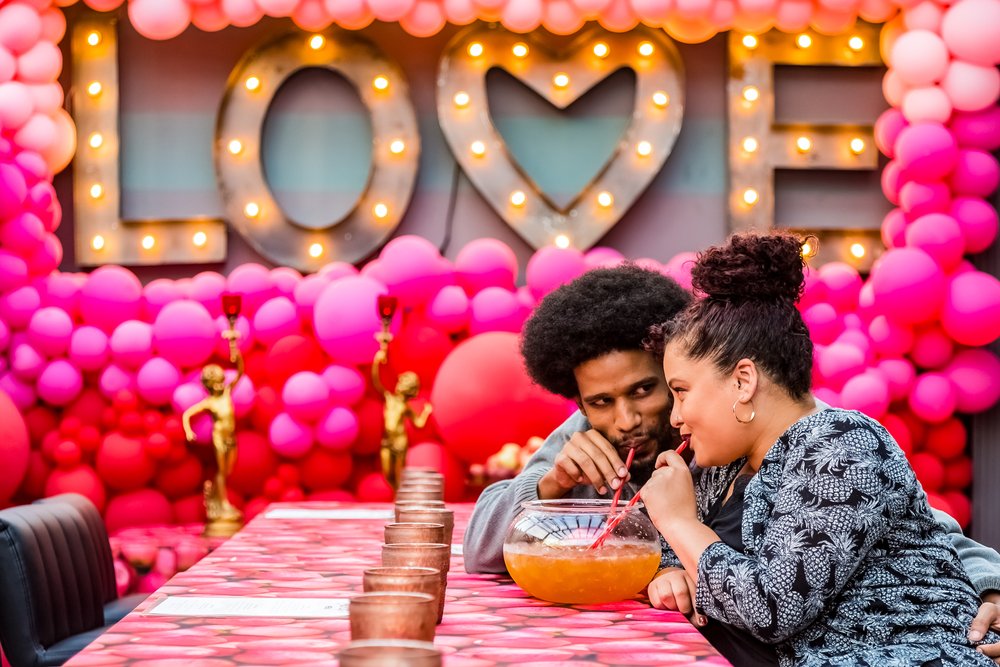
Austin, You Literally Have A "Keep It Weird" Slogan. And Yet The Ghosting Is Very Normal. 👻

Austin, You Literally Have A "Keep It Weird" Slogan. And Yet The Ghosting Is Very Normal. 👻

Because nowhere on earth is more authentic, more genuine, more aggressively itself — and more mysteriously unable to send a simple "I don't think this is going anywhere" text.

🤠 Let's Just Put This Out There, Austin. Honestly.

It's July in Austin.

Barton Springs is packed with people who moved here from California and would like you to know they got here first. The rooftop bars on East 6th are operating at full capacity in heat that can only be described as a personal attack. The food truck parks of South Congress are heaving. Rainey Street has a line outside every bar before 8pm. And someone who spent three very genuine, very "I'm not like other people in this city" evenings with you at a craft brewery in East Austin telling you they were "honestly just really vibing with where this is going" has just...

Stopped vibing.

Without notice. Without explanation. Without even the courtesy of a "hey, been super busy with this new project" that at least acknowledges your continued existence as a human being on this planet. Just silence. Big, warm, Texas-sized silence sitting there in your message thread like a tumbleweed rolling through a very expensive new development where a perfectly good dive bar used to be.

Welcome to Ghost Season, Austin. Keep it weird, indeed.

And before you blame yourself, blame the heat, or blame the fact that everyone in this city is simultaneously in a band, launching a startup, training for a triathlon, and "really trying to stay true to themselves" — there is actual data on this. Nearly 67% of dating app users report having been ghosted in summer, or having ghosted someone themselves. Austin doesn't ghost cynically. Austin ghosts authentically, which is somehow both more confusing and more Austin than any other kind of ghosting imaginable.

🌵 What An Austin Summer Does To People (It's Genuinely A Lot)

Here's the thing about summer in Austin that people who just moved here from the coasts are always slightly unprepared for.

Austin in July is not a summer. It is a test of character.

The temperature routinely exceeds 100 degrees Fahrenheit for weeks at a time. The humidity wraps around you like a warm, unwelcome hug from someone you barely know. The Colorado River shimmers in the heat like a mirage. Barton Creek Greenbelt becomes simultaneously a paradise and a survival challenge. And the entire city, rather than retreating sensibly indoors, doubles down on its commitment to outdoor living with a stubbornness that is either deeply admirable or genuinely concerning depending on your relationship with sunscreen.

More sunlight means more serotonin. More serotonin means more confidence and more options. And in a city that has grown from a quirky college town into one of the fastest growing, most dynamic, most option-rich urban environments in America — a city where new people arrive every single week bringing new energy, new possibilities, and new reasons to keep things undefined — summer simply supercharges an already overwhelming sense of possibility.

The person who was "genuinely really excited about this" in April is now "just trying to stay present and enjoy the summer" in July. In Austin, this is not a contradiction. This is a lifestyle philosophy delivered with complete sincerity and zero follow-through.

They mean it when they say it.

They also mean it when they stop saying anything at all.

🎸 A "No" Would Have Been Authentic, Actually

Here is our genuinely unpopular opinion in a city that prides itself on authenticity above almost everything else.

A "no" is authentic.

Not a vibe killer. Not a departure from the energy. Not something that conflicts with the whole "keeping it real" brand that Austin has built its entire cultural identity around. Authentic.

We'd all rather hear "I don't think we're the right match" — delivered with the same warm, direct, genuine energy that Austin does everything else — than receive a silence so complete, so sun-baked, so Texas in its vast untroubled expanse that we find ourselves wondering whether we imagined the whole thing or whether it dissolved in the heat somewhere between the third brewery and the food truck with the four hour line.

A no respects your time. A no closes the loop. A no is, in fact, the most authentic thing available in a situation like this — and Austin, of all cities, should understand authenticity.

The ghost doesn't do authentic.

The ghost does vibes. Specifically the absence of vibes, delivered without comment, in a city that talks about good vibes more than almost anywhere else on earth.

Which is, honestly, a bit on the nose.

😏 Here's What This Summer Is Actually Telling You

Summer ghosting in Austin is information delivered at 103 degrees. Sweaty, disorienting, slightly surreal information — but information.

Because if someone treats you as a seasonal option in July — something to keep loosely in the mix while they assess their summer festival schedule, their new band's gig calendar, and their general openness to commitment — you find out in July. Not in October when the temperature finally drops below 90 and they reappear with "hey, been meaning to reach out, want to grab a drink on Rainey?" like the last three months were simply a very long music festival nobody told you about.

You find out now. While the summer is entirely, completely yours.

Austin in July is a clarity machine with a Barton Springs pass. People reveal exactly who they are when the stakes feel low and the options feel limitless. The ones who show up — who follow through, who say what they mean, who bring the same authentic energy to their communication that they bring to everything else they care about in this city — those are worth everything. The ones who ghost you with complete sincerity and no apparent awareness of the contradiction? Useful information. Very Austin information. But useful.

🥂 Austin. This Summer. Keep It Real. Actually Real.

Here is a suggestion for the most authentically itself city in America.

Be as real in your communication as you are in everything else.

Because Austin has the warmth. Austin has the directness. Austin has the fundamental confidence to say what it means in almost every other context — about music, about food, about politics, about the fact that the old Austin was better even though the new Austin is pretty great too. What Austin occasionally forgets is that authenticity applies to the uncomfortable conversations too. Not just the easy ones.

Say the thing. Then show up.

And if you're tired of the whole system — the apps, the talking stages, the authentic disappearances, the ghosts who genuinely meant well and then genuinely stopped texting — there is a better way to meet someone in this city.

Real rooms. Real people. Four minutes of actual conversation that tells you more than four weeks of increasingly one-sided texting ever will. No algorithm. No profile that lists your favourite food trucks as a substitute for a personality. No "I'm really bad at texting" delivered as though it's an endearing quirk rather than a choice. Just you, showing up, in a room, in real time, finding out very quickly whether something is genuinely there.

At MyCheekyDate, we host speed dating events right here in Austin — across the neighbourhoods where real Austinites actually live and actually want to meet someone worth keeping around past the next music festival — with a Smart-Card matching system that's private, mutual, and built entirely without a ghosting mechanism. You either match or you don't. Clearly. Cleanly. With the same directness this city is absolutely capable of when it decides to be.

Austin keeps it weird.

We'd just like it to also keep it honest.

We're here to help with the rest.

Find your next Austin speed dating event at mycheekydate.com. Real events. Real people. Zero ghosting infrastructure. Breakfast tacos absolutely encouraged.

Speed Dating in Austin: The City That's Changing Everything Except How It Connects (2026 Data)

Speed Dating in Austin: The City That's Changing Everything Except How It Connects (2026 Data)

By The MyCheekyDate Team | Based on Smart-Card data from 750+ Austin attendees

Austin is in the middle of becoming something.

It has been in the middle of becoming something for about a decade now and the process shows no signs of slowing down.

The city that built its identity around keeping things weird has spent the last ten years welcoming tech campuses, new skylines, transplants from both coasts, and a cost of living that would have seemed unimaginable to the Austin of fifteen years ago. The Domain exists. The Oracle campus exists. The startups exist. The people who moved here from San Francisco and immediately started telling people how much better San Francisco was — they exist too, and Austin has absorbed them with the particular patience of a city that knows exactly what it is and is not remotely threatened by the comparison.

And yet.

Walk into a MyCheekyDate event in Austin and something remains completely, stubbornly, beautifully intact.

The Texas charm.

The genuine, unhurried, socially embedded warmth that this state has always produced in its people regardless of what is happening to the skyline outside. The sense that going out is not a decision but a default. That being social is not something you schedule but something you simply are.

After 17 years of events in this city, the Smart-Card data has something specific to say about Austin daters:

They are adapting to everything the city is becoming.

And holding on to everything that made it worth becoming.

📊 The Austin Numbers

We analyzed Smart-Card interaction data from over 750 Austin attendees across recent events. Here is what the data shows.

86% of Austin attendees received at least one mutual match.

Right at our national average of 86% across 65+ cities. In a market changing as rapidly as Austin, that consistency is its own kind of signal. New arrivals, long-time locals, tech transplants, and Texas originals all landing in the same room and connecting at exactly the national average tells you something important:

The warmth is structural. It survives the change.

The average Austin attendee received 2.6 mutual matches per event.

Above our national average of 2.3. Austin daters arrive open — not cautiously open, not strategically open, but genuinely, socially, Texas-style open — in a way that produces more connections per person than most cities manage. When going out is a way of life, connecting comes naturally. The data confirms it.

79% of first-event non-matchers matched at their second Austin event.

Two percentage points above our national average of 77%. Austin daters who come back for a second event bring the same easy confidence they brought to the first one, now with the added advantage of knowing what to expect. 79% of them find exactly what they came back for.

Three numbers. One consistent story.

Austin changes. Austin connects. The two things coexist with remarkable stability.

🎸 Going Out Is Not a Plan in Austin. It Is Simply How Life Works.

There are cities in our network where going out requires a decision.

A consultation of the calendar. A consideration of options. A weighing of whether tonight is the right night for this particular activity. A text thread that takes forty-five minutes to produce a plan that then gets cancelled twenty minutes before it was supposed to start.

Austin is not one of those cities.

In Austin, being social is embedded in the culture so deeply that it barely registers as a choice. Going out on a Tuesday is not remarkable. Staying in requires more explanation than going out. The question is never whether to have a good evening. It is simply which good evening to have.

That baseline social energy changes everything about a speed dating room.

Austin guests do not need to warm up. They do not need to transition from work mode to social mode. They do not arrive carrying the weight of a decision they are still not sure they made correctly.

They arrive already in the mode that most cities spend the first thirty minutes of an event trying to reach.

Ready. Open. Genuinely glad to be in a room full of interesting people.

That energy is contagious. It reaches the quieter guests, the more cautious arrivals, the one or two people who came because a friend suggested it and are still deciding whether they are glad they did.

By rotation three, everybody is glad they did.

The 2.6 average matches per event is what that energy produces when it has somewhere to go.

🤠 The Texas Charm That Survives Everything

Austin has changed enormously since we opened here in 2008.

The Domain has transformed the north side of the city. East Austin has evolved from overlooked to unmissable. South Congress has gone from local secret to national destination. Downtown has grown a skyline that would be unrecognizable to anyone who left in 2010 and just returned.

Through all of it, something has remained.

The Texas charm.

It is not a performance. It is not a regional affectation that shows up in accent and disappears in behavior. It is a genuine, deeply embedded social warmth that this state produces in its people with remarkable consistency — and that Austin, more than any other Texas city, has always expressed through a particular openness to whoever shows up.

Keep Austin Weird was never really about weirdness. It was about welcome. The willingness to make room for whoever you are and whatever you brought with you. The civic warmth that says this city has space for you without requiring you to be anything other than what you already are.

That disposition is extraordinarily valuable in a speed dating context.

Austin daters — whether they grew up here or arrived last year from San Francisco — tend to absorb it quickly. The social norm of being genuinely, unhurriedly interested in the person across from you is contagious in this city. New arrivals catch it faster than they expect. Long-time locals maintain it without effort.

The Smart-Card data, with its 2.6 average mutual matches per attendee, confirms that charm is extraordinarily effective.

🏙️ Old Austin and New Austin in the Same Room

Here is something fascinating about running events in a city changing as rapidly as Austin:

The room reflects the tension.

On any given evening at a MyCheekyDate Austin event, the guest list might include a software engineer who relocated from Seattle eighteen months ago, a musician who has been in Austin since before the tech boom, a marketing professional who came from New York for a job at one of the new campuses, and a fourth-generation Texan who has watched the city transform around them with a mixture of pride and mild bewilderment.

In most cities, that kind of demographic diversity creates friction.

In Austin it creates conversation.

Because the Texas social culture is expansive enough to hold all of it. New Austinites tend to adopt the warmth quickly — sometimes within weeks of arriving, sometimes within the first evening out. Long-time locals tend to extend it generously, with the patience of people who have been welcoming newcomers long enough to know that most of them eventually become Austinites in the ways that matter.

The result is a room that feels more cohesive than the city's rapid evolution might suggest.

Old Austin and New Austin, sitting across from each other for four minutes at a time, finding more common ground than either expected.

The 86% match rate reflects that cohesion.

The 2.6 average reflects what happens when cohesion produces genuine connection rather than polite coexistence.

🧠 What the Machine-Learning Layer Reveals About Austin

The Smart-Card is not just a matching system. It is a machine-learning supported platform that identifies real-world attraction patterns from live events — building a picture, across thousands of evenings in dozens of cities, of what real-world chemistry looks like when it has room to happen.

In Austin, the machine-learning signals produce findings that are specific to this market.

Austin's match rate is the most stable in our Texas markets across demographic variables.

We operate in three Texas cities — Austin, Dallas, and Houston. Each produces distinct Smart-Card data. Austin's most distinctive characteristic is the stability of its numbers across a dating pool that has changed more dramatically in the last decade than almost any other city we operate in.

New arrivals connect at similar rates to long-time locals. Tech-sector transplants connect at similar rates to creative-sector Austin originals. The warmth the city instills in people is not demographic. It does not concentrate in one age group or one professional category or one part of the city. It distributes itself across the room with remarkable evenness.

The machine-learning layer identifies this as what we call cultural absorption — the process by which a city's social norms are transmitted to new arrivals faster than demographic change might predict. Austin's warmth is its most effectively transmitted cultural product.

The stated-versus-revealed preference gap in Austin is smaller than in most peer cities.

Austin daters tend to connect with people who are closer to their stated preferences than in cities like Los Angeles, San Francisco, or Toronto, where the room's diversity consistently produces surprises that override prior expectations. This is not because Austin daters are rigid — the 2.6 average matches suggests real openness. It is because Austin's social culture already encourages people to arrive with broad rather than narrow stated preferences. The filtering has already happened before registration. The stated preference is already more generous than in more guarded cities.

When generous stated preferences meet genuine in-person warmth, the gap between what people said they wanted and who they actually selected is naturally smaller.

Austin's seasonal pattern is the most pronounced in our Texas markets.

The machine-learning data shows a clear seasonal effect in Austin that is stronger than in Dallas or Houston: spring and fall events — when the weather is exceptional and the city's outdoor social culture is operating at full capacity — produce noticeably higher match rates than summer events, when the heat keeps more people inside and the social rhythm slows slightly. The outdoor culture that shapes Austin's personality is, apparently, a weather-dependent variable in the dating data.

🎵 The Neighborhoods of Austin Dating

17 years of events across Austin has confirmed that the city's neighborhoods produce meaningfully different room energies — and that the city has enough of them now to constitute its own internal map of dating cultures.

Downtown and 6th Street bring the concentrated social energy of a neighborhood that exists, largely, to have a good time. Events here draw from across the city and tend to produce warm, lively rooms. The 6th Street energy is contagious in exactly the way that benefits a speed dating event — people arrive already social.

South Congress brings a more curated, slightly more considered crowd. These are Austin daters who have opinions about where they live and why — who chose South Congress specifically and carry that choice with a certain quiet pride. Rooms here tend to be warm and conversationally substantive.

East Austin draws the creative, eclectic, and increasingly diverse crowd that has made East Austin one of the most interesting neighborhoods in Texas. These rooms are more unpredictable — in the genuinely excellent sense — and often produce some of the most interesting Smart-Card data in the city.

The Domain and North Austin bring the tech-adjacent crowd that represents New Austin most purely. These guests arrived recently, came for work, and are actively building a social life in a city they are still discovering. They tend to engage with the Smart-Card most enthusiastically of any Austin submarket — the tech comfort is real — and they connect with a genuine openness that comes from arriving without the established social circles that make connection feel less urgent elsewhere in the city.

South Austin brings the long-time locals in their most concentrated form. Deeply rooted, deeply opinionated about the city, and deeply warm in the way of people who have been doing Austin correctly since before it was a destination.

In every neighborhood the Austin thread runs through all of it.

Social by default. Warm by structure. Open to whoever shows up.

🍹 Highbies and Azul Rooftop: The Rooms Austin Loves

17 years in a city teaches you which venues understand the assignment.

Highbies has become one of our most beloved Austin venues for reasons that are immediately apparent when you walk in. The energy is social, unpretentious, and genuinely fun in the way that the best Austin nights always are. There is no transition period between arriving and being somewhere worth being — Highbies does that work instantly. Guests arrive already feeling like they made the right choice. The room finds its rhythm fast and keeps it.

Azul Rooftop brings something completely different and equally beloved. There is something about a rooftop in Austin — the skyline, the warm evenings, the particular pleasure of being above the city at night — that changes how people feel about themselves and each other. Azul Rooftop produces some of our most consistently warm and lively Austin events. People arrive looking at the view and stay for the conversations.

Both venues share the quality that defines great Austin nights: they feel like real Austin rather than a staged version of it. Unpretentious. Social. Worth going out for.

Which in Austin is the highest possible compliment.

🏆 Where Austin Sits in the Full National Rankings

In our full city-by-city analysis — Which Cities Have the Highest Mutual Match Rates at Speed Dating Events? (2026 Data) — Austin sits at exactly the national average on match rate, in a tier alongside Toronto, Washington DC, and Houston.

On average matches per event, Austin sits comfortably above the national average at 2.6 — above New York (2.3), above Dallas (2.4), above Denver (2.5), and reflecting a city where genuine social openness produces more connections per person per evening than many higher-match-rate markets.

The Austin data story is not about being the best market in the network. It is about being the most consistent one. Match rate exactly at national average across 17 years of a city changing faster than almost any other in our dataset. Average matches per event consistently above it. Second-event improvement two points above national average.

Consistency, in a city transforming as rapidly as Austin, is its own kind of remarkable.

The warmth survives everything.

The data confirms it, year after year.

📍 17 Years of Austin Evenings

We have been running events in Austin since 2008.

17 years of watching one of America's most dynamic cities date. 17 years of rooms that arrived already warm and left warmer. 17 years of hosts reporting back that Austin was the event where everyone stayed too long because nobody wanted the evening to end.

Austin in 2008 was a different city from Austin today. The skyline was lower. The rents were different. The demographic mix was different. The conversation about what Austin was becoming had barely started.

What has not changed is the energy in the room.

Fun. Warm. Socially embedded. Completely at ease with the idea that a good evening is not something you plan but something you simply show up for.

The Smart-Card has been measuring that quality for 17 years.

86%. 2.6. 79%.

Every year. Through all of it.

Austin changes. Austin connects.

Both things, stubbornly, simultaneously true.

💛 So. Is Speed Dating Worth It in Austin?

Based on Smart-Card data from 750+ Austin attendees across 17 years and 26,000+ verified events:

86% found at least one mutual match.

2.6 mutual matches per event on average — above the national average and above New York, Dallas, and Denver.

79% of first-event non-matchers matched at their second event.

If you are an Austin dater — whether you were born here, moved here last decade, or arrived last year and are still figuring out which Austin you live in:

The room at Highbies or Azul Rooftop on a MyCheekyDate evening is the same Austin it has always been.

Warm. Social. Ready for a good night.

Which in Austin requires absolutely no convincing at all.

Come as you are. Stay as long as you like.

The data says you will probably leave with someone worth seeing again.

MyCheekyDate has hosted real, host-led speed dating events in Austin since 2008 — Downtown, South Congress, East Austin, the Domain, South Austin, and beyond. Our Smart-Card handles the matching privately, mutually, and without a single awkward public reveal. Machine-learning supported interest signals mean every event informs what comes next: future events, private select invitations, and Curated Introductions shaped by who you actually connected with rather than who you said you wanted. Find your next Austin event at mycheekydate.com/speed-dating-austin — and if you want to see how Austin compares to every other city in our network, the full data is right here.

A Note on Methodology This analysis reflects Smart-Card interaction data from 750+ MyCheekyDate attendees across Austin events, including events hosted across Downtown, South Congress, East Austin, the Domain, and South Austin. Mutual match rate reflects the percentage of attendees who received at least one mutual selection. Average matches per event reflects mean mutual selections per attendee across the full Austin sample. Second-event improvement reflects attendees who received zero mutual matches at a first event who subsequently attended a second Austin event. National baseline figures (86% mutual match rate | 2.3 average matches per event | 77% second-event improvement) reflect the full Smart-Card dataset across 65+ cities. All data reflects behavioral selections made privately through the Smart-Card system and does not include self-reported survey responses. MyCheekyDate has hosted verified speed dating events in Austin since 2008. Smart-Card machine-learning supported interest signals are used to identify real-world attraction patterns, inform future event curation, and support Curated Introductions. Full methodology at mycheekydate.com/smart-card.

Dating App Algorithms vs. Human Judgment in Austin: What Our Smart-Card Data Actually Shows

Dating App Algorithms vs. Human Judgment in Austin: What Our Smart-Card Data Actually Shows

By The MyCheekyDate Team | Based on Smart-Card data from Austin attendees across 19 years of events

Start with the contradiction that defines Austin dating before you even get to the algorithm.

WalletHub ranks Austin among the very best cities in the country to be single. Sperling's once named it the single best city for dating in America outright. The city has a nearly even gender split, a young and growing population, an enormous, ambitious singles pool, and a culture so famously open and easygoing it built an entire identity around "Keep Austin Weird."

And yet Austin Monthly called dating in this city "cursed." Match.com once ranked Austin's men as the worst-behaved daters in the country, finding they were over five times more likely to ghost than men elsewhere — a reputation a more recent 2025 survey from NumberBarn still placed in the national top five for ghosting. Ask Austin singles directly, and the consensus, repeated across local news segments and dating forums alike, comes back blunt: "The dating landscape sucks."

Both things are true at once. That's the actual story.

Now add the number that explains the gap between Austin's excellent demographic fundamentals and its frustrating lived experience:

57 app matches produce, on average, one in-person date.

Not one relationship. Not one second date. One. Less than 2% of all swipe-based matches ever become an actual meeting. Only 14% of Hinge matches convert to a first date. Austin has, on paper, almost everything an algorithm needs to work well — a large, diverse, well-balanced, highly available dating pool. And it still produces some of the most consistently frustrated, most publicly vocal dating dissatisfaction of any major U.S. city, alongside genuinely strong demographic rankings. That isn't a contradiction in the data. It's a direct illustration of this article's entire argument: a good dating pool, run through a flawed matching mechanism, still produces bad outcomes.

Austin's tech-driven population growth compounds the problem. The city's thriving tech sector has pulled in a large number of male professionals, creating a real and well-documented gender disparity in the broader dating-age population, even as the city's overall numbers look more balanced. Add a constant, ongoing wave of transplants — new arrivals chasing jobs, weather, and a lower cost of living than the coasts — and you get a dating market that's perpetually large, perpetually shifting, and perpetually difficult to actually read.

Our Smart-Card data shows what happens when you take that same large, available, frustrated population and run it through a different process entirely: 86% of attendees received at least one mutual match after a real face-to-face conversation. The average attendee left with 2.3 mutual matches per event. And 77% of first-event non-matchers found a match at their second event.

When it comes to predicting attraction in a city this demographically advantaged and this consistently disappointed by its own dating scene — does algorithmic matching outperform human judgment in real conditions?

After five years of structured Smart-Card data and 19 years of watching real chemistry form in real Austin rooms, we have an answer.

🤖 How Dating App Algorithms Actually Work (And What They're Optimising For)

Austin is one of the clearest possible demonstrations that good demographic conditions don't fix a broken matching mechanism — because this city has nearly every structural advantage an algorithm should want, and the dating experience still earns local headlines like "cursed."

Swipe-based algorithms function primarily as engagement systems. Their job is not to find you the right person. Their job is to keep you on the platform long enough to find them, or to believe you might. These goals are related but not identical, and when they conflict, the platform's business interest wins.

The mechanics: profile signals — photos, bio keywords, age, location, stated interests — build a compatibility pool. Behavioural signals take over from there. Who you swipe on, who swipes on you, response rates, message depth. All of this feeds a score that determines who surfaces and when.

In Austin specifically, the algorithm has to contend with a population in genuine, constant flux. A large share of the dating pool at any given moment consists of recent transplants — people who arrived within the last year or two, still building a social life from scratch, still figuring out which version of themselves they're presenting in a new city. The algorithm treats this churn as just more behavioral data to learn from. It has no way of distinguishing "this profile represents someone who's been stable and known in this market for years" from "this profile represents someone three weeks off the plane from California, still genuinely unsure what they're looking for."

Here's the core problem, and it shows up directly in Austin's well-documented ghosting reputation: an algorithm optimized for engagement, applied to a population with an unusually high share of newly arrived, still-orienting users, produces exactly the pattern Austin has become known for — matches that start with real apparent interest and then simply evaporate, because the person on the other end was never entirely sure what they were looking for in the first place, and the app gave them no reason to find out before moving on.

What the algorithm knows: your photos, your stated interests, your in-app behavior, how recently your account was created.

What the algorithm cannot know: whether the person you matched with is genuinely interested in connecting, or simply enjoying the validation of a new city's attention while they figure out their own life. That distinction is invisible to a profile. It becomes obvious within about ninety seconds of an actual conversation.

📋 What the Smart-Card Actually Measures — And Why That's Different

The Smart-Card is not a dating app. Understanding exactly what it captures matters before the comparison makes sense.

When a guest attends a MyCheekyDate event in Austin — whether that's a South Lamar bar, a downtown rooftop, an East Austin spot, or a venue near the live music scene this city is famous for — they have real face-to-face conversations before any selection is made. No profile to optimise before you're seen. No ambiguity about whether someone showed up genuinely interested or just generally enjoying the attention.

This is, in fact, the Smart-Card's most direct answer to Austin's specific reputation problem. Ghosting requires a gap — a space between expressed interest and an actual planned meeting, where someone can simply stop responding with no consequence. The structure of a MyCheekyDate event removes that gap by design. You're already there. The conversation either happens, in person, in real time, or it doesn't. There's no message thread to quietly abandon.

After the event, guests privately submit selections from their phone — who they'd like to see again — with the window open until midnight so nobody has to make a rushed decision. A match is only created when both people independently chose each other. If one person selects another and the interest isn't mutual, nothing is shared. No hints, no nudges, no one-sided reveals. In a dating market this defined by ghosting, this matters specifically: the format produces resolution without anyone having to be the one who simply stops responding.

What this produces is data in a category behavioural economists call revealed preference — not what someone says they want, but what they actually choose after real interaction.

Revealed preference is almost always more accurate than stated preference. And in Austin, where stated app interest has earned a genuine, data-backed reputation for not converting into anything real, the Smart-Card offers something the apps structurally cannot: a forced, private, mutual resolution, every single time.

📊 The Gap Between Who Austin Daters Say They Want and Who They Actually Match With

This is the finding that resonates most directly with Austin attendees, in a city whose dating reputation is so publicly, vocally contested.

Across five years of Smart-Card data, the divergence between what Austin guests listed as preferences and who they subsequently selected in real rooms is substantial, and it follows patterns shaped by exactly what makes this city's dating culture distinct.

The "figuring it out" gap. A meaningful share of Austin's dating pool — by both reputation and demographic reality — consists of people genuinely still figuring out what they want, whether because they're new to the city, newly out of a relationship, or in the middle of a broader life transition that drew them to Austin in the first place. Stated app preferences from this group tend toward the vague: "open to anything," "not looking for anything serious right now, but who knows." Smart-Card data shows something more specific once a real conversation happens: people who present as genuinely uncertain on an app frequently make clear, confident, mutual selections in the room, once an actual conversation has given them something concrete to respond to rather than an abstract profile to project onto. The vagueness, it turns out, is often a function of the format, not the person.

The transplant-versus-local gap. Austin's enormous, ongoing influx of transplants creates a real cultural divide that shows up clearly in stated preferences — locals and longtime residents often express a preference for "someone who actually gets Austin," while recent arrivals frequently default to dating within their own transplant social circles, simply because that's who they've met. Smart-Card data shows this divide softening considerably once real conversation is the deciding factor: longtime locals and recent transplants match with real consistency, at rates that a transplant-status-aware algorithm would likely underpredict.

The "Keep Austin Weird" gap. Austin's identity is built, genuinely, around individuality, eclectic interests, and a resistance to conventional self-presentation — which creates a specific problem for profile-based matching. The qualities Austin daters say they value most — authenticity, originality, not taking yourself too seriously — are exactly the qualities that perform worst on a platform that rewards polished, algorithmically optimized self-presentation. Smart-Card data shows that the most "Austin" version of someone — genuinely weird, genuinely themselves, low on performative polish — frequently underperforms on apps and dramatically outperforms in person, where that same quality reads as exactly the authenticity this city claims to prize.

📈 Algorithm Prediction vs. Smart-Card Outcomes: The Austin Numbers

The direct comparison:

Swipe-based app conversion to in-person meeting: approximately 1 in 57 matches (under 2%) Hinge match conversion to first date: 14% Austin men's reported ghosting rate vs. national average (2018 Match.com finding): 549% higher Austin's national ranking for ghosting frequency (2025, NumberBarn): 4th highest Austin's WalletHub ranking among best U.S. cities for singles: top 10 Smart-Card mutual match rate: 86% of attendees received at least one mutual match Smart-Card average matches per event: 2.3 Smart-Card second-event match improvement: 77% of first-event non-matchers matched at their second event

The Austin-specific story in these numbers is genuinely unusual. This is a city that ranks well, sometimes very well, on every conventional demographic measure of dating-market quality — large population, strong gender balance, high social-opportunity scores, real affordability relative to coastal tech hubs. And it simultaneously carries one of the most persistent, well-documented ghosting reputations in the country. Good fundamentals, bad mechanism, bad outcomes. That's the whole story in one sentence.

The selection environment effect plays out in Austin with a specific local flavor. Near-infinite apparent supply meets a population with an unusually high share of people still genuinely uncertain about what they want, in a city growing fast enough that there's always, plausibly, someone new arriving next week. This combination produces close to ideal conditions for the exact pattern Austin has become known for: interest that's genuinely felt in the moment and doesn't survive contact with a slightly better-seeming option, or simply fades because the format never forced a real decision.

The Smart-Card removes this dynamic by design. The pool for any given event is fixed and finite — twelve to fifteen real conversations, in one evening, with a hard resolution point by midnight. There's no infinite supply to retreat into instead of deciding. There's no message thread to simply stop answering.

The 77% second-event improvement carries particular weight in a city full of recent transplants still building local social fluency. A first event for a newer Austin resident likely involves real unfamiliarity — with the format, with the city's social norms, with the broader question of what they're actually looking for here. The second event removes much of that uncertainty. The data shows it converting directly into meaningfully higher match rates.

🧠 Why Human Chemistry Cannot Be Algorithmically Predicted — The Austin Version

The case isn't that algorithms will never improve. It's that there is a category of information available only in real-time, face-to-face interaction that no algorithm working from profile and behavioural data can access — and that category determines attraction more reliably than profile compatibility, even in a city this contested in its own dating reputation.

Genuine eclecticism that a profile flattens. Austin's population is famously full of people who don't fit neatly into a single category — musicians who code, tech workers who barbecue competitively, academics with serious live-music habits. The city's own local color, repeatedly cited by people who love living here, is the ability to "hop from lily pad to lily pad" across wildly different conversational and social registers. This is precisely the quality that a structured dating profile, built around a handful of selectable interest tags, cannot capture. A real conversation can. Smart-Card data consistently shows attendees connecting over exactly this kind of unexpected, cross-domain overlap that no algorithm would have known to surface.

Sincerity that ghosting culture has made people suspicious of. Austin's well-documented ghosting reputation has, almost certainly, made the entire dating population somewhat more guarded — more cautious about reading too much into early interest, more braced for the other person to simply disappear. This produces a real chicken-and-egg problem on apps: guardedness reads as low interest, which produces less investment from the other person, which makes ghosting more likely, which reinforces the guardedness. In a real room, where ghosting structurally isn't an option, that defensive posture has much less reason to activate. The Smart-Card data shows attendees engaging with more openness and warmth than the city's broader app-dating reputation would predict — because the format itself removes the specific risk that produced the guardedness in the first place.

The transplant energy that doesn't show up in a bio. A huge share of Austin's population arrived recently, drawn by genuine enthusiasm for the city, a sense of starting fresh, an openness to new experience that comes with relocating somewhere by choice rather than by inertia. This energy is hard to convey in three profile prompts and considerably easier to feel directly across a real conversation. Smart-Card data shows this transplant enthusiasm converting into real chemistry at notable rates — exactly the kind of signal an algorithm, working from static profile text, has no access to.

🤠 Austin, Neighborhood by Neighborhood: Where the Algorithm Gap Shows Up

The divergence between algorithmic prediction and real-world outcomes shifts across Austin's distinct pockets.

Downtown and Rainey Street events draw a younger, often newer-to-Austin crowd, heavily weighted toward recent tech-sector transplants. Smart-Card data here shows the "figuring it out" gap most clearly — attendees whose stated app preferences skew vague or noncommittal making notably clear, confident selections once a real conversation forces the question.

South Congress and South Lamar events bring a slightly more established, often more creatively oriented crowd, with stated preferences that lean toward shared cultural and lifestyle interests. Smart-Card outcomes here show the "Keep Austin Weird" gap especially clearly: attendees whose profiles likely underperform algorithmically due to a deliberately eclectic, less-polished self-presentation converting at strong rates once that same eclecticism becomes a real conversational asset.

East Austin draws one of the city's more diverse, lower-pretense crowds, with Smart-Card data showing some of the strongest cross-background and cross-transplant-status selection patterns in the Austin network — locals and recent arrivals connecting at rates that profile-based, similarity-weighted matching would likely underpredict.

The broader university-adjacent population, drawing on UT Austin's massive student and recent-graduate base, represents a uniquely young, transient, high-volume slice of the dating pool. Smart-Card data shows particularly strong second-event improvement here, consistent with a population often still building both general social confidence and a clearer sense of what they actually want, post-graduation, in a city they may or may not be staying in long-term.

💡 What This Means for the Future of Austin Dating as AI Gets More Embedded

Austin is a genuinely useful market for thinking about where AI-assisted matchmaking is heading, because this city shows, with unusual clarity, that excellent demographic fundamentals don't automatically translate into good dating outcomes when the underlying matching mechanism is structurally flawed.

AI matchmaking will keep improving in narrow, specific dimensions — better filtering, marginally fewer poor matches, more sophisticated compatibility scoring. None of this resolves Austin's actual, well-documented core problem: a population with an unusually high share of people still genuinely orienting themselves — newly arrived, newly single, newly figuring out what they want — being run through a system that rewards continued engagement over forced resolution, and that has, as a direct and predictable consequence, produced one of the most persistent ghosting reputations of any major American city.

No algorithm resolves this by getting smarter about prediction, because the problem was never really about prediction accuracy. It's about the absence of any mechanism that forces a real answer. Austin's local matchmaking and professional introduction services have grown specifically around this gap, explicitly positioning themselves around the promise of vetted, intentional, accountable introductions in a market where the apps have built a reputation for the opposite.

The more interesting development is AI applied to real interaction data — the foundation Smart-Card machine-learning signal processing is built to provide. When the model learns from who Austin attendees actually select after a conversation that reached a forced, real resolution, it has access to a fundamentally different, more reliable signal than an app match that may have simply ghosted before any of it was ever tested.

The future of Austin dating isn't a smarter prediction engine. It's more rooms where ghosting structurally cannot happen.

📊 The Data, Plainly

For 19 years and 26,000+ verified events across 65+ cities — including consistent events across Austin — MyCheekyDate has been running a large-scale natural experiment in human attraction. The Smart-Card has made that experiment legible.

86% of attendees received at least one mutual match.

2.3 mutual matches per event, on average.

77% of first-event non-matchers received at least one match at their second event.

57 to 1: the ratio of swipe-app matches to in-person dates.

14%: Hinge's match-to-first-date conversion rate.

549%: how much more likely Austin men were found to ghost compared to the national average, per Match.com's 2018 analysis — a reputation more recent data suggests hasn't fully gone away.

Top 10: Austin's WalletHub ranking among the best U.S. cities for singles, based on population balance, social opportunity, and affordability — sitting alongside that same persistent ghosting reputation.

The stated-versus-revealed preference gap: consistent, substantial, and most visible in the specific space between expressed app interest and whether that interest survives contact with an actual, in-person meeting.

These numbers tell a coherent story once you read them together. Human judgment, operating in real conditions with real information in real time, outperforms algorithmic prediction at converting mutual interest into actual connection. Not because Austin's algorithms have worse data or a worse user base than anywhere else — the demographic fundamentals here are genuinely strong. Because no amount of demographic advantage fixes a matching mechanism that lets interest evaporate in the gap between a match and an actual meeting, and Austin's specific population, growing fast and full of people still finding their footing, has fallen straight into that gap more visibly than most.

The brain assesses chemistry in four minutes with a follow-through rate that profile-and-preference algorithms haven't matched in 19 years of trying.

💛 One Last Cheeky Thought

Austin has every reason, on paper, to be one of the best dating cities in the country. And by plenty of measures, it is. Good population balance. Real affordability. A culture that genuinely celebrates individuality and resists taking itself too seriously.

And yet ask almost anyone who's actually tried dating here, and you'll hear some version of the same frustrated story: promising matches, real-feeling conversations, and then nothing. A name on a screen that simply stops responding, with no resolution, no explanation, and no real accountability built into the system that produced the match in the first place.

The Smart-Card doesn't fix Austin's demographics. It doesn't need to — the demographics were never the problem. It fixes the gap where the ghosting happens, by removing that gap entirely. The conversation occurs. The decision gets made, privately and mutually, by the end of the night. Nobody has to be the one who simply stops responding.

86% of Austin attendees leave with at least one person who chose them back — already, definitively, before they've even left the venue.

In a city this good on paper and this exhausted by ghosting in practice, that's not a small difference. It might be the only one that actually matters.

Ready to skip the ghost entirely? MyCheekyDate hosts real, host-led speed dating events across Austin — Downtown, South Congress, East Austin, and beyond. No promising match that quietly stops responding. No message thread left hanging with no resolution. Just real people, four unscripted minutes, and a Smart-Card that handles the matching privately, mutually, and with a real answer before you head home. Find your next Austin event at mycheekydate.com/speed-dating-austin — and if you want to understand exactly how the Smart-Card works, it's right here.

Your Texting Style Is Not Your Personality, Austin. Keep It Weird, But Make It Real.

Your Texting Style Is Not Your Personality, Austin. Keep It Weird, But Make It Real.

Or: why your talking stage currently consists of one person typing "haha" somewhere on South Congress and another person trying to decode it like a set list, on a patio, at 97 degrees, wondering if this city is still the place they moved to or something else entirely.

📱 Let's Begin With Something Slightly Uncomfortable

You are not "getting to know" someone over text.

You are conducting a small, carefully casual public relations campaign — in a city that has built an entire identity around not seeming like it's trying, while trying extremely hard.

Every message is reviewed. Every emoji is considered. Every "haha" has been through more internal deliberation than a rezoning application on South Lamar.

You've rewritten the message. You've deleted the message. You've typed "we should grab a drink on a patio sometime" and then spent eight minutes deciding whether "patio" was too Austin-obvious and whether "sometime" was appropriately laid-back or just passively noncommittal.

Meanwhile they're doing the same thing.

Probably somewhere near East Sixth.

Welcome to dating in Austin: a city that used to be famously easy to meet people in, that has grown so fast and changed so completely that half the people in any room have been here less than three years, don't know anyone outside of work, and are conducting their entire social life through an app in a city that was specifically designed for bumping into strangers.

A Harvard study found 94% of millennials report texting-related anxiety. In a city that tells you to keep it weird, the anxiety is hidden behind a very convincing performance of being extremely chill about everything.

🎭 The Talking Stage Is An Extended Patio Hangout That Never Actually Gets Scheduled

We've all agreed to call it a "talking stage."

In Austin, it's more of a very long, very pleasant conversation that exists entirely in principle.

Two strangers match. They spend somewhere between a week and an entire summer exchanging warmly casual messages.

"How was your weekend?"

"So good. Barton Springs, then some live music. You?"

"Same vibe. Pretty low-key."

"Classic."

Outstanding. Two people who both had an excellent Austin weekend and would like the other person to know it.

The remarkable thing: both leave convinced they have something. With whom? With a version of someone assembled from their neighbourhood opinions, their stance on which Austin is the real Austin, their Spotify — always Spotify in this city — and two hundred messages of relaxed, friendly, conspicuously chill non-escalation.

Austin daters are excellent at being fun over text. What they are structurally less comfortable with is the transition from fun-over-text to an actual plan, because making an actual plan requires committing to a specific time in a city where spontaneity is the cultural currency and scheduled things feel slightly against the vibe.

Bumble data shows talking stages over three months have a 70% fizzle rate. Austin's version doesn't fizzle so much as evaporate — pleasantly, in the heat, while both people are technically still available and nominally interested and somehow never in the same place at the same time despite living twelve minutes apart.

A 2025 survey found 62% of stalled talking stages come down to mismatched goals. Austin adds its own variable: mismatched definitions of what "we should hang" means as a level of commitment. For one person it's an intention. For the other it's a plan. The gap between those two things is where the talking stage lives forever.

😬 The Double Text, Austin Edition

The double text isn't embarrassing.

The aggressively casual spiral that happens before the double text is embarrassing.

You send a message. Twenty minutes: nothing — you're chill, genuinely. One hour: nothing. You've checked their Instagram. They posted a story from a Rainey Street bar forty minutes ago. You have feelings about this that you are processing with the same energy you bring to not caring about things.

You've sent the story to your group chat. The group chat has opinions.

Then they reply:

"Hey sorry — was at Stubb's. No signal. What are you up to?"

Three hours of extremely casual processing. One completely Austin explanation.

43% of men and 26% of women admit to feeling genuinely drained by extended pre-date texting. They're not being chill. They're exhausted at being chill.

The person warmly managing four simultaneous talking stages while maintaining the exterior of someone who is absolutely not keeping track is not a confident dater.

They are a tired person with a parking spot near the Domain they found by accident and refuse to give up.

🤠 Austin Has Made "Keeping It Chill" A Dating Obstacle

Let's name the specific thing that makes the Austin talking stage its own experience.

Austin's cultural identity is built on ease. On spontaneity. On the idea that good things happen organically, without too much planning, on a Tuesday evening when someone just happens to end up at the same place.

This worked beautifully when Austin was smaller. When the same people kept showing up at the same venues. When the city had the density of familiarity that makes organic connection possible.

Austin is now the fourth fastest-growing large city in America. That organic density is gone in a lot of neighbourhoods. And what replaced it is apps — and the same talking stage every other city is running, but with a specifically Austin flavour of performed effortlessness on top.

The "we should hang" that never becomes a plan. The "let's do something this week" that disappears into a calendar with forty other things in it. The matching energy that never escalates because escalating would mean trying, and trying is not the vibe.

A therapist writing in Psychology Today named the dynamic precisely: "Many clients try to manage uncertainty by overthinking every message, hoping that a 'perfect' response will somehow manufacture a sense of control. This performance actually fuels anxiety rather than fixing it."

In Austin, the performance is effortlessness. Which is its own exhausting thing to maintain.

😏 The Chillest Texter In Austin Is Not Always The Best Date

This needs saying over a frozen margarita at Trudy's.

Text ease and real chemistry are cousins at best.

We've watched thousands of people meet at MyCheekyDate events in Austin.

The person who runs the most relaxed, warm, effortlessly fun text conversation? Sometimes exactly that in person — easy, present, the kind of energy this city used to run on before it got complicated.

Sometimes the effortlessness is load-bearing. Remove the asynchronous format and the ability to take two hours before replying, and what remains is someone whose natural register in real time is slightly more anxious than the text thread suggested. The chill was a presentation. The actual person is doing quite a lot of work underneath it.

Meanwhile the person who replies inconsistently because they genuinely live their life offline — at shows at Emo's, floating the river on a weekend, doing things that don't photograph well — often the most present, most genuinely easy person in the room.

The numbers are consistent: only 14% of Hinge matches ever become a first date. Less than 2% of app matches result in meeting in person. A 2025 study found American singles averaged fewer than two dates in the preceding year — nearly half of single men and a third of single women went on zero.

Not zero matches. Zero dates.

78% of app users reported emotional exhaustion in 2024. Not from dating. From almost-dating.

In Austin, almost-dating has a great patio and excellent beverage options. That doesn't make it dating.

🚗 The Distance Problem Is The Growth Problem

Every Austin event. Same conversation.

"Where are you?"

"East side."

"Oh nice — I'm in North Austin. Near the Domain."

[Internal calculation: thirty-five minutes on a good day, an hour on 183 during happy hour, and North Austin and East Austin might as well have different dress codes at this point.]

"We should find somewhere in the middle."

The middle, in Austin, is increasingly a negotiation between two cities that have grown up inside the same zip codes and don't entirely recognise each other.

But here's what years of Austin events shows: when there's real chemistry, people navigate the geography. We've matched East Side creatives to North Austin tech workers. We've watched people cross MoPac for a second date without complaining about it, which in Austin is practically a declaration of intent.

You cannot fall for someone you've never met. You can fall for a text thread from someone twelve minutes away that still somehow never becomes a plan.

The person is worth the drive. But you have to meet them first.

💬 What Our Smart-Card Data Shows

When Austin daters skip the performed effortlessness and meet face to face first, the genuine warmth underneath it — which in this city is real, and was always real — gets to actually land.

Our Smart-Card system tracks real-world attraction — not vibe curation, not profile aesthetics, not who presents the most convincing version of Austin living, but who people actually choose after a real conversation in a real room. No profile to make look effortlessly cool. No bio that took four drafts to strike the right balance of interesting and unbothered. No photo from ACL 2023.

Selections are completely private until midnight. Nothing shared unless both people choose each other. No one-sided reveals. No app download. A match only exists when both people want it — no scheduling required, no "we should hang" ambiguity, no wondering if they meant it.

Across 1,026 attendees in 35 cities:

86% received at least one mutual match → 2.3 average mutual matches per event → 77% of zero-match guests at event one matched at event two

That 77% is the number. The first event in Austin carries some unfamiliarity — the format is new, the performance of effortlessness hasn't quite dropped yet. The second event removes that. The person who's been performing chill in a text thread for three weeks shows up as themselves — warmer, more present, easier than the performance suggested. That person matches at 77%.

Those real-world signals shape what comes next — private select events, CheekySocial evenings, Curated Introductions — built on who you actually connected with in a room, not what your profile projected. Austin daters consistently surprise themselves with who they respond to when the effortlessness performance is off and it's just two people actually talking.

🎸 Four Minutes. Not Four Months Of "We Should Hang."

Austin used to be the city where connection happened by accident. Where you ran into someone at a show and ended up talking until the venue closed. Where "we should hang" meant something because the city was small enough that hanging actually happened.

That Austin still exists in the people here. It doesn't exist in the talking stage.

Here's the alternative.

You show up. Four minutes with a real person. You either feel something or you don't — before the "we should hang" gets added to a mental list of things that might happen eventually, before the talking stage outlasts two music festivals and a season change, before the thread becomes a pleasant thing neither person is going to do anything about.

No evening wondering if "let's find a time this week" was a plan or a sentiment.

No patio that never got booked.

Just: is there something here, in person?

Find out in four minutes, not four months.

💛 One Last Thing

Austin is still — underneath the growth and the traffic and the discourse about whether it's still Austin — a city with genuine energy. People here are warm. Creative. Up for things. The kind of people who say yes to a night out and mean it.

The talking stage is the one place that energy goes to die quietly.

The antidote isn't a more effortless opener. Not a more convincingly casual reply. Not finally converting "we should hang" into a specific Tuesday.

It's being in a room, being yourself — uncurated, un-workshopped, no performative chill required — and letting someone meet the actual version of you.

Which is, in our experience, considerably more interesting than the vibe you've been projecting.

And a lot more fun.

Keep it weird. But actually show up.

Ready to turn "we should hang" into something that actually happens? MyCheekyDate hosts boutique, host-led speed dating events in Austin — chic venues, great atmosphere, tickets that never expire. Real people. Four minutes. A Smart-Card that handles the matching privately and mutually so nobody has to do the awkward thing of suggesting it first. Find your next Austin event at mycheekydate.com/speed-dating-austin — no patio required, but we won't rule it out.

The World Cup Is Here. Austin Was Already Ready.

The World Cup Is Here. Austin Was Already Ready.

No matches at Q2 Stadium. Austin doesn't host. Austin doesn't care. Austin FC just turned the city into a free 39-day soccer hub, Auditorium Shores is packing out, Inn Cahoots has every single match through the Final, and Rainey Street is doing what Rainey Street does. This city was built for exactly this summer.

⚽ Let's Start With the Austin Difference

Every other city in this series is scrambling to build a World Cup atmosphere.

Austin already has one. It just also happens to have football on the screen.

This is a city with the best live music scene in America, a dating culture built around outdoor socialising, the most walkable bar district in Texas, and a population of 480,000 singles — 35% of the metro area in the prime 25–44 bracket — who have already perfected the art of showing up somewhere and talking to strangers.

Austin doesn't need a FIFA stamp to throw a party. But it got one anyway — sort of.

Austin FC, the city's MLS club, has gone harder on World Cup infrastructure than most actual host cities. Auditorium Shores on June 11 and 12 for the opening matches — 5,000 capacity, already at registration limit, USA and Mexico and Canada on the big screen with Lady Bird Lake behind you. Then Inn Cahoots in East Austin from June 13 through July 19 — every single one of the 100 remaining matches, free, daily programming, full backing of Austin FC and FOX 7 Austin, 37 consecutive days of football in one of the city's most beloved venues.

Thirty-seven days. Every match. Free.

No host city has done it better.

🌊 Auditorium Shores — Where the Opening Weekend Lives

The opening weekend belongs to Auditorium Shores — Austin's most iconic green space, right on Lady Bird Lake with the Downtown skyline framing the north side and the Congress Avenue Bridge in view.

Austin FC is transforming it into a free beer-garden-style watch party on June 11 and 12 for the four opening matches: Mexico (June 11), and USA plus Canada (June 12). Large outdoor screens. Food and beverage vendors. Family-friendly. Doors open noon each day.

Registration hit capacity within days of opening, which tells you everything you need to know about Austin's appetite for this.

Arrive early — registration doesn't guarantee entry and the venue caps at 5,000. Bring a blanket. Sit on the lawn by Lady Bird Lake on a June evening and watch the World Cup kick off with several thousand strangers who are all there for the same reason.

This is the purest form of what the World Cup does socially — removes the usual architecture of how you meet people and replaces it with shared stakes and shared air — and Austin is doing it on one of the most beautiful outdoor stages in Texas.

After the matches, the Congress Avenue Bridge, the trail along the lake, and South Congress are right there. The evening is yours. 📍 Auditorium Shores, 900 W Riverside Dr, Downtown Austin

⚽ Casa VERDE at Inn Cahoots — The 37-Day Hub

From June 13 through July 19, Austin FC transforms Inn Cahoots in East Austin into Casa VERDE — a free, 37-day soccer hub showing every FIFA World Cup match through the Final.

All 100 remaining matches. Daily programming. Food and beverage. The full backing of Austin's MLS club. Free entry.

Inn Cahoots is already one of the most beloved venues in East Austin — a spacious, warm, indoor-outdoor space that does events the right way. As a World Cup hub it is, frankly, extraordinary. There is no equivalent in any other non-host city in North America. Most host cities don't even have this.

For 37 consecutive days, if there's a match — and there will always be a match — Inn Cahoots is the place. Morning games over breakfast tacos. Afternoon games over cold beers. Evening knockouts with the full East Austin crowd buzzing around you.

This is where to make Inn Cahoots your local for the summer. Regulars get comfortable. Comfortable people talk to strangers. Strangers become something else. 📍 Inn Cahoots / Casa VERDE, 504 W 24th St, East Austin

🍺 The Bar Scene: Austin Does This Exceptionally Well

Haymaker — East Austin

Opening early for every match and showing all games on multiple screens, Haymaker on Manor Road is the dedicated soccer fan's home base — a neighbourhood spot that takes the game seriously without being precious about it. The kind of bar where you show up for the 9am kick off still half asleep and leave two hours later having made actual friends. 📍 2310 Manor Rd, East Austin

Victory Lap — Rainey Street & West Campus

Both locations going all in for the full tournament. Wall-to-wall TVs, turf patio, drink specials running the entire 39 days. The Rainey Street location is particularly well positioned — on the most socially active street in Austin, surrounded by the bungalow bar scene, easy to start here and end anywhere.

$4 Fireball shots every time the USMNT scores on Rainey Street. $4 Red, White and Blue shots on the same occasion at West Campus. The incentive structure is extremely Austin. 📍 Rainey Street + West Campus, Austin

Banger's Sausage House & Beer Garden — Rainey Street

One of the great Austin beer garden experiences — 104 taps, outdoor space, communal tables, and a crowd that is reliably warm, mixed, and very good at the thing Austin does better than anywhere: showing up somewhere and becoming instant friends with the table next to them.

As a World Cup watch party venue with the Rainey Street energy around it, Banger's this summer is genuinely excellent. 📍 79 Rainey St, Rainey Street, Austin

Foxtail — North Austin

Elevated watch party experience throughout the tournament — large-screen projectors, lounge seating, $8 margaritas, $6 beers, discounted appetizers. A USA match watch party on June 12 with themed drinks and giveaways. The polished option if you want the match energy without the full outdoor chaos. 📍 7001 Burnet Rd, North Austin

Parley — East Austin

The neighbourhood secret: a local East Austin spot showing every game with rotating $3.65 drink specials inspired by the countries playing. When Ecuador plays, Ecuador-inspired specials. When Argentina plays, you can probably guess. This is the World Cup done with creativity and warmth — the kind of bar where the staff are as invested in the tournament as the crowd. 📍 East Austin

🌮 The Austin Advantage: This City Is Already a Date

Here is the thing about Austin that makes it different from every other city in this series.

In London, DC, Boston, and Seattle, the World Cup is the reason to go outside. The energy has to be manufactured around the matches.

In Austin, the energy already exists. The World Cup just gives it a focus.

This is a city where Barton Springs Pool is a legitimate first date option — natural spring-fed swimming in the middle of the city, $5 entry, surrounded by locals who are relaxed and present in a way that's genuinely contagious. Where Lady Bird Lake has kayaks and paddleboards and a 10-mile hike-and-bike trail that is full of approachable, active, genuinely interesting people on any given Saturday morning. Where South Congress still has the weird vintage boutiques and the food trucks and the rooftop bars. Where East 6th is eclectic and surprising and full of people who chose Austin because they wanted something specific and then became very enthusiastic about it.

Dating in Austin is easier than anywhere else in Texas because the city's social infrastructure is built for it. The outdoor lifestyle creates natural meeting points. The live music scene creates shared experience everywhere you go. The food culture creates reasons to linger.

The World Cup adds to all of this rather than replacing it. A summer in Austin during a World Cup is a summer where every bar has an excuse to be electric, every outdoor space has a reason to pull people in, and the usual social warmth of this city gets amplified daily by the tournament schedule.

🎸 The Post-Match Austin Evening: Neighbourhood by Neighbourhood

This is where Austin's identity as a dating city really earns itself.

Rainey Street — The bungalow bar district along the creek is the most naturally social street in the city. Container Bar's outdoor shipping container setup. Lustre Pearl's yard and games. Half Step's serious cocktails. The walkable layout that makes hopping between venues feel like a continuation of the same conversation rather than a new destination. Post-match on a big game day, Rainey Street is exactly right. 📍 Rainey Street Historic District, Downtown Austin

East 6th Street — Grittier, more creative, more likely to surprise you. Whisler's for mezcal and the best back patio in the city. Nickel City for the laid-back dive bar energy that feels like the real Austin. Weather Up for serious cocktails in a warmly lit room. The kind of neighbourhood where you go in looking for one thing and find something else entirely. 📍 East 6th Street, East Austin

South Congress — Boutiques, food trucks, Continental Club for live music spilling onto the pavement, and the particular energy of a street that has been cool long enough to be comfortable with itself. For the post-match evening that starts with a walk and ends with wherever the live music takes you. 📍 South Congress Ave, South Austin

Lady Bird Lake at Dusk — Free. The hike-and-bike trail along the water, the Congress Avenue Bridge in the distance, the bats emerging at sunset (genuinely — a million and a half bats live under that bridge and they come out every evening in summer, which is one of the best free spectacles in any city in America). Walk it, find somewhere to sit, let the city be generous. 📍 Lady Bird Lake Trail, Downtown Austin

🤠 The Keep Austin Weird Dating Philosophy

There's a reason Austin has been consistently ranked among the best cities in America for single people.

It's not the apps. It's the culture.

Austin was built — culturally, physically, socially — around the idea of showing up. Showing up to the concert. Showing up to the food truck. Showing up to the thing at Auditorium Shores even though you don't know anyone and arrived alone.

The World Cup fits Austin's dating culture perfectly because it gives showing up a structure and a schedule. June 12 at Auditorium Shores. June 13 onwards at Inn Cahoots. Every match, every day, with the full city as your social infrastructure.

The people who go — who actually show up — tend to be exactly the kind of people worth meeting. Curious. Social. Comfortable with the present moment. The kind of person who says yes to an outdoor watch party on a Tuesday because it seemed like the right energy and found themselves still there at midnight having made three new friends and possibly something more.

😏 The MyCheekyDate Part (You Knew It Was Coming)

Austin has 480,000 singles. A thriving outdoor social scene. A city literally built around showing up. And this summer, 39 days of World Cup watch parties adding structured collective energy to all of it.

It is, on paper, the perfect environment for meeting someone.

In practice, it still requires the step that Austin's laid-back energy can sometimes delay indefinitely: actually making it intentional. Actually being in a room for the purpose of meeting someone rather than just in a room where meeting someone might happen.

That's where MyCheekyDate comes in.

Real events in real Austin venues — chosen for atmosphere, run by real hosts, full of people who came specifically to meet someone rather than just to watch the match. Smart-Card matching handles the mutual interest question privately afterward so you can just enjoy the evening.

The World Cup gives Austin 39 brilliant reasons to be in a room with strangers.

MyCheekyDate gives you the room where the strangers are actually looking to meet you back.

Find your next Austin event at mycheekydate.com/speed-dating-austin — and if there's a match on before your event this summer, Inn Cahoots is right there. ⚽😏

The Paw Print Dealbreaker: A Guide to Dating, Animals & Keeping Austin Weird (With Your Dog)

The Paw Print Dealbreaker: A Guide to Dating, Animals & Keeping Austin Weird (With Your Dog)

Because in a city where live music plays on a Tuesday and dogs swim in natural springs off South Congress, the animal people aren't hard to find. They're just already outside.

🤠 Let's Talk About Austin for a Second

Austin has a motto: Keep Austin Weird. And it has earned it. This is a city where a sausage restaurant on Rainey Street has a dedicated menu item for dogs called the Woof Wurst, and the proceeds go to a local rescue. Where there is an entire off-leash island on Lady Bird Lake — thirteen acres, accessed by bridge, surrounded by cypress trees — that exists purely so dogs can roam. Where the first major US city to achieve no-kill shelter status did it not through policy alone but through a community-wide, volunteer-driven, fiercely committed effort that started in 2008 and has never stopped.

Austin loves its animals with the particular energy the city brings to everything it loves: loudly, communally, with live music somewhere in the background and a cold beer in hand.

The animal people here are not a niche. They are, emphatically, the mainstream. The question is not whether you'll find them — you will, everywhere, immediately — but whether you know which patio to be on when you do.

🐶 The Dog People of Austin

In Austin, the dog is not a lifestyle accessory. The dog is part of the lifestyle itself, fully integrated, present at the brewery and the taco truck and the live music venue and the lake. This is not optional. This is just how things work here.

Red Bud Isle — 13 acres of off-leash island on the banks of Lady Bird Lake, accessed by bridge from Redbud Trail — is one of the great pieces of dog infrastructure in the country. Cypress trees, sandy beach areas, kayaking from the surrounding water, and dogs absolutely everywhere, all the time, doing what dogs do best. The community that forms here is exactly what you'd expect from Austin: warm, friendly in a way that requires no warm-up, and entirely unbothered by the fact that someone's retriever has just launched itself directly into the lake at full speed. This is expected. This is fine. Welcome to Red Bud Isle.

Auditorium Shores — the 4.5-acre off-leash area on the south bank of Lady Bird Lake, right opposite the Austin skyline — is where the morning running community and the dog walking community overlap almost completely. Post-morning walk, the South Congress and South Lamar corridors extend naturally in every direction, and the dog-friendly patio density on this stretch of the city is genuinely extraordinary.

Barkin' Springs — the unofficial off-leash dog area just east of Barton Springs Pool in Zilker Park — is where water-loving dogs go to experience what can only be described as peak Austin: a natural swimming hole, live oaks overhead, the whole city seeming to collectively agree that this is the correct way to spend a Wednesday afternoon.

For the brewery and bar scene, Austin has constructed an ecosystem that seems almost specifically designed around the dog owner's social life. Banger's Sausage House & Beer Garden at 79 Rainey Street is the flagship — over 200 beers on tap (the largest tap wall in Texas), a massive outdoor beer garden, a small on-site dog run, and the Woof Wurst: a dog-specific sausage on the menu with a percentage of every purchase going directly to Austin Pets Alive. This is a restaurant that has built its dog-love directly into the revenue model. The Woof Wurst is not a marketing gimmick. It is a charitable commitment in sausage form. Order one.

Yard Bar at 6700 Burnet Road is the off-leash dog park meets bar meets restaurant that Austin was always going to invent. Agility equipment, a splash pad, dedicated Bark Rangers keeping the peace, a small dog zone, a menu of hush puppies and burgers and Antonelli's cheese plates, and the general energy of somewhere that was built by people who thought "why should the dog have to wait outside?" and then simply did something about it. The entry fee is $5 for dogs. The vibe is consistently excellent.

Loro at 1600 E 6th Street — Aaron Franklin's barbecue meets Tyson Cole's Asian flavours, under the shade of oak trees on a sprawling patio that is, on a warm Austin afternoon with your dog stretched out beside you and a frozen gin and tonic from the 2-5pm happy hour in your hand, genuinely one of the great outdoor dining situations in the country.

For the South Austin crowd, Cosmic Coffee on 121 Pickle Road has a massive outdoor garden designed to hang out in — multiple food vendors, hammocks, dog-friendly everywhere — and the kind of slow, easy vibe that makes an afternoon disappear in the best possible way. The Austin Beer Garden Brewing Co. at 1305 W Oltorf Street keeps things local and partially shaded on a patio that has never turned a well-behaved dog away. Jester King Brewery — a little further out on the Dripping Springs highway but absolutely worth the drive — offers a two-mile nature trail, stunning Hill Country views, goats you cannot let your dog chase, and the kind of farmhouse brewery experience that makes you wonder why all breweries aren't like this.

🐱 The Cat People of Austin

Austin's cat community is quieter than its dog community — which is to say, slightly quieter than a concert, rather than significantly quieter — and runs largely through Austin Pets Alive!, which operates a dedicated cat adoption centre at 3108 Windsor Road alongside its main headquarters.

APA!'s cat programmes are not casual. The Feline Leukemia Adoption Centre, the Ringworm Adoption Centre, the Neonatal Kitten Nursery — these are specialist programmes for the cats most at risk of euthanasia, the ones that most shelters can't accommodate. Since 2008, APA! has saved over 120,000 dogs and cats from being killed at Central Texas shelters. It helped make Austin the first major no-kill city in the United States. The people who foster cats for APA! — who take in the ringworm kittens, the FeLV-positive adults, the bottle-fed neonates — are doing work that most people don't know is being done at all. They are doing it quietly, weekly, because they believe every animal deserves a real chance.

Those people are in Austin in large numbers. They are also not who you'd expect. They are the person at the barbecue truck who also quietly fosters kittens. The tech worker who comes home from the Domain and spends their evening with a bottle-fed three-week-old. The musician who keeps the carrier in their car because you never know when you'll need it. Austin contains multitudes, and the cat people are among the most interesting of them.

Austin's cat café scene has been developing — check locally for current openings as the scene continues to grow — but the real cat community in this city lives in the rescue network, the foster pipelines, and the Saturday adoption events that APA! runs at PetSmarts across the city and at its Windsor Road and Cesar Chavez adoption centres.

🐶🐱 Can They Date Each Other in Austin?

Austin's geography makes this entirely manageable. South Austin dog person and east Austin cat fosterer: fifteen minutes apart on South Congress, probably already at the same coffee shop. The question, as always, is whether the animals will eventually declare a truce.

What Austin adds: this is a city that is genuinely good at introductions. The culture of turning up at a patio with your dog and ending up in conversation with three strangers over the course of an afternoon is deeply embedded here. The cross-species negotiation is just another Austin project — approached with the same good-natured, roll-up-your-sleeves energy that the city applies to everything.

Patience, outdoor space, and a willingness to let the introduction happen on the animals' timeline. Austin has all of these in abundance.

🤧 The Allergic Ones (An Austin Complication)

Austin has its own specific version of this: cedar fever. The city's famously brutal February cedar pollen season means that a significant percentage of Austinites are already in a complicated relationship with their own histamine levels for several months of the year. Adding cat dander into this picture requires some advance planning.

The good news: Austin's outdoor lifestyle is genuinely excellent allergy management for the rest of the year. The conversation about pet allergies is still worth having before someone is at your South Lamar bungalow discovering that your three cats have left their imprint on every surface. Early, kind, specific — always the right approach.

And the person who manages cat allergies because they've met someone they like, in a city where the pharmacies stock antihistamines in quantities that suggest everyone is managing something? That kind of pragmatic commitment is very Austin.

🚫 No Pet — The Austin Ick Conversation

Austin is a city that moves fast and asks very few questions about your life choices. It does not require you to have a dog. What it notices — quietly, naturally — is how someone moves through a city this full of animals.

The 2024 data: 75% of women wouldn't date someone who actively dislikes animals. In Austin, a city where the live music venue has a dog in the corner and the coffee shop has a water bowl outside and the brewery has Bark Rangers on staff, active dislike of animals is a more visible quality than it might be elsewhere. It simply keeps coming up.

Pet-free by circumstance is completely different. The person who can't have a dog in their apartment but donates monthly to Austin Pets Alive and makes it to the Woof Wurst nights at Banger's whenever they can — that person is exactly the animal-community person the data is not talking about when it says 75%.

What to listen for: warmth when the dog at the next table approaches. Whether they stop for the APA! adoption event at PetSmart even when they're not looking to adopt. Whether they know what no-kill means and why it matters. These are small signals. In Austin, they add up quickly.

💔 The Statistic That Belongs on a Billboard on I-35

58% of women report missing their ex-partner's dog more than their ex-partner after a breakup.

In Austin, where the dog was woven into everything — the Red Bud Isle morning, the Banger's Sunday evening, the Barkin' Springs afternoon that turned into three hours because nobody wanted to leave — this lands with the full weight of everything that was actually good about the relationship.

The dog was the reason to be outside. The social glue for every patio conversation. The companion who asked for nothing except presence and made everything better without effort. When the relationship ends, you lose all of that at once. In a city where daily life is built around outdoor community, that's not a small subtraction.

20% of women stayed in a relationship longer than they should have because of a partner's dog. The dog was doing emotional work that nobody was acknowledging. It always is. Austin just has particularly good dogs.

🗺️ Where to Find Your People in Austin (With Fur)

South Congress / South Lamar / Zilker — Barkin' Springs and Auditorium Shores for the off-leash morning community, Loro at 1600 E 6th for the oak-shaded patio crowd, Cosmic Coffee on Pickle Road for the slow-afternoon garden energy, the whole south Austin corridor of dog-friendly patios that constitutes the social spine of the city. Jo's Coffee on South Congress — the "I love you so much" mural wall — has always welcomed dogs on its patio, and the people on that corner on a Saturday morning are representative of everything Austin does well.

Rainey Street — Banger's at 79 Rainey Street for the Woof Wurst and the 200-tap beer garden, the whole Rainey Street historic district where practically every converted bungalow patio is dog-welcoming, the evening energy of a strip that was built for people who bring their dogs everywhere and won't apologise for it.

North Austin / Burnet Road — Yard Bar at 6700 Burnet Road for the off-leash dog park bar experience, the Burnet Road corridor's growing concentration of local breweries and patios.

East Austin — Central Machine Works on E 4th Street, the east Austin patio scene, the neighbourhoods where the musician and the tech worker and the APA! volunteer all end up living two streets apart.

Red Bud Isle / Lake Austin — 3401 Redbud Trail for the 13-acre off-leash island, the whole Lady Bird Lake circuit from Red Bud through Auditorium Shores to the hike-and-bike trail, which is the single best continuous dog-walking environment in the city.

Austin Pets Alive! — headquarters at 1156 W Cesar Chavez Street (open daily 12–6pm), cat adoption centre at 3108 Windsor Road, dog adoption centre at 3118 Windsor Road. Over 120,000 lives saved since 2008. The people who volunteer here, foster here, or simply show up to an adoption event and end up staying for two hours because they got talking — these are the people you want to meet.

🐾 A Night for Patches — For the City That Chose No-Kill

Austin Pets Alive! did not make Austin a no-kill city by accident. It took fifteen years of sustained, community-wide effort — innovative programs for the hardest-to-place animals, an enormous volunteer network, a fostering culture that runs deep into every neighbourhood in the city. The people behind it are not unusual. They're just the Austin animal people, showing up consistently, because they decided it mattered.

That spirit — of showing up for vulnerable creatures without an audience, without recognition, just because it's right — is exactly what A Night for Patches was built around.

Here's how it works: pick any animal charity you love — Austin Pets Alive!, Austin Animal Services, Austin Humane Society, any local rescue that has your heart. Donate the cost of your MyCheekyDate ticket or package directly to them. Email us at info@mycheekydate.com with your proof of donation and your chosen event. We'll credit you the full amount.

No forms. No waiting. No bureaucracy.

You take care of the animals. We'll take care of the rest.

It's part of our Dating That Gives Back spirit — the conviction that the person who gives before they've received anything back is the most interesting person in the room. Austin has more of them than it gets credit for. They're usually the ones at the bar with a dog at their feet and a Woof Wurst on the table.

😏 The Cheeky Austin Conclusion

You could spend another evening on the apps. Another thoughtful opener, another photo taken at the Barton Springs overlook at golden hour, another first date at a bar that is technically fine but doesn't have a dog park attached.

Or you could be at Red Bud Isle on a Sunday morning when a stranger's enormous dog comes bounding out of Lady Bird Lake, shakes itself completely dry directly in front of you, and the owner — already laughing, not even slightly sorry — says "she does this literally every time and I keep not warning people."

Or at Banger's on a Tuesday evening when the person next to you orders a Woof Wurst for their dog and explains, completely unprompted, that the proceeds go to Austin Pets Alive, and they always order it, and their dog doesn't even really like sausage, but it's the principle.

Or at Yard Bar on a Saturday afternoon, watching your dog negotiate the agility equipment with more confidence than competence, when the Bark Ranger next to you and the person whose dog is currently cheering yours on from the fence line start a conversation that goes somewhere.

Or at a MyCheekyDate event in Austin, four minutes in, when the person across from you says — with the particular Austin directness that is somehow both completely casual and completely genuine — "I foster kittens for APA and I cry every time they leave but I've already signed up for the next one and honestly I'd do it forever."

Keep Austin Weird. Keep Austin warm.

Match them immediately.

MyCheekyDate hosts real, host-led speed dating events in Austin — no algorithms, no swipe fatigue, no one whose profile photo was taken at ACL in a year they can't quite remember. Find the next Austin event at mycheekydate.com/speed-dating-austin.

Animal lover? Our A Night for Patches initiative lets you donate to any animal charity you love — Austin Pets Alive!, Austin Humane Society, Austin Animal Services — and receive full credit toward your event or package. Email info@mycheekydate.com with your proof of donation and chosen event. We'll make it so. 🐾💛

Speed Dating in Austin: Twenty Floors Above the City, a Moody Downtown Lounge, and Two Acres of Hill Country

Speed Dating in Austin: Twenty Floors Above the City, a Moody Downtown Lounge, and Two Acres of Hill Country

Why three completely different venues — the tallest rooftop bar in Austin, a cocktail lounge with the best espresso martini in the city, and a two-acre outdoor social club in southwest Austin — are where the city's singles are actually meeting each other.

Austin has a specific kind of energy that makes everything feel possible.

This is a city that invented a motto — Keep Austin Weird — and then watched that motto survive two decades of explosive growth, a tech migration that brought half of Silicon Valley with it, a cost-of-living reality check, and enough new residents to make the city feel simultaneously larger and somehow more itself than it used to be.

The energy is still there. The weirdness, mostly.

And the dating scene carries both.

Austin dating is warmer and more open than most American cities its size. Less performative than LA. Less credential-obsessed than DC. Less frozen than Seattle. Texan hospitality is a real thing, and it shows up in how people approach conversations, strangers, and the general proposition of connection.

But.

The city has grown so fast, and from so many different places, that it now contains multitudes. The original Austinites. The tech transplants. The California arrivals. The people who came for South by Southwest and just... stayed. The University of Texas crowd cycling through annually. The suburban families who moved out to the Hill Country and commute in.

It is, in short, a city where the dating pool is enormous, the apps are oversubscribed, and knowing which version of Austin someone lives in can tell you more about compatibility than any profile algorithm.

The solution, as it turns out, is three venues in three completely different parts of the city.

🌆 Venue One: The Tallest Rooftop Bar in Austin

310 East 5th Street. The Westin Austin Downtown. Twenty floors up.

Azul Rooftop makes one claim quietly and lets the view make the rest of the argument: it is the tallest rooftop bar in Austin, sitting twenty stories above downtown with panoramic views of the Austin skyline, Lady Bird Lake, and the Texas Hill Country stretching out behind it.

By day it is a pool scene — cabanas, loungers, a daytime social energy that feels distinctly Texan. As the sun goes down, the pool clears and the lounge takes over. Fire pits. Agave-forward cocktails. The monthly Tequila, Tacos & Tunes events. A happy hour called Skyline Sips that does exactly what it promises.

The Infatuation, InsideHook, and Thrillist have all covered it. Yelp reviewers rave consistently about the "incredible views, good vibes, and excellent drinks." The vibe has been called "warm, energetic and scenic" — which is, in three words, the ideal atmosphere for meeting someone.

And the views do something important. Looking out over Lady Bird Lake at sunset from twenty floors up, you feel something shift. The city below looks beautiful. You feel lucky to be here. That mood — grateful, a little awed, slightly outside the everyday — is extraordinarily good chemistry territory.

🍸 Venue Two: The Moody Downtown Lounge with the Best Espresso Martini in Austin

720 Brazos Street, Suite B-710. Downtown.

Higbie's occupies a different part of the Austin personality entirely.

Where Azul is expansive and golden, Higbie's is intimate and electric. The description that has followed it everywhere: a moody cocktail lounge. Stylish interior with charming greenery and unique ceiling lighting. Creative cocktails that have built a genuine reputation — the Taco Whiskey Sour (named for the beloved bartender who created it), the Oaxacan Negroni, the La Pepina, the espresso martini that reviewers keep calling the best they have ever had.

Karaoke nights on Thursdays. Late-night happy hour. A bar that feels genuinely neighbourhoody despite sitting in the middle of downtown Austin, which is an achievement.

The staff are the kind of warm and charismatic that make strangers feel like regulars and regulars feel like locals in the best possible sense. In a city full of bars trying to be cool, Higbie's manages to be excellent instead — which is considerably harder and considerably more enjoyable.

For speed dating, a moody, well-lit cocktail lounge with genuinely exceptional drinks and staff who know how to make a room feel welcoming is exactly what you want. The atmosphere does the nervous energy conversion that takes a first conversation from formal to comfortable faster than any icebreaker exercise.

🌳 Venue Three: Two Acres of Southwest Austin with Mini Golf and Live Music

8600 Highway 290 West. Oak Hill.

This is the one that surprises people. And it is, in its own way, the most Austin of the three.

Oak Hill Social sits on two acres of land in southwest Austin — between the city and Dripping Springs, at the edge of the Hill Country — and it is exactly what it sounds like: a social venue in the fullest possible sense. Coffee and cocktails from early morning. A full spiritless menu for non-drinkers. A free mini golf course. Cornhole boards. Hook and Ring. Darts. Fourteen TVs. Two stages for live music. Fire pits. Dog friendly. Family friendly.

The space can hold 60 inside and over 600 outside. The outdoor gaming area is covered in oak trees — which, given the venue's location, is a detail that feels appropriate and slightly magical. The reviews describe it as "a neighbourhood gem," "a new and needed place in Oak Hill," and a venue that makes it easy to spend an entire evening without quite noticing.

Located where Graceland Grocery used to stand — which has its own Austin mythology — Oak Hill Social has become a genuine community gathering point for the southwest corner of the city that larger downtown venues cannot serve.

And for speed dating? A venue where games, live music, outdoor space and a relaxed energy create the kind of evening where conversation happens naturally rather than being performed is precisely right for the ages 24–38 crowd who come here on Saturday nights. The setting removes every ounce of pressure. Nobody is stiff at a venue with a free mini golf course.

😏 Three Venues. One City. Why It Matters.

Austin's diversity of experience is one of its great strengths and one of its specific dating challenges.

The person who lives in Oak Hill and goes to outdoor concerts does not naturally cross paths with the person who frequents downtown cocktail bars on Brazos Street. The tech transplant in the Domain corridor does not organically encounter the longtime Austin local who remembers when the city felt smaller.

The apps flatten all of that difference into the same carousel of profiles. Everyone is in the same pool, regardless of which Austin they inhabit.

MyCheekyDate's events across three very different venues do something the apps cannot: they bring together the right people for the right setting. The age groups are matched to the venues. The energy of each space is matched to what each group of people is actually looking for.

Azul puts the 32–46 crowd on a rooftop above a city they love, which tends to produce the best version of how those conversations can go.

Higbie's gives the 29–42 crowd a moody, intimate, genuinely excellent cocktail bar where the atmosphere does half the conversational work.

Oak Hill gives the 24–38 crowd the most relaxed, unpressured, authentically Austin evening on offer — which, for people who moved here partly because they were tired of pressure, is exactly right.

📍 The Events

Ages 24–38 | Saturday Nights | Oak Hill Social, 8600 Hwy 290 W | 7PM Early Bird from $32.95 → Book here

Ages 29–42 | Saturday Nights | Higbie's, 720 Brazos St Ste B-710 | 7PM Early Bird from $32.95 → Book here

Ages 32–46 | Sundays | Azul Rooftop, 310 E 5th St | 6PM Early Bird from $32.95 → Book here

Ages 36–48 | Sundays | Azul Rooftop, 310 E 5th St | 6PM Early Bird from $32.95 → Book here

Full schedule at mycheekydate.com/speed-dating-austin

🥂 The Cheeky Truth About Austin Dating

Austin does not have a coldness problem. It does not have a credential problem or a Freeze or a tech-introversion issue or a forty-five-minute commute between one potential match and another.

Austin's challenge is sheer abundance. Too many people, too many options, too many versions of the city coexisting simultaneously. The apps cannot navigate that. They present everyone as equally available and equally compatible, which produces a volume of matches and a shortage of actual evenings.

A MyCheekyDate event in Austin is not a workaround. It is an evening out in one of the great going-out cities in America, at a venue chosen specifically because it captures something real about the city — the rooftop grandeur, the moody cocktail intimacy, the relaxed outdoor social energy — and puts the right people in it at the right time.

Keep Austin Weird.

And show up in person.

MyCheekyDate has hosted over 1,700 speed dating events in Austin. Host-led. Smart-Card matched. No swiping, no tech migration small talk, no situationships that outlast your lease. Just three exceptional venues, the right crowd for each, and four minutes to find out. Find your Austin event →

Before the First Date, We Already Know Too Much: Austin Edition

Before the First Date, We Already Know Too Much: Austin Edition

In Austin, it's entirely possible to know someone's taco preferences, favorite swimming hole, dog’s Instagram account, and ACL Festival attendance history before you've learned whether there's actually any chemistry.

🤠 The Austin First Date Starts Long Before the First Date

Austin likes to think of itself as laid-back.

Casual.

Easygoing.

And to be fair, it is.

But modern dating in Austin has become surprisingly efficient when it comes to gathering information.

By the time you're meeting for drinks on South Congress, coffee in East Austin, or tacos somewhere that locals insist tourists haven't discovered yet, you've probably already learned a remarkable amount about each other.

Not intentionally.

It just sort of happens.

One profile becomes one search.

One search becomes ten.

And suddenly you're showing up to a first date with enough background knowledge to recognize their dog on sight.

📱 The Austin Deep Dive Is Usually Disguised as Curiosity

It starts innocently.

You match.

You exchange a few messages.

Then you decide to have a quick look.

A harmless scroll.

Five minutes later you've learned they paddleboard on Lady Bird Lake, spend weekends at Barton Springs, have attended ACL three years in a row, and possess strong opinions about breakfast tacos.

You've also learned where they take their dog, which coffee shops they frequent, and that at some point they became very passionate about pickleball.

As one does in Austin.

🎸 Everyone's Life Looks Extremely Fun Online

One thing Austin does exceptionally well is creating the appearance that everyone is having a fantastic time.

The live music photos.

The rooftop cocktails.

The Hill Country winery trips.

The food truck discoveries.

The sunsets over Mount Bonnell.

The casual Tuesday evening that somehow looks like a tourism campaign.

Social media makes Austin seem like one continuous weekend.

Reality, of course, includes laundry, traffic on I-35, and unanswered emails.

But those photos rarely make the feed.

🌮 The Neighborhoods Are Half the Dating Profile

Austin may be growing fast, but locals still make assumptions based on where someone lives.

Someone in South Congress gives off a different energy than someone in Mueller.

Someone in East Austin feels different from someone in Westlake.

The Domain.

Clarksville.

Zilker.

Bouldin Creek.

Hyde Park.

Each neighborhood comes with its own personality.

And every Austin dater knows it.

A first date at a trendy East Austin cocktail bar tells a different story than meeting for coffee near South Lamar.

A stroll around Lady Bird Lake creates a different impression than drinks overlooking downtown.

Before you've even met, the city has already started filling in the blanks.

The Internet Still Can't Predict the Important Stuff

This is where all the research becomes slightly ridiculous.

You can know where someone works.

You can know where they hike.

You can know where they brunch, where they vacation, and where they spend every sunny Saturday.

You still cannot know whether you'll click.

You can't Google chemistry.

You can't search for spark.

You can't scroll your way into attraction.

No amount of information changes that.

❤️ The Best Austin Dates Usually Ignore the Script

The funniest thing about dating is how often people surprise you.

The person who seemed impossibly cool online turns out to be wonderfully awkward.

The person with the perfectly curated profile is much funnier in real life.

The person you almost didn't meet ends up becoming your favorite conversation of the week.

Those moments never appear in the research phase.

They only happen when two people actually sit down and talk.

😏 One Last Cheeky Thought

So yes, have a quick look.

Check the Instagram.

See whether they seem lovely.

Maybe confirm they're a real person and not just a collection of Barton Springs photos and taco recommendations.

But perhaps stop before you've reconstructed every festival, brunch, and Hill Country getaway they've attended since 2022.

Austin may be a city that loves stories.

The best ones, however, still begin when the phones go away and the date actually starts.

 Why Dating in Austin Got So Expensive (And So Much Worse)

Why Dating in Austin Got So Expensive (And So Much Worse)

342,000 singles. The #1 ranked dating city in America. A notorious flake factor. And a city that's been slowly losing the thing that made it worth moving to.

🤠 Let's Start With the Rankings

Austin has a trophy case.

Austin was ranked the best city for dating in the entire United States by Sperling's Best Places, receiving a perfect score. It landed 10th on the most single-friendly cities list nationally. Texas ranked third best state for singles in WalletHub's annual report, citing dating opportunities, romance, and fun. PeopleWin + 2

By almost every metric that ranking systems use — singles density, income levels, entertainment options, outdoor activities, gender balance, nightlife per capita — Austin wins. Or comes very close to winning. Consistently.

Which makes what we're about to say somewhat complicated.

Because Austin also has a flake problem, a transplant problem, a gentrification problem, a traffic problem, a "Keep Austin Weird" problem that is mostly a problem of that phrase having stopped meaning anything, and a dating culture that the city's own residents describe as "uniquely chaotic" — which is a generous framing for what is, in practice, a pool of 500,000 singles who are all slightly too busy, slightly too options-aware, and slightly too committed to their own narrative of freedom to fully commit to anything else.

The rankings are not wrong. Austin is genuinely a great city to be single in.

It is also genuinely exhausting to date in.

Both things are true. This is very Austin.

🎸 The Identity Crisis Nobody Admits To

To understand Austin dating in 2026, you first need to understand what happened to Austin.

Austin once served as a hippie hub, a city of genuine eccentrics where Whole Foods started as a co-op where grungy men sorted alfalfa sprouts on the floor. The slogan was "Keep Austin Weird" and it meant something — a genuine resistance to the genericising forces of American consumer culture. Those days are gone. They've been replaced by Elon Musk and Joe Rogan and Teslas and upscale Tex-Mex and cortados. The strangeness of the city faded as it became marketable. Fortune

Austin's dating scene is uniquely chaotic — tech transplants, musicians, students, and long-time Austinites create a diverse but fragmented dating pool. With over 500,000 singles and a city where 60% of residents moved from somewhere else, Austin dating is complicated. NBC Los Angeles

Sixty percent. From somewhere else. In a city that built its entire identity on being a specific, rooted, genuinely weird place.

The result is a dating pool that is enormous, diverse, educated, and professionally successful — and that is, at a deeper level, slightly uncertain about what it's doing here and what kind of place it's living in. The musician from South Austin who moved here in 2008 is dating in the same city as the Amazon engineer who relocated from Seattle in 2023, and they are both using the same apps and occasionally showing up at the same bar on Rainey Street and they have almost nothing in common except a zip code and a vague fondness for brisket.

This fragmentation is real. And it makes connection — genuine, sustained, identity-compatible connection — harder than the rankings suggest.

🏠 The Rent That Surprised Everyone

Here is where Austin offers the most genuine relief in this series.

The average rent for a one-bedroom apartment across Austin is $1,412 in 2026 — a 2.35% decrease compared to the previous year. After years of eye-watering growth, Austin's rental market has actually softened. The city that was briefly threatening to price out its own soul has blinked. RentCafe

That said, the neighbourhoods where people actually want to date — where the bars are walkable, the energy is right, the first date has a fighting chance of turning into a second — run considerably higher.

Downtown Austin averages $3,080 per month — 58% above the national average. To comfortably afford downtown rent, you'd need to earn approximately $123,000 a year. South Congress, Austin's most iconic character neighbourhood — vintage shops, local restaurants, the "Keep Austin Weird" ethos in its most photogenic form — commands rents reflecting its desirability. East Austin has gentrified dramatically from its working-class roots to become a foodie destination, with corresponding price increases throughout. RandallwealthgroupRentCafe

East Austin and South Congress tend to be more budget-friendly compared to downtown hotspots. Bars typically charge $5 to $20 for entry, with drinks starting at $8. Upscale clubs and venues will cost more. Amber

The practical picture: Austin is meaningfully more affordable than New York, London, Boston, or the Bay Area. But the gap between "Austin average rent" and "rent in the neighbourhoods where Austin dating actually happens" is considerable — and the people paying $3,000 a month downtown know it.

💸 Date-Flation Hits Differently When You're Outdoors

The national average all-in date cost has climbed to $189 in 2026, up 12.5% from the year before. Daters now spend an average of $2,323 a year going on fewer dates than ever. Business of Apps

Austin has a genuine structural advantage here: the outdoors.

The key is to prioritise shared experiences that reflect mutual interests — like a free outdoor concert, a park walk, or a stroll along the river — over expensive outings. By planning around neighbourhoods known for walkability and casual charm, couples can test compatibility in natural settings while keeping costs manageable. Fortune

Zilker Park is free. Barton Springs Pool is $3. The Greenbelt is free. A Sunday morning at the farmers market on South Congress costs nothing but your time and whatever you end up buying because the breakfast tacos were unavoidable. Lady Bird Lake at sunset is one of the more reliably romantic free experiences available in any American city.

Austin's outdoor infrastructure means the $189 national average date is, for a creative planner, entirely optional. The city rewards people who treat the setting as the date rather than just the backdrop — and in a city of transplants who all moved here for the lifestyle, suggesting a kayak on the lake or a hike through Barton Creek Greenbelt reads not as cheap but as fluent. As someone who actually knows why they're here.

The irony is that Austin's most authentic dating experiences are also its least expensive ones. The city built on weirdness is most itself on a Tuesday evening at an outdoor venue on Red River, not at a $200 dinner downtown.

🗺️ The Neighbourhood That Tells You Everything

Austin's neighbourhoods function less as postcode declarations and more as cultural allegiances — and reading them correctly tells you almost everything you need to know about the person across the table.

East Austin is where the city's creative transformation is most visible and most contested. East Austin has gentrified dramatically from its working-class Latino roots to become a foodie destination — 12th Street, Mueller, and Holly neighbourhoods anchor this transformation. The bars are excellent. The coffee is outstanding. The people here are either very deliberately cool or very deliberately not bothered about appearing cool, which in Austin amounts to the same thing. The rent has followed the reputation upward. RentCafe

South Congress (SoCo) is the postcard Austin — vintage shops, local restaurants, the Continental Club, the visual identity of the Keep Austin Weird era preserved in amber and increasingly priced accordingly. A first date here signals: I know what Austin is supposed to be and I chose it deliberately. Whether that's true is the second date's job to determine.

Rainey Street is where the bars are good and the density of young professionals is high enough that a Friday night has its own organic social logic. It is not the most interesting Austin, but it is consistently functional Austin — and sometimes functional is exactly what a first date requires.

South Lamar threads between SoCo's character and the Domain's polish. South Austin maintains character despite rising costs. The Alamo Drafthouse is here. So is a concentration of people who want Austin to stay what it was and are willing to pay slightly more for the privilege of living near evidence that it hasn't entirely changed. RentCafe

The Domain is North Austin's answer to the question nobody in Austin was asking: what if we built a place that looked like a city but felt like a mall? Young tech workers live here in numbers. The dating scene is functional, well-funded, and somehow feels like it could be in any American city rather than this one specifically. This is not a compliment. It is, for some people, exactly what they want.

Hyde Park and North Loop maintain the older Austin character — bungalows, independent coffee shops, the kind of streets that look like Austin in a film from fifteen years ago. Hyde Park and North Loop maintain older Austin's student-adjacent, liberal character. Dates here feel unhurried. The conversation usually matters more than the venue. That is either the best possible thing or a sign that the venue wasn't particularly considered. RentCafe

😮 The Flake Factor (Austin's Specific, Underdiscussed Problem)

Every city in this series has a thing. Seattle has the Freeze. Toronto has the dating recession. Boston has the fellowship crowd. DC has the polarisation.

Austin has the Flake.

Austin has a notorious "flake factor." People overcommit to plans, ghost frequently, and prioritise casual connections over commitment. The city's "Keep Austin Weird" culture attracts free spirits who resist traditional relationship timelines. NBC Los Angeles

This is real, and it is structural. A city where 60% of residents moved from somewhere else, where the ethos is freedom and weirdness and keeping things loose, where SXSW happens every year and turns the social calendar into a temporary carnival, where the options appear genuinely limitless — this city produces a specific kind of romantic non-commitment that is not quite the ghosting of New York or the reserve of Seattle. It is something more cheerful and somehow more frustrating: the enthusiastic yes that evaporates. The plan that was real when it was made and simply failed to survive the week. The person who genuinely liked you and also genuinely had seventeen other things on.

Austin's abundance — which is its greatest dating asset — is also the engine of its greatest dating liability. When everything is possible, nothing is urgent. And when nothing is urgent, the date that seemed inevitable on Wednesday hasn't happened by Saturday, and by Sunday someone has moved on to the next possibility with no hard feelings and no particular awareness that anything went wrong.

This is not malice. It is the logical output of a culture built on keeping options open in a city that keeps adding options.

📱 The App That Wants $500 in the City Where Bumble Was Born

There is a certain poetry in the fact that Austin is home to Bumble's headquarters — the app that was founded specifically to challenge the power dynamics of digital dating, that gave women control of the first message, that built its entire identity around the idea that the apps could be better.

Bumble HQ is in Austin. The hometown app. Women control conversations. Time limits combat flaking. NBC Los Angeles

Time limits combat flaking. In the city famous for the Flake. Bumble was, in a very literal sense, built to solve Austin's most specific dating problem from the inside.

And then Tinder Select arrived — $499 a month, invite-only, a badge, VIP matching — with the opposite proposition: not more accountability, but more exclusivity. Not less flaking, but higher-status flaking.

In a city where the most successful dating app was founded to fix a structural problem, and where that structural problem is still visibly present, the $499 badge is the app industry at its most philosophically incoherent.

Austin doesn't need premium exclusivity. It needs follow-through. No subscription tier has yet found a way to sell that.

🌞 What Actually Works

Austin's legendary music scene provides natural conversation starters and shared experiences. From intimate acoustic sets to high-energy concerts, these venues create perfect environments for meeting fellow music lovers. Outdoor spaces — Zilker Park during festivals, the Greenbelt, Lady Bird Lake — provide endless date possibilities. PeopleWin

The things that work in Austin are the things that were always Austin: the live music, the outdoor life, the casual social density of a city that spends enormous amounts of time outside and in motion. The 6th Street chaos is not for everyone. But the intimate venue on Red River where a band you've never heard of turns out to be extraordinary, and you're standing next to someone who also showed up on a Tuesday night because they take music seriously — that is a very specific kind of Austin magic that no app has replicated.

Austin singles thrive on authenticity, good conversation, and local culture. The Austin dating scene blends digital discovery with in-person moments — a walkable, culture-forward environment where real connections begin. Fortune

The city still works best in person. In the right room, or on the right trail, or at the right outdoor stage. The flake problem doesn't survive an evening where someone actually showed up.

😏 The Cheeky Conclusion

Austin is, by the numbers, the best dating city in this entire series.

The singles density. The gender balance — roughly 51% men to 49% women, among the most even of any major American city. The income levels. The outdoor infrastructure. The music. The food. The weather for nine months of the year that makes being outside feel like the obvious choice. Ambiance Matchmaking

Austin's high single median income of $68,630 is one of the strongest among all top dating cities, supporting both affordability and lifestyle. Ambiance Matchmaking

And yet: sixty percent of residents from somewhere else, all slightly uncertain about who Austin is now and what it's becoming. A flake factor so well-documented it has its own name. A tech influx that brought money and ambition and, gradually, a certain generic quality to the neighbourhoods that used to be the reason people came. And an app industry that responded to all of this by launching a $500 monthly subscription in the hometown of the app that was built to solve the problem $500 subscriptions can't fix.

The city hasn't lost what makes it great. The music is still here. The Barton Springs is still here. The taco trucks are still here. The specific outdoor-casual-authentic energy that made Austin the highest-rated dating city in America is still, if you know where to look, completely intact.

The fix is not a premium tier. It is not a badge. It is showing up on a Tuesday, in the right room, with enough intention to actually follow through.

Keep Austin Weird.

But maybe also, just this once, keep the plan.

Speed Dating in Austin: What Our Smart-Card Data Actually Shows About This City

Speed Dating in Austin: What Our Smart-Card Data Actually Shows About This City

By The MyCheekyDate Team | Based on Smart-Card data from 750+ Austin attendees

Austin is in the middle of becoming something.

It has been in the middle of becoming something for about a decade now and the process shows no signs of slowing down.

The city that built its identity around keeping things weird has spent the last ten years welcoming tech campuses, new skylines, transplants from both coasts, and a cost of living that would have seemed unimaginable to the Austin of fifteen years ago.

And yet.

Walk into a MyCheekyDate event in Austin and something remains completely intact.

The Texas charm.

The genuine, unhurried, socially embedded warmth that this state has always produced in its people regardless of what is happening to the skyline outside. The sense that going out is not a decision but a default. That being social is not something you schedule but something you simply are.

After 17 years of events in this city, our Smart-Card data has something specific to say about Austin daters.

They are adapting to everything the city is becoming.

And holding on to everything that made it worth becoming.

The Austin Numbers

We analyzed Smart-Card interaction data from over 750 Austin attendees across recent events. Here is what we found.

86% of Austin attendees received at least one mutual match.

Right at our national average across 60 cities. In a market that is changing as rapidly as Austin, that consistency is its own kind of signal. New arrivals, long-time locals, tech transplants, and Texas originals all landing in the same room and connecting at exactly the national average tells you something important about Austin's social culture.

The warmth is structural. It survives the change.

The average Austin attendee received 2.6 mutual matches per event.

Above our national average of 2.3 and reflecting something our hosts notice consistently: Austin daters arrive open. Not cautiously open. Not strategically open. Genuinely, socially, Texas-style open in a way that produces more connections per person than most cities manage.

First-event non-matchers who matched at their second Austin event: 79%.

Two percentage points above our national average of 77%. Austin daters who come back for a second event bring the same easy confidence they brought to the first one, with the added advantage of knowing what to expect. 79% of them find exactly what they came back for.

Going Out Is Not a Plan in Austin. It Is Simply How Life Works.

There are cities in our network where going out requires a decision.

A consultation of the calendar. A consideration of options. A weighing of whether tonight is the right night for this particular activity.

Austin is not one of those cities.

In Austin, being social is embedded in the culture so deeply that it barely registers as a choice. Going out on a Tuesday is not remarkable. Staying in requires more explanation than going out. The question is never whether to have a good evening. It is simply which good evening to have.

That baseline social energy changes everything about a speed dating room.

Austin guests do not need to warm up. They do not need to transition from work mode to social mode. They arrive already in the mode that most cities spend the first thirty minutes of an event trying to reach.

Ready. Open. Genuinely glad to be in a room full of interesting people.

That energy is contagious and it is one of the most significant reasons Austin consistently performs above the national average on mutual matches per attendee.

When going out is a way of life, connecting comes naturally.

The Texas Charm That Survives Everything

Austin has changed enormously since we opened here in 2008.

The Domain has transformed the north side of the city. East Austin has evolved from overlooked to unmissable. South Congress has gone from local secret to national destination. Downtown has grown a skyline that would be unrecognizable to anyone who left in 2010 and just returned.

Through all of it, something has remained.

The Texas charm.

It is not a performance. It is not a regional affectation that shows up in accent and disappears in behavior. It is a genuine, deeply embedded social warmth that this state produces in its people with remarkable consistency.

Austin daters, whether they grew up here or arrived last year from San Francisco, tend to absorb it.

There is a directness to Texas social culture that translates beautifully into a speed dating context. People say what they mean. They engage with genuine interest rather than performative curiosity. They find something to appreciate in almost everyone they talk to and they are not shy about showing it.

Our hosts notice this in every Austin room.

The conversations feel real faster here than in most cities. The warmth arrives earlier. The laughter comes easier.

That is Texas charm doing what Texas charm does.

And our Smart-Card data, with its 2.6 average mutual matches per attendee, confirms that charm is extraordinarily effective.

Old Austin and New Austin in the Same Room

Here is something fascinating about running events in a city that is changing as rapidly as Austin:

The room reflects the tension.

On any given evening at a MyCheekyDate Austin event, the guest list might include a software engineer who relocated from Seattle eighteen months ago, a musician who has been in Austin since before the tech boom, a marketing professional who came from New York for a job at one of the new campuses, and a fourth-generation Texan who has watched the city transform around them with a mixture of pride and mild bewilderment.

In most cities that kind of demographic diversity creates friction.

In Austin it creates conversation.

Because the Texas social culture is expansive enough to hold all of it. New Austinites tend to adopt the warmth quickly. Long-time locals tend to extend it generously. The result is a room that feels more cohesive than the city's rapid evolution might suggest.

The 86% match rate reflects that cohesion.

A city still finding its new identity is also, apparently, very good at finding mutual interest across the diversity that identity brings.

Highbies and Azul Rooftop: The Rooms Austin Loves

Seventeen years in a city teaches you which venues understand the assignment.

Highbies has become one of our most beloved Austin venues for reasons that feel immediately apparent when you walk in. There is an energy there that captures something essential about Austin — social, unpretentious, and genuinely fun in the way that the best Austin nights always are. Guests arrive at Highbies already feeling like the evening has momentum. The room finds its rhythm quickly and keeps it.

Azul Rooftop brings something completely different and equally beloved. There is something about a rooftop in Austin — the skyline, the warm evenings, the sense of the city spread out below — that changes how people feel about themselves and each other. Azul Rooftop produces some of our most consistently lively and warm Austin events. People arrive looking at the view and stay for the conversations.

Both venues share the quality that defines great Austin nights: they feel like real Austin rather than a staged version of it. Unpretentious. Social. Worth going out for.

Which in Austin is the highest possible compliment.

The Ever-Changing City and the Constant Dater

Austin changes faster than almost any city we operate in.

New venues open monthly. New neighborhoods emerge. New transplants arrive constantly, bringing new energy, new perspectives, and new additions to a dating pool that looks noticeably different from the one that existed five years ago.

And yet the Smart-Card data remains remarkably consistent.

86% match rate. 2.6 average mutual matches. 79% of non-matchers connecting at their second event.

These numbers have not moved dramatically as the city has evolved around them. Which tells us something important.

The warmth that produces these results is not demographic. It is not about who is in Austin at any given moment. It is about what Austin does to people once they are here.

The city socializes people into its own culture with remarkable efficiency. New arrivals absorb the warmth. Long-time locals maintain it. The result, year after year, is a room that connects at above-average rates regardless of how much the city outside has changed since the last time we checked.

That is Austin's real superpower. Not the tech boom. Not the music scene. Not the food culture, as exceptional as all of those things are.

The ability to make social warmth contagious.

Seventeen Years of Austin Evenings

We have been running events in Austin since 2008.

That is 17 years of watching one of America's most dynamic cities date. 17 years of rooms that arrived already warm and left warmer. 17 years of hosts reporting back that Austin was the event where everyone stayed too long because nobody wanted the evening to end.

Austin in 2008 was a different city from Austin today. The skyline was lower. The rents were different. The demographic mix was different. The conversation about what Austin was becoming had barely started.

What has not changed is the energy in the room.

Fun. Warm. Socially embedded. Completely at ease with the idea that a good evening is not something you plan but something you simply show up for.

The 2.6 average mutual matches is not a surprise to anyone who has spent time in an Austin room.

It is Texas charm, measured.

So. Is Speed Dating Worth It in Austin?

Based on Smart-Card data from 750+ Austin attendees:

86% found at least one mutual match.

The average Austin attendee matched 2.6 times per event.

79% of first-event non-matchers matched at their second event.

If you are an Austin dater — whether you were born here, moved here last decade, or arrived last year and are still figuring out which Austin you live in:

The room at Highbies or Azul Rooftop on a MyCheekyDate evening is the same Austin it has always been.

Warm. Social. Ready for a good night.

Which in Austin requires absolutely no convincing at all.

Come as you are. Stay as long as you like.

The data says you will probably leave with someone worth seeing again.

A Note on Methodology

This analysis reflects Smart-Card interaction data from 750+ MyCheekyDate attendees across Austin events over a recent multi-month period. Austin data includes events hosted across the city including Downtown, South Congress, and East Austin venues. Mutual match rate reflects the percentage of attendees who received at least one mutual selection. Average matches per attendee reflects mean mutual selections across the full Austin attendee sample. Second-event match rate reflects attendees who received zero mutual matches at their first event and subsequently attended a second Austin event. All data reflects behavioral selections made privately through the Smart-Card system and does not include self-reported survey responses.

MyCheekyDate has hosted sophisticated, host-led speed dating events in Austin since 2008. Its proprietary Smart-Card matching system facilitates private mutual-interest matching after real in-person events built around chemistry, conversation, and connection. [View upcoming Austin events.]

Your Friends Met Them on South Congress Once and Now They Have Thoughts

Your Friends Met Them on South Congress Once and Now They Have Thoughts

🍸 In Austin, Dating Becomes a Group Project Very Quickly

Not because Austin people are nosy.

Because Austin is friendly, social, and secretly much smaller than it pretends to be.

You can meet someone for drinks on South Congress and somehow your friend’s yoga teacher’s roommate already knows they “used to date someone in Zilker” and “have complicated Barton Springs energy.”

So once your friends meet the person you’re dating, the analysis begins immediately.

Usually over tacos, patio drinks, or brunch somewhere where everyone is wearing linen and pretending they are not judging.

“She seems cool.”
“He gives East Austin but owns too many startup vests.”
“I don’t know, something felt very Rainey Street.”
“She said she’s in a ‘healing era.’ I’m concerned.”

And suddenly your relationship is no longer private.

It’s been added to the group chat agenda.

☕ Austin Friends Think They Can Read Energy Instantly

And honestly?

Sometimes they can.

Austin people are highly tuned into vibes.

Too tuned in, perhaps.

They notice:
How someone treats the bartender.
Whether they ask real questions.
If they seem grounded or just “spiritual” in a suspiciously convenient way.
Whether they’re fun or simply loud.
If they say they love nature but have not been west of Zilker in months.

One drink on East Sixth and your friends already have findings.

A dinner on South Lamar becomes evidence.
A walk around Lady Bird Lake becomes data collection.
One weird comment at a backyard party in Travis Heights becomes a three-day group chat discussion.

And modern dating culture has made this worse.

Everyone now speaks fluent therapy TikTok with a side of astrology.

So suddenly every mildly awkward moment becomes:

“Emotionally unavailable.”
“A red flag.”
“A pattern.”
“Very avoidant.”

Meanwhile the person may simply be overheated, under-caffeinated, and trying to survive cedar season.

🌵 Austin Relationships Are Basically Neighborhood Diagnoses

Dating in Austin is never just chemistry.

It’s lifestyle compatibility.

An East Austin relationship feels different from a Tarrytown relationship.

South Congress couples feel stylish, social, and slightly performative. Great patios, good boots, and someone always suggesting “one more drink.”

East Austin relationships often begin with excellent chemistry, mezcal, and one person who says they’re “not into labels” while behaving suspiciously like a boyfriend.

Zilker relationships feel outdoorsy in theory and brunch-based in practice. Dogs, greenbelts, Barton Springs, and someone who owns very expensive sandals.

Clarksville relationships feel calmer and more adult. Pretty streets, quiet dinners, and people who seem like they’ve discovered emotional regulation.

Rainey Street relationships? Brave. Chaotic. Possibly temporary.

Your friends absolutely notice which version of Austin your relationship belongs to.

Because in this city, neighborhoods are personality traits with parking issues.

📱 The Group Chat Is Basically a Vibe Audit

One friend thinks they’re charming.
One thinks they’re trying too hard.
One says they “seem emotionally unavailable but in a cute way.”
One has already checked whether they still follow their ex from Hyde Park.

Austin group chats move fast.

And because the city is one giant social overlap with better tacos, someone always knows something.

“Oh wait, didn’t they date someone from my run club?”
“My friend matched with them on Hinge.”
“I swear I saw them at Hotel Vegas with somebody else.”

You can lose public support in Austin before the queso arrives.

🍷 The Friend Who Misses Your Single Era

This part is real.

Some friendships are built around dating chaos.

The bad date recaps.
The emergency margaritas.
The dramatic speeches about deleting the apps while still absolutely having the apps.

Then suddenly you meet someone steady.

Someone calm.
Someone who texts back without making it weird.

And everything shifts.

You leave the bar earlier.
You stop needing full emotional debriefs after every date.
You become less available for forensic analysis over breakfast tacos.

Your friends may genuinely want happiness for you.

But your stability can still disrupt the group chat economy.

That does not make anyone bad.

It just makes everyone very Austin.

🚨 Sometimes Friends Are Completely Right

If someone constantly embarrasses you, confuses you, destabilizes you, or makes you feel anxious all the time, listen.

Austin friends are very good at spotting when someone’s “free spirit” is actually just inconsistency wearing a hat.

They may notice you laugh less.
Explain more.
Seem tense.
Defend someone who keeps doing the bare minimum.

That matters.

Especially in a city where charm, wellness language, and good patio energy can temporarily disguise emotional chaos.

💋 But Your Relationship Cannot Be Run Like a Festival Lineup

Everyone does not need a slot.

At some point, adulthood means listening to people without handing them control over your emotional life.

Your friends are not waking up next to this person.
They are not building ordinary Tuesday nights with them.
They are not there for the quiet moments that actually decide whether love works.

You are.

And increasingly, people are realizing that the best relationships often look less exciting publicly than they feel privately.

Less dramatic.
Less performative.
Less optimized for group chat commentary.

More peaceful.

😏 The Quiet Thing Austin Daters Secretly Want

Underneath all the live music, patio drinks, wellness talk, and “just moved here” energy, many Austin daters are tired.

Tired of ambiguity.
Tired of emotionally unavailable people calling themselves “open.”
Tired of relationships that feel amazing at a concert and impossible by Monday morning.

What people secretly want is steadiness.

Someone who feels calming after a long week.
Someone equally comfortable at dinner on South Congress or walking quietly around Lady Bird Lake.
Someone who makes life feel easier instead of more complicated.

At MyCheekyDate, we see this all the time.

People arrive at events carrying opinions from friends, TikTok, podcasts, exes, and group chats that deserve their own wellness retreat.

Then something happens.

They meet someone in real life.

And suddenly the noise gets quieter.

Not gone.

Just quieter.

Because chemistry becomes much harder to overanalyze when someone is actually sitting across from you making you laugh.

Your friends can absolutely offer perspective.

But eventually, the relationship belongs to the two people inside it.

Not the group chat.

Even if the group chat has very strong Austin energy.

How the MyCheekyDate Smart-Card Works in Austin

How the MyCheekyDate Smart-Card Works in Austin

Real Austin chemistry, supported by proprietary matching technology.

Dating in Austin has a very particular rhythm.

It is creative, social, outdoorsy, ambitious, music-adjacent, tech-adjacent, food-truck-adjacent, and somehow still full of people who say they are “laid-back” while maintaining a calendar that looks like a startup launch plan.

Someone in East Austin may have a completely different dating rhythm than someone in Westlake. A South Congress dater may love the idea of meeting someone from The Domain until the drive becomes part of the relationship. Clarksville, Mueller, Travis Heights, Zilker, Hyde Park, Bouldin Creek, and Downtown all bring their own version of Austin energy.

Austin is full of interesting singles.

But finding someone who actually feels easy across the table? That is where things get more complicated.

That is where the MyCheekyDate Smart-Card comes in.

MyCheekyDate events in Austin are host-led, real-world dating experiences supported by our proprietary, algorithmic, smartphone-based Smart-Card matching system. Guests meet face to face, privately select who they would like to see again, and receive mutual-interest results after the event.

But the Smart-Card does more than support matches from one evening.

Using machine-learning supported interest signals, Smart-Card activity may help MyCheekyDate identify real-world attraction patterns across events, helping inform future Austin events, invite-only gatherings, members-only experiences, curated events, and Curated Introductions.

No paper scorecard scramble.
No public yes-or-no reveals.
No app download required.
No awkward guessing.

Just real conversations, private selections, and a smarter way to understand what may come next.

Why Austin dating needs more than a profile

Austin is one of those cities where a profile can look fantastic and still tell you very little.

Someone hikes.
Someone loves live music.
Someone is “building something.”
Someone has a dog named after a whiskey or a poet.
Someone claims to be spontaneous, but only if spontaneity occurs within a 12-minute radius.

On paper, two people may seem aligned.

Similar age range.
Similar lifestyle.
Similar love of patios, tacos, and “getting out of town when possible.”

But real chemistry is not just a list of interests.

It is how someone listens.
How they laughs.
How the conversation feels after the first polite questions.
Whether there is ease.

That is the part dating apps often miss.

MyCheekyDate events bring that real-life signal back into the process. The Smart-Card then helps preserve and process what happened in the room by allowing guests to privately select who they would like to see again.

In a city where dating can feel casual on the surface but surprisingly hard to pin down, that kind of clarity matters.

What the Smart-Card does after an Austin event

The Smart-Card is MyCheekyDate’s proprietary, algorithmic, smartphone-based matching system.

Guests use it after meeting in person to privately indicate who they would like to see again. It is web-based and smartphone-friendly, so there is no app download required.

The Smart-Card supports:

  • private guest selections

  • mutual-interest matching

  • discreet match delivery

  • no public yes-or-no reveals

  • no one-sided contact sharing

  • algorithmic interest signals

  • future event matching

  • private select invitations

  • members-only experiences

  • Curated Introductions

A match is only shared when both guests select each other.

That keeps the experience respectful and low-pressure. Nobody is put on the spot. Nobody has to wonder whether their interest will be revealed publicly. Nobody receives contact from someone they did not also choose.

You can learn more about this process on Why Matches Are Mutual and The Role of Mutual Interest.

The Smart-Card is not just a digital scorecard

A paper scorecard records who someone liked on one night.

The Smart-Card can help MyCheekyDate understand something broader.

Using proprietary algorithms and machine-learning supported interest signals, Smart-Card activity may help identify real-world attraction patterns across events.

Those signals may include:

  • who guests are drawn to

  • where mutual interest appears

  • which types of daters may naturally connect

  • how stated preferences compare with real-life choices

  • which guests may be well-suited for future curated experiences

  • which combinations of guests may create stronger future rooms

This is especially useful in Austin, where dating is shaped by lifestyle, neighborhood habits, social energy, career rhythm, creative circles, and whether two people actually feel natural together once the profile disappears.

Someone may think they want one kind of match, then consistently connect with a different kind of energy in person. Another guest may not be the loudest person in the room, but may create the kind of warm, grounded conversation people remember later.

The Smart-Card helps MyCheekyDate notice those patterns.

Not to replace chemistry.

To better understand it.

Machine-learning supported signals, real-world connection

Machine learning can sound cold.

Dating should not.

That is why the Smart-Card is designed to support the human experience, not replace it.

The chemistry still happens in person. The host still guides the room. The conversations still unfold naturally.

But behind the scenes, Smart-Card activity may help MyCheekyDate understand what live dating behavior actually shows: who guests select, where mutual interest appears, which preferences repeat, and which types of people may be more naturally aligned in future settings.

Those machine-learning supported interest signals can help inform:

  • future Austin speed dating events

  • private select invitations

  • invite-only gatherings

  • members-only experiences

  • curated social events

  • CheekySocial

  • The Founders Club

  • Curated Introductions

That means one event can become part of a broader dating ecosystem.

A guest may attend an Austin speed dating event, submit private selections, receive mutual matches, and later be considered for a future curated experience where the room is shaped by stronger compatibility signals.

The matching does not have to end when the evening ends.

Future Austin rooms can become more intentional

A great Austin dating event is not just about filling seats.

It is about creating the right mix.

Age range matters.
Energy matters.
Lifestyle matters.
Conversation style matters.
Mutual-interest signals matter.

The Smart-Card helps MyCheekyDate better understand how people connect across events, which may help shape future rooms where the guest mix suggests stronger potential compatibility.

That can be especially helpful in a city where dating scenes can feel surprisingly segmented. East Austin has one rhythm. South Austin has another. The Domain, Downtown, Zilker, Hyde Park, and West Austin all bring different lifestyles, routines, and social expectations.

Smart-Card signals help MyCheekyDate look beyond the surface and understand where attraction actually appears in live settings.

For more on this broader curation process, visit How We Curate Our Daters.

Why real-world signals matter in Austin

Austin has a lot of singles, but dating here can still feel strangely elusive.

People are friendly.
People are busy.
People are social.
People are often new to town.
People say they are open to connection, but schedules, lifestyles, and neighborhoods still get in the way.

Profiles can help, but they only go so far.

Real interaction reveals more.

The way someone listens.
The way they laughs.
The way they handle a short conversation.
The way the energy changes when the conversation stops being about “what do you do?” and starts feeling like two people actually meeting.

The Smart-Card helps MyCheekyDate learn from that real interaction. It gives us a clearer sense of where interest appears, which guests naturally connect, and how future rooms might be shaped more thoughtfully.

That is why the technology matters.

It helps real-world chemistry travel beyond a single evening.

Private by design

Because Smart-Card selections involve interest, privacy matters.

Guests do not see who selected them unless there is mutual interest. One-sided interest is not announced. Contact information is not exchanged unless both guests select each other.

MyCheekyDate does not publicly rank guests or turn dating into a popularity contest.

The Smart-Card is designed to keep the matching process discreet, respectful, and human.

That privacy-first approach matters in any city, but especially in Austin, where social circles, creative communities, professional networks, and neighborhood scenes can overlap more than people expect.

For more, see Guest Safety, Privacy & Data Protection.

Human-led, technology-supported

MyCheekyDate Austin events are still about real people meeting face to face.

The host guides the room.
The conversations happen in person.
The chemistry is still human.

The Smart-Card simply adds a smarter layer behind the scenes.

It helps process private selections.
It shares only mutual matches.
It uses algorithmic and machine-learning supported interest signals.
It may help inform future event matching.
It may help shape invite-only and curated experiences.
It may help connect Austin daters beyond one evening.

That is the balance we care about:

real-world chemistry, supported by proprietary matching technology.

The Smart-Card and The Cheeky Guarantee

Trust matters in live dating events.

The Smart-Card supports the matching experience.

The Cheeky Guarantee supports guest clarity when plans change.

If MyCheekyDate cancels or reschedules an event, guests may request a refund. If a guest’s own plans change, their ticket remains valid as flexible credit for any future MyCheekyDate event, at any time, with any amount of notice.

Together, they reflect the same idea:

Dating should feel clearer, kinder, more private, and more human.

Guests should understand how matches work.
Guests should understand what happens if plans change.
Guests should feel that the experience is being handled with care.

That is what we are building in Austin and beyond.

Try a MyCheekyDate event in Austin

If you are ready to meet Austin singles in person, explore upcoming Austin speed dating events.

You can also learn more about:

Because in Austin, the best connection is not always the one that looks perfect on paper.

Sometimes it is the one that feels easy before the second round of drinks.