Or: why an empty results email after your first event in this city is a smaller sample than it feels like, and what our own numbers say happens next.
😬 Let's Name the Fear Nobody Admits Out Loud
You're on the T home after your first event, or scrolling on your couch in the South End or Cambridge that same night, checking your phone even though you already know exactly when the results email lands. And it lands. No matches. Not one.
Was it something you said. Did nobody actually like you back. Should you have led with something more impressive, or less impressive, or some slightly different, better-calibrated version of yourself for fifteen four-minute conversations in a row, in a city where everyone at the table has a graduate degree and a carefully considered opinion about it.
Here's the thing nobody tells you before you go: that fear, the one about coming home to an empty inbox, is the single biggest reason people never book their first event at all. Not the T ride to get there. Not the format. The fear of what an empty results email might say about them, in a city where being assessed and found wanting feels like it should have shown up on a transcript somewhere.
It's a real fear. It deserves a real answer, not a breezy "don't worry, you'll definitely match." So here's the real one, and in Boston, the numbers are actually on your side more than most cities we operate in.
🔒 What Actually Happens When Nobody Matches
Here's the specific, mechanical truth, because you deserve better than vibes, and this city has never been satisfied with vibes as an answer to anything.
At every MyCheekyDate event, selections happen through the Smart-Card. After each conversation, you privately rate your interest on a five-tier scale. Nobody sees that card except the system. Not the person you talked to. Not the host. Not the other daters in the room. Not us, individually, scrolling through who liked whom.
Only mutual matches are ever revealed. If you selected someone and they didn't select you back, that data point exists nowhere except a private tally that never surfaces. No display. No announcement. No meaningful glance across a Back Bay bar, no follow-up email quietly listing who passed. It's generated and then it goes exactly nowhere, forever.
So if nobody matches with you, here's what happens. You get the same results email everyone gets, a day or two later. If you have matches, they're listed. If you don't, the email just doesn't list any. That's it. Nobody in that room ever finds out, including everyone you talked to that night. Nobody but you, and only if you go looking for a feeling that was never given a shape.
Public rejection isn't softened here. It's structurally impossible.
🆚 Two Very Different Kinds of Rejection
If you've dated in Boston, your nervous system already has a rejection model installed, built in a dating pool full of people who are unusually good at constructing a case for themselves on paper, credentials, research positions, the right thoughtful bio line.
On an app, rejection is visible, or worse, it's just silence you have to interpret yourself. Someone didn't swipe right, and even if you never learn who, you feel the shape of the absence. It's quantified, tracked in a match rate that can start to feel like a peer review. It's cumulative, weeks of scrolling compounding into a low hum of "not enough." And it's sometimes public, a right swipe or super like left sitting out in the open for someone else to deal with.
None of that happens here. Non-matching at a MyCheekyDate event is private, known only to a system that never tells a soul. It's single-evening, no running tally following you from Beacon Hill to Kendall Square and back. And it's followed by something apps don't do at all, a real conversation about what comes next, including the chance of being invited back based on who you actually were in the room, not just who happened to select you that night.
📈 What the Boston Data Actually Shows
Here's the first thing worth knowing: Boston's mutual match rate is 88%, two points above our national average of 86%, drawn from 500+ real Boston attendees across Back Bay, the South End, Seaport, and Cambridge. And the average Boston attendee who matches walks out with 2.9 mutual matches, tied for the highest average in our entire 65-city network.
So the odds, going in, are genuinely good here. Better than most cities we run events in.
But if you're in the smaller group that doesn't match at a first event, here's the number that matters most: 77% of Boston attendees who didn't match at their first event matched at their second. That figure sits exactly at our national average, which in a city this analytical is, if anything, a reassuring kind of consistency. It's not an inflated local promise. It's just what the data says, plainly, three out of four times.
Here's why we think that pattern holds. Boston runs on a real, well-documented warm-up curve. Our hosts have watched it for years before the data ever confirmed it: the reserve is real in the first few conversations of a first event, the dry humor tends to arrive a beat later than in most cities, and the actual warmth underneath takes a few minutes to surface because it was never going to lead with itself. A first event asks you to compress that entire warm-up into one unfamiliar evening. A second event, where the format and the room are no longer new, gives that same warmth a much shorter distance to travel.
(Honest caveat, in keeping with how we treat every number we publish: these figures are drawn from 500+ Boston attendees across Back Bay, the South End, Seaport, and Cambridge events, weighted toward the most recent 24 months. Strong compass for this market, not a guarantee for your specific second night.)
👂 What Our Boston Hosts Actually See
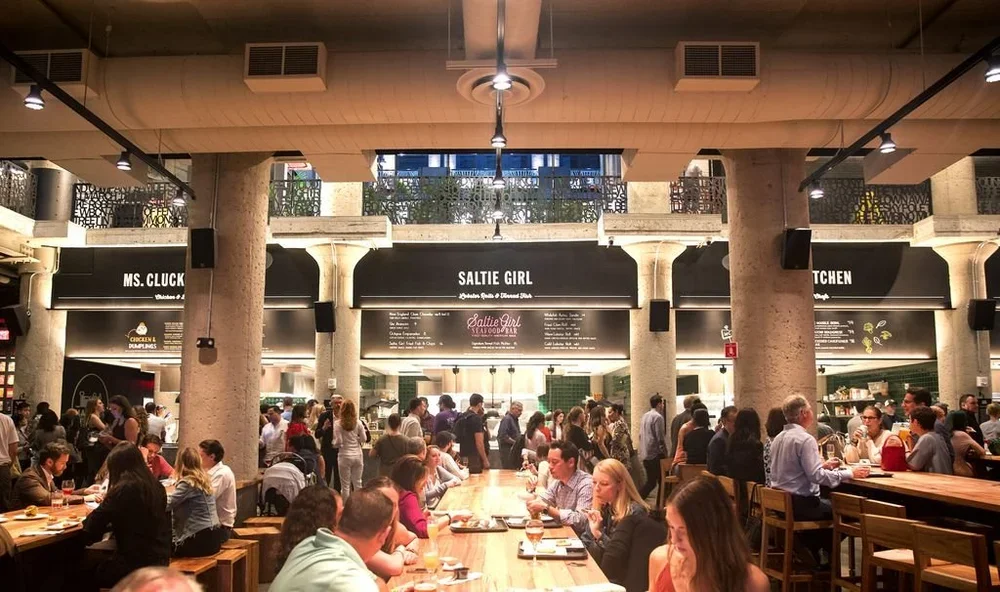
We asked our Boston hosts, the ones running rooms at Time Out Market, the AC Hotel Boston Downtown, and venues across the South End and Cambridge, what they notice that daters usually can't see about themselves.
The credential-led opener. First-timers here are especially prone to this one. A few opening lines that lean on where they studied or where they work before anything more personal gets a chance to come up, like the résumé needs to clear a bar before the actual conversation is allowed to start.
The half-beat delay. A slight pause before answering, like the response is being reviewed for accuracy before it's delivered. Hosts across our network see this everywhere, but Boston hosts describe it as unusually careful, even by our standards.
The late arrival of the humor. Boston hosts specifically flag this one. The dry, genuinely funny version of someone tends to show up a beat later here than in most cities, often not until the third or fourth conversation of the night, once the analytical opening has run its course.
The shift, usually around conversation five or six. The shoulders drop. The answers get shorter and somehow more real. The laugh sounds like an actual laugh instead of the careful kind. Hosts describe it as watching someone stop reviewing their own answers and start actually talking.
The instant version, in returning attendees. People back for a second event tend to arrive already at that relaxed place, sometimes before the first conversation even starts. Boston hosts consistently describe returning guests as warming up faster, sometimes skipping the credential-led opener entirely, which lines up exactly with what the 77% second-event rate shows in the data.
🔑 The Invite-Back Policy: Earned, Not Automatic
Most speed dating companies have a simple, slightly desperate model for people who didn't match: invite them back automatically, for free, because an empty seat is a lost sale. That is not how we decide who comes back.
The invite-back isn't earned by matching. It's earned by being the kind of person who makes the room better, and in a city this good at establishing credentials early, that distinction means something specific.
They led with warmth, not credentials. Genuine interest and good humor toward the table, arriving before the résumé did, not after.
They stayed present, even in conversations that weren't going anywhere. Our Back Bay and Cambridge hosts notice the difference immediately between someone checked out and someone still fully in it, four minutes at a time.
They made the room easier to be in. Not performing intellect. Actually bringing warmth, in a way our hosts and staff genuinely felt, from a South End rooftop to a Seaport lounge.
Matching is one way to succeed at a MyCheekyDate event. Showing up fully, warm, present, and genuinely engaged, credentials aside, is another. We notice both.
Sit with why that's different. It means the room improves over time, filled increasingly with people who let the warmth lead instead of the résumé. It means outcome isn't the only currency that matters to us. And it means that if you didn't match at your first event but you were fully yourself in that room, the story isn't over. You already did the thing we actually care about.
🪞 What Not Matching Actually Tells You
Let's be honest about the disappointment first, because skipping past it isn't reframing, it's just avoidance. An empty results email will probably sting a little, even once you understand everything above, especially in a city that treats being assessed and found wanting as something that shouldn't happen to people who worked this hard to get where they are. That's a normal response to putting yourself out there, and it deserves to be felt, not talked out of.
But here's the honest reframe, not the comforting fiction: not matching at your first event is not a verdict on your intelligence, your accomplishments, or your worth. It's a data point about what happens to almost everyone the first time they walk into an unfamiliar format, managing new mechanics, surrounded by strangers, with the analytical opening layer this city defaults to still quietly running.
The credential-led, carefully reviewed version of yourself, the one that tends to show up first in this city, simply doesn't match as well as the warmer, less guarded one that shows up a few minutes in. That's not a flaw. It's the most consistent pattern in the Boston dataset. The second event is where the real you tends to show up, without needing the first few minutes to get there. The 77% isn't a slogan. It's what the reserve looks like once it's had a chance to lift.
💌 Community Over Commerce
Dating apps have a business model that doesn't actually want you to succeed, not fully, not permanently. A satisfied person who deletes the app is a lost user, so the incentive, quietly, is to keep you just dissatisfied enough to keep swiping, in a city that's already spent enough time being evaluated on paper.
That's not our model. We want you to actually meet someone and stop needing us, and the invite-back policy is the proof. We're not optimizing for how many times you show up. We're investing in who you are when you're in the room, because a room full of people who came back relaxed, warm, and ready to actually connect is the best thing we can offer the next person walking in nervous for their first time, wherever from Back Bay to Kendall Square they're coming from.
If you match this time, the next question is what you say afterward, and we've already covered that, in our piece on the post-date text. If you don't, the honest version is this: the window isn't closed, the stakes are lower than they feel tonight, and in a city with an 88% first-event match rate and matches per event tied for the highest in our network, the odds were already better than the fear gave them credit for.
💛 One Last Cheeky Thought, Boston Edition
Nobody wants to hear that their first event might come back empty, especially somewhere that's spent years teaching people that being evaluated and found wanting is something to be avoided at almost any cost.
But the number says otherwise more often here than in most cities we run this format. 88% mutual match rate. 2.9 average matches per event, tied for the network high. Built from 500+ real Boston attendees across nearly two decades of Wednesdays in the South End and Thursdays in Cambridge.
And if you're in the smaller group that doesn't match the first time, the second-event number is exactly what it is everywhere else in our network, no rounding up required: 77%, three out of four, once the reserve has had a minute to lift.
You don't need a flawless first evening to end up somewhere good. You need one evening, honestly shown up to, credentials optional, and a second one after it if the first doesn't land.
MyCheekyDate has hosted verified speed dating events in Boston since 2007, part of 26,000+ verified events across 65+ cities worldwide over the last 10 years alone. If you're ready to find out what your own Smart-Card results look like, start here: mycheekydate.com/speed-dating-boston.
📊 A Note on Methodology National baseline figures (86% mutual match rate | 2.3 average matches per event | 77% second-event improvement) reflect the full Smart-Card dataset across all markets, weighted toward the most recent 24 months where sample size allows. Boston figures (88% mutual match rate | 2.9 average matches per event | 77% second-event improvement) reflect Smart-Card interaction data from 500+ Boston attendees across events in Back Bay, the South End, Seaport, and Cambridge, weighted toward the most recent 24 months. MyCheekyDate has hosted verified speed dating events in Boston since 2007. The 26,000+ verified events referenced throughout this piece were run globally across 65+ cities in the last 10 years alone, over 19 years of operation since founding. Full Smart-Card methodology available at mycheekydate.com/smart-card.