🤝 Why Dallas Is Next
Every city in this series so far has had strong demographic fundamentals working against some cultural or structural obstacle. Dallas breaks that pattern in an interesting way: the demographics here are genuinely decent — a near-even gender split, a large metro singles pool, a young professional population — and the local reputation is still, by multiple independent measures, one of the weaker dating scenes in the country. That's worth understanding on its own terms before asking where AI companionship fits in.
📊 The Dallas-Specific Picture
The underlying numbers are fine. The lived experience, by most local accounts, isn't. Dallas has a metro singles population of roughly 1.3 million with a close-to-even gender ratio, a relatively young median age, and a genuinely large, well-employed professional dating pool. And yet WalletHub's 2026 ranking of best and worst cities for singles placed Dallas 88th out of more than 180 cities — well behind both Austin (6th) and Houston (46th), the two Texas cities it's most often compared to. A separate ranking placed it 50th out of 100 cities studied, citing a D grade for entertainment options relative to the city's size. D Magazine gave Dallas's dating scene a blunt C grade in its own local coverage, pointing to a below-average singles population relative to the metro's overall size, above-average cost of living, and a nightlife and restaurant scene that reads as "meh" for a city this large.
Local press has pointed to something more specific than infrastructure. The Dallas Observer ran a piece arguing the dating scene here has been getting worse, tying part of that decline to a widening cultural and political divide that's made it harder for people to connect across different social circles. Whatever one makes of that framing, it points to something real and worth taking seriously as a dating variable distinct from population size or restaurant density: a city where people increasingly sort into circles that don't cross, which shrinks the practical dating pool regardless of what the total population number says.
Our own read on the city lines up with the "good bones, tired execution" pattern. Dallas's dating culture is shaped by a strong professional population spread across neighborhoods like Uptown, Deep Ellum, and the Design District, and the scene reads as energetic and outgoing on the surface. But our own hosts consistently hear the same fatigue here that shows up nationally — daters describing dating apps as repetitive after years of use, some guests admitting they were tempted to stay home after a long workweek before deciding to show up anyway. The lift, when it happens, comes reliably once real conversation actually starts.
The cost and effort math is a real, specific obstacle here. Above-average cost of living combined with a nightlife and entertainment scene local rankings consistently grade as thin for a city this size means the practical friction of "let's go out and meet people" is higher in Dallas than the population numbers alone would suggest — a genuinely different problem than Austin's ghosting culture or Boston's reserve, but one that produces a similar net effect: fewer people actually following through on the intention to date.
🤖 Where AI Companions Fit Into a Dallas-Specific Story
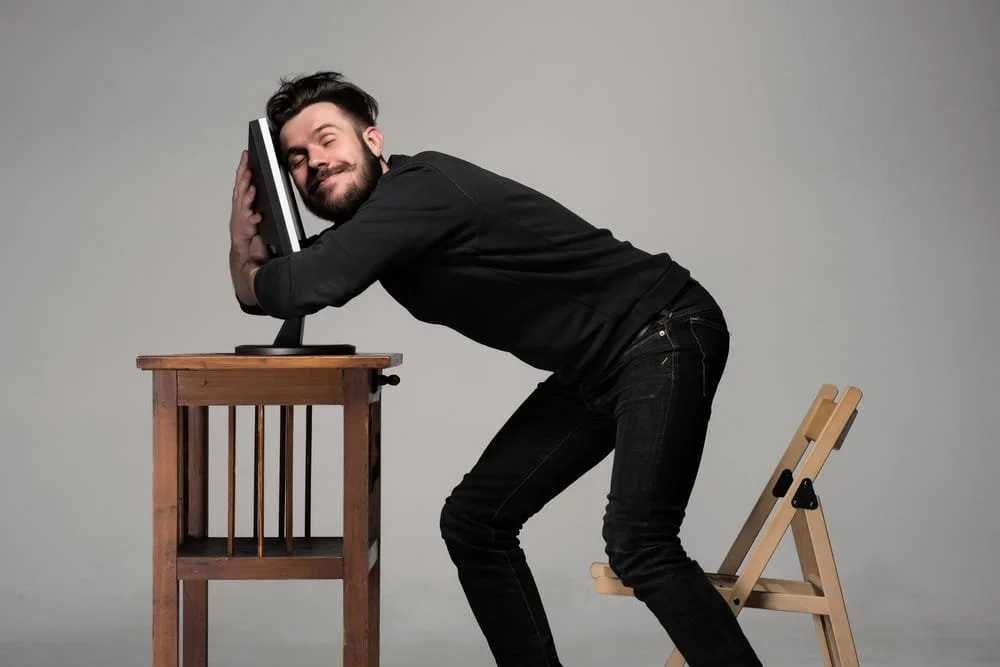
The national argument holds here without modification: an AI companion removes friction, not need, and comfort still isn't chemistry. But Dallas has two genuinely distinct, compounding reasons the appeal might land harder here than the underlying demographics would predict.
The first is straightforwardly practical. In a city where going out costs more and delivers less — thinner entertainment options, a "meh" restaurant scene by local rankings, real distance between neighborhoods — an AI companion is available at zero cost and zero logistical friction, in a market where both of those things are genuinely harder to come by than the population numbers suggest they should be.
The second is more specific to what local reporting has flagged: if Dallas really is experiencing a meaningful sorting effect, where people increasingly stay within social and cultural circles that don't overlap, an AI companion sidesteps that entirely. It has no politics, no social circle, no side of a divide to be on. In a dating market where crossing into an unfamiliar circle has apparently become a real, reported obstacle, a companion that requires no crossing at all is solving a problem this city's own local press has already named directly.
🕯️ What Still Only Happens at a Real Table
The structural ceiling doesn't move for Dallas any more than anywhere else: an algorithm tuned to please you cannot be the reason 42% of matches nationally land outside someone's stated type, because it was built to avoid the kind of genuine surprise a real conversation produces.
What's specific to Dallas is that its own reported problem — a divide that keeps people from meeting across circles — is exactly the kind of thing a room with no pre-existing social overlap is built to solve. Nobody at a speed dating event already knows who you are, what circle you run in, or which side of any local divide you might fall on. That's not a small thing in a market where local reporting suggests exactly that kind of pre-sorting has become a genuine barrier to connection. An AI companion avoids the divide by having no side at all. A real room avoids it by making the divide temporarily irrelevant — which, unlike avoidance, is the version that can actually produce a real connection.
💛 One Last Cheeky Thought
Dallas has the numbers to be a good dating city and a local reputation that keeps insisting otherwise — decent demographics, thin follow-through, and, if the local paper's right, a widening gap between circles that never quite meet. An algorithm can't cross that gap either. It just doesn't have to, because it was never on either side of it to begin with.
A real room does something an app and a companion both structurally can't: it puts people who wouldn't have otherwise crossed paths at the same table anyway, circles and all, and lets four real minutes decide whether the gap actually mattered.
Curious what happens when Dallas actually crosses the room? MyCheekyDate hosts real, host-led speed dating events across Dallas — Uptown, Bishop Arts, Deep Ellum, and beyond — no circle required, no algorithm sorting you into people just like you, just a stranger, a real conversation, and a Smart-Card that only counts it when you both actually meant it. Find your next Dallas event at mycheekydate.com.
A Note on Methodology
Dallas dating-market rankings (WalletHub 88th of 180+ cities, Zumper 50th of 100 cities, D Magazine's "C grade" assessment) via Beyond The Sparks' 2026 compilation of independent city rankings, citing WalletHub's 2026 Best and Worst Cities for Singles, Zumper, and D Magazine's April 2026 dating coverage. Cultural and political sorting commentary reflects reporting cited in the Dallas Observer, as referenced in the same Beyond The Sparks piece; presented here as a reported local dynamic, not an independently verified causal claim. Dallas population and gender-ratio figures via Ambiance Matchmaking's 2026 Dallas dating guide, citing U.S. Census Bureau data. Dallas host observations (crowd age, app fatigue, pre-event hesitation, in-room lift) reflect MyCheekyDate's own published Cheeky Dating Index — Dallas Snapshot (March 2026). National baseline figures (86% mutual match rate, 2.3 average matches, 77% second-event improvement, 42% of matches outside stated type) reflect the full Smart-Card dataset across all markets; a Dallas-specific Smart-Card breakdown was not available at time of publication. AI companion usage and market data as cited in our companion national piece, "AI Girlfriends, AI Boyfriends, and the Real Table" (September 2026). MyCheekyDate was founded in 2007 and has hosted 26,000+ verified events across 65+ cities in the last 10 years alone.