The First-Sight Files, Washington DC Edition
The short answer: Yes, even in a city where the first question is usually "So, what do you do?" Our hosts can often see a spark the moment two people sit down. In DC, the spark is the moment two people stop networking and start actually talking. The conversation that follows decides whether it becomes a match.
🏛️ Let's Begin With the DC Paradox
On paper, Washington should be the easiest dating city in America. Census data puts 69.3% of DC residents aged 20 and over as single. That's an enormous pool of educated, ambitious, available people.
And yet. Nearly half of DC residents live alone, and the city has been ranked the loneliest in America. Dating here is expensive too: one widely cited cost study put a DC dinner-and-movie night at about $153, second only to Miami nationally.
The problem isn't supply. It's culture. First conversations become networking, and first dates can feel like interrogations. So we asked the people who have hosted more than 1,200 of our DC events: in a city this busy sizing each other up, does love at first sight still get through?
💘 The Number That Just Jumped
Nationally, love at first sight is having a comeback. The 15th annual Singles in America study found belief in love at first sight rose from 41% in 2010 to 62% in 2026, and the share who say they've experienced it rose from 30% to 47%.
The twist in the same survey: nearly half of singles say they've fallen for someone they weren't initially attracted to.
In a town that runs on polling, consider this the one poll everyone can agree on.
👀 What Love at First Sight Actually Looks Like (Even in DC)
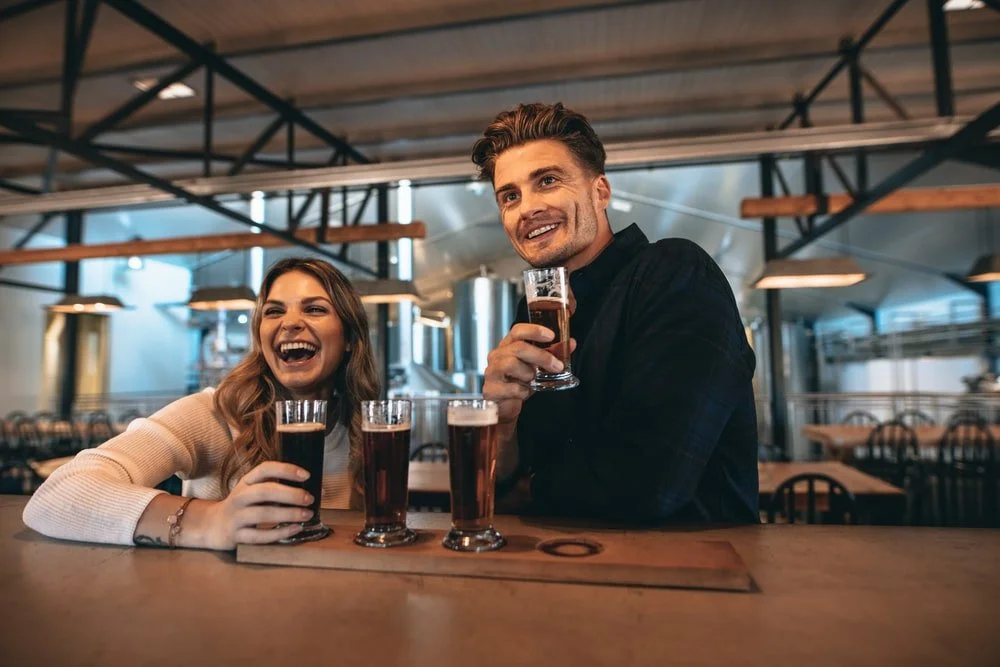
Our hosts say they can often spot it the moment two people sit down.
It's a spark in the eye, a little something. Then they lean in. And then comes a casualness, a comfort two strangers shouldn't have yet.
Our DC hosts have a sharp eye for what gets in the way. They've told us that many DC daters arrive with a kind of pre-loaded caution, as if they've already rehearsed how careful they'll be. You can tell who's still performing readiness and who's actually arrived. The spark is what happens when two people who've actually arrived sit down across from each other. Nobody asks for a business card.
⏱️ How Fast Can You Tell If There's Chemistry?
Faster than a Red Line train on a good day, which, admittedly, isn't saying much. Here's the pattern our hosts see:
The first few seconds: the spark. The glimmer, the lean, the ease.
A few minutes in: a deeper connection starts to build, or doesn't.
By the end of the conversation: they're either confirming what they felt at the start, or finding that the details don't add up to a mutual match.
The first impression is instant. The verdict takes an actual conversation.
🗳️ When the Spark Meets the Election Cycle
Our hosts have watched unbelievable chemistry fizzle. It wasn't that the spark was fake. Once two people start talking about themselves and their goals, it becomes clear their interests or plans just don't line up.
In DC, those goals often come with an expiration date. The glimmer is real, and then one of you is "only here until the administration changes," or the fellowship ends, or the campaign wraps up in November. Or one lives on Capitol Hill, the other in Arlington, and you can both see the romance quietly calculating which of three jurisdictions you'd have to cross. And yes, with the midterms coming up, sometimes you discover you'd cancel out each other's vote. A spark can get you through the first few minutes. It can't change anyone's registration.
🎭 The One-Sided Version: The Briefing
Then there's the lopsided lightning bolt, when one person is smitten and the other is being diplomatic about it.
Our hosts say it's easy to spot, because it stops looking like a conversation and starts looking like an act. The smitten person is putting on a show they hope will entertain the other.
In DC, that show tends to sound like a briefing: the title, the agency, the committee, the very important thing they can't quite talk about. It's meant to impress. Across a table, it lands like testimony, and the other person is politely waiting for the hearing to end. Mutual chemistry looks comfortable. One-sided chemistry looks like someone reading from prepared remarks.
☕ The "Flat" Pair That Matched Anyway
Some pairs look like nothing is happening, then match.
Our hosts' read: a lot of the time, it just means their energies match. Both of them are very casual in personality and demeanour, and they simply needed to meet someone who was like that too.
In a city full of high-octane résumés, this might be the most refreshing match of all. Two people who never once mention their jobs have a pleasant chat about the best half-smoke, the Nationals, and whether anyone has actually been to the Air and Space Museum since school. From across the room, it looks like nothing. Then both quietly select each other before midnight.
That fits our own data: 42% of matches happen outside the "type" people describe before the event.
🔁 So Who Gets Struck?
Everyone. Our hosts see sparks throughout the evening, with nearly everyone who attends.
And it doesn't discriminate. Hosts see no difference between first-timers and returning daters, and no difference by age. Whether it's a Saturday night event or a Sunday evening for the over-30s, the look across the table is the same. It just tends to show up once people stop asking what everyone does.
💛 One Last Cheeky Thought
Washington has more singles than almost anywhere, and a culture built on sizing people up. Our hosts watch that culture drop away every week, usually within seconds, whenever two people forget to network.
Sometimes the spark confirms itself in a few minutes. Sometimes it runs into an administration change or the wrong side of the Potomac. And sometimes the best match of the night was two people who never mentioned their jobs at all. That's why there's a room full of conversations, not one.
And it's why our hosts tell every dater the same thing: "Any time you have that lightning-bolt moment, it makes all the other times you didn't simply not matter."
Ready to find out if it happens in the first few seconds, before anyone asks what you do? MyCheekyDate hosts real, host-led speed dating across Washington, DC, at venues like Public Bar Live, The Pub & The People, and Hotel Zena. No swiping, no algorithm, just real conversations and a Smart-Card that only counts it when you both meant it. Find a DC event at mycheekydate.com.
❓ Quick Answers
Is love at first sight real in Washington, DC?
Our hosts see instant chemistry at DC events all the time, often within seconds, once people stop networking and start talking.
How fast can you tell if there's chemistry?
The initial spark shows up in seconds. A deeper connection builds over the next few minutes of conversation.
Why is dating in DC so hard?
DC has one of the highest shares of single residents in the country, but long hours, high costs, a transient population, and a networking-first culture make connecting harder than the numbers suggest.
What should I avoid asking on a first date in DC?
Our hosts' advice: skip "So, what do you do?" as your opener. The conversations that spark are the ones that don't start with a résumé.
A Note on Methodology
Survey figures are from the Kinsey Institute and Match's 15th annual Singles in America study (a U.S. sample of about 5,000 singles, conducted March–April 2026). The DC singles share is Census data as reported by DCReport (2026). The living-alone and loneliness figures are as reported by Luvo Matchmaking (2026). The date-cost figure is as reported by Relish (2026). DC host observations were previously published in MyCheekyDate's Ick piece. All host observations are qualitative and pattern-based, not a controlled study, and not drawn from the Smart-Card dataset. The 42% outside-stated-type figure is from the full Smart-Card dataset across all markets. MyCheekyDate has hosted 1,200+ events in Washington, DC and 26,000+ across 65+ cities worldwide.
Sources: