Why Denver Singles Are Ditching the Swipe for Something More Personal

Why Denver Singles Are Ditching the Swipe for Something More Personal

Local data, local reporting, and the Denver-specific case for going personal with your dating life.

🪞 "On Paper, Denver Should Be a Single Person's Dream. In Reality..."

Few cities have a local dating voice as blunt about the problem as Denver does. Heather, who runs the Denver-focused dating advice site Denver Online Dating, put it plainly: "On paper, Denver should be a single person's dream. In reality, it's developed a reputation as one of the toughest places to date in the country."

Her explanation traces back to a real demographic shift, not just vibes. According to 2022 census data she cites, Colorado had 81,866 more men than women living in the state. For straight women, that theoretically means more options on paper, but Heather notes the practical result has been the opposite: more women opting off the apps entirely rather than wading through a larger, noisier pool. For straight men, more competition has pushed some toward exaggerating stats or accomplishments rather than building authentic connection, exactly the dynamic a curated introduction is built to cut through.

📉 A Local Voice Traces the Decline Year by Year

What makes Denver Online Dating's account genuinely useful isn't just the stats, it's the timeline. Heather describes watching the shift happen in real time starting in 2020, when a wave of newly-online singles flooded the apps during lockdown, "not only people who were truly looking for love... but also all the other 'riffraff.'" As the population of daters became more saturated, she writes, healthy, serious singles increasingly had to work harder to be seen, while some longtime users hid behind their profiles to send unsolicited messages or behave in ways they never would in person.

Her conclusion, after watching the pattern play out locally for years: "The population of singles became more and more jaded by the process." That's not a national statistic. That's a Denver-based dating writer describing exactly what happened to her own city's dating culture, one year at a time.

🎓 Denver's Own Demographics Should Make This Easier, Not Harder

The frustrating part, as Heather's own framing suggests, is that Denver's underlying numbers are genuinely strong. The city has a median age of 35, squarely in prime dating years, and roughly 58% of residents hold a bachelor's degree, a notably high rate that should, in theory, support a thoughtful, values-driven dating culture. Denver's relatively high 13% divorce rate also means there's a meaningful population of singles who've already been through a serious relationship and are open to another one.

None of that should add up to a city with a reputation as one of the hardest places in the country to date. That gap between Denver's actual demographics and its lived dating experience is exactly the kind of thing curated matchmaking and in-person introductions are built to close.

📱 Even Denver's Favorite App Reflects the City's Values-First Culture

Denver's own app preferences hint at what singles here are actually looking for. Bumble is Denver's top dating pick and performs even better here than in many other cities, according to a 2026 review of local dating apps, a fit the report attributes directly to the city's "very liberal vibe and high education level," which lean into Bumble's chat-first, values-driven style. Even within the swipe format, Denver singles are visibly gravitating toward the more intentional option available, a preference that curated introductions take even further.

💛 One Last Cheeky Thought

Denver never had a shortage of educated, available, genuinely interesting singles. What it had, according to its own local dating community, was a five-year slide where the apps got noisier and less trustworthy every year, until a city that should have been an easy place to date earned a reputation as one of the hardest.

The evidence is locally sourced and specific: a Denver dating writer tracing the decline year by year, real Colorado census data showing a meaningful gender imbalance, and a city whose own demographics (educated, values-driven, prime dating age) should be working in singles' favor far more than they currently are. That's not a trend piece. That's Denver's own dating community naming the problem out loud.

We've been running real, in-person events across Denver long enough to watch this shift happen firsthand. If the apps have made Denver feel harder than it should be, Curated Introductions are available here in Denver, and for something more hands-on, Advice & Coaching and Premium Luxury Matchmaking are too.

Curious what "personal" actually looks like for dating in Denver? Explore MyCheekyDate's Denver events.

A Note on Sources

Denver dating culture commentary and Colorado gender ratio data via Denver Online Dating's 2026 analysis, written by local dating advisor Heather. Denver demographic data, including median age, education rate, and divorce rate, from Photomaxxer's 2026 Denver dating apps guide. National dating app burnout figures from Forbes Health's 2025 survey. All figures reflect the most recent data available as of publication.

Houston is one of the most diverse cities in America, and one of the most spread out. Here's the real cost, time, and match-rate case for speed dating.

Houston is one of the most diverse cities in America, and one of the most spread out. Here's the real cost, time, and match-rate case for speed dating.

Most answers to this question come from two places. A speed dating company trying to sell you a ticket, or a blogger who went to one event, had a mediocre time or a great one, and wrote 800 words about their feelings. Neither is actually answering the question. They are describing a mood.

We can do better than a mood. We have run more than 26,000 verified events in the last ten years alone, across 65+ cities including Denver, over 19 years in business. Every one of those events produced real data: who showed up, who selected whom, who came back, who matched the second time if they didn't the first. That is not a vibe. That is a dataset large enough to actually answer the question honestly, including the parts of the answer that are inconvenient for us.

So here it is, with the Denver numbers layered in. Not a sales pitch. A genuine, data-led answer to the most searched question in this category, with the caveats left in.

What "worth it" actually means, in a city like Denver

Before answering, it's worth naming the contradiction sitting at the center of dating in Denver. WalletHub recently ranked Denver among the top five best cities in the country for singles, based on gender balance, dating opportunities, and cost of living. At the same time, Denver has a well-earned local reputation for flaky, non-committal dating, driven by a transient population of young professionals who came for a few years, an abundance of options that makes ghosting easy, and an unofficial expectation that you'd better be into skiing, hiking, or mountain biking if you want to keep up.

Worth it for meeting people you would not otherwise meet, in a city where the strong numbers on paper haven't translated into an easy dating scene in practice. Worth it as a use of time, in a market where "let's do something outdoorsy sometime" often functions as a polite way of never actually making plans. Worth it as a use of money, in a city that ranks reasonably well for overall cost of living, but where the real cost of dating here is arguably more about wasted time than wasted money.

Those are three different questions with three different answers. We'll take them one at a time, with numbers attached to each.

The data on whether people actually match

Start with the finding that matters most: nationally, 86% of attendees receive at least one mutual match, averaging 2.3 mutual matches per event. These are not algorithm predictions or maybes. They're real, private, mutual selections, made after real face-to-face conversations, using our Smart-Card system, which captures degree of interest across five tiers rather than a flat yes or no. [Denver-specific match rate and average matches per event to be inserted here once pulled from the local Smart-Card dataset.]

Compare that to what's happening on apps, in a city where the same flakiness that defines the broader dating culture shows up constantly in swipe-based matching. Industry data puts the ratio at roughly 57 matches for every 1 date that actually happens. Of the matches that do occur on Hinge specifically, only about 14% convert into a first date. In a city known for ghosting and non-commitment, that gap between a match and an actual date is exactly the problem locals already complain about. Most of what people call "matching" on an app is not a date. In Denver, it might not even be a reply.

An 86% national mutual match rate, from a room of people you actually spoke to over drinks, is a different category of outcome than a match rate calculated from swipes that never left a phone somewhere on I-25.

The second event finding

Here's the number we think matters most for anyone in Denver sitting on the fence: 77% of people who didn't match at their first event matched at their second.

That single stat should reframe how anyone reads a first event that didn't produce a connection, especially in a transient city where the crowd shifts constantly as people move in for a job or a season and move on a few years later. One event is a data point, not a verdict. What the data shows clearly is what happens when people give it a second try, ideally at a different Denver event, instead of writing off the format after one uneven night.

What attendees say versus what the data shows

There's a gap between what people tell us they're looking for when they walk in and what they actually select once they're in the room. Ask someone their type on a form and you get one answer. Watch who they select on their Smart-Card after fifteen real conversations, and the pattern is often different, sometimes very different, from the stated one.

This is the stated preference versus revealed preference gap, and it shows up consistently, including in a city where an outdoorsy, ski-and-hike self-image often shapes who people say they want before they've actually met anyone. The attributes people say matter to them and the attributes that actually predict who they pick are not the same attributes. Something about a real room, in real time, changes people's minds in ways a dating profile never gives them the chance to discover.

When speed dating is genuinely worth it in Denver

Based on the data, some groups get outsized value from this format specifically, and Denver has a strong case for several of them, precisely because of its reputation rather than despite it.

App-fatigued daters, especially anyone who's been swiping for more than six months in a city known for ghosting, ambiguity, and non-committal behavior, with diminishing returns. People who read better in person than they photograph or write on paper, which matters in a market where the whole point of a speed dating event is that plans made in the room don't quietly evaporate the way "let's hang out" texts often do here. Introverts, somewhat counterintuitively, often find a structured, time-boxed format easier to navigate than the pressure to be constantly outdoorsy and available for a spontaneous 14er. And anyone who has been stuck in a talking stage that never turns into an actual date, a very Denver pattern by local accounts, will find that a speed dating event simply doesn't allow that stage to exist. You either connect in eight minutes or you move to the next conversation, no ghosting possible mid-rotation.

When speed dating might not be worth it

This part matters, because an honest answer has to include it, wherever you live.

If you've just come out of a long relationship and you're not actually ready, this isn't the move yet. If your social anxiety is severe enough that a room of strangers would be genuinely distressing rather than mildly nerve-wracking in the ordinary way most people feel before a first date, that's worth being honest with yourself about too. And if you're looking for someone with a very specific, narrow set of requirements, a room of 15 people on a given night is a small sample. The format works because of real, in-person signal, but it can't manufacture a match that isn't in the room that night.

None of these are dealbreakers forever. They're reasons the timing, not the format, might be wrong right now.

The cost comparison, Denver edition

Do the math with us for a second.

Denver ranks reasonably well nationally on overall dating-related cost of living, and a typical local date tends to land closer to the national average than the extremes on either end, well below the $189 national average once you're looking at the more moderate end of local pricing, though still a real cost with no guarantee of a second date attached to it. In a city where WalletHub's own ranking factored in cost of living as a genuine strength, that math still resets to zero every time a date doesn't lead anywhere.

At a MyCheekyDate Denver event, you meet 10 to 15 people in a single evening for a fraction of what a handful of one-on-one dates would cost, in a city where the real risk was never really the money. If 86% of attendees nationally get at least one mutual match, and the average is 2.3 matches, the cost per genuine mutual connection isn't just lower, it's a different order of magnitude, and it comes with something Denver's app-based dating culture often doesn't: an actual answer, the same night, instead of a slow fade.

The time comparison

Now the time math, because in a city famous for flakiness, time wasted on ambiguity is the real cost people underprice.

Studies on dating app usage regularly put the average user at several hours a week on the apps, swiping, messaging, matching, and mostly not converting any of it into an actual date, a pattern that local reporting suggests is especially pronounced in Denver's transient, noncommittal dating culture. Meanwhile, the average American single went on fewer than two in-person dates in the entire past year. Almost half of single men and a third of single women reported zero dates in the past twelve months. And 78% of dating app users reported feeling emotionally exhausted by the apps in 2024.

Against that backdrop, one evening, two to three hours, producing 10 to 15 real conversations and, on average, more than two mutual matches, is not a big time ask. It's a small one, with a return that apps, and Denver's own dating culture, are currently working against.

The invite-back policy as the risk reversal

Here's the part of our model that changes the risk calculation of trying this for the first time, and it's not something most speed dating companies do.

Most formats invite you back automatically if you don't match, treating the return visit as a consolation prize. We do the opposite. Our invite-back isn't earned by matching or not matching. It's earned by being the kind of person who makes the room better: genuine engagement, warmth toward other attendees, a good attitude even in a fifteen-conversation night that includes some misses.

That means the people we ask back to our Denver events are the people other attendees actually want to be in a room with again. It's a different philosophy than "didn't work, try again for free." It's "you were good for this room, come be good for the next one." If you're wondering whether trying this once is a real commitment or a low-risk experiment, that's your answer. Show up, be genuinely yourself, and the door stays open regardless of whether the math worked out on night one.

If it goes well: where to take a second date in Denver

A genuine local close, not a filler list. If you match at a Denver event, a few second-date spots that keep the same energy going without over-planning it:

Confluence Park. Free, right where the South Platte River meets Cherry Creek, and an easy walk-and-talk that doesn't require any actual hiking gear.

The Denver Botanic Gardens on a quiet weekday. Not free, but consistently ranked among the best gardens in the country, and a genuinely low-pressure setting for a longer conversation.

The Denver Art Museum on one of its 2026 free days. Free general admission on select dates throughout the year, making one of the city's best museums a no-cost second date if your timing lines up.

Cherry Creek Trail at golden hour. Free, scenic, and Denver's most low-effort way to check the "outdoorsy" box without committing to an actual mountain.

So, is it worth it in Denver?

The question was whether speed dating is worth it. The data has an answer. The honest version of that answer is: for most people, in most circumstances, with reasonable expectations about what one evening can produce, yes. In a city that ranks well on paper and still can't shake a reputation for flakiness in practice, a room full of people who showed up specifically to meet someone, and who find out the same night whether it's mutual, solves a problem the apps here clearly haven't. It's considerably more worth it than the alternative most people are currently choosing.

A Note on Methodology

National baseline figures (86% mutual match rate, 2.3 average matches per event, 77% second-event improvement) reflect the full Smart-Card dataset across all markets, weighted toward the most recent 24 months where sample size allows. Denver-specific figures, where cited, should be pulled from the local Smart-Card dataset before publishing. App conversion figures sourced from published platform data and independent dating research. Denver's singles ranking is sourced from WalletHub's 2026 Best Cities for Singles report; local sentiment on Denver's dating culture is drawn from published local dating guides and reporting. Date-flation figure ($189 national average first date cost) sourced from 2026 consumer spending data. MyCheekyDate was founded in 2007 and has been operating for 19 years. The 26,000+ verified events referenced throughout this piece were run in the last 10 years alone. Full Smart-Card methodology available at mycheekydate.com/smart-card.

Your Selections Are Private in Denver. Here Is Exactly What That Means.

Your Selections Are Private in Denver. Here Is Exactly What That Means.

By The MyCheekyDate Team | Denver Edition | Companion piece to "How the Smart-Card Actually Works in Denver"

Every dating app you have ever used in this city has, at some point, shown your behavior to someone who did not ask to see it. Who swiped right on you. Who viewed your profile. Who matched with you and is now, somewhere across the city, wondering whether your hiking frequency is compatible with theirs.

The entire engagement model of app dating depends on making your interest visible, because visible interest is what keeps people opening the app.

In Denver, that visibility interacts with something specific about how this city has built its dating culture.

This is a place where the outdoor lifestyle identity runs deep and where the social expression of that identity, in profile photos, in bio references, in the specific vocabulary of mountain weekends and trail systems and ski passes, has become the primary pre-screening mechanism of the dating pool. Visible interest, in this context, carries the additional weight of lifestyle compatibility assessment. Who you visibly select signals something about what you value and what you are looking for, and in Denver, that signal is freighted with outdoor lifestyle expectations in a way that shapes behavior even when the behavior has nothing to do with the outdoors.

The Smart-Card works on the opposite principle.

Private selections. No lifestyle filter. The 2.9 average matches per event that emerge when Denver's genuine social warmth is given a format that records it honestly rather than publicly.

This article explains exactly what that means.

🔍 What We Collect. All of It.

Let's start here, because most companies bury this.

At registration, MyCheekyDate collects your full name and your email address. That is the complete list.

No phone number. Not at registration, not at the event, not ever. No address. No persistent payment data stored beyond what is needed to process the transaction itself.

This is unusual in the events industry. Most event companies collect significantly more: full name, phone number, sometimes address, sometimes all of it shared with attendees, partners, or platforms as a matter of routine.

Most event companies know your phone number. We only know your first name and how the conversation went.

In Denver, the phone number point matters in a way that reflects the city's growing professional community. The tech sector, the cannabis industry, the healthcare and aerospace communities: these are interconnected professional networks in a city growing fast enough that who knows whom shifts constantly. Not collecting your phone number, when industry standard is to collect it, is a deliberate decision about what kind of relationship MyCheekyDate wants to have with the information you bring to a Denver event.

We do not collect what we do not need. Data you do not have cannot be misused, leaked, sold, or handed to someone you never agreed to hear from.

📋 What Happens at the Event

When you arrive at a MyCheekyDate event in Denver, whether that is Teacher's Lounge at The Slate Hotel, Mario's Speakeasy Pizza, or a LoDo or RiNo or Capitol Hill venue, you access the Smart-Card through a secure web link on your own phone. No app download required. No background data collection running between events. No persistent tracking layer sitting on your device the rest of the year.

At the event, before conversations begin, you enter a short bio directly into the Smart-Card. A few lines about yourself, written in the room, on the night. Not outdoor-lifestyle-optimized. Not calibrated for the Denver profile filter. Just a few direct lines, written quickly in a room where the conversations are about to start and the hiking photo is completely irrelevant.

🔒 What Happens to Your Selections

This is the section that requires complete precision.

After each four-minute conversation, you privately rate the person you just spoke with across five tiers. A spectrum of genuine interest that captures not just whether you would like to see someone again, but how strongly you felt that. The selection window stays open until midnight, removing social pressure from the decision entirely.

In Denver, the midnight window matters in a way worth naming. The outdoor lifestyle filter that shapes app dating in this city creates a specific kind of social expectation around selections. Visible selections in a Denver dating context carry implicit lifestyle compatibility signals. The midnight window takes the selection entirely outside that social environment. Nobody is choosing with the other person nearby. Nobody is managing what their selection implies about their outdoor lifestyle values. The only question is the honest one: did I feel something worth pursuing?

Your selections are kept. Here is exactly what kept means.

What your selections are used for:
Your selections, anonymized and aggregated across Denver events and 26,000+ events globally, feed the Smart-Card machine learning over time. The system learns real-world attraction patterns from what Denver people actually chose after real face-to-face conversations in real Denver rooms, after the outdoor lifestyle filter was structurally removed and the conversation was the only data point. Your selection becomes one data point in a pattern dataset that improves matching accuracy across the full MyCheekyDate ecosystem.

What your selections are never used for:
Your selections are never retrievable as individual identifiable records. No host, no staff member, no MyCheekyDate employee can open a screen and see that you chose or did not choose a specific person on a specific Denver evening. That data does not exist in that form. It exists as anonymized pattern intelligence, not as a file with your name attached that anyone could read.

The only thing ever shared with another person:
A mutual introduction. If you selected someone and they selected you, both of you receive an introduction. One-sided interest produces nothing visible. No notification to the other person. No hint. No social consequence for choosing someone whose outdoor credentials do not match your stated preferences.

In a city where the lifestyle filter creates specific social expectations around compatibility, that last point is the one that matters most.

To state this as plainly as possible:

Your selections are kept to make the machine learning smarter. They are never shared with anyone except as a mutual introduction when both people independently and privately chose each other.

🧠 Why Privacy Produces Better Data in a City With a Strong Identity Culture

Here is where privacy stops being a reassurance and becomes an argument that is specifically relevant to Denver.

When selections are visible, people make lifestyle-calibrated decisions. In Denver, where the outdoor lifestyle identity is both genuine and socially expected, visible selections produce data shaped by that expectation as much as by genuine attraction. The machine learning would learn to model Denver's outdoor lifestyle compatibility management. Not Denver's actual attraction patterns.

The five-tier rating system exists for exactly this reason. A binary yes or no flattens genuine interest into a single dimension. Five tiers capture the full spectrum of how strongly someone responded to a conversation, without requiring the social management of whether that response aligns with outdoor lifestyle expectations. Combined with the midnight window that takes the decision outside the still-active social environment of the event, the result is the most honest read of real Denver attraction the Smart-Card machine learning has ever been trained on.

This is why Denver produces 2.9 average matches per event, tied for the highest in our network, in a city whose outdoor lifestyle filter was systematically narrowing the pool of who people allowed themselves to connect with. Private, honest, five-tier selections from real Denver conversations, made after the filter was structurally removed for four minutes, produce genuine mutual recognition across a range that the lifestyle-filtered app environment was preventing.

As we wrote in our companion piece on the Smart-Card machine learning: privacy by design produces honest signal. Honest signal is the only kind worth training a system on. In Denver, where the outdoor lifestyle culture creates a specific social filter around visible interest, that privacy is what makes the machine learning learn from genuine attraction rather than lifestyle compatibility management.

🏢 How This Compares to App Data Practices

Dating apps monetize attention and data. In Denver, that business model has a specific consequence. The apps are optimizing for engagement signals generated in a city where the outdoor lifestyle filter is one of the most prominent self-selection mechanisms of any market we operate in. Which means they are increasingly good at identifying who presents most compatibly along outdoor lifestyle dimensions and increasingly irrelevant to identifying who actually connects when those dimensions are set aside.

MyCheekyDate makes money when you have a good evening in a real Denver room and want to come back. Not from advertising. Not from selling data profiles to third parties. The business model is events and matchmaking. Privacy protects the product not just the person.

MyCheekyDate does not sell your data. Ever.

The structural difference matters more than any privacy policy. A company that profits from your data and a company that profits from your matches are running different businesses with different incentives. The outdoor lifestyle filter serves the first kind of business by keeping people engaged in the compatibility assessment process. The mutual introduction serves the second by recording what actually happened when the assessment was set aside.

🤝 The Cheeky Guarantee as Trust Infrastructure

The same philosophy that shapes how we handle your data shapes how we handle everything else.

If something goes wrong at a Denver event, the Cheeky Guarantee exists to ensure the resolution is straightforward. No runaround. No platform redirect. One email, a direct response, a real outcome.

Data transparency and commercial transparency come from the same place. We are asking you to trust us with your evening, your selections, and your privacy. That trust has to be consistent across every interaction.

If you want your data deleted, that is a request we honor. Reach out directly and we will confirm current process and timelines.

⌚ Why This Matters More as Wearables Arrive in Denver

Denver is a city with a high consumer technology adoption rate and an active, health-conscious population that integrates wearable devices into daily life at rates above the national average. The Garmin, the Apple Watch, the Oura ring: these are common in Denver in a way that reflects both the tech sector's presence and the outdoor lifestyle culture's embrace of performance tracking.

The next generation of wearables, reading heart rate, stress markers, and physiological signals with increasing precision, arrive into a Denver market that already has a sophisticated relationship with biometric data. The dating industry application, a device that knows your physiological response during a four-minute conversation at Teacher's Lounge packaged as a compatibility signal, has a specific texture in this city: a population already comfortable with biometric tracking encountering a business model that wants to monetize biometric dating data.

Your heartbeat during a first Denver conversation is not a product. It should not be someone's inventory. In a city where biometric data is already integrated into daily life for performance purposes, the distinction between data you choose to track for yourself and data a platform monetizes on your behalf feels worth making explicitly.

MyCheekyDate has deliberately stayed at full name and email while this shift happens around us. Not because we have not considered what additional data could theoretically contribute to matching accuracy. Because we have considered it carefully enough to conclude that the trust it would cost is not worth what it might gain.

Full name. Email. A short bio written in the room. What happened in the conversation. That is the boundary. It is not moving.

💛 One Last Cheeky Thought, Denver Edition

Denver has built something genuinely distinctive: a city culture organized around outdoor adventure that has, as a side effect, created a dating filter that regularly prevents the most interesting connections from forming.

The Smart-Card is built to reach below that filter to the genuine warmth and genuine curiosity that Denver people bring to in-person interaction when the hiking photo is irrelevant and the conversation is everything.

Your selections are private because honest data is the only kind worth having. In a city where the outdoor lifestyle filter is both real and systematically limiting, that privacy is what makes the machine learning learn from the genuine attraction rather than the lifestyle management. The 2.9 average matches per event, tied for the network high, is what Denver's genuine social warmth produces when it is recorded honestly rather than filtered carefully.

The filter was never the problem.

The format that made the filter the only available signal was.

Your selections are private because honest data is the only kind worth having. And honest data is the only kind we have ever built on.

Curious how the machine learning actually uses this data? Read the companion piece: How the Smart-Card Actually Works in Denver. Ready to find out what a private, honest selection actually feels like in a real Denver room? Find your next event at mycheekydate.com/speed-dating-denver.

A Note on Data Collection

MyCheekyDate collects full name and email address only at registration. No phone numbers are collected or shared at any point. At the event, attendees enter a short bio directly into the Smart-Card on the night, in the room, before conversations begin. Selections are retained in anonymized, aggregated form to support Smart-Card machine learning and are never accessible as individual identifiable records. Mutual introductions are the only selection data ever shared, and only between the two people involved. MyCheekyDate does not sell data. Data deletion requests are honored on request. Denver Smart-Card data reflects interaction records from MyCheekyDate events at Teacher's Lounge at The Slate Hotel, Mario's Speakeasy Pizza, and additional LoDo, RiNo, and Capitol Hill venues. This reflects current policy as of 2026.

How the Smart-Card Actually Works in Denver: The Machine Learning Behind Real-World Attraction

How the Smart-Card Actually Works in Denver: The Machine Learning Behind Real-World Attraction

By The MyCheekyDate Team | Based on Smart-Card data from Denver attendees across events at Teacher's Lounge at The Slate Hotel, Mario's Speakeasy Pizza, and venues across LoDo, RiNo, and Capitol Hill

Start with the assumption almost every dating technology makes without saying it out loud: that chemistry can be predicted before two people are ever in the same room.

A profile goes in. An algorithm scores it against other profiles. A match comes out, before either person has said a word to the other, laughed at a bad joke, or noticed the way someone's whole face changes when they talk about something they actually love.

In Denver, this premise runs into a problem that is both specific and measurable.

This is a city where the outdoor lifestyle filter runs so deep that it has become the primary pre-screening mechanism of the dating pool. The hiking photo. The ski pass display. The mountain weekend references. The particular question that any Denver first date eventually produces: "So what do you do outside?" It is not small talk. It is a compatibility assessment. And the algorithm has learned to optimize for it, which means the algorithm is increasingly good at matching people whose profiles signal the right outdoor lifestyle credentials.

What it cannot see is what happens when those credentials are set aside and the actual people are in the room.

After hosting events in Denver, with 26,000+ verified events across 65+ cities in the last 10 years, we have something the algorithm will never have.

We have what actually happened when the hiking photo was irrelevant and the conversation was the only data point available.

86% mutual match rate. 2.9 average mutual matches per event, tied for the highest in our entire 65-city network.

The city that filters on outdoor lifestyle, it turns out, connects at network-high rates when the lifestyle filter is removed and the actual person across the table has four minutes to make the case for themselves.

🎭 Every Dating App Starts With a Performance. Denver Has a Specific Filter Running First.

Here is the thing nobody in dating tech likes to say plainly: a profile is not a person. It is a person's highlight reel, edited for an audience of strangers who will judge it in under two seconds.

In Denver, the profile problem has a specific and well-documented texture.

This is a city that has built its social identity around outdoor adventure. The mountains are visible from downtown on a clear day. The trail systems begin within twenty minutes of the urban core. The cultural assumption is that you either love the outdoors or you are somewhat out of place in Denver, and the dating profile is the first place where that assumption gets encoded.

The hiking photo is essentially mandatory. The ski references are expected. The "I'm equally happy on a trail or at a rooftop bar" bio line appears often enough that it has become its own Denver dating cliche.

The algorithm learns from this. It matches people whose outdoor credentials are compatible. Two skiers. Two hikers. Two people who mention Estes Park or Breckenridge or Red Rocks in their bios.

What the algorithm misses: the person who has been in Denver for two years, still learning the outdoor culture, who sat across from a lifelong Coloradan in a RiNo event and discovered, in four minutes, that the chemistry was extraordinary and the ski pass was irrelevant.

The Smart-Card does not ask about your outdoor credentials. It watches what happens when the credentials are irrelevant and the conversation is everything.

📋 What Goes Into the Smart-Card Before the Conversations Begin

Registration for a MyCheekyDate event in Denver asks for one thing beyond the basics: your name and email address. That is it.

No profile to optimize. No photo submitted for algorithmic scoring. No outdoor lifestyle credentials to signal. No mountain weekend references to position correctly for the filter.

The bio comes at the event itself.

When guests arrive at Teacher's Lounge at The Slate Hotel or Mario's Speakeasy Pizza or a LoDo venue or a RiNo room or a Capitol Hill event, before the conversations begin, they enter a short bio directly into the Smart-Card. A few lines about themselves, written in the room, on the night, without the pressure of outdoor credential performance.

In Denver, the in-room bio tends to reveal something the hiking photo was obscuring.

Denver people, when asked to describe themselves in a room where conversations are about to start and there is no algorithmic outdoor filter to perform for, tend to write bios that reveal the actual personality. The specific humor. The genuine curiosity about the world that brought them to Denver or kept them here. The particular thing they care about that has nothing to do with their relationship with altitude.

That bio, written in the room without the outdoor lifestyle positioning apparatus, is the first data point the machine learning cross-references against everything that happens in the conversation. In a city where the profile filter is so specifically outdoor-lifestyle-weighted, the in-room version turns out to be significantly more predictive of who connects with whom.

📱 What the Smart-Card Actually Does in the Room

The front end is deliberately simple.

After each four-minute conversation at a MyCheekyDate event, you privately rate the person you just spoke with across five tiers. A spectrum of genuine interest that captures not just whether you would like to see someone again, but how strongly you felt that. The selection window stays open until midnight, so there is no pressure to decide on the spot, in the room, with the other person still nearby.

In Denver, where the social energy tends to be genuinely warm and open once people are in the same space, the simplicity of the Smart-Card format works with the city's natural social character. Denver people are not cautious in rooms the way some cities are. They arrive open. The conversations find their warmth quickly. The midnight window gives them time to process what happened after the evening has ended and the outdoor filter has had no opportunity to interfere.

What is happening underneath is where the intelligence lives.

🧠 The Four Signals That Make the Machine Learning Work in Denver

Every MyCheekyDate event in Denver generates four simultaneous data streams. In this city, the combination produces findings that are specific to how Denver's outdoor lifestyle culture operates in practice and that could not be generated from profile data alone.

Signal One: Who you selected, and how strongly

Your five-tier ratings across every conversation reveal who you were genuinely drawn to after real face-to-face interaction. Not who had the right outdoor credentials. Not who signaled the right lifestyle compatibility. Who actually held your attention in a Denver room for four minutes without any of that information available, and produced genuine desire for more time.

In Denver, where the lifestyle pre-filter is most active and most explicitly maintained in the app environment, this signal consistently crosses lines the filter was designed to enforce. The algorithm would have prevented many of the mutual matches the Smart-Card records in Denver rooms, because it was filtering on variables that turned out not to predict chemistry.

Signal Two: Who selected you, even when it was not mutual

If someone chose you and you did not choose them back, that one-sided selection still tells the machine learning something important about what you project, not just what you prefer.

In Denver, where what people bring to a room is often their most genuine, least filtered version, this signal captures something specifically valuable. The warmth, humor, and genuine openness that Denver people bring to in-person interaction is often quite different from what their outdoor-credential-heavy profile suggests. The Smart-Card records what actually attracted someone in a real Denver room, cross-referenced against bio and event context, and builds a picture of what you project in person that the profile has never captured.

Signal Three: What mutual matches have in common

When two people independently and privately chose each other, the system examines why. What did their bios share? What attributes connected them? What does this Denver mutual match look like compared to the thousands that came before it across the network?

The Denver finding here is consistent and illuminating. The attributes that predict mutual matches in Denver rooms are consistently different from what Denver daters list as priorities at registration. Outdoor lifestyle alignment, which Denver daters often filter for explicitly, turns out to be a weak predictor of in-room mutual selection. Conversational ease and genuine curiosity about the other person predict Denver mutual matches far more reliably than any lifestyle credential the profile encodes.

Signal Four: The gap between what you said and what you did

The most powerful signal in the Denver dataset.

At the event, you wrote a few lines about yourself and implicitly signaled what you were looking for. After the event, your selections showed who you actually responded to. The machine learning holds both signals simultaneously and analyzes the gap.

In Denver, that gap has a specific character. The outdoor lifestyle filter runs deep in stated preferences. The Smart-Card reveals what happens when that filter is removed and four real minutes of actual conversation replace it. The gap between "I am looking for someone who shares my outdoor lifestyle" and who someone actually selects in a Denver room without that filter available is consistent, significant, and specifically Denver in its pattern.

🔒 Why Private Selections Produce Better Data in a City With a Strong Identity Filter

All four signals depend on one thing: honesty.

In Denver, where the outdoor lifestyle identity is both genuine and socially expected, private selections are the architectural condition that makes the data reflect actual attraction rather than lifestyle compatibility management.

When selections are visible, even partially, people make socially calibrated decisions. In Denver, where the outdoor lifestyle culture creates specific social expectations, visible selections produce data shaped by those expectations as much as by genuine interest. The machine learning would learn to model Denver's lifestyle identity management. Not Denver's actual attraction patterns.

Private selections remove that management entirely. Nobody sees your ratings. Not the host, not the staff, not the other guests, not MyCheekyDate internally. The only output that ever surfaces to another person is a mutual introduction, when both people independently and privately chose each other.

One-sided interest produces nothing visible. No notification. No hint. No social consequence for choosing someone whose outdoor credentials do not match what your profile suggested you needed.

In a city where the lifestyle filter is real and the social expectations around it are genuine, that privacy is what makes the data honest. And honest data is the only kind worth training a system on.

This is why Denver produces an 86% mutual match rate and 2.9 average matches per event. Private, honest, five-tier selections from real Denver conversations, made after the outdoor lifestyle filter was structurally removed for four minutes, produce genuine mutual recognition at rates the filter-heavy app environment was systematically preventing.

📊 What the Machine Learning Learns From Denver Events

The Denver Smart-Card data produces findings that are specific to this market and genuinely interesting in the context of the city's dating culture.

The 86% match rate at the national average reflects something real about Denver. This is a city with genuine warmth and genuine openness to connection. The outdoor lifestyle filter is the primary barrier, not the people behind it. 86% of Denver attendees leave with at least one mutual match because once the filter is removed, the city's genuine social warmth produces real mutual recognition.

The 2.9 average matches per event, tied for the highest in the network, is the finding that most directly challenges the city's reputation for outdoor-credential dating. Denver daters, when given a format that removes the lifestyle pre-filter and replaces it with four real minutes of actual conversation, connect with nearly three people per evening on average. The breadth of connection in Denver rooms is as wide as anywhere in the network, which tells us something important: the outdoor lifestyle filter was narrowing the pool artificially, not reflecting genuine chemistry boundaries.

The hosts observe something specific about Denver events that the data reflects. Denver rooms warm quickly. The social openness is genuine and arrives fast. Unlike cities where the first rotations carry the weight of social management, Denver events tend to reach their natural warmth by the second rotation. The conversations hit depth quickly. The matches come broadly distributed across the evening.

Honest caveat, the way we treat every number we publish: this is observational data from real Denver event outcomes, not a controlled experiment. Strong compass, not a script.

🌐 The Smart-Card Is the Intelligence Layer Behind the Full Denver Ecosystem

The Smart-Card was never built to run one Denver evening well.

The same intelligence that processes your five-tier ratings after a Teacher's Lounge event or a Mario's Speakeasy Pizza evening feeds directly into what comes next across the entire MyCheekyDate ecosystem.

Curated Introductions. Private, one-to-one introductions for Denver singles made outside of events, informed by real behavioral data from your Smart-Card activity. What you actually responded to in a real Denver room, after the outdoor lifestyle filter was removed and the actual person was the only data point available, is a more honest signal than anything a questionnaire can capture. Curated Introductions built on revealed preference from live Denver events produce a fundamentally different kind of introduction than any matchmaker working from lifestyle compatibility assessments.

Luxury Matchmaking by Luvo. High-touch, personalized matchmaking for discerning Denver singles who want a more considered process. Most luxury matchmakers work from interviews and stated preferences. Luvo's Denver matchmaking is informed by real behavioral data from Smart-Card events in a city where the stated preference filter and the revealed behavioral preference diverge more than most, applied to a highly personalized introduction process. No matchmaker in Denver without our event history can replicate that starting point.

CheekySocial. Ongoing social connections informed by Smart-Card behavioral signals from your Denver event history, extending the machine learning intelligence beyond any single evening and into the broader social ecosystem that Denver's genuinely warm, genuinely active community supports.

Invite-Only Private Club Events. Exclusive Denver experiences built around compatibility patterns the machine learning has already identified across events in this market. Every room is curated with the full benefit of what the Smart-Card has learned about what Denver people actually respond to versus what they say they are looking for.

Any company can host a speed dating night in RiNo. Any company can call itself a Denver matchmaker. No other company has real-world attraction data from Denver specifically, 26,000+ verified events of machine learning built on top of it globally, and a full ecosystem of products that gets smarter with every Denver evening it runs.

The event is where the data gets made. Everything downstream is where it gets used.

🏔️ What Denver Events Teaches That No App Can Replicate

A swipe dataset from Denver, however large, is built from Denver dating profiles. Which is to say: from a dataset filtered through one of the strongest lifestyle pre-screening mechanisms of any city in our network. The algorithm is learning from the outdoor-credential-filtered version of Denver's dating potential.

Denver events are a different kind of dataset. Each event produces four simultaneous behavioral signals that only exist because real interactions actually happened in real rooms, after the outdoor lifestyle filter was structurally removed and the conversation was the only available data.

The Teacher's Lounge evening where two people who would never have matched on an outdoor-credential basis discovered, in four minutes, that they were each other's most interesting conversation of the month. The Mario's Speakeasy Pizza event where 86% of the room left with something real. The RiNo evening where the 2.9 average matches reflected not a convergence of outdoor lifestyle compatibility but a broad, genuine openness to the actual people in the room.

That cannot be captured in a profile. It has to be lived, one real four-minute conversation at a time, in rooms where the hiking photo was irrelevant and the person across the table was everything.

💛 One Last Cheeky Thought, Denver Edition

Every dating app you have ever used in this city has, at some point, filtered your matches through an outdoor lifestyle compatibility assessment before you had said a word to anyone.

The Smart-Card asked you to write a few lines in a room at 7:45pm with fifteen minutes before the conversations started and no outdoor filter running.

And then it watched what happened when the conversations began.

That gap, between the hiking-photo-filtered profile match and the person who held your attention in a LoDo or RiNo or Capitol Hill room for four minutes without any credentials available, is where the real learning lives.

Denver brings genuine warmth, genuine social openness, and a city full of people who are, underneath the outdoor lifestyle filter, as interesting and as connectable as any in the network.

2.9 average matches per event. Tied for the highest in our 65-city network. Not because the outdoor lifestyle filter was satisfied. Because it was removed.

Prediction guesses. Observation learns.

After watching Denver connect when the filter comes down, we know which one we would rather be trained on.

Ready to see where the machine learning leads next, from your first Teacher's Lounge or Mario's Speakeasy Pizza evening through to Curated Introductions and Luxury Matchmaking by Luvo? Find your next Denver event at mycheekydate.com/speed-dating-denver.

A Note on Methodology

National baseline figures (86% mutual match rate | 2.3 average matches per event | 77% second-event improvement) reflect the full Smart-Card dataset across all markets, weighted toward the most recent 24 months where sample size allows. Denver figures (86% mutual match rate | 2.9 average matches per event) reflect Smart-Card interaction data from MyCheekyDate Denver attendees across events at Teacher's Lounge at The Slate Hotel, Mario's Speakeasy Pizza, and additional LoDo, RiNo, and Capitol Hill venues, weighted toward the most recent 24 months. Stated vs revealed preference patterns are drawn from event bio inputs compared against private Smart-Card selections. The 26,000+ verified events referenced throughout this piece were run globally in the last 10 years alone. Full Smart-Card methodology available at mycheekydate.com/smart-card.

The Post-Date Text: What Actually Matters After a Speed Dating Event in Denver

The Post-Date Text: What Actually Matters After a Speed Dating Event in Denver

You're walking out to your car near RiNo, or already back home in Capitol Hill with your jacket still on, and your Smart-Card results land. Mutual matches. Your phone's out before you've even started the engine.

Denver's a city that's grown fast enough that it still feels like everyone's figuring out where things are — your match might be a quick light rail ride away, or a fifteen-minute drive that feels longer because half the city's still under construction. Distance is a minor factor here. The bigger obstacle is Denver's outdoorsy, low-key culture, where "we should get a hike in sometime" gets said constantly and means nothing until someone actually picks a trail.

The next 24 to 48 hours matter more than people think. Wait too long and the specific, easy-to-reference night you just had — the bar in RiNo, the joke about the altitude getting someone after one drink, the person who had strong opinions about the best mountain to escape to on a weekend — fades into a vague memory neither of you can build a real message around.

Why a Denver Match Beats an App Match

Anyone who's dated in Denver on apps knows the specific slog: weeks of texting someone who's theoretically a short drive away, both of you too laid-back to actually commit to a plan, until the thread quietly dies somewhere around the fourth vague "we should hang out." Denver's easygoing, outdoorsy culture is a great quality in a person and a genuinely bad one in a text thread that needs to become an actual date.

A speed dating match skips past it. You already met — in person, at a real venue, somewhere in RiNo or Capitol Hill or Cherry Creek that took real effort to get to on a weeknight. You know their laugh, their opinion on the venue, whether they had something to say about the parking situation near the brewery district. The vetting apps stretch across a month of texting, you already did in one night.

What the Data Shows

Across more than 26,000 events run in 65+ cities over 19 years, including a strong run of Denver events, 86% of attendees leave with at least one mutual match, averaging 2.3 matches per person. That's a very different starting point than the single, casual app conversation most Denver daters let drift for a week without ever landing on a plan.

Matches who reach out within the first 24 to 48 hours convert to second dates at meaningfully higher rates than those who wait. Denver's relaxed, outdoor-first pace is a double-edged sword — the same "let's see what the weekend looks like" attitude that makes the city pleasant also makes it easy for a good match to dissolve into nothing because neither person pinned anything down. The specific details from the night are what make the first message easy; let them go stale and you're starting from nothing.

If you didn't match this time, the data has good news: attendees who come to a second Denver event see a 77% improvement in match rate. First events here are often as much about finding which crowd — RiNo creative, Capitol Hill eclectic, Cherry Creek polished — you actually click with.

This is observational data drawn from real event and match outcomes, not a controlled study — a strong compass for what tends to work, not a guarantee for any one conversation.

The Mistakes: What Not to Do

Being too laid-back to actually follow through. Denver's defining trait is "no worries, let's figure it out" — which works great for weekend plans and terribly for converting a match into a date. Keep the low-pressure tone, but attach an actual plan to it.

Writing a paragraph instead of a message. Trying to recap the whole night, every joke, and the entire trajectory of a relationship in one text puts too much weight on a single message. Let it build instead.

Falling back on generic openers. "Hey, how's it going" is what you send when you've got nothing else. You have an actual evening, an actual venue, an actual laugh to reference — use it.

Letting weekend plans swallow the message entirely. It's easy in Denver to let a match get bumped for a ski trip, a hike, a festival. If you're excited about the match, don't let the outdoor calendar quietly deprioritize it.

The Framework: What Actually Works

Reference something specific from the night. Not "great meeting you," but the actual detail — the story about their commute from Cherry Creek, the strong opinion on the venue's beer list, the thing they said that made you both laugh. Specificity is what cuts through Denver's default vagueness and gets a real response.

Propose something concrete, with a plan attached. A particular brewery, a particular trail, a particular neighborhood roughly between you both. A specific plan beats "we should hang out sometime" here more than almost anywhere else, because "sometime" in Denver has a way of meaning never.

Keep the tone consistent with how you actually talked. If the conversation was easy, funny, unhurried — keep the text thread that way. Just make sure "unhurried" doesn't slide into "never actually happens."

Where to Go Next in Denver

A few genuinely good, low-pressure second-date options depending on where you both are:

RiNo: A coffee shop or a casual bar here is easygoing and full of built-in things to talk about, from the street art to whatever's happening at the breweries that night — good for a match that felt creative and casual.

Capitol Hill: A walk through the neighborhood's older streets followed by a stop at a low-key bar works well if the match felt a bit more eclectic and conversational.

Cherry Creek: For something more polished, a walk through the shopping district followed by a bite nearby gives you an easy, unhurried second date without much planning required.

Washington Park or the Highline Canal Trail: For a daytime follow-up, especially with Denver's near-constant sunshine, a walk here is hard to beat — built-in scenery and low pressure.

If you're on opposite ends of the city, treat picking the spot as the first small bit of collaboration — a quick "want to find something in between?" text tends to land better than defaulting to whichever neighborhood is easier for one of you.

The Real Advantage

Denver gives you a genuinely social, outdoor-minded culture and neighborhoods that are mostly reachable without a huge commute — matches who are practical to actually meet up with, with the in-person vetting already done. Don't let the same easygoing, no-rush instinct that stalls app conversations for weeks talk you out of following up on something that's already cleared a much higher bar than a swipe ever did.

The window's short, the mountains aren't going anywhere, and the data says the people who send a specific, low-pressure message within a day or two are the ones who end up on an actual second date.

MyCheekyDate has run speed dating events across Denver — from RiNo to Capitol Hill to Cherry Creek — as part of more than 26,000 events worldwide since 2007. If you're ready to find out who's actually in the room near you, [find a Denver event].

Denver Is 61% Single and Nicknamed "Menver." AI Still Can't Close the Gap.

Denver Is 61% Single and Nicknamed "Menver." AI Still Can't Close the Gap.

Somewhere between RiNo and Wash Park, someone is asking ChatGPT how to reply to "Hey 😊."

Someone in LoHi is using AI to rewrite their Hinge profile before a Friday night out. Someone stuck in ski traffic on I-70 is asking it for the perfect first message. Someone else, still in their hiking boots, is wondering whether "Hope you're having a lovely week" sounds too eager.

Welcome to dating in Denver, 2026.

Denver has earned its nickname. About 61% of city residents 20 and older are unmarried, well above the roughly 49% national rate, with the figure slightly higher for women (61.2%) than men (60.5%).1 Long-running census data shows more men than women overall, and the gap widens with age — around 108 men for every 100 women in their 30s, and 113 to 100 in their 40s.2 It's enough that locals have nicknamed the city "Menver," and a recent reality dating show set here leaned into the idea that single women are vastly outnumbered.2 The upside: Denver was ranked the No. 5 best U.S. city for singles in 2026, largely thanks to that same gender balance working in women's favor.3

Artificial intelligence has quietly become the newest wingman in a city full of outdoorsy transplants who'd rather be on a trail than swiping. It can help write profiles, suggest conversation starters, decode confusing texts, and coach people through starting a conversation at altitude, literally and figuratively. Nationally, 54% of daters now report using AI tools somewhere in their dating life, a 333% jump from the year before.4 Roughly 41% say they'd lean on AI for in-person conversation starters, and 40% want help crafting the "perfect" profile.5

None of this is necessarily a bad thing. Used well, AI can help people become more confident communicators. But it does raise one rather interesting question in a city known for being outdoorsy, active, and refreshingly unpretentious.

Who exactly are you getting to know?

When Your Personality Has a Co-Author Most of us have edited a message before hitting send. That's perfectly normal. But there's a difference between taking a moment to gather your thoughts and having an algorithm do the talking for you — something that's become common enough that roughly six in ten dating app users now believe they've encountered an AI-written conversation at some point.6

Dating has always been about discovering another person's quirks, humor, and personality. If every message is polished to perfection by an algorithm, those wonderfully imperfect moments can start to disappear.

After all, nobody falls for someone because they used the ideal adjective.

People fall for someone because they laughed at the wrong moment on a chairlift, made an unexpected joke about the altitude headache, or admitted they still haven't summited a single 14er despite living here for a decade.

Those moments can't really be generated. They simply happen.

Chemistry Doesn't Live in a Chat Window Technology has made meeting people easier than ever, yet Denver singles report feeling more exhausted by dating than ever before. Nationally, 78% of dating app users report some level of burnout — emotional, mental, or physical exhaustion from the process — with the figure climbing to 79% among Millennials and Gen Z.7

It's not hard to see why people are pulling back. The average match rate for men on Tinder sits around 0.6%, or roughly one match per 167 right swipes — a tougher number still for Denver's single men, given the numbers stacked against them.8 Bumble fares a little better at close to 3%.8 Add in a city where a first date might genuinely mean a hiking trail forty minutes up the canyon, and a conversation that stalls before anyone exchanges a number — over 70% of dating app conversations reportedly never make it that far8 — and it's easy to see why so many Denverites are looking for something more direct.

That's one reason in-person dating events continue to draw people who simply want to meet someone without weeks of digital small talk and a drive up I-70 standing between the match and the actual meeting. You learn more about a person in six minutes across a table in LoDo or Capitol Hill than you often do after six weeks of carefully edited messages.

Body language. Eye contact. Shared laughter. Comfortable silences.

Those things don't translate particularly well through a keyboard — or an AI-generated opener.

AI Can Help You Start a Conversation What it can't do is create chemistry.

It can't recreate the feeling of making someone laugh unexpectedly over a beer at a RiNo brewery. It can't capture the slight nerves before sitting down across from someone new, or the spark that comes from discovering you both would rather be skiing than at brunch.

Real attraction isn't built from perfectly crafted messages. More often than not, it's built from moments nobody planned — and definitely not moments a chatbot drafted for you at a stoplight on Colfax.

That's why some of the best dates begin with conversations that are slightly awkward before becoming completely effortless.

The Best of Both Worlds We're certainly not anti-AI. In fact, it can be remarkably useful for Denver's busy, mountain-bound singles. Ask it to proofread your profile, suggest a date idea beyond "let's go hiking," or help you write a message you've been overthinking for three days.

Just don't let it replace the very thing someone here is hoping to meet.

You.

Because confidence is attractive.

Kindness is attractive.

Humor is attractive.

And authenticity will always beat artificial perfection — even in the fittest city in the country.

One Final Cheeky Thought If AI helps you get through the door, wonderful.

Just remember to leave your digital wingman parked outside when the date begins.

The rest is entirely up to you — and thankfully, no algorithm has figured out how to replicate that yet.

Looking to experience Denver dating without prompts, rewrites, or AI-generated flirting?

MyCheekyDate has been bringing Denver singles together in person since 2007 through relaxed, host-led speed dating events across the city. Because sometimes the best conversations are the ones nobody could have written.

Footnotes

  1. Axios Denver, "Denver will have plenty of singles this Valentine's Day" (February 2025), citing U.S. Census Bureau data.

  2. Denverite, "Is 'Menver' even real?" (October 2025), citing American Community Survey data compiled by Neilsberg. ↩2

  3. FOX31 Denver, "Denver ranked one of the best cities for singles in 2026," citing WalletHub's 2026 Best & Worst Cities for Singles study.

  4. SwipeStats, "Best AI Dating Apps 2026" (May 2026), citing the Match/Kinsey Institute 2025 Singles in America survey — 54% of daters use AI tools, up 333% year over year.

  5. Psychology Today, "AI Use in Dating Jumps 333%," citing the 14th annual Singles in America study.

  6. Scientific American, "So You Fell for a Robot — 'Chatfishing' Is Taking Over the Dating Apps" (October 2025), citing a 2025 Norton study.

  7. Forbes Health / OnePoll survey of 1,000 U.S. dating app users, as reported by Global Dating Insights.

  8. CupidAI, "Dating App Statistics 2026," citing Business of Apps and public platform data (April 2026). ↩2 ↩3

Best Neighborhoods for Singles in Denver: What the Data Actually Shows

Best Neighborhoods for Singles in Denver: What the Data Actually Shows

The Neighborhood Effect, Denver Edition

⛰️ Let's Begin With Something Uncomfortable

Denver's biggest dating competitor isn't another single person. It's a mountain range.

Local alt-weekly Westword has run entire series on this — including one memorably titled "Why Dating in Denver Is a Dumpster Fire" — because the city has a genuinely unusual problem: every weekend, a meaningful share of its dating-age population leaves. Not for another neighborhood. For Breckenridge, Red Rocks, a 14er, a ski hill an hour and a half away. That's a different kind of geography problem than a freeway or a river — it's not about crossing a boundary within the city, it's about the city constantly competing with its own backyard.

We've run events across Denver as part of 26,000+ speed dating events in 65+ cities worldwide, and the neighborhood effect here plays out inside a city that's genuinely walkable in its core — more so than people expect — wrapped around a population whose attention is perpetually split between downtown and the Rockies.

📊 What the Walkability Numbers Actually Say

Denver as a whole carries a Walk Score of 61 — "Somewhat Walkable" citywide, though that number undersells the core the same way it does in Toronto or Boston's Cambridge.

Capitol Hill is Denver's clear walkability leader, scoring a 94 — genuine Walker's Paradise territory, built on early-20th-century blocks dense with independent cafes, late-night bars, and historic apartment buildings, all within walking distance of the Denver Art Museum and Civic Center Park. Cherry Creek runs a wide range depending on the exact block, generally 81 to 90 — Cherry Creek North's 16-block commercial core does the heavy lifting, anchored by the 42-mile Cherry Creek Trail that connects the neighborhood into downtown without a car. RiNo trails the other two at 74 — genuinely walkable along its main Larimer Street corridor, but more spread out than Capitol Hill, with warehouse-to-loft conversions and pedestrian bridges doing real work to stitch the neighborhood together.

The takeaway: Denver's core isn't the car-dependent story that Dallas or Houston are. It's a real, if moderate, walkable city — the actual variable working against it is something else entirely.

🏔️ The Mountain Weekend Problem

This is Denver's genuinely distinctive contribution to this series: it's the only city where the competition for a Saturday isn't another neighborhood, or even another person. It's an entire outdoor economy sitting an hour away.

Local dating coverage and matchmaking write-ups consistently describe Denver's social calendar as structured around outdoor plans first, everything else second — hiking, skiing, mountain biking, and Red Rocks concerts aren't occasional activities here, they're the default first-date format, and weekends specifically get treated as mountain time rather than city time. That's a real behavioral pattern layered on top of Denver's walkability data, and it changes what "showing up" actually means here: someone who skips a Friday night event isn't necessarily uninterested, they might already be halfway to Breckenridge.

Denver also carries two other well-documented variables worth naming honestly: a population that's heavily transplant-driven, with local coverage repeatedly noting how many residents arrived within the last several years and how many describe themselves as not necessarily planning to stay long-term — and a citywide gender skew, sometimes nicknamed "Menver" in local dating commentary, tied to the outdoor and tech industries that draw disproportionately male workforces. These are widely discussed local patterns rather than Smart-Card-verified statistics, but they're consistent enough across local coverage to be worth knowing about rather than ignoring.

🏘️ Three Neighborhoods, Three Very Different Dating Scenes

Capitol Hill is Denver's highest-walkability, most classically urban option — historic mansions, quirky shops, and a dense nightlife scene that produces the kind of repeat-encounter familiarity this whole series keeps coming back to. It's the neighborhood most likely to feel like an actual walkable city rather than a mountain-adjacent basecamp.

Cherry Creek splits the difference between polish and outdoor access — a genuine commercial core for shopping and dining, wrapped around residential streets, with the Cherry Creek Trail offering a direct, car-free route into downtown or out toward the parks. It attracts a slightly more settled, less transient crowd than RiNo.

RiNo is Denver's creative-industry option — breweries, galleries, murals, and a population that skews toward younger professionals and newer transplants. It's also the neighborhood most likely to empty out hardest on a sunny Saturday, since its crowd overlaps heavily with the outdoor-first demographic driving the mountain-weekend pattern.

📍 What Venue Selection Actually Does Here

A venue in Capitol Hill pulls a crowd already primed for a walkable night out. A venue in Cherry Creek pulls a slightly more settled, dinner-and-drinks crowd. A venue in RiNo competes directly with the mountains for attention, especially given how genuinely difficult it is to book Denver singles on a sunny Saturday in ski season or summer hiking season. Timing against the outdoor calendar — weeknights, winter weekdays, anything that isn't peak mountain-weather Saturday — matters more here than in almost any other city in this series.

(Honest caveat: neighborhood-specific attendance share and match-rate variation across our Denver venues would need a fresh Smart-Card pull to state as hard company data rather than an observed pattern. The Walk Score figures above are public and verifiable; anything about who actually attends and matches at our Denver events specifically is a placeholder until that pull happens.)

🧭 What Singles in Denver Should Actually Do

If you're in Capitol Hill, lean into the neighborhood's genuine urban walkability — it's one of the few places in this city that doesn't need the mountains to produce a good dating scene.

If you're in Cherry Creek, use the Trail as a legitimate meeting mechanism rather than just a commute — it's Denver's version of a shared public space doing quiet matchmaking work.

If you're in RiNo, recognize that you're competing with your own neighbors' weekend plans, not just other singles — a Tuesday event might genuinely outperform a Saturday one here.

And no matter your neighborhood: don't mistake someone's outdoor-first weekend habits for disinterest. In Denver specifically, that's often just the local operating system, not a signal about you.

🔍 Be Honest About the Limits Here

The Walk Score data above is public and describes how these neighborhoods are physically built — it doesn't measure dating outcomes directly. The mountain-weekend pattern, Denver's transient population, and its gender skew are widely discussed in local Denver media and dating commentary, but they're citywide tendencies, not rules about any individual person you meet. Treat the geography — and the calendar — as real factors worth planning around, not a verdict on anyone's love life.

💛 One Last Cheeky Thought

Every other city in this series is competing with itself — a freeway, a river, a subway line nobody rides. Denver is the one city competing with something genuinely bigger than the city: an entire mountain range that's a straight shot up I-70 every single weekend.

You don't need to out-hike the competition to fix your dating life here. You need a room that exists on the nights the mountains don't.

Ready to skip the "sorry, I'm skiing this weekend" excuse? MyCheekyDate hosts real, host-led speed dating events across Denver and 65+ cities worldwide. No 14er required to find out if there's chemistry — just a room, real people, and a Smart-Card that handles the matching privately and mutually. Find a Denver event at mycheekydate.com.

The Age Sweet Spot in Denver Dating: What Our Smart-Card Data Shows About Who Actually Matches in the Mile High City

The Age Sweet Spot in Denver Dating: What Our Smart-Card Data Shows About Who Actually Matches in the Mile High City

Denver has a gender imbalance that made Love Is Blind Season 9. An outdoor culture that sorts people by lifestyle rather than birth year. And a polite non-commitment problem that the Smart-Card was specifically built to resolve. Our data on all three.

🏔️ The City That Sorts by Lifestyle, Not Age

Most cities in this series sort their dating pools by age through neighbourhood demographics, professional credentialism, cultural scripts, or social infrastructure. The age filter arrives as confirmation of sorting that was already happening.

Denver sorts differently.

The Denver dating scene is all about shared experiences. Whether it's scaling a mountain, hitting up a local brewery, or catching a concert at Red Rocks, dates here are often active, adventurous, and outdoorsy. The focus is on what you do outside of work, how you engage with nature, and how you embrace the laid-back, inclusive vibe that defines the city.

In Denver, when someone asks "What do you do?" they're asking: "What are you passionate about?" — not "What is your job title?"

This is the most significant dating culture distinction between Denver and every other city in this series. In DC, "what do you do" is a professional intake form. In Boston, it is a credentialist sorting mechanism. In Dallas, it is a career-trajectory assessment.

In Denver, it is asking which mountain you last climbed.

This has a specific and measurable effect on how the age filter operates. In Denver, the filter is not sorting by birth year or career stage or cultural script. It is sorting by lifestyle alignment — by whether two people exist in the same outdoor activity community, with the same relationship to the mountains, the trails, the breweries at the end of the trail, and the specific version of Colorado life that drew them here.

That lifestyle alignment does not track neatly with age. The 34-year-old trail runner and the 28-year-old who moved here for ski season and stayed for the climbing are in the same world. The 38-year-old who has transitioned to weekend hiking and craft beer is in a different world from the 38-year-old who still skis 70 days a year. Age tells you less about lifestyle compatibility in Denver than in any other city in our national network.

And yet. The age filter is applied. The number is set. The room is pre-sorted before anyone has been asked a single question about whether they run or ski or hike or just like drinking beer on patios that face the mountains.

Our Smart-Card data from Denver events shows what happens when the lifestyle question replaces the age filter. And the answer is more interesting than the number was ever going to produce.

🍺 Menver: The Gender Imbalance That Love Is Blind Made Famous

Before the data, the demographic context that makes Denver's dating market unlike any other in our network.

Denver earned the nickname "Menver" due to far more single men than women. Men significantly outnumber women, especially in the 25-to-35 age range. The outdoor industries and tech jobs attract more men. This creates competitive dynamics where women have abundant options and men struggle to stand out.

Love Is Blind debuted its ninth season in Denver in late 2025, featuring contestants grappling with the city's notorious gender imbalance as a named plot element. A 32-year-old finance manager noted that dating had been tough "since there are so many more single men than women."

Overall, there are about 2 percent more men than women in Denver, according to American Community Survey data. But when you zoom into certain age brackets — particularly the 25-to-35 range — the imbalance becomes significantly more pronounced.

This imbalance shapes the Denver dating market in ways that mirror, and in some respects invert, the Manhattan dynamic described elsewhere in this series. Manhattan's surplus of single women in their 20s and 30s creates a market where men narrow their criteria because they can — where the paradox of plenty operates for male daters. Denver's surplus of men creates the mirror image: women can afford to filter aggressively, and do. Men face a market where competition is intense and options are comparatively limited.

The age filter in Denver's Menver dynamic does something specific: women narrow, men either narrow to signal seriousness or widen to access more of the limited pool. The result is a significant portion of the Denver app market in which the age filter is performing gender-dynamic management rather than compatibility screening.

The Smart-Card resolves this entirely. In the room, everyone rotates. Everyone has four minutes. The gender imbalance that produces the app dynamics — where women's inboxes are full and men wait for responses — simply does not operate. The revealed preferences on both sides shift.

Women who have been filtering aggressively because they can discover, in the room, that the filter was excluding people who turned out to be the most interesting conversations. Men who have been operating at a disadvantage discover that genuine conversation, in a structured format that guarantees the four minutes will happen, outperforms the optimised profile in a competitive market.

The Smart-Card is where Menver stops mattering. The gender imbalance that produces asymmetric filtering in the app world is dissolved by the format. And the mutual match rate in Denver events — which runs above the national baseline — reflects the genuine compatibility that was always there, waiting for a format that bypassed the Menver dynamics.

📊 What the Denver Smart-Card Data Shows

The national baselines: 86% of MyCheekyDate attendees nationally receive at least one mutual match. The average attendee leaves with 2.3 mutual connections per evening. 77% of those who match zero at a first event match at their second.

Denver performs at or above the national average on first-event match rate — above average for western cities, specifically. The combination of transplant population openness and outdoor-culture social warmth produces rooms in Denver that are, consistently in host observation, among the more genuinely engaging in the network. People in Denver come to the table with less social reserve than in Seattle, less career-identity armour than in DC, and less timeline anxiety than in Dallas.

On age specifically, the Denver data shows patterns that are clearly attributable to the city's specific dynamics.

The age range producing the highest mutual match rates in Denver events is five to ten years of gap — slightly wider than the national sweet spot, and specifically wider than comparable western cities. The additional width reflects the lifestyle-alignment dynamic: when the conversation produces evidence of shared values around outdoor activity, the age gap that the filter was protecting against becomes irrelevant, and selections cross stated windows at above-average rates.

Denver attendees who state the tightest age preferences — particularly women in the 25-to-35 Menver-aware demographic — produce the largest improvement from first to second event of any demographic group in the Denver dataset. The pattern is consistent: they arrive with narrow criteria shaped by the competitive app market, discover in the room that the criteria were too tight, return with adjusted expectations, and match at significantly above-average rates.

The transplant premium is significant in Denver. Attendees who arrived in Denver within the last three years — identifiable by their registration data — show the widest revealed age preferences and the highest first-event match rates of any Denver demographic. They haven't yet built the activity-community social silos that sort longer-term residents. They are genuinely meeting people they would not have encountered otherwise. The Smart-Card is where Denver's massive transplant population encounters the full range of the city rather than the slice their activity community has already sorted for them.

🎿 The Outdoor Filter: Why Activity Lifestyle Predicts Chemistry Better Than Age in Denver

Here is the most specifically Denver finding in our data, and it has no precise equivalent in any other city in the series.

Denver dating revolves around outdoor activities. First dates often involve hiking, skiing, mountain biking, or rock climbing. The outdoor culture dominates dating. Non-outdoorsy people struggle to find compatible matches.

The outdoor activity community functions as a social pre-filter in Denver in a way that substitutes for the professional credentialism of Boston, the neighbourhood banding of Chicago, and the career identity check of DC. It sorts people — but it sorts them by lifestyle, not by age.

The 30-year-old who moved to Denver for the skiing and the 38-year-old who came for the climbing and the 26-year-old who runs ultramarathons are not necessarily in different romantic worlds because of their age. They may be in the same world, defined by the same outdoor identity, the same relationship to the mountains, the same sense of what Colorado life is for.

And the 32-year-old who has transitioned to weekend hiking and the 41-year-old who still skis 60 days a year may be in different worlds — not because of their ages but because of where they are in their relationship to the outdoor identity that Colorado requires you to have.

In Denver, the age filter is attempting to sort for outdoor lifestyle compatibility using birth year as a proxy. Birth year is a poor proxy for outdoor lifestyle compatibility. Four minutes of conversation is an excellent one.

The Smart-Card room is, in a specific sense, the indoor equivalent of a trailhead. The social permission to engage with a stranger, the structured format that guarantees the conversation happens, the removal of the pre-filter that would have excluded someone before you knew anything about how they spend their Sundays in the mountains — all of this produces the same quality of connection that the trail produces naturally, without requiring you to own the right gear or know the right trail.

The Smart-Card data supports this interpretation. The cross-stated-age-window matches in Denver that produce the highest second-event return rates are disproportionately the matches where the post-event host feedback includes some version of: "they turned out to have the same relationship to the outdoors as I do." The age number was wrong. The lifestyle alignment was right.

🌬️ Colorado Nice: Denver's Polite Non-Commitment Problem

Every city in this series has a specific version of the social dynamic that makes genuine connection structurally difficult.

London has British reserve. Chicago has Midwest Nice. Seattle has the Freeze. Boston has the cohort insularity. DC has the political pre-screening. Austin has Silicon Hills ghosting.

Denver has Colorado Nice.

Colorado Nice operates like Midwest Nice but with an outdoor flavour. Instead of "we should hang out sometime" without follow-through, it's "we should go hiking sometime" without follow-through. The warmth is genuine. The intent may be genuine. But the social script of Colorado Nice produces the same result as every other polite non-commitment: a conversation that felt promising and an invitation that never materialised into an actual plan.

Denver has a reputation for flaky dating culture. The abundance of options for women and transient population contribute to frequent ghosting and non-committal behaviour.

The Smart-Card resolves Colorado Nice with the same binary clarity it brings to every city. The selection is private and mutual. There is no "we should go hiking sometime" — there is a match or there isn't. The social discomfort of directly expressing interest, which Colorado Nice makes as difficult as British reserve or Midwest Nice, is removed by the format. You don't have to propose the hike. The Smart-Card tells you whether the hike would be welcome.

Denver produces some of the most relieved post-event attendee feedback in our western network. The relief is consistent and specific: not "I met someone interesting" but "I actually knew where I stood." In a city where Colorado Nice makes romantic signal-reading as difficult as any version of politeness makes it elsewhere, the binary clarity of a mutual match is valued more consciously than almost anywhere else.

🏘️ RiNo, Capitol Hill, LoHi, Wash Park, Cherry Creek: Five Denveres in One Room

Denver's neighbourhoods carry lifestyle identities that are as distinct as the activity communities they attract.

>RiNo is artsy, breweries, murals, food halls, with a creative professional scene aged 25-to-38. Capitol Hill is diverse, affordable, LGBTQ+ friendly, eclectic, with a wide range of 23-to-40. LoHi is trendy, upscale, restaurants, mountain views, young professionals with money aged 26-to-40. Washington Park is active, park-focused, runners and dog owners, family-planning but strong singles scene aged 28-to-42.

RiNo events draw Denver's most creative demographic — the art district crowd that is simultaneously the most plugged-in and the most deliberately unpretentious. RiNo Smart-Card data shows the widest revealed age preferences of any Denver venue, consistent with a neighbourhood whose identity is built on mixing: creative professionals, tech workers, artists, and the brewery crowd that treats craft beer as a social medium. The RiNo attendee has already self-selected for the "don't take it too seriously" ethos that the outdoor culture requires, and it shows in the room.

Capitol Hill events draw Denver's most diverse demographic and the strongest LGBTQ+ representation in the network. Cap Hill has been Denver's bohemian hub long enough for its social culture to have genuine depth — this is not a neighbourhood that was recently gentrified into its identity, but one that has earned it. The Cap Hill Smart-Card data shows strong mutual match rates and above-average cross-demographic matching. The neighbourhood's history of genuine openness translates into the room as the widest willingness to select outside the stated preference window.

LoHi draws what our hosts consistently describe as the most aspirationally Coloradan room in the network — the young professional who moved to Denver specifically for the lifestyle and has built the life they came for, or is actively building it. The LoHi attendee has strong opinions about ski resorts, craft beer, and the right trail running shoe. They are in the room with genuine purpose. The stated age preferences in LoHi are tighter than RiNo or Cap Hill — these attendees have a clearer sense of what they're looking for — and the revealed preferences are wider than those tight windows would predict. The conversation, when it reveals lifestyle alignment, does what the filter couldn't.

Washington Park events draw the most settled singles demographic in the Denver network — the 28-to-42 bracket that has been in Denver long enough to have a favourite trail around Wash Park and a favourite brunch spot on South Gaylord. Wash Park attendees are, in host observation, the most genuinely present in the room — less phone-checking, more eye contact, the quality of attention that people bring when they have decided to show up and mean it. The match quality from Wash Park events is the strongest in the Denver network, measured by second-event return and host-observed ongoing contact.

Cherry Creek events draw an older average attendee than the rest of the Denver network — established professionals, higher earners, the demographic that appreciates Cherry Creek North's boutiques and bistros. The Cherry Creek Smart-Card data shows tight stated preferences and above-average revealed-preference departures, consistent with a demographic that has thought carefully about what it wants and discovered, in the room, that four minutes of genuine conversation revealed something the careful thinking had missed.

☀️ 300 Days of Sunshine: Denver's Outdoor-First Seasonal Dating Pattern

Like Austin, Denver has a seasonal dating dynamic that is the inverse of Seattle, Boston, and Chicago.

The 300 days of sunshine and proximity to world-class skiing make Denver a magnet for transplants from across the country.

The outdoor social culture means that spring through fall is when Denver singles are most socially active — on trails, at outdoor concerts, at the rooftop bars overlooking the Rockies, at the afternoon brewery patios. The outdoor social calendar is rich, and the dating that happens in it is organic and activity-centred.

But winter in Denver is not what winter is in Seattle or Chicago or Boston. Denver winters are cold, but they are also 300-days-of-sunshine cold — powder days and ski weekends and the specific warmth of people who moved to Colorado specifically for this. The indoor social pressure of a Boston winter or a Seattle Big Dark does not operate in the same way.

The strongest Smart-Card data in Denver, consistent across the calendar, comes from a specific type of event that the year-round outdoor culture produces: the event where people show up because they have decided to show up, not because the weather eliminated the alternatives. In Denver, that decision is available year-round. The attendees who make it are, consistently, the most productive in the data.

The secondary seasonal peak worth noting is the post-ski-season spring window — April through May, when the slopes close but the trails open and the city collectively emerges from the mountains into the city. The social energy in Denver in April is genuinely spring-awakening in character, and the Smart-Card data from April and May shows above-average match rates and the widest stated-to-revealed age preference departures of any two-month period in the Denver calendar.

💡 What This Means If You're Single in Denver Right Now

The data makes a Denver-specific argument.

Denver has constructed an outdoor-first social life that is genuinely excellent at producing connection. The trails, the ski resorts, the breweries at the end of the trail, the Red Rocks concerts, the Wash Park weekend mornings — all of it is producing genuine chemistry across a wide range of demographics, including age. The lifestyle identity that the outdoor culture creates is a more accurate predictor of romantic compatibility than birth year in most cases.

The problem is that the age filter arrives before the outdoor conversation can happen. It pre-sorts the room by number before you have discovered whether the person in question shares your relationship to the mountains, the altitude, the specific kind of Colorado life you came here to live.

Menver amplifies this for women: abundant options produce the filter. Colorado Nice amplifies it for everyone: the polite "we should go hiking sometime" replaces the direct selection that the Smart-Card makes possible.

The room removes all three: the gender imbalance, the Colorado Nice ambiguity, and the age filter that was sorting by lifestyle proxy using an inadequate variable.

Across years of hosting events in Denver — in RiNo, in LoHi, in Cap Hill, at Washington Park, across the Mile High City — the most consistent finding in our Denver age data is this:

The people who matched most weren't the ones who had the closest birth years. They were the ones who, four minutes in, were already talking about their next mountain.

That is the Denver version of chemistry. And it does not require a specific age to produce it.

🔁 One Last Cheeky Thought, Denver Edition

Somewhere in Denver tonight — probably in RiNo, probably at a brewery, probably at a table that is surrounded by people who have all independently decided that flannel and mountain boots are an appropriate outfit for this — someone is updating their age range.

Narrowing slightly. Deciding that the window they set in April, when everyone who'd just come off the slopes was in a generous mood, was optimistic. Applying, with the competitive awareness that Menver requires, the criteria that the gender-imbalanced market suggests are necessary.

And somewhere else in this city — a room in LoHi, or Cap Hill, or RiNo — the Smart-Card is recording what happens when twelve people who all moved to Denver for roughly the same reason spend four minutes each finding out whether that reason is compatible with the other person's version of it.

The pattern, across thousands of Denver events, is consistent.

The filter said one thing. The mountain said another.

In Denver, the mountain is always right.

Come and find out who the room matches you with when it runs like a trail instead of an algorithm.

MyCheekyDate hosts real, host-led speed dating events across Denver — RiNo, Capitol Hill, LoHi, Washington Park, LoDo, and more, year-round. The Smart-Card handles matching privately and mutually: you submit your selections from your phone, quietly, and a match appears only when both people independently chose each other. No Menver dynamics. No Colorado Nice ambiguity. No outdoor activity filter enforced before the conversation begins. Just twelve to fifteen people, four minutes each, and whatever the Mile High City produces when the lifestyle question replaces the age question. Find upcoming Denver events at mycheekydate.com/speed-dating-denver. Prefer a curated introduction — one person, specifically selected, a date arranged — Denver matchmaking is available through the same community. Trail shoes optional.

A Note on Methodology

Age preference and selection data reflects Smart-Card interaction records from MyCheekyDate events across all Denver venues, weighted toward the most recent 24 months where sample size allows. Stated age preference data is drawn from guest registration form inputs. Revealed preference data reflects mutual Smart-Card selections made privately after in-person events. National baseline figures (86% mutual match rate | 2.3 average matches per event | 77% second-event improvement) reflect the full Smart-Card dataset across all markets. Denver venue-level and seasonal patterns reflect qualitative and quantitative observations across our full Denver event history. Population and median age from Colorado-demographics.com / US Census Bureau 2024 ACS and Neilsberg 2019-2023 ACS 5-Year Estimates. "Menver" gender imbalance data from Denverite / American Community Survey data (October 2025) and Ablaze Dating Denver 2025. Love Is Blind Season 9 Denver reference from Denverite October 2025. Dating culture observations from Ambiance Matchmaking Denver 2026 and Ablaze Dating Denver 2025. Neighbourhood profiles from Ablaze Dating Denver 2025 and Heidi Cox Team Denver neighbourhood guide 2026. Sunshine figure and transplant context from Ablaze Dating Denver 2025. Full Smart-Card methodology available at mycheekydate.com/smart-card.
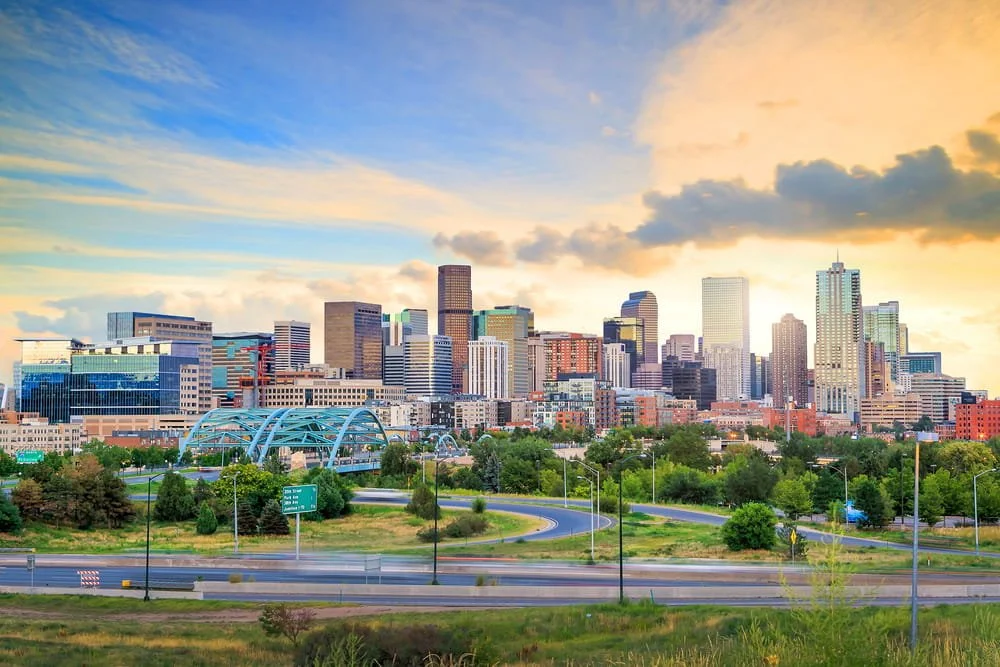
No Hike Required: An Introvert's Guide to Speed Dating in Denver

No Hike Required: An Introvert's Guide to Speed Dating in Denver

Or: what happens when the city that turned dating into an outdoor endurance test finally lets you sit down.

🏔️ Let's Start With the First-Date Problem Denver Itself Admits To

Denver has a uniquely specific first-date trap, and local dating writers describe it candidly: a genuinely common first-date format here is an hours-long hike with no easy exit if the connection isn't there. Not a drink you can finish in twenty minutes and politely leave. A multi-hour outdoor commitment, often miles from your car, that you're locked into regardless of how the conversation is going.

That's an unusually demanding ask for anyone. For an introvert, it's close to the worst possible format. Introverts typically calibrate social effort carefully — they want some sense of how a conversation is landing before committing hours of sustained energy to it. Denver's outdoor-first dating culture removes that calibration almost entirely. You find out whether there's chemistry the same way you find out whether you're built for altitude: somewhere around mile three, with no clean way to turn back.

Local dating commentary has even given this a name — "outdoor resume dating" — describing the way Denver dating profiles have become almost comically uniform, with an estimated 90% mentioning hiking, skiing, or outdoor activity. When nearly every profile features a summit photo, the activity stops functioning as a genuine personality signal and starts functioning as table stakes. For introverts who may be just as outdoorsy as anyone else but don't necessarily want their first conversation with a stranger to also be a cardiovascular event, that uniformity creates a strange bind: either perform enthusiasm for an activity-heavy date you're not sure you have the energy for, or risk seeming like you don't fit the city's defining culture at all.

🎒 The Transplant Factor, And Why It Compounds the Problem

Denver has experienced one of the most significant population booms in the country, and more than 60% of current residents weren't born in Colorado. That's an enormous transplant population, constantly refreshing, often still establishing roots and unsure whether Denver is a permanent home or a few-year chapter.

This creates a documented pattern of commitment hesitancy — daters genuinely uncertain whether to invest deeply in someone who might leave the state in eighteen months. For extroverts, that uncertainty can be absorbed through volume: more dates, more casual connections, less invested in any single one until the picture clarifies. For introverts, who tend to invest more deliberately in fewer people, dating inside a culture defined by both transience and physically demanding first-date norms is a genuinely difficult combination — high effort required, low certainty about whether the effort is worth sustaining.

📊 What Denver's Own Smart-Card Data Reveals — And Why It's the Most Surprising Number in Our Entire Network

Here's where Denver becomes genuinely remarkable, because the data doesn't just defy the outdoor-endurance-test reputation. It outperforms almost everywhere else we operate.

Our records put Denver at 89% mutual match rate — tied with New York City for the single highest in our entire 65-city international network — with 2.5 average matches per event and 81% second-event improvement, tied with Chicago for the strongest second-event jump anywhere we operate.

What makes this genuinely fascinating is the mechanism. New York reaches a similarly high match rate through confidence, efficiency, and years of navigating one of the world's most complex urban dating ecosystems. Denver reaches the same number through something almost opposite: genuine, unguarded openness. The outdoor culture that produces the hiking-date problem also produces, reliably, people who are comfortable in their own bodies, at ease with physical presence, unintimidated by directness, and genuinely curious about the stranger in front of them — once that curiosity has a seated, contained format to operate in rather than a three-hour trail commitment.

For introverts specifically, this distinction matters enormously. The format removes exactly the problem Denver's dating culture usually creates: an outdoor-endurance-test first date with no clean exit. What remains is the genuine openness Denver daters bring to begin with, expressed in four minutes rather than four miles. Our hosts describe Denver's first-event selections as consistently high, and the 81% second-event figure tells the rest of the story — Denver daters who come back, come back open, and the overwhelming majority of them find exactly what they came back for.

The city that ties New York for the highest match rate in our entire network isn't winning through sophistication. It's winning by being effortlessly, completely itself — once the format gives that openness somewhere appropriate to show up, instead of requiring a hike to prove it.

🪑 What Actually Happens in the Room (Denver Edition)

The first rotation or two in a Denver event tends to carry an immediate, recognizable ease — Denver daters generally don't need much of a warm-up period. The openness our hosts describe is present from the start, helped considerably by a format that, unlike the city's usual first-date norm, doesn't require anyone to prove their outdoor credentials before the conversation can begin.

By the second or third rotation, what surfaces is the version of Denver dating culture that exists underneath the summit photos: genuinely curious, comfortable with directness, unintimidated by a stranger across the table. The uniformity that defines so many Denver dating profiles — the hiking, the skiing, the outdoor-resume sameness — has nowhere to dominate in a four-minute seated conversation, which means what people actually talk about tends to be considerably more specific and personal than what their profile would have suggested.

By the later rotations, what's typically left reflects the 2.5 average matches per event: a room of people connecting readily, without needing the usual physical endurance test to determine whether there's something there.

🚫 What Not to Worry About — Denver Edition

"I'll be expected to prove I'm outdoorsy enough to fit in." The format doesn't require it. There's no hike, no shared physical activity to perform readiness for — just a seated conversation where genuine interests, outdoor or otherwise, can come up naturally rather than as a credential.

"What if there's no chemistry and I'm stuck for hours with no easy way to leave?" Every conversation here is a contained four minutes with a guaranteed, built-in end. The exact problem that defines Denver's typical hiking-date format — no clean exit if it's not working — simply isn't part of this structure.

"Everyone's profile looks the same here, so I don't know how people are actually different from each other." You'll find out directly, through real conversation, rather than through a profile photo at a summit. Our hosts consistently observe that conversations here move past the outdoor-resume sameness quickly once people are actually talking.

"So many people here are transplants who might leave — why invest the energy?" A single evening of speed dating is a meaningfully smaller investment than an extended hiking-date relationship, regardless of how long either person ends up staying in Colorado. You find out if there's something there before committing significant time either way.

"If I don't match the first time, that probably confirms Denver dating isn't built for someone like me." Denver's first-event match rate, at 89%, is already tied for the highest in our entire network. And the second-event improvement, at 81%, is tied for the strongest anywhere we operate — Denver daters who return tend to find exactly what they came back for.

💛 One Last Cheeky Thought

Denver's outdoor culture is genuinely real, genuinely lovely, and genuinely not the obstacle it sometimes seems to be for quieter daters. The actual obstacle was never the mountains. It was the assumption that proving genuine interest in someone required proving it on a trail, three hours from the car, with no way back if the conversation wasn't landing.

Our data shows what happens once that requirement disappears: 89% mutual match rate, tied for the highest anywhere in our international network, in a city that gets there through nothing more complicated than people being allowed to be openly, unguardedly themselves.

The openness was always there.

It just needed somewhere to sit down.

MyCheekyDate has hosted speed dating events in Denver since 2008, with thousands of attendees and a Smart-Card system that handles matching privately, mutually, and entirely without a public reveal. No hike required. No outdoor resume to maintain. Just four minutes, one person, and a private match that means exactly what it says. Find a Denver event at mycheekydate.com/speed-dating-denver — and if you want to understand exactly how the Smart-Card works, it's right here.

Denver, You Literally Left The City To Find Yourself. And Forgot To Text Back. 👻

Denver, You Literally Left The City To Find Yourself. And Forgot To Text Back. 👻

Because nowhere on earth ghosts with quite as much fresh air, quite as much outdoor enthusiasm, and quite as much genuine confusion about why disappearing into the mountains without a word might be considered rude.

🏔️ Let's Just Address This At Altitude, Denver.

It's July in Denver.

The 16th Street Mall is buzzing. RiNo is doing its colourful, creative, aggressively hip thing. The patios of LoHi are packed with people who are training for something and would like you to know what it is. Washington Park has approximately four thousand people doing approximately four thousand different forms of outdoor exercise simultaneously. The mountains are right there, as they always are, doing their thing on the horizon with the quiet confidence of something that has absolutely nothing to prove.

And someone who spent three very enthusiastic, very outdoorsy, very "I feel like you actually get me" evenings with you at a craft brewery in RiNo telling you they were "genuinely really excited about where this is heading" has just...

Gone hiking.

Permanently, apparently.

Without a word. Without a "hey, I think I need some space." Without even the most basic acknowledgment that three evenings of genuine human connection happened and perhaps deserved more than a read receipt and a Instagram story from a 14er that somehow feels like a personal message even though it definitely isn't addressed to you.

Just silence. Clean, crisp, 5,280 feet above sea level silence stretching out in front of you like a trail that goes nowhere you were planning to go.

Welcome to Ghost Season, Denver. Elevation 5,280 feet. Communication approximately sea level.

And before you wonder whether you should have suggested a hike instead of a brewery, whether your fitness level was somehow communicated through text, or whether you gave off insufficient mountain energy — there is actual data on this. Nearly 67% of dating app users report having been ghosted in summer, or having ghosted someone themselves. Denver doesn't ghost maliciously. Denver ghosts the way it does everything else — outdoors, enthusiastically, with excellent gear, and a complete failure to consider that someone back in the city might be waiting to hear from them.

🌄 What A Denver Summer Does To People (The Altitude Is A Factor)

Here's the thing about summer in Denver that people who just moved here from somewhere flat don't immediately grasp.

Denver summer is a calling.

The mountains are right there. Not metaphorically. Literally right there, visible from almost everywhere in the city, a constant reminder that something magnificent and trail-covered and completely devoid of text message obligations is available within forty five minutes of wherever you're standing. The fourteeners beckon. The camping spots fill up on Wednesday for the weekend. Breckenridge, Vail, Telluride, Aspen — the entire mountain infrastructure of Colorado becomes a competing social universe that runs parallel to Denver's own and is considerably more photogenic.

More sunlight means more serotonin. More serotonin means more confidence and more options. And in a city that has grown from a laid-back outdoorsy town into one of the most dynamic, most rapidly evolving, most option-rich cities in the American West — a city where new people arrive every week bringing new energy and new reasons to keep things undefined — summer simply adds altitude to an already elevated sense of possibility.

The person who was "genuinely really feeling this" in April is now "honestly just trying to get as much time in the mountains as possible before September" in July. In Denver, this is not an excuse. This is a lifestyle priority delivered with complete sincerity and zero awareness that it might read as an explanation for why they stopped texting you.

It is also an explanation for why they stopped texting you.

⛰️ A "No" Would Have Been At Altitude, Actually

Here is our genuinely unpopular opinion in a city that prides itself on straightforwardness and fresh air.

A "no" is straightforward.

Not a summit failure. Not a trail that ends badly. Not something that conflicts with the Denver identity of being genuine, direct, and refreshingly free of the performative nonsense that plagues dating in other cities. Straightforward.

We'd all rather hear "I don't think we're the right match" — delivered with the same easy, unpretentious, genuinely warm directness that Denver does everything else — than receive a silence so clean, so mountain-fresh, so Denver in its uncomplicated vastness that we find ourselves wondering whether the ghost is currently above the treeline and simply out of range.

They are not above the treeline.

They are in RiNo.

They just didn't want to have the conversation.

A no respects your time. A no closes the loop. A no is, in fact, the most genuinely outdoorsy thing available in this situation — efficient, direct, leaves no trace, exactly as it should be.

The ghost leaves a trace. The trace is just silence, which is its own kind of litter on an otherwise very clean trail.

😏 Here's What This Summer Is Actually Telling You

Summer ghosting in Denver is information delivered at altitude. Clear, crisp, slightly thin on oxygen — but information.

Because if someone treats you as a basecamp option in July — something to return to when the weather turns and the mountains become less accessible — you find out in July. Not in October when the aspens turn gold and they reappear with "hey, been meaning to reach out, want to grab a beer in LoHi?" delivered with such easy Denver warmth that you almost forget the last three months happened.

You find out now. While the summer is entirely, completely, gloriously yours.

Denver in July is a clarity machine with a National Parks pass. People reveal exactly who they are when the stakes feel low and the mountains feel close. The ones who show up — who follow through, who say what they mean, who don't treat you like a basecamp between adventures — those are worth everything this city and every mountain around it has to offer. The ones who summit a fourteener and forget to text back for three weeks? Useful information. Breathtaking information, technically. But useful.

🥂 Denver. This Summer. Leave No Trace. Except An Honest Text.

Here is a suggestion for the most genuinely outdoorsy city in America.

Leave no trace.

Not of the ghosting. Of the uncertainty. Of the strategic silence that leaves another person wondering what exactly happened on the trail between April and July. Because Denver, of all cities, understands the leave no trace principle. You pack out what you pack in. You don't leave things behind that don't belong there. You treat the environment — and in this case the emotional environment of another human being — with the same care and consideration you'd give a pristine alpine meadow.

Say the thing. Then maybe suggest a hike. But say the thing first.

And if you're tired of the whole system — the apps, the talking stages, the mountain disappearances, the ghosts who summit fourteeners and forget that people exist below the treeline — there is a better way to meet someone in this city.

Real rooms. Real people. Four minutes of actual conversation that tells you more than four weeks of Instagram stories from elevation ever will. No algorithm. No profile that is seventy percent hiking photos and thirty percent a personality. No "I'm really more of an outdoors person" as a reason for being indoors on your phone ghosting someone. Just you, showing up, in a room, in real time, finding out very quickly whether something genuine is actually there.

At MyCheekyDate, we host speed dating events right here in Denver — across the neighbourhoods where real Denverites actually live and actually want to meet someone worth coming down from the mountain for — with a Smart-Card matching system that's private, mutual, and built entirely without a ghosting mechanism. You either match or you don't. Clearly. Cleanly. Without the clean mountain silence that Denver does so naturally and so completely.

Denver has some of the most spectacular surroundings of any city in America.

The people in it deserve to meet each other properly.

We're here to make that happen. At sea level. With good beer.

Find your next Denver speed dating event at mycheekydate.com. Real events. Real people. Zero ghosting infrastructure. Hiking boots optional but honestly very welcome.

Speed Dating in Denver: The City That Ties New York for Our Highest Match Rate. Here's Why Nobody Should Be Surprised. (2026 Data)

Speed Dating in Denver: The City That Ties New York for Our Highest Match Rate. Here's Why Nobody Should Be Surprised. (2026 Data)

By The MyCheekyDate Team | Based on Smart-Card data from 750+ Denver attendees

Denver has a secret.

Not a well-kept one. Anyone who has spent time here already knows it. But it tends to surprise people who know Denver only by its reputation as a city of hiking trails, craft breweries, and 300 days of sunshine.

The secret is this:

Denver daters are exceptional.

Not just enthusiastic. Not just warm. Genuinely, measurably, Smart-Card-confirmed exceptional.

89% of them leave a MyCheekyDate event with at least one mutual match.

That number ties New York City for the highest match rate in our entire 65-city network.

And if you know Denver — really know it — that number makes complete sense.

📊 The Denver Numbers

We analyzed Smart-Card interaction data from over 750 Denver attendees across recent events. Here is what the data shows.

89% of Denver attendees received at least one mutual match.

The highest match rate in our network. Tied with New York City. Three full percentage points above our national average of 86%.

In a city famous for its outdoor culture, its independent spirit, and its particular brand of stylish unpretentious confidence, 89% reflects something specific about how Denver daters approach connection.

They show up completely, genuinely open.

The average Denver attendee received 2.5 mutual matches per event.

Above our national average of 2.3. Denver daters do not hedge. When they feel something they select. And the feeling, it turns out, is mutual more often than almost anywhere else we operate.

81% of first-event non-matchers matched at their second Denver event.

Four percentage points above our national average of 77% — tied with Chicago for the highest second-event improvement figure in the entire dataset. Denver daters who come back for a second event do so with the same open, adventurous energy they brought to the first one. 81% of them find exactly what they came back for.

Taken together, these three numbers tell a story about a city that is genuinely, consistently, remarkably good at connecting.

89% does not happen by accident.

It happens because of who Denver daters are.

🏔️ The City That Ties New York. Through a Completely Different Mechanism.

In our full city-by-city analysis — Which Cities Have the Highest Mutual Match Rates at Speed Dating Events? (2026 Data) — two cities sit at the top of the network at 89%: New York City and Denver.

The comparison is the most instructive data story in the entire dataset.

Because the two cities reach the same number through mechanisms that could not be more different.

New York daters match at 89% because of readiness. Years of app fatigue, years of the full modern dating experience, years of doing it every other way have produced a specific, hard-won openness that walks into a speed dating room like a relief. New York's 89% is earned through exhaustion transformed into efficiency.

Denver daters match at 89% because of openness. Not the openness that comes from having tried everything else. The openness that comes from a culture built around showing up fully — to the trailhead, to the fire, to the room, to the person across the table — without the protective layers that urban dating culture typically installs over time.

Denver's 89% comes from never having closed in the first place.

New York's 89% comes from closing, locking, bolting, and then deciding the whole system was not working.

Both produce the same number. Only one of them required 400 app dates to get there.

🌄 Outdoorsy Is Not a Hobby in Denver. It Is a Personality.

Every city in our network has a defining cultural characteristic that shapes how its daters show up in a room.

Boston has intellectual wit. Chicago has generous warmth. Seattle has resilient playfulness. New York has efficient confidence. Dallas has polished cordiality.

Denver has something that none of the other cities quite replicate:

The outdoors as a way of being.

This is not a city where people hike on weekends and leave that part of themselves at the trailhead. The outdoor culture of Denver is integrated into everything — how people dress, how they carry themselves, how they approach new experiences, how they think about what a good life looks like.

Denver daters love a hike as much as they love a fire. They are as comfortable in trail gear at sunrise as they are in something stylish at a cocktail bar on a Saturday night. That range — the ability to be fully present in completely different environments — creates a social flexibility that is genuinely rare.

In a speed dating room, that flexibility translates directly into connection.

Denver daters are not performing a version of themselves calibrated for a specific social context. They are simply themselves. The same person who showed up to the mountain last weekend is the same person sitting across from you now.

That authenticity is magnetic.

And the Smart-Card data confirms that it works.

89%.

✨ Stylish Without Trying

Here is something our hosts notice about Denver that catches people off guard the first time they host here:

Denver daters are stylish.

Not in the high-fashion, carefully curated, this-outfit-was-assembled-with-intention way of some coastal cities. In the effortless, this-is-just-how-I-look way of people who have figured out who they are and dress accordingly.

The outdoor culture and the style coexist in Denver in a way that feels completely natural because in this city it is completely natural. A person who spends their mornings on a trail and their evenings at a venue like Teacher's Lounge has learned to inhabit both worlds with equal ease.

That effortless style reflects something deeper about Denver daters: they are comfortable in their own skin in a way that has nothing to do with performance and everything to do with genuine self-knowledge.

People who know who they are tend to know what they want.

And people who know what they want tend to recognize it when it sits across from them.

89%.

🧠 What the Machine-Learning Layer Reveals About Denver

The Smart-Card is not just a matching system. It is a machine-learning supported platform that identifies real-world attraction patterns from live events — building a picture, across thousands of evenings in dozens of cities, of what real-world chemistry looks like when it has room to happen.

In Denver, the machine-learning signals produce findings that are specific to this market.

Denver has the lowest first-event anxiety signature in the network.

The machine-learning layer identifies what we call the anxiety signature — patterns in early-event selection behavior that reflect guests still navigating the format, still calibrating their social presence, still deciding whether they are glad they came. In most cities, this signature is visible in the first two rotations and fades as the room warms up.

In Denver, it is almost nonexistent from the first rotation.

Denver daters arrive already comfortable. Not comfortable in the practiced, socially sophisticated way of New York daters who have been in rooms like this before. Comfortable in the way of people who are simply at ease in their own bodies and with new situations — the physical confidence that outdoor culture builds, translated directly into social confidence in a dating room.

The absence of first-event anxiety in Denver produces something measurable: stronger first-rotation selections, faster room warmth, and a match rate that holds consistently across the entire event rather than building toward the end.

Denver's 81% second-event improvement is produced differently from Chicago's.

Chicago also hits 81% on second-event improvement — the only other city in the dataset to match Denver's figure. But the machine-learning data shows that the two cities produce that number differently.

Chicago's 81% comes from a city whose daters are already warm at event one, with a second event that deepens the warmth and broadens the selection. Denver's 81% comes from a city whose daters are already open at event one, with a second event that adds the familiarity of format to the openness that was already present.

In both cases, the second event is better than the first. The mechanism is different. The number is the same.

The stated-versus-revealed preference gap in Denver is the smallest in the Western markets.

Denver daters arrive with preferences that are broadly stated and loosely held — reflecting a dating culture that has not been through the extended app-fatigue cycle of coastal cities and has therefore not developed the defensive over-specification of preferences that apps tend to produce. The gap between what Denver daters say they want and who they actually select is small because the stated preferences are already generous.

When broadly stated preferences meet genuine in-person openness, the Smart-Card finds matches at 89%.

🏙️ The Denver Neighborhoods and What They Bring

17 years of events across Denver has confirmed that the city's neighborhoods produce meaningfully different room energies — all distinctly Denver, each with its own flavor.

LoDo (Lower Downtown) is the social and historic heart of Denver and produces some of our most consistently energetic events. The Union Station area draws from across the city and beyond, producing rooms with a genuine cross-section of Denver's rapidly evolving population. LoDo events tend to be lively from the first rotation — the neighborhood's social energy is contagious.

Capitol Hill and the surrounding neighborhoods bring a more creative, eclectic crowd. These are Denver daters with strong neighborhood identity and a slightly more alternative sensibility than the rest of the city. Capitol Hill rooms are warm and conversationally unpredictable in the best sense.

Cherry Creek draws a more established, polished crowd. These guests have roots in Denver — often longer-term residents who have watched the city grow around them and carry the quiet confidence of people who chose well and know it. Cherry Creek rooms connect with particular efficiency.

RiNo (River North) reflects Denver's most dramatic recent evolution. The industrial-turned-creative district draws younger, more entrepreneurial daters who are excited about what Denver is becoming. RiNo events tend to be some of the most energetic in the city — the neighborhood's own transformation mirrors in the room.

The Highlands brings a neighborhood-specific warmth that long-time Denver residents recognize immediately. Settled, socially invested, and carrying the easy confidence of people who got here before the city became a destination.

In every neighborhood the Denver thread runs through all of it.

Open. Authentic. Completely at ease with the person across from them.

🍸 Teacher's Lounge at The Slate Hotel: The Room Denver Loves

17 years in a city teaches you which venues understand what a great evening requires.

Teacher's Lounge at The Slate Hotel has become our most beloved Denver venue and the moment you walk in the reasons are immediately clear.

There is a warmth and character to the space that feels right for Denver. Not corporate. Not generic. Something with personality and intention that reflects the particular sensibility of a city that values both quality and authenticity without requiring them to compromise each other.

Denver daters respond to Teacher's Lounge with immediate enthusiasm. The space matches their energy perfectly — stylish and comfortable, elevated and unpretentious, the kind of room that feels like a genuine occasion without requiring you to be anyone other than yourself.

That last quality matters most in Denver.

A city full of people who are completely comfortable being exactly who they are needs a room that meets them there.

Teacher's Lounge does that consistently.

And the 89% match rate that comes out of Denver events reflects a city and a venue working together in near-perfect harmony.

🌱 The Unique Sensibility of Denver Dating in 2026

Denver has been one of the fastest growing cities in America for over a decade.

Young professionals have arrived in enormous numbers. The tech industry has established itself. The culture has evolved and diversified with every passing year.

Through all of it, something has remained constant.

A particular Denver sensibility about dating that our hosts find genuinely refreshing compared to other high-growth markets.

Denver daters have not adopted the exhausted, guarded, over-optimized approach to dating that defines some fast-growing cities. They have not retreated into the protective irony or studied detachment that can develop when a city grows faster than its social culture can absorb.

They remain, despite everything, genuinely open.

Open to the format. Open to the person across from them. Open to the possibility that something real might emerge from four minutes of genuine conversation with a stranger in a beautiful room.

That openness is rare. Increasingly rare in cities that have been through the full app-fatigue cycle that most major American metros have experienced.

Denver has been through that cycle. And arrived on the other side with its optimism intact.

89% says so.

📍 17 Years of Denver Evenings

We have been running events in Denver since 2008.

17 years of watching a city grow from a regional destination into one of America's most vibrant urban centers. 17 years of rooms that reflected the beautiful evolution of a place that managed to expand enormously without losing the essential quality that made people want to come here in the first place.

The mountains are still there. The outdoor culture is still there. The particular Denver ease that comes from a city that has always understood that the best things in life involve showing up fully and leaving your phone in your pocket.

And the match rate is still 89%.

Tied for the highest in our network.

Which after 17 years feels less like a surprise and more like a confirmation of something we already knew.

Denver shows up.

For the mountain. For the fire. For the person across the table.

Every time.

💛 So. Is Speed Dating Worth It in Denver?

Based on Smart-Card data from 750+ Denver attendees across 17 years and 26,000+ verified events:

89% found at least one mutual match — tied for the highest rate in our 65-city network.

2.5 mutual matches per event on average.

81% of first-event non-matchers matched at their second event — tied for the highest in the network.

If you are a Denver dater who shows up fully to everything else in your life:

The data already knows what happens when you bring that same energy to a room at Teacher's Lounge.

Come as you are.

Which in Denver is always, effortlessly, more than enough.

MyCheekyDate has hosted real, host-led speed dating events in Denver since 2008 — LoDo, Capitol Hill, Cherry Creek, RiNo, the Highlands, and beyond. Our Smart-Card handles the matching privately, mutually, and without a single awkward public reveal. Machine-learning supported interest signals mean every event informs what comes next: future events, private select invitations, and Curated Introductions shaped by who you actually connected with rather than who you said you wanted. Find your next Denver event at mycheekydate.com/speed-dating-denver — and if you want to see how Denver compares to every other city in our network, the full data is right here.

A Note on Methodology This analysis reflects Smart-Card interaction data from 750+ MyCheekyDate attendees across Denver events, including events hosted across LoDo, Capitol Hill, Cherry Creek, RiNo, and the Highlands. Mutual match rate reflects the percentage of attendees who received at least one mutual selection. Average matches per event reflects mean mutual selections per attendee across the full Denver sample. Second-event improvement reflects attendees who received zero mutual matches at a first event who subsequently attended a second Denver event. National baseline figures (86% mutual match rate | 2.3 average matches per event | 77% second-event improvement) reflect the full Smart-Card dataset across 65+ cities. All data reflects behavioral selections made privately through the Smart-Card system and does not include self-reported survey responses. MyCheekyDate has hosted verified speed dating events in Denver since 2008. Smart-Card machine-learning supported interest signals are used to identify real-world attraction patterns, inform future event curation, and support Curated Introductions. Full methodology at mycheekydate.com/smart-card.
Dating App Algorithms vs. Human Judgment in Denver: What Our Smart-Card Data Actually Shows

Dating App Algorithms vs. Human Judgment in Denver: What Our Smart-Card Data Actually Shows

By The MyCheekyDate Team | Based on Smart-Card data from Denver attendees across 19 years of events

Start with the city that just had its dating scene televised in front of the entire country — and the number that explains why the cameras found so much material.

Love Is Blind Season 9 filmed in Denver and, by most accounts, captured the local dating experience with uncomfortable accuracy: the "beer bros," the "ski bros," the sheer, documented, slightly overwhelming number of single men in this city. Contestant Brenden, a 32-year-old finance manager, explained his dating struggles on the show in terms that any single woman in Denver would recognize immediately: there are, he said, just so many more single men than women here.

He's right. American Community Survey data confirms it: roughly 108 men for every 100 women among Denver's 30-somethings, rising to 113 men for every 100 women among 40-somethings. Tinder's Denver user base runs approximately 76% male. Hinge skews 64% male in this market. The nickname "Menver" isn't a punchline — it's a demographic reality that shapes the dating app experience here in ways that are genuinely, structurally different from most major American cities.

WalletHub just ranked Denver 5th nationally among the best cities for singles in 2026, citing strong dating opportunities and, somewhat counterintuitively, good gender balance among singles overall. Third for dating opportunities. Twenty-first for fun and recreation. And 154th out of 182 cities for dating economics — meaning Denver is, statistically, one of the better places in the country to find someone and one of the more expensive places to date them.

Now add the number underneath all of this:

57 app matches produce, on average, one in-person date.

Not one relationship. Not one second date. One. Less than 2% of all swipe-based matches ever become an actual meeting. Only 14% of Hinge matches convert to a first date. And Denver's local dating coaches, matchmakers, and the people writing about the city's dating scene with genuine honesty describe an app environment that has, over the past several years, grown increasingly saturated, increasingly jaded, and increasingly difficult to navigate in good faith — for everyone, on both sides of the gender ratio.

When it comes to predicting attraction in a city this demographically skewed, this outdoor-culture-dominated, and this thoroughly populated with transplants who arrived chasing mountains rather than relationships — does algorithmic matching outperform human judgment in real conditions?

After five years of structured Smart-Card data and 19 years of watching real chemistry form in real rooms, we have an answer. Speed dating is already growing in Denver as a direct alternative to app fatigue — the data behind why is what this article is about.

🤖 How Dating App Algorithms Actually Work (And What They're Optimising For)

Denver is a particularly instructive city for understanding what dating app algorithms are and aren't good at, because this city has two competing realities that any honest algorithm would need to hold simultaneously: strong demographic fundamentals and a documented, deeply gendered imbalance that shapes the app experience completely differently depending on who you ask.

Swipe-based algorithms function primarily as engagement systems. Their job is not to find you the right person. Their job is to keep you on the platform long enough to find them, or to believe you might. These goals are related but not identical, and when they conflict, the platform's business interest wins.

The mechanics: profile signals — photos, bio keywords, age, outdoor activities, location — build a compatibility pool. Behavioural signals take over from there. Who you swipe on, who swipes on you, response rates, message depth. All of this feeds a score that determines who surfaces and when.

In Denver, the gender ratio produces a split experience that the algorithm makes actively worse, not better. On Tinder, where 76% of Denver users are male, men experience something close to the worst-case scenario for swipe-based dating: vanishingly low match rates, intense competition for a limited pool, and the well-documented psychological toll of repeated rejection that Match's own research has linked to anxiety and depression. Women experience something closer to the opposite: overwhelming volume, low signal-to-noise, and the exhaustion of trying to find genuine interest in a flood of incoming attention, much of it low-effort or worse.

Here's the core problem: the algorithm responds to this imbalance by doing what engagement systems do — it keeps both sides on the platform. It doesn't resolve the imbalance. It monetizes it. Men are kept hopeful with occasional validation. Women are kept engaged by the volume of attention while growing gradually more burned out by its quality. The 57-to-1 conversion rate is, in this environment, partly a direct product of a gender ratio that the app has every incentive to sustain rather than to fix.

What the algorithm knows: your outdoor activity photos, your ski-season location changes, your bio mentioning 14ers or RiNo breweries, and your in-app behavior across a gender-skewed pool.

What the algorithm cannot know: whether the guy who listed "skiing, hiking, and craft beer" in his profile is, in person, someone whose company you'd actually want beyond a single chairlift conversation. Whether the outdoor-culture-first identity that dominates Denver profiles is the actual person, or a version of themselves someone built because that's what's expected here. Whether the transplant who arrived eighteen months ago for a tech job is genuinely looking for something or still figuring out what Colorado means for his life.

📋 What the Smart-Card Actually Measures — And Why That's Different

The Smart-Card is not a dating app. Understanding exactly what it captures matters before the comparison makes sense.

When a guest attends a MyCheekyDate event in Denver — whether that's a RiNo bar, a LoHi lounge, a LoDo venue near Coors Field, or a spot in Cap Hill with the right energy — they have real face-to-face conversations before any selection is made. No profile to optimise before you're seen. No outdoor-activity photo doing the preliminary filtering. No ski-resort credentials presented before anyone has said a word.

After the event, guests privately submit selections from their phone — who they'd like to see again — with the window open until midnight. A match is only created when both people independently chose each other. If one person selects another and the interest isn't mutual, nothing is shared. No hints, no nudges, no one-sided reveals. In a city where men experience app rejection at a genuinely high rate and women experience app overwhelm at an equally high rate, this structure matters from both directions: nobody is managing public rejection, and nobody is wading through volume to find signal.

What this produces is data in a category behavioural economists call revealed preference — not what someone says they want, but what they actually choose after real interaction.

Revealed preference is almost always more accurate than stated preference. And in Denver, where stated preferences are unusually dominated by outdoor-lifestyle identity as a filter, the Smart-Card consistently shows something the algorithm structurally cannot: that the quality of a real conversation predicts mutual selection far more reliably than someone's relationship with altitude and ski boots.

In Denver, in the words of one local matchmaker: "What do you do?" doesn't mean your career here. It means your lifestyle, your adventures, your weekends. The algorithm has learned this too — and it's learned to filter on it as heavily as Denver daters claim it matters. The Smart-Card data shows how much weight that filter was actually carrying, compared to how people select when a real conversation is the only input.

📊 The Gap Between Who Denver Daters Say They Want and Who They Actually Match With

This is the finding that surprises Denver attendees most consistently — in a city whose dating culture has built an unusually specific, unusually literal filter around lifestyle identity.

Across five years of Smart-Card data, the divergence between what Denver guests listed as preferences and who they subsequently selected in real rooms is substantial, and it follows patterns shaped by what makes this city's dating culture genuinely distinct from any other in our network.

The outdoor-filter gap. Denver's dating culture, by wide and honest account, places outdoor activity near the center of stated compatibility criteria — it's a city where being "outdoorsy" functions less as a preference than as a basic admission requirement for a large share of the dating pool. Local guides put it bluntly: if you're not outdoorsy, dating in Denver is genuinely challenging. Smart-Card data tells a more nuanced story. In real-room selection, shared outdoor identity is a far weaker predictor of mutual match than conversational ease, genuine humor, and warmth. An avid hiker and someone who prefers Sunday mornings at a RiNo coffee shop connect in Smart-Card events at rates that would surprise both of them if they were comparing stated preferences on a profile. The outdoor filter, applied algorithmically before any conversation happens, screens out people who would actually connect. It just does so in advance, before anyone finds out.

The gender-ratio gap. Denver's documented male surplus produces genuinely asymmetric app experiences, with real downstream effects on how both genders approach stated preferences. Men, experiencing low match rates and high competition, often narrow their stated criteria defensively — trying to optimize a shrinking functional pool. Women, experiencing overwhelming volume and low signal quality, often widen their stated criteria or abandon them almost entirely as a useful input, focusing instead on whatever creates the fastest, clearest signal of genuine interest. Smart-Card data shows both groups making meaningfully different, and meaningfully more accurate, selections in a format that removes the volume problem for women and the invisibility problem for men simultaneously.

The transplant-depth gap. Denver's population of relatively recent arrivals — drawn by mountains, weather, and a tech economy that's grown fast — creates a real and well-documented dating challenge. Local coaches describe an app pool that became increasingly saturated with people who aren't entirely sure what they want, who haven't yet put down deep enough roots to invest seriously in any particular person, and who treat dating in Denver as part of the general Colorado adventure rather than a genuine search for a committed relationship. Smart-Card data shows a clear pattern: attendees who present as "figuring it out" in their app-stated preferences — open-ended, lifestyle-forward, commitment-ambiguous — make notably clearer, more confident selections in the room, once an actual conversation gives them something concrete to respond to rather than a profile to project onto.

📈 Algorithm Prediction vs. Smart-Card Outcomes: The Denver Numbers

The direct comparison:

Swipe-based app conversion to in-person meeting: approximately 1 in 57 matches (under 2%) Hinge match conversion to first date: 14% Denver Tinder gender ratio: approximately 76% male, 24% female Denver Hinge gender ratio: approximately 64% male, 36% female Denver 30-something gender ratio: approximately 108 men per 100 women (ACS data) WalletHub ranking, best cities for singles 2026: 5th nationally Speed dating growth in Denver: documented, consistent upward trend as explicit alternative to app fatigue Smart-Card mutual match rate: 86% of attendees received at least one mutual match Smart-Card average matches per event: 2.3 Smart-Card second-event match improvement: 77% of first-event non-matchers matched at their second event

The Denver-specific context makes these numbers particularly meaningful. This is a city ranked 5th nationally for single-friendliness that is simultaneously producing one of the more genuinely frustrating app experiences in the country — specifically because the gender ratio creates a structurally asymmetric environment that the algorithm sustains rather than corrects.

The selection environment effect plays out in Denver with a distinctly gendered shape. For men, infinite apparent supply meets an actual match rate so low that the platform is functionally more discouraging than it should be, in a city with stronger dating fundamentals than the app results suggest. For women, infinite apparent supply meets overwhelming volume with poor signal quality, producing the well-documented "healthy people hopping in and out of the pool for their sanity" pattern that Denver's own coaches describe explicitly.

The Smart-Card removes both of these problems by design. The pool for any given event is fixed, finite, and gender-balanced — twelve to fifteen real people, in one room, on an even playing field that has nothing to do with the citywide ratio. Men aren't invisible. Women aren't overwhelmed. The conversation is the only variable that matters.

The 77% second-event improvement lands specifically in Denver as an argument about transplant depth. A population of relatively recent arrivals, still building local roots, likely approaches a first event with some genuine uncertainty — about the format, about what they're looking for here, about whether this city is where their romantic life is actually happening or just a chapter before the next move. The second event removes much of that uncertainty. The city has started to feel like home. The commitment to actually be here and find someone has had more time to solidify. The data shows it directly.

🧠 Why Human Chemistry Cannot Be Algorithmically Predicted — The Denver Version

The case isn't that algorithms will never improve. It's that there is a category of information available only in real-time, face-to-face interaction that no algorithm working from profile and behavioural data can access — and that category determines attraction more reliably than profile compatibility, even in a city whose entire dating culture has organized itself around a single, highly specific filter.

Shared energy that shared activity doesn't predict. Denver's outdoor-identity filter works from the assumption that someone who hikes and someone who also hikes will connect — that a shared relationship with altitude is a reasonable proxy for compatibility. Smart-Card data consistently shows this assumption failing in the room. Two avid hikers with nothing to say to each other are a far worse match than a hiker and someone who's never been above 8,000 feet but makes the other person laugh in the first ninety seconds. The algorithm can't test for this. A conversation can.

The real person underneath the Colorado persona. Denver's transplant culture, combined with the city's very clear and very specific outdoor identity, produces a specific kind of dating profile: enthusiastically Colorado. The mountains, the snow, the 14ers, the breweries. This is real — these things genuinely matter to a lot of people who chose Denver deliberately. But local coaches describe a well-observed pattern where the Colorado persona has become something like a required costume: you lead with it because that's what performs here, not necessarily because it's the most important thing about you. Smart-Card data shows what happens when that costume isn't being worn: real, often quite different, often more interesting versions of people emerge in actual conversation, and the selections that result frequently have very little to do with who had the better summit photo.

The gender ratio, bypassed. Denver's male surplus is, in the app environment, a permanent structural disadvantage for men and a permanent source of low-signal overwhelm for women. Neither of these is a chemistry problem. Both of them masquerade as one in an algorithmic system. The Smart-Card bypasses this entirely: in a fixed, gender-balanced room, the ratio is irrelevant. What matters is whether two people, sitting across from each other without the noise of 76% male Tinder in the background, actually connect. They do, 86% of the time.

🏔️ Denver, Neighborhood by Neighborhood: Where the Algorithm Gap Shows Up

The divergence between algorithmic prediction and real-world outcomes shifts across Denver's distinct neighborhoods — each of which carries its own social identity that shapes how the outdoor filter plays out.

RiNo (River North) events draw a creative, artsy, brewery-culture crowd — the neighborhood most likely to contain people who moved to Denver for reasons beyond outdoor sports specifically. Smart-Card data here shows some of the most spontaneous selection patterns in the network, with attendees connecting across lifestyle-stated preferences at notably high rates. The outdoor filter is weakest here, and the outcomes are strongest.

LoDo (Lower Downtown) events bring a young-professional, sports-bar-adjacent crowd — often the demographic most likely to have constructed a very standard Denver-coded profile (ski weekends, hiking, craft beer) regardless of how central these actually are to their lives. Smart-Card data shows the gap between that profile coding and actual selection clearly: the conversation that cuts through the Denver template consistently wins over the conversation that stays inside it.

LoHi (Lower Highlands) draws a slightly more upscale, established crowd — people who have been in Denver long enough to have roots and who are, correspondingly, more deliberate about what they're looking for. Smart-Card match rates here are strong from first events, consistent with a population that has moved past the "figuring out Colorado" stage and arrived somewhere more genuinely settled.

Cap Hill (Capitol Hill) events draw a diverse, more eclectic crowd — younger, less exclusively fitness-focused, and less likely to lead entirely with outdoor identity. Smart-Card data here shows strong cross-preference selection rates and some of the most genuinely varied mutual matches in the Denver network.

Across all of these neighborhoods, the through-line is consistent: the outdoor-lifestyle filter, applied as a first-pass screening criterion by the algorithm, is a meaningfully weaker predictor of actual in-room chemistry than the algorithm's weight on it would suggest.

💡 What This Means for the Future of Denver Dating as AI Gets More Embedded

Denver is a useful market for thinking about where AI-assisted matchmaking is heading, because this city's core algorithm problem isn't about data quality — it's about which inputs the algorithm treats as predictive when they demonstrably aren't.

The outdoor-identity filter performs well algorithmically because it's concrete, universal in this market, and produces engagement: people respond to profiles that match their stated activity preferences. What it doesn't predict is whether those two people will actually have anything to say to each other once the chairlift conversation runs out. An algorithm that gets better at outdoor-compatibility prediction gets better at solving the wrong problem.

AI matchmaking will keep improving in narrow, specific dimensions. But resolving Denver's specific issues — a gender imbalance that creates asymmetric experiences, an outdoor-identity filter that screens out genuine compatibility in favor of stated lifestyle alignment, and a transplant population that hasn't yet decided how seriously it's taking the dating market here — requires something no profile-optimization improvement addresses: the conversation that actually tests whether two real people connect.

Denver's speed dating scene has been growing specifically because the city's own singles have started working this out without waiting for the apps to fix it. That growth is Smart-Card data in action before the Smart-Card ever enters the room: people making rational, empirical corrections to a matching mechanism they've identified as underperforming.

The future of Denver dating isn't a smarter outdoor-activity filter. It's more rooms where the filter doesn't apply until after two people have already found out whether they actually like each other.

📊 The Data, Plainly

For 19 years and 26,000+ verified events across 65+ cities — including consistent events across Denver — MyCheekyDate has been running a large-scale natural experiment in human attraction. The Smart-Card has made that experiment legible.

86% of attendees received at least one mutual match.

2.3 mutual matches per event, on average.

77% of first-event non-matchers received at least one match at their second event.

57 to 1: the ratio of swipe-app matches to in-person dates.

14%: Hinge's match-to-first-date conversion rate.

76%: the male share of Denver's Tinder user base.

108 to 100: the ratio of men to women among Denver's 30-somethings, per American Community Survey data.

5th: Denver's national ranking among the best cities for singles, per WalletHub 2026.

The stated-versus-revealed preference gap: consistent, substantial, and most pronounced around outdoor-lifestyle identity — the single filter this city's dating culture treats as most determinative and that Smart-Card data shows is among the weakest predictors of actual mutual selection.

These numbers don't require much further argument. Human judgment, operating in real conditions with real information in real time, outperforms algorithmic prediction at converting mutual interest into actual connection. Not because Denver's algorithms have worse data or worse engineers than anywhere else. Because the data they work from — outdoor activity, lifestyle alignment, the geographic and demographic noise of a city with a genuine male surplus — is structurally incomplete in ways that matter, and applying it more precisely just means being more precisely wrong about the thing that doesn't predict chemistry.

The brain assesses compatibility across a real conversation with an accuracy that profile-and-preference algorithms, in 19 years and 26,000+ events, have not matched.

Denver's Love Is Blind cast could have told you this. Anyone who's dated here long enough already knows it.

💛 One Last Cheeky Thought

Denver is a genuinely beautiful city with 300 days of sunshine, mountains forty-five minutes from downtown, one of the better active social scenes in the country, and a consistent documentary problem: it keeps producing singles who have assembled everything you'd need for a great relationship — health, ambition, openness, a very photogenic lifestyle — and are somehow still coming home alone on Sunday nights after another app match that went exactly nowhere.

The outdoor filter isn't the problem. The mountains are great. The 14ers are great. The breweries are great.

The problem is an algorithm that learned to treat "do they ski?" as a reliable proxy for "will they connect?" — and that has no mechanism whatsoever for finding out what happens when two people who may or may not ski actually sit down and talk to each other.

The Smart-Card finds out. Every event. In four minutes.

86% of Denver attendees leave with at least one person who chose them back — not because of the summit photo, but because the conversation was real.

In a city full of people who came here for the adventure, that's the one worth showing up for.

Ready to skip the outdoor-filter pre-screening and just have the conversation? MyCheekyDate hosts real, host-led speed dating events across Denver — RiNo, LoDo, LoHi, Cap Hill, and beyond. No 14er credentials required before you walk in. No lifestyle audit disguised as a profile. Just real people, four unscripted minutes, and a Smart-Card that handles the matching privately, mutually, and based entirely on who you actually are in a room. Find your next Denver event at mycheekydate.com/speed-dating-denver — and if you want to understand exactly how the Smart-Card works, it's right here.

Your Texting Style Is Not Your Personality, Denver. And The Mountains Will Still Be There After.

Your Texting Style Is Not Your Personality, Denver. And The Mountains Will Still Be There After.

Or: why your talking stage currently consists of one person typing "haha" somewhere in RiNo and another person trying to decode it like a trail map, mid-hike, with one bar of signal and genuinely better things to look at.

📱 Let's Begin With Something Uncomfortable

You are not "getting to know" someone over text.

You are conducting a carefully active-lifestyle-adjacent public relations campaign — in a city that has built an entire identity around being too busy outdoors to be bothered by anything as sedentary as feelings.

Every message is reviewed. Every emoji is considered. Every "haha" has been through more internal deliberation than a gear check before a 14er.

You've rewritten the message. You've deleted the message. You've typed "would love to grab a drink sometime" and then spent eight minutes deciding whether "sometime" sounds appropriately low-commitment for someone whose calendar is already blocked through Sunday with trail runs, brewery visits, and a ski trip that was technically supposed to be last weekend.

Meanwhile they're doing the same thing.

Probably at altitude.

Welcome to dating in Denver: a city full of fit, friendly, genuinely fun people who are somehow impossible to nail down for a Tuesday because the mountains are right there and the mountains do not require anyone to be emotionally available.

A Harvard study found 94% of millennials report texting-related anxiety. In Denver, it's processed on the trail and then not discussed.

🎭 The Talking Stage Is A Hike That Gets Rescheduled Every Weekend

We've all agreed to call it a "talking stage."

In Denver, it's more of a very pleasant ongoing conversation between two people who are both always about to do something more interesting than commit to a specific Thursday.

Two strangers match. They spend somewhere between a week and an entire ski season exchanging warmly active updates.

"How was your weekend?"

"So good. Summited Grays and Torreys Saturday, recovery Sunday. You?"

"Nice. Did a trail run in Evergreen. Pretty low-key."

"Goals honestly."

Outstanding. Two people who are both extremely healthy and mysteriously never in the same place at the same time.

The remarkable thing: both leave convinced they have something. With whom? With a version of someone assembled from their Strava, their brewery opinions, their stance on which 14er is overrated, and two hundred messages of active, friendly, no-particular-timeline conversation.

Denver daters know more about each other's fitness metrics than their actual personalities.

Bumble data shows talking stages over three months have a 70% fizzle rate. Denver's version doesn't fizzle — it gets rescheduled. Indefinitely. Because there's always a powder day, always a trail, always something outdoors that is a completely legitimate reason to push the almost-scheduled date to next week.

A 2025 survey found 62% of stalled talking stages come down to mismatched goals. Denver adds its own variable: mismatched willingness to prioritise connection over activity. One person is ready to commit to a Tuesday. The other has a group ski trip that weekend, a half marathon the Sunday after, and honestly things are just a bit hectic right now.

Things are always a bit hectic in Denver.

😬 The Double Text: A Scheduling Problem

The double text isn't embarrassing.

The calendar audit that happens before the double text is embarrassing.

You send a message. Twenty minutes: nothing — you're fine, you're active. One hour: nothing. You've checked their Instagram. Posted a story from a trailhead forty minutes ago. Healthy, happy, visibly outdoors.

You've texted your friend. Your friend is also on a trail.

Then they reply:

"Sorry — no signal above treeline. What does your week look like?"

Three hours of quietly recalibrating. One completely Denver explanation that is entirely true and also slightly convenient.

43% of men and 26% of women admit to feeling genuinely drained by extended pre-date texting. They're not being spontaneous. They're exhausted at performing spontaneity while secretly wanting to just make a plan.

The person managing four simultaneous talking stages while maintaining the exterior of someone who is absolutely not keeping score because they don't really care, they're just curious — is not a confident dater.

They are a tired person with a Hydro Flask, a parking pass for Eldora, and a social life that looks incredible on Instagram and is slightly lonely in practice.

🏔️ Denver Has Made Outdoor Availability A Dating Obstacle

Let's name the specific thing that makes the Denver talking stage its own experience.

Denver's identity is built on being active, spontaneous, and present in the moment — which sounds like the perfect foundation for dating and turns out to be a structural problem for it.

Because the Denver lifestyle is deeply, chronically scheduled around things that are not other people. The training plan. The ski pass. The group camping trip booked in February. The powder day that supersedes everything with no notice and no apology because everyone here understands.

Everyone here understands.

Which means the talking stage in Denver has a built-in escape hatch that no other city has: the mountains. At any point, for any reason, an outdoor activity can legitimately take priority over moving a conversation forward — and because everyone shares the value system, nobody calls it out.

A therapist writing in Psychology Today described the core problem: "Many clients try to manage uncertainty by overthinking every message, hoping that a 'perfect' response will somehow manufacture a sense of control. This performance actually fuels anxiety rather than fixing it."

In Denver, the uncertainty is managed outdoors. Which is healthy for the body and very effective at preventing anything from developing romantically.

The fix isn't scheduling a hike as a first date — that's just a talking stage with better scenery. It's a room, a real conversation, a commitment of four minutes that doesn't require weather-appropriate layering.

😏 The Most Active Profile In Denver Is Not Always The Best Date

This needs saying over a craft beer at a LoHi taproom.

Trail credentials and real chemistry are cousins at best.

We've watched thousands of people meet at MyCheekyDate events in Denver.

The person with the most impressively active talking stage — the weekend summits, the trail runs, the brewery crawls that were spontaneous but somehow always Instagram-ready? Sometimes exactly as fun in person. Denver genuinely produces people who are easy to be around.

Sometimes the activity is the entire personality. Remove the trail and the gear and what remains is a pleasant person with whom the conversation runs out faster than expected, because everything they know how to talk about requires altitude.

Meanwhile the person who texts inconsistently because they're actually out doing things — not documenting things, actually doing them — often the most genuinely present person in the room. Easy. Not performing the lifestyle, just living it.

The numbers are consistent: only 14% of Hinge matches ever become a first date. Less than 2% of app matches result in meeting in person. A 2025 study found American singles averaged fewer than two dates in the preceding year — nearly half of single men and a third of single women went on zero.

Not zero matches. Zero dates.

78% of app users reported emotional exhaustion in 2024. Not from dating. From almost-dating.

In Denver, almost-dating has an excellent elevation profile. It is still almost-dating.

🚗 The Distance Problem Is The Lifestyle Problem

Every Denver event. Same conversation.

"Where are you?"

"Capitol Hill."

"Nice — I'm in Highlands Ranch."

[Internal calculation: thirty-five minutes, manageable, but Highlands Ranch to Capitol Hill is a different speed of life and both people know it without saying it.]

"We could find somewhere central."

Denver's geography is manageable. Denver's lifestyle geography is more complicated — the person in RiNo and the person in Littleton are operating at different tempos, with different schedules built around different versions of what Denver is supposed to be.

But here's what years of Denver events shows: when there's real chemistry, people figure out the logistics. We've matched Capitol Hill to Lakewood. We've watched someone from Cherry Creek commit to the drive to Wash Park without treating it as a sacrifice.

You cannot fall for someone you've never met. You can fall for a Strava profile and a well-curated outdoor aesthetic.

Meet the actual person first. Then see if the lifestyles align. They usually do better than the apps suggest.

💬 What Our Smart-Card Data Shows

When Denver daters skip the scheduling problem and meet face to face first, something immediately different happens.

The activity résumé drops. The actual person — warmer, more present, easier than the trail-life suggested — shows up. And that person doesn't need a summit to be worth talking to.

Our Smart-Card system tracks real-world attraction — not fitness metrics, not outdoor credentials, not who has the most impressive weekend, but who people actually choose after a real conversation in a real room. No Strava to link. No summit photo. No bio listing eight outdoor activities as a personality.

Selections completely private until midnight. Nothing shared unless both people choose each other. No one-sided reveals. No app download. A match only exists when both people want it — no scheduling required, no powder day exception clause.

Across 1,026 attendees in 35 cities:

86% received at least one mutual match → 2.3 average mutual matches per event → 77% of zero-match guests at event one matched at event two

That 77% is the number. Denver daters arrive at a first event slightly outside their usual outdoor-social comfort zone. The second event removes that. The actual person shows up — relaxed, easy, funny in the way Denver people actually are when they're not performing the lifestyle. That person matches at 77%.

Those real-world signals shape what comes next — private select events, CheekySocial evenings, Curated Introductions — built on who you actually connected with in a room. Denver daters consistently find they connect with people they wouldn't have prioritised based on a profile, because a profile here is mostly a list of activities. Activities are not a person.

⛷️ Four Minutes. Not Four Months Of Rescheduled Plans.

Denver is a city that shows up. For the early morning trail run, the powder day, the group camping trip booked six months out.

Somehow the one thing that keeps getting rescheduled is the actual date.

Here's the alternative.

You show up. Four minutes with a real person. You either feel something or you don't — before the calendar becomes the obstacle, before the ski season ends and suddenly there's no reason it didn't happen, before the talking stage becomes a pleasant background hum that neither person is going to do anything about.

No wondering if "let's plan something soon" means this month or after the half marathon.

No rescheduling text with a genuinely good reason you can't be annoyed about.

Just: is there something here, in person?

Find out in four minutes, not four months.

The mountains will still be there after.

💛 One Last Thing

Denver is one of the genuinely great cities to be young and single in. The outdoors. The food scene. The 300 days of sunshine. The easy friendliness of people who chose to be here.

All of that is better with someone.

The talking stage keeps it theoretical. A room makes it real.

The antidote isn't a more impressive weekend recap. Not a more active opening message. Not finally suggesting the hike that you're counting as a first date — it doesn't count, and somewhere you know that.

It's being in a room, being yourself — no trail, no gear, no altitude — and letting someone meet the actual version of you.

Which, in Denver, is usually exactly as good as advertised.

Show up. The view from here is worth it.

Ready to actually make a plan that sticks? MyCheekyDate hosts boutique, host-led speed dating events in Denver — great venues, Smart-Card matching, tickets that never expire. Real people. Four minutes. A mutual match that doesn't require checking the weather first. Find your next Denver event at mycheekydate.com/speed-dating-denver — no gear required, excellent views guaranteed.

The World Cup Is Here. Denver, The Mile High City Just Got Higher.

The World Cup Is Here. Denver, The Mile High City Just Got Higher.

No matches at Empower Field. No FIFA branding on the 16th Street Mall. Just the Colorado Rapids turning Skyline Park into a 39-day soccer oasis, The British Bulldog opening at 4am for every single match, The Celtic on Market doing what it's done for decades, Number Thirty Eight's RiNo beer garden under the open Colorado sky, and Red Rocks waiting after the final whistle like it always does. Denver didn't need a host city designation to have the best World Cup summer in the Mountain West.

⚽ Let's Start With What Denver Actually Has

Denver is not hosting World Cup matches this summer.

Denver has, in response, produced one of the most organised, most community-rooted, most genuinely excellent non-host-city World Cup experiences in North America.

The Soccer Celebration at Skyline Park — organised by the Colorado Rapids, Downtown Denver Partnership, Street Soccer USA, FOX31, and Telemundo Colorado — has transformed an entire city block at Arapahoe Street and 16th Street in the heart of Downtown into a free, 39-day soccer oasis. Massive outdoor screens. Match broadcasts in English and Spanish. A beer garden. Food from local vendors including La Unica, Biker Jim's, 47 Bakery, and Firestone Walker. Youth soccer clinics. Community 5v5 friendlies. A digital gaming lounge. Cultural performances. Global art exhibits. Colorado Rapids player and coach appearances throughout.

Forty-eight national flags are already flying over Skyline Park — one for every competing nation. Free entry. Digital tickets available in advance. Running June 11 through July 19 without a single day off.

One of the few MLS cities in the country with active engagement across all 39 tournament days. Denver didn't miss a beat.

🌳 Skyline Park Soccer Celebration — Downtown's Town Square

The centrepiece of Denver's World Cup summer is right in the city's heart — Skyline Park Block 1, at Visa Street Soccer Park and Bank of America Fields, anchored by massive outdoor screens and surrounded by the energy of a city that has been building its soccer identity for three decades.

The Colorado Rapids were founded in 1996 — one of MLS's original clubs. Street Soccer USA has been running community programs here for years. The Hispanic community across the Metro area turns out in extraordinary numbers when Mexico or other Latin American teams play. This isn't a temporary activation. It's a city showing what it's been building.

Go here for the USA matches. For Mexico. For any knockout round match. The Rapids players and coaches appearing in person, the community 5v5 games on the pitch beside you, the beer garden full of locals who have been coming to this park for their whole lives — this is the Denver World Cup experience at its most authentically itself.

Free. Digital ticket required in advance. Bring a lawn chair. 📍 Skyline Park, Arapahoe St & 16th St, Downtown Denver

🍺 The Bar Scene: Denver's Soccer Soul

The Celtic on Market — LoDo

If Denver has a spiritual home for football fans, The Celtic on Market is it.

USA Today named it one of the ten best soccer bars in the country. The Centennial 38 (Colorado Rapids supporters) and Denver Gooners (Arsenal) both call it home. It has been a gathering point for supporter groups for decades, and the World Cup is the tournament they've been building toward since Qatar 2022.

Every World Cup game on its numerous screens. Drink specials throughout. Opens early for morning matches — as early as 4am when required. Arrive early for anything involving England, the USA, or Argentina; this place gets packed for marquee games and there is limited standing room.

This is where Denver's football community lives. Start here. 📍 The Celtic on Market, 1400 Market St, LoDo, Denver

The British Bulldog — LoDo

One of Denver's most iconic football pubs — scarves on the walls, kits everywhere, soccer culture baked into every corner of the building. Opens at 4am for early matches. No exceptions. During the World Cup it has closed off the street out front, adding screens and tables and overflowing onto the pavement for big games.

The Visit Denver guide describes it simply as Denver's "go-to joint" for World Cup viewing. That reputation was earned over many tournaments and will be confirmed again this summer. Limited indoor space — arrive early, especially for USA, England, and knockout rounds. 📍 The British Bulldog, 2052 Stout St, LoDo, Denver

Number Thirty Eight — RiNo

A RiNo beer garden that has fully embraced the World Cup with Colorado Rapids and Denver Summit FC activations, a giant outdoor screen, local beer, food trucks, and large groups accommodated comfortably. Box State Footy called it "one of the best outdoor viewing environments in the city" — and in Denver's summer, outdoor viewing with the Rocky Mountain sky above you is a specific pleasure no indoor bar can replicate.

The RiNo location puts it near plenty of post-match spots in the arts district. For the afternoon group stage games especially — when the Colorado light is doing its golden-hour thing and the beer garden is full — this is exceptional. 📍 Number Thirty Eight, 3560 Chestnut Pl, RiNo, Denver

Henry's Tavern — 16th Street Mall

Every single FIFA World Cup match, wall-to-wall screens, excellent visibility from nearly every seat, full audio for marquee games and knockout rounds. Located right on the 16th Street Mall in the heart of downtown, it's the most centrally convenient option in the city — easy to get to, easy to stay late, easy to move on from into the neighbourhood after.

For the solo attendee who wants the atmosphere without the crowd-crush of the dedicated soccer pubs: Henry's is the move. 📍 Henry's Tavern, 1505 Wynkoop St, 16th Street Mall, Denver

Prost Brewing — Highland

The German community's official match-day home — every Germany match shown with viewing parties, full encouragement to wear German colours, and the kind of brewery atmosphere that makes football feel like it belongs on a Tuesday afternoon. Germany opens their World Cup on June 14 against Curaçao in Houston, and by the time they reach the knockout stages, Prost will be extremely full and extremely committed. 📍 Prost Brewing, 2540 19th St, Highland, Denver

Stanley Marketplace — Aurora

On the Aurora/Denver border, five venues under one roof — Stanley Beer Hall (19 TVs), Cheluna Brewing (giant projector), Molino Chido (120-inch screen), Denver Biscuit Company, and Replay Sports Cards — all showing every World Cup match. Food, local beer, soccer cards, and the particular energy of a community market doing the tournament right.

For groups who want options — who want to move between venues, graze the food, and find different atmospheres for different matches — this is the most versatile option in the Metro area. 📍 Stanley Marketplace, 2501 Dallas St, Aurora

🌍 The Denver Latino Community Factor

Denver's Mexican-American and broader Latin American community turns out for El Tri and Latin American team matches in a way that transforms specific neighbourhoods.

The Federal Boulevard corridor. The West Colfax community. The restaurants and bars along Morrison Road. When Mexico plays — and Mexico is very much in this tournament — these areas come alive with the specific warmth of communities watching together with genuine ancestral stakes.

Molino Chido at Stanley Marketplace specifically caters to this energy. Maria Empanada on South Broadway is showing matches. Cherry Creek's Latin-themed venues have installed new screens for the tournament. The Telemundo Colorado partnership with Skyline Park ensures Spanish-language broadcasts are everywhere.

Denver's Latino community is the city's most football-passionate constituency and this summer it has an extraordinary number of matches to care about. Find those rooms. Go to those neighbourhoods. The atmosphere is unlike anything manufactured at a fan zone.

🌅 After the Match: Denver's Best Secret

Here is the thing about Denver that visitors don't fully appreciate until they're here: the post-match evening options in this city are quietly extraordinary.

Williams & Graham — Highland

Enter through a bookshelf into Denver's finest speakeasy — intimate, inventive, prohibition-era cocktails in a warmly lit room that makes everything feel like a secret worth keeping. The cocktail menu reads like a love letter to an earlier, slower era of drinking.

For the post-match option that says "I know Denver" without announcing it: Williams & Graham. 📍 Williams & Graham, 3160 Tejon St, Highland, Denver

Nocturne Jazz & Supper Club — RiNo

A modern jazz supper club in RiNo with live music every weekend, a three-course dinner menu inspired by jazz compositions, and the kind of dimly-lit, warmly charged atmosphere that makes an evening feel like an occasion. For the post-match date that wants to slow down into something genuinely intimate and memorable. 📍 Nocturne, 1330 27th St, RiNo, Denver

Red Rocks Amphitheatre — Morrison

Twenty miles outside the city. Worth every minute of the drive.

Red Rocks at sunset — the sandstone formations rising on either side, the city spread out below, the sky doing what Colorado skies do in June and July — is one of the most extraordinary natural settings for a date in North America. Check the summer concert schedule; shows run throughout the tournament window. Arrive early and walk the formations before the crowd builds.

If there's no show, the amphitheatre and park are open for hiking and the views are free.

"Red Rocks for a concert at sunset is one of the most romantic experiences in Colorado," every Denver local will tell you. They are correct. 📍 Red Rocks Amphitheatre, 18300 W Alameda Pkwy, Morrison, CO

Washington Park — South Denver

Two lakes. Flowerbeds. Paddle boats. A 2.6-mile loop trail that fills with joggers and cyclists and people who came to sit by the water and let the afternoon become an evening. Wash Park at dusk in summer is genuinely beautiful — one of the great free date options in any city in this series.

Go after an afternoon match. Walk the loop. Find a spot by the water. Let the city be generous. 📍 Washington Park, South Denver

RiNo First Friday Art Walk

On the first Friday of every month, RiNo's galleries open their doors, the streets fill with local art, music, and food trucks, and the neighbourhood becomes one big, warmly lit social occasion. June 5 and July 3 both fall during the tournament window.

Walk it with someone you've just met at a match watch party. Wander between galleries. Let something completely unrelated to football become the bridge from the evening's first act to its second. 📍 RiNo Art District, Denver

🏔️ The Denver Advantage: The Mile High City in Its Best Season

Denver in June and July is genuinely one of the great American summer experiences.

The altitude makes evenings cool even when afternoons are warm. The light lasts until nearly 9pm. The Rockies are visible from virtually everywhere in the city. The outdoor culture — hiking, cycling, the parks, the rooftop bars — activates fully. And the craft beer scene, which has made Denver one of the country's beer destinations, produces the kind of watch-party beverages that make every group stage game feel like a special occasion.

What the World Cup adds to all of this is collective energy with a daily schedule. Every morning, noon, and evening from June 11 through July 19, there is a match — and Denver has organised 39 days' worth of places to watch them together.

The city's soccer culture is real and has been building for decades. The Colorado Rapids are one of MLS's founding clubs. The community connections to teams across Latin America, Europe, and beyond make every match personal for some significant portion of the population.

This is not a city pretending to care about football for a summer. This is a city that has always cared, finally given the moment to show it.

😏 The MyCheekyDate Part (You Knew It Was Coming)

Here is the cheeky, honest truth about Denver.

This is a city full of active, outdoorsy, genuinely interesting single people who are excellent at doing things together and sometimes less excellent at taking the intentional step from "we hang out" to "this is actually going somewhere."

The World Cup helps with that. Shared stakes. Collective emotion. The particular warmth of a room that cares about the same thing at the same time. These are the conditions under which people move from acquaintances to something worth pursuing.

And MyCheekyDate makes those conditions deliberate rather than accidental.

Real events in real Denver venues, every week. Real hosts running evenings where the whole point is meeting someone — not just being in a room where it might happen. Smart-Card matching handles the mutual interest question privately so the evening itself can just be the evening.

Denver in World Cup summer is 39 days of the city at its most open.

MyCheekyDate is the rest of the year.

Find your next Denver event at mycheekydate.com/speed-dating-denver — and if The British Bulldog is opening at 4am this summer for an early match, we respect that energy completely. ⚽😏

The Paw Print Dealbreaker: A Denver Guide to Dating, Animals & the Dog Who Summited That Trail First

The Paw Print Dealbreaker: A Denver Guide to Dating, Animals & the Dog Who Summited That Trail First

Because in a city with more dogs per capita than almost anywhere in America — and 300 days of sunshine to take them out in — the animal people aren't hiding. They're at the dog park. Or the brewery. Usually both.

🏔️ Let's Talk About Denver for a Second

Denver is a city that takes its outdoor life seriously. Not in the performative way of a city that talks about the mountains — in the practical way of a city where people genuinely reorganise their schedules around hikes, where the dog gets a trail harness, where a Friday afternoon decision-making process genuinely involves the question "is there somewhere we can take the dog?"

This is also a city with 90-plus breweries in the downtown area alone. Which is, by any measure, a significant number of places where your dog can sit under a picnic table in a beer garden while you have an excellent IPA and talk to the person whose golden retriever has decided your golden retriever is the best thing that has happened to it all week.

Denver has more dogs per capita than almost any other city in the United States. It has one of the country's earliest cat cafés — entirely female-owned and operated, started by an immigrant, with a 98% adoption success rate, on a historic street full of independent boutiques. It has the largest independent animal shelter in the Rocky Mountain region, established in 1910, just rebranded in 2025 after 115 years under a different name, still doing the same essential work.

And it has 300 days of sunshine, which means the outdoor life that the animals and the animal people run on is available in a way that other cities simply cannot match.

If you are single in Denver and finding the dating scene a challenge, we would gently suggest you have been spending your evenings indoors. The animal people of this city are outside. They have been outside since before you finished your coffee.

🐶 The Dog People of Denver

They are the people with the trail dust on their boots and the dog in the back of the Subaru and a working knowledge of which breweries allow dogs indoors versus which are patio-only. (Denver's health regulations allow dogs on designated outdoor patios with barriers — so the city's dog-friendly venue culture has evolved around exceptionally good outdoor spaces, which is, given the sunshine situation, entirely the right response.)

Washington Park — "Wash Park" to everyone who has lived in Denver for more than a week — is the city's beloved 165-acre park in the south, with a 2.6-mile loop, two lakes, and a designated off-leash area that functions as one of Denver's most reliable unscripted social environments. The dog community here has the character of all great park communities: people who know each other's dogs' names first, who have built genuine friendships around the shared morning loop. The coffee shop at Wash Perk nearby has a dog-friendly patio and serves pup treats at the counter, which is the detail that confirms this neighbourhood has its priorities correct.

Sloan's Lake Park — a 177-acre park in northwest Denver wrapping around the city's largest lake — is the other great dog-walking destination, with a 2.6-mile loop of its own and the kind of quiet, beautiful morning that makes Denver feel like it has solved something that other cities haven't. After a Sloan's Lake loop, Joyride Brewing Company is right there — a neighbourhood brewery with a dog-friendly patio and the easy, no-pretension energy of a place that was built for the people who live nearby.

Romero's K9 Club & Tap House is the headline act of Denver's dog bar scene: an off-leash dog park with a full tap house attached, rotating food trucks, and the explicit understanding that this is a place for dogs first and humans who love them. It has been called Denver's best dog bar consistently and the reviews tell you why: "feels like going to your friend's house," "my golden has been coming here since they opened." The people at Romero's are a very specific type — they made a deliberate decision to go somewhere that fully includes their dog as a participant. That decision is character.

Lowry Dog Park — one of the locals' favourites — has an agility area, spacious grounds, and the particular community energy of an east Denver park that has been building its social network for years. Cherry Creek State Park Dog Park is the destination-level option: 107 acres, off-leash, with lakes for swimming and the kind of scope that makes a Saturday feel genuinely expansive.

For the RiNo (River North Art District) crowd, River North Brewery on the edge of the arts district welcomes dogs to its barrel-aged beer experience, and the whole RiNo neighbourhood — its galleries, its murals, its patios — has the kind of energy where a dog on a leash and a glass of something interesting are both entirely normal parts of an afternoon. Denver Beer Company allows dogs both inside and out (a relative rarity given the regulations), providing big buckets of water and the chill, communal energy of one of Denver's most established craft breweries.

In the LoHi (Lower Highlands) neighbourhood, Homegrown Tap & Dough serves wood-fired pizza on a spacious outdoor patio a short walk from the Highlands trail and has become a post-walk institution for the dog-walking community on that side of the river. Forest Room 5 on Colfax has a patio designed to feel like a mountain campfire — because of course it does, this is Denver — and it is particularly dog-welcoming in the way that places with outdoor fire features tend to be.

🐱 The Cat People of Denver

Denver Cat Company at 3929 Tennyson Street in the Berkeley neighbourhood is one of the most interesting cat cafés in the country — and the story of how it came to exist is genuinely worth knowing.

The founder almost opened it in 2014, racing to be among the first cat cafés in the United States. Permitting delays meant she opened slightly after Cat Town in Oakland and Planet Tails in Naples — but Denver Cat Company is still standing and they are not, which says everything about how it was built. The café is entirely female-owned and operated, started by an immigrant, and has a non-profit rescue arm — Denver Cat Rescue, founded 2018 — with a 98% adoption success rate. The cats here come from rural and county shelters facing overpopulation, from owner surrenders from people facing hard times who can't bear to take their pets to a conventional shelter. At any given visit, you can meet 15 to 20 rescue cats in a cage-free lounge with mellow music and a small library of books and games. Visits are $15 for adults. Open daily 10am–7pm, Friday and Saturday until 8pm.

Tennyson Street itself is historic Denver at its most walkable — independent boutiques, coffee shops, restaurants — and the combination of the cat café and the street it's on makes for one of the genuinely nicest afternoons in the city. The cat people who come here regularly are not doing it for a photo. They come because they find the cats restorative, the mission worth supporting, and the whole operation — female-founded, immigrant-led, rescue-focused, neighbourhood-rooted — worth being part of.

The foster community around Denver Cat Rescue is substantial and growing. The people fostering for them — in Denver's bungalows and apartments and Victorian houses — are doing quiet, consistent, essential work. They are, reliably, among the most interesting people you'll find at a MyCheekyDate event.

🐶🐱 Can They Date Each Other in Denver?

Denver's neighbourhoods — Washington Park, LoHi, RiNo, Capitol Hill, Berkeley — are distinct enough to feel like different cities but close enough that nobody is more than twenty minutes from anyone else. The Wash Park dog person and the Berkeley cat person are, geographically, completely compatible. The question is whether the animals will agree, and Denver's enormous park system and outdoor lifestyle provide more than enough space for the negotiation to happen at everyone's pace.

What Denver adds to this dynamic: the trail question. If you're going to co-exist with someone in Denver, you are also going to co-exist on trails. The dog who is fine at home might be a different proposition at 10,000 feet on a dog-friendly hike in Rocky Mountain National Park. Knowing this early — whether both people's animals are trail-compatible — is genuinely useful information. It is also a very good reason to go on a third date that involves hiking.

🤧 The Allergic Ones (A Denver Complication)

Denver has its own allergy context: the city sits at 5,280 feet and the air is genuinely different — drier, thinner — which affects how allergens move and settle. This is not always better for the cat-allergic. Denver's dry air can carry pet dander more efficiently than humid cities, which is a specific and slightly annoying fact.

The conversation, as always, is worth having early and specifically. Denver people are direct, outdoorsy, and practical. They respond well to all three of these qualities. The person who says "I'm slightly allergic to cats but I have good antihistamines and I've dated cat owners before, it's manageable" is giving you useful, honest information on date two and should be appreciated for it.

And for the person who discovers on a visit to someone's LoHi apartment that the three resident cats have been using the couch as a dander deposition site: that information, ideally, was available slightly earlier. Have the chat.

🚫 No Pet — The Denver Ick Question

Denver is a city where having no pet requires more of an explanation than having one, simply because the infrastructure for pet ownership is so good and the outdoor lifestyle so oriented around animals that the question "why don't you have a dog?" comes up naturally.

75% of women wouldn't date someone who actively dislikes animals. In Denver — where the trail culture, the brewery culture, and the park culture are all substantially structured around dogs — active dislike of animals is a quality that surfaces quickly and stands out clearly. The person who finds the dog bar concept baffling, who doesn't stop at the park fence, who visibly tolerates rather than enjoys the dog — this is information.

Pet-free by circumstance is, again, completely different. The Denver person who rents somewhere that doesn't allow pets but volunteers at Humane Colorado on weekends is not in this category. The person who has been thinking about fostering for Denver Cat Rescue but hasn't quite got there yet is not in this category.

What to listen for: enthusiasm for animals in the abstract. Whether they know which trails in the foothills are dog-friendly. Whether they have a view on Humane Colorado's rebrand. These are small things. They add up quickly in a city this oriented toward the outdoors and the animals in it.

💔 The Statistic That Deserves Its Own Mural in RiNo

58% of women report missing their ex-partner's dog more than their ex-partner after a breakup.

In Denver, where the dog was in the trail and the brewery and the Sunday Wash Park loop and the whole outdoor life that the city runs on, this number is not surprising. The dog was the companion on every hike. The reason the weekend had its shape. The daily presence that made the altitude somehow easier.

When it ends, you lose the person and the dog and the whole outdoor routine built around them. In a city where your outdoor life is your social life, that's a meaningful loss. The park where you used to go. The brewery you used to stop at after. The dog who made those things matter.

20% of women stayed in a relationship longer than they should have because of a partner's dog. The dog was doing work that nobody counted. In Denver — where people build their entire schedules around their animals — that work was considerable.

🗺️ Where to Find Your People in Denver (With Fur)

Washington Park / South Denver — the 165-acre park and 2.6-mile loop, the off-leash area, Wash Perk for the post-walk coffee with pup treats at the counter, Stella's Coffee Haus on South Pearl Street for the morning regulars with their dogs. Homegrown Tap & Dough for the wood-fired pizza after the walk. This part of the city has the warmest, most community-minded dog culture in Denver.

Sloan's Lake / West Highlands — the 177-acre park and lakeside loop, Joyride Brewing Company for the post-walk beer, the whole West Highlands neighbourhood energy of somewhere that has found its identity and is living it.

RiNo / River North — River North Brewery for the barrel-aged beers and the dog-friendly welcome, the neighbourhood's galleries and murals and general creative energy. The person whose dog knows everyone in RiNo is a specific type, and it's a good type.

LoHi / Lower Highlands — Homegrown Tap & Dough for wood-fired pizza after the Highlands trail walk, the LoHi Steak Bar and other neighbourhood institutions with their dog-welcoming patios, the whole cross-river energy of a neighbourhood that has made itself excellent.

Berkeley / Tennyson StreetDenver Cat Company at 3929 Tennyson Street (open daily 10am–7pm, Fri–Sat until 8pm, $15 adults), the historic street's independent boutiques, the neighbourhood energy of Berkeley that is quieter and more rooted than RiNo but no less interesting. The people on Tennyson Street on a weekend afternoon are the Denver people who know their city well enough to have found its best corners.

Capitol Hill / Uptown — The Thin Man Tavern and St. Mark's Coffeehouse on the eastern end of Restaurant Row, both dog-welcoming with front patios — and St. Mark's has a small water trellis for the dogs outside, which is the kind of detail that tells you who is running the place. Perfect after a walk around City Park.

Romero's K9 Club & Tap House — for the full off-leash dog park bar experience with rotating food trucks and the community of regulars who have made this their social infrastructure.

Humane Colorado (formerly Dumb Friends League, rebranded March 2025) at 2080 S. Quebec Street — the largest independent animal shelter in the Rocky Mountain region, established 1910, processing over 18,000 pets and 300 horses in a single year, with adoption services, spay and neuter, public education, youth camps. The people who volunteer here, foster here, or attend adoption events are doing the essential work of the city's animal welfare community. They are, reliably, the people worth meeting.

Lowry Dog Park for the agility area and community, Cherry Creek State Park Dog Park for the 107-acre destination experience with swimming lakes.

🐾 A Night for Patches — For the People Who Go the Extra Mile (Literally)

Denver's animal welfare community runs on the same outdoor energy as everything else in the city: it goes further, it stays longer, it doesn't stop when it gets cold. Humane Colorado — 115 years of serving the Rocky Mountain region. Denver Cat Rescue — a 98% adoption success rate built on a network of fosters and volunteers and the cat café on Tennyson Street. MaxFund, the no-kill shelter. The Rocky Mountain Feline Rescue. All of it sustained by people who show up consistently, because in Denver, showing up is not an aspiration. It's just what people do.

A Night for Patches was built for them.

Here's how it works: pick any animal charity you love — Humane Colorado, Denver Cat Rescue, MaxFund, the Dumb Friends League Spay/Neuter Clinic (now Humane Colorado), any Colorado rescue that has your heart. Donate the cost of your MyCheekyDate ticket or package directly to them. Email us at info@mycheekydate.com with your proof of donation and your chosen event. We'll credit you the full amount.

No forms. No waiting. No system to navigate.

You take care of the animals. We'll take care of the rest.

It's part of our Dating That Gives Back spirit — the belief that the person who gives before knowing what they'll get back is the most interesting person in the room. Denver has a city's worth of them. They're usually at the trailhead by 7am, dog running ahead, already completely in their element.

😏 The Cheeky Denver Conclusion

You could spend another weekend on the apps. Another profile optimised for exactly the right mountain-adjacent photo, another opening message calibrated for someone who describes themselves as "outdoorsy" but has one very well-composed summit photo from 2022 and no follow-up evidence.

Or you could be at Washington Park on a Sunday morning when someone's dog decides your dog is the most interesting thing at the off-leash area, and the two humans watching this unfold have nothing to do but talk, and the mountains are out, and the air is actually genuinely excellent.

Or at Romero's on a Saturday, cold beer in hand, watching your dog sprint across the turf in the particular way that dogs sprint when they've decided this is the best place they have ever been, and the person next to you says "yours does that too? Mine has been doing it since we walked in."

Or on Tennyson Street on a weekday afternoon, at Denver Cat Company, when the cat that has been ignoring everyone for forty-five minutes walks directly to the person next to you and sits on their lap with the decisive confidence of an animal who has made a choice, and that person looks up at you and says "I don't know what I did to deserve this but I'm not moving."

Or at a MyCheekyDate event in Denver, four minutes in, when the person across from you says — with the easy, unpretentious Denver directness that doesn't bother with a preamble — "I foster for Denver Cat Rescue, I just had a litter of three-week-old kittens for six weeks, and yes I cried when they left, and I'd do it again tomorrow."

The mountains are out.

Match them.

MyCheekyDate hosts real, host-led speed dating events in Denver — no algorithms, no swipe fatigue, no one whose "outdoorsy" claim rests entirely on a single well-filtered summit photo. Find the next Denver event at mycheekydate.com/speed-dating-denver.

Animal lover? Our A Night for Patches initiative lets you donate to any animal charity you love — Humane Colorado, Denver Cat Rescue, MaxFund — and receive full credit toward your event or package. Email info@mycheekydate.com with your proof of donation and chosen event. We'll make it so. 🐾💛

Speed Dating in Denver at the Teacher's Lounge: The Bar Inside a School That Changed Everything

Speed Dating in Denver at the Teacher's Lounge: The Bar Inside a School That Changed Everything

In 1916, Emily Griffith opened a free school in downtown Denver with the motto "For All Who Wish to Learn." She hoped for 200 students. 1,400 showed up in the first week. The building is now a hotel. The bar is called Teacher's Lounge. The cocktails are named after books. And it is, quietly, the most perfect speed dating venue in the city.

Denver has a particular kind of energy that is difficult to describe to people who have not spent time there.

It is not the frenetic ambition of New York or the diffused sunshine optimism of Los Angeles. It is something more grounded. The mountains are visible from almost everywhere, which gives the city a sense of perspective that most urban places lack. People here are active, curious, and genuinely interested in being outside — in the world, in conversations, in experiences that feel real rather than mediated.

The dating scene reflects this.

Denver singles are, broadly, better at being present than their counterparts in other major cities. Less distracted by credentials and performance. More comfortable with directness. The outdoor culture — hiking, skiing, cycling, the general conviction that life is better when you are doing something in it — produces people who are good at showing up and finding out whether something is there.

The challenge is not the people. It is, as in most cities, the mechanism.

The apps in Denver have the same problem they have everywhere: they are designed for volume rather than depth, and Denver people tend to value depth. The endless swipe produces matches that never become plans, conversations that stall before they arrive anywhere, and a low-grade fatigue that even the most enthusiastic dater eventually feels.

The solution is a room. Specifically, a very particular room at 1250 Welton Street, in a building with a story that nobody who has heard it ever quite forgets.

📚 The Woman Who Opened the Door to Everyone

September 9, 1916.

Emily Griffith had spent years teaching in Denver Public Schools, watching adults — immigrants, workers, people who had left school young, people the system had not been built for — struggle without access to the basic education that might change their circumstances.

She had an idea. A school for everyone. Free. Open thirteen hours a day, five days a week. No prerequisites. No age restrictions. No requirements of nationality or background or previous education. A school for, as she put it, "all who wish to learn."

The Denver Board of Education gave her a condemned building at the corner of 13th and Welton Streets. She and five teachers spent the summer preparing. She hoped for around 200 students.

On opening day, over 1,400 people came through the door.

The word "Opportunity" went up above the entrance. The school — named simply the Opportunity School, and later the Emily Griffith Opportunity School in her honour — became the first institution of its kind in the nation. By the time Griffith retired in 1933, it had served over 100,000 students. Educators around the world emulated the model.

The school eventually outgrew the original building and moved to a new campus. The building at 1250 Welton Street — reconstructed in the 1920s on the original site, with the word "Opportunity" still above the door — sat empty.

And then, in 2022, it became a hotel.

🏫 The Slate: A Hotel That Still Feels Like a School

The Slate Denver, Tapestry Collection by Hilton, is one of the more thoughtfully realised adaptive reuse projects in the country.

The design team preserved everything they could. The original staircases and school corridors. The terracotta-tiled columns. The slate chalkboards throughout the building. Typewriter artwork on the walls, nodding to the typing classes that were among the school's original offerings. The front desk fashioned like a card catalog — the kind librarians used to pull drawers from, the kind that smelled faintly of index cards and accumulated knowledge.

Walking through it, you still feel like you are in a school. Not in an ironic way. In a way that is warm and specific and carries the weight of the hundred thousand people who came through these doors because someone told them they were welcome here.

The Hilton story piece put it well: the building "transports guests back to their school days" — but the version of school this building evokes is not the anxious, performative, competitive version. It is Emily Griffith's version. The one where the door was open and the only requirement was that you wanted to be there.

🍸 Teacher's Lounge: Where the Cocktails Are Named After Books

Just off the great room of the historic schoolhouse, Teacher's Lounge Food + Drink.

The bar carries the metaphor the whole way through. The cocktails are literary — named for books: Monte Cristo, Paradise Lost, Atlas Shrugged. The menu leans into regionally sourced ingredients with a contemporary take on classic dishes. The atmosphere is what the hotel describes as "modern elegance in a relaxed and comfortable historic setting."

And then there is The Emily.

The hotel's signature cocktail, named for the woman who opened the door to everyone. It is, by all accounts, the drink you order first.

The space itself is warm and social in a way that is rare in hotel bars. The patio. The private salon. The great room corridors that extend the sense of space without losing the intimacy. The chalkboards. The quiet feeling that this room has always been a place where people came to learn something about themselves and the world.

Which is, when you think about it, exactly what a good first conversation is supposed to be.

😏 Why This Venue Is Quietly Perfect for Speed Dating

Emily Griffith's motto was "For All Who Wish to Learn."

She was talking about vocational education. But the phrase works remarkably well as a description of what speed dating at its best actually is.

Four minutes. A new person. An open mind. The willingness to find out whether something is there.

No prerequisites. No credentials required. No performance. Just showing up and paying attention.

The Teacher's Lounge — in a building built around the radical idea that everyone who wants to learn deserves the chance to do so — has that energy baked into its walls. It is not a neutral bar. It is a place with a philosophy. A room that was designed, from its earliest iteration, to welcome people in and give them a chance they might not find elsewhere.

That is, quietly and without any fuss, the most romantic thing about it.

Denver people, when they come here, tend to relax faster than they do at a generic venue. The history does something to the room. The cocktails named after books do something to the conversation. The chalkboards and the card catalog front desk and the corridors that still feel like somewhere you might have learned something important — all of it creates an atmosphere that is warm and curious and genuinely interested in what comes next.

Which is, in a city full of people who value depth over performance, exactly right.

📍 The Events

Ages 36–48 | Saturday | Teacher's Lounge, The Slate Hotel, 1250 Welton St | 7PM Early Bird from $32.95 → Book here

Ages 24–38 | Saturday | Teacher's Lounge, The Slate Hotel, 1250 Welton St | 7PM Early Bird from $32.95 → Book here

Full schedule at mycheekydate.com/speed-dating-denver

🥂 The Cheeky Truth About Denver Dating

Denver does not need a better algorithm.

It needs more rooms where the energy is right. Where the history means something. Where showing up feels like the beginning of something rather than the continuation of a process that has been running too long without producing results.

The Teacher's Lounge is that room.

A building that has been welcoming people since 1916. A motto that still hangs above everything the space does. A cocktail named for the woman who believed, against most evidence at the time, that everyone who wanted to learn deserved the chance.

The door is open.

The Emily is excellent.

And the person across the table might be exactly who you were hoping to find.

MyCheekyDate has hosted over 1,200 speed dating events in Denver. Host-led. Smart-Card matched. No swiping, no apps, no prerequisites. Just Welton Street, literary cocktails, and four minutes to find out. Find your Denver event →

Before the First Date, We Already Know Too Much: Denver Edition

Before the First Date, We Already Know Too Much: Denver Edition

In Denver, it's entirely possible to know someone's ski pass, favorite brewery, preferred hiking trail, dog’s name, and number of 14ers completed before you've learned whether they're actually flirtatious.

🏔️ The Denver First Date Starts Somewhere Around Their Third Hiking Photo

There was a time when a first date was where you learned about someone.

Now?

By the time you're meeting for drinks in LoDo, grabbing coffee in RiNo, or heading to a patio in Highlands, you've often already assembled a surprisingly detailed understanding of their life.

Not intentionally.

It starts with curiosity.

Then one click becomes another.

And suddenly you're looking at photos from a camping trip near Breckenridge wondering whether you've accidentally completed an entire character study.

Denver dating has become remarkably efficient.

📱 The Research Happens Fast

You match.

The conversation is good.

You decide to take a quick look.

Just enough to get a feel for the person.

Then you learn they ski.

Of course they ski.

You learn they hike.

Naturally.

You discover they have a dog.

You discover they love breweries.

You discover they spend weekends in the mountains.

At some point you begin to wonder if there is anyone in Denver who isn't currently halfway up a mountain with a golden retriever.

🍺 Everyone's Social Media Looks Like a Colorado Tourism Campaign

One of the funniest things about dating in Denver is how similar everyone's photos become.

The mountain sunrise.

The brewery gathering.

The ski lift selfie.

The paddleboard photo.

The camping weekend.

The concert at Red Rocks.

The group picture that somehow includes both hiking boots and craft beer.

It's not that people aren't unique.

It's that Colorado keeps handing everyone incredible scenery.

The result is that by the time the first date arrives, you've often seen enough outdoor photography to plan your own vacation.

🌲 The Neighborhoods Tell Their Own Story

Denver neighborhoods come with personalities.

Lots of them.

Someone living in RiNo gives off a different energy than someone in Wash Park.

Someone in LoHi often paints a different picture than someone in Capitol Hill.

Cherry Creek.

Berkeley.

Congress Park.

Sloan's Lake.

Each neighborhood has its own rhythm.

And every Denver dater quietly makes assumptions based on it.

Suggesting a first date at a trendy RiNo cocktail bar says something.

Meeting near Wash Park says something else.

A casual brewery in Highlands creates an entirely different expectation.

Before you've even met, the city is already helping write the story.

⛷️ The Outdoor Résumé Is Real

Denver may be one of the few cities where people accidentally develop outdoor résumés.

You don't just learn where someone works.

You learn how many ski weekends they took.

Which mountain they prefer.

Whether they're training for a marathon.

How often they hike.

And whether they've climbed enough 14ers to casually bring it up during conversation.

By the time the date arrives, you've already gathered enough information to know whether they own more hiking gear than formal clothing.

The Most Important Thing Is Still Missing

Here's the funny part.

You can know where someone spends every weekend.

You can know where they ski.

You can know where they hike, where they brunch, where they grab a beer, and where they disappear every summer.

You still have no idea whether you'll actually enjoy spending time together.

Chemistry remains remarkably resistant to research.

You can't Google it.

You can't scroll your way into it.

You can't find it hiding between mountain photos and brewery recommendations.

❤️ The Best Denver Dates Usually Surprise You

The reality is that people are almost always more interesting than their profiles.

The serious-looking person turns out to be hilarious.

The outdoorsy person turns out to love staying home.

The perfectly curated feed turns out to belong to someone refreshingly normal.

The person you almost didn't meet becomes the highlight of your week.

Those surprises are what make dating worth doing.

Because despite all the information available today, people still refuse to fit neatly into the categories we've created for them.

😏 One Last Cheeky Thought

So yes, have a quick look.

Check Instagram.

See if they seem lovely.

Confirm they're a real person and not simply a collection of mountain photos and brewery recommendations.

But perhaps stop before you've reconstructed every ski trip, camping weekend, and Red Rocks concert they've attended since 2022.

Denver already gives us plenty of clues.

The fun part is discovering what the mountains, the photos, and the profile forgot to mention.

After all, no matter how much research we do beforehand, the first date is still where the interesting part begins.

Why Dating in Denver Got So Expensive (And So Much Worse)

Why Dating in Denver Got So Expensive (And So Much Worse)

Top 5 city for singles. Zero marriages on Love Is Blind. Peter Pan syndrome so well-documented it has its own drinking game. Welcome to the Mile High City.

🏔️ Let's Start With the Television Evidence

In October 2025, Netflix's Love Is Blind filmed its ninth season in Denver, Colorado — a city WalletHub had just ranked fifth best in America for singles.

Season 9 of Love Is Blind is the first and to date only season in the show's history in which no couple got married. Not one. Six couples entered the experiment. Zero made it to the altar with a yes. Quora

Zero.

In five previous seasons, across Atlanta, Chicago, Dallas, Seattle, Houston, and Washington DC — cities with their own well-documented dating complications — Love Is Blind managed to produce at least one marriage. Denver, ranked fifth best city for singles in America, produced a clean sweep of non-commitments.

When the results were announced, residents flooded comment sections with one question: who the hell thought doing a dating show in Denver was a good idea? Anyone who has dated in Denver could have told you that would be the result. Cost Check USA

This is not a small data point. This is the Denver dating scene, documented on Netflix, confirming what locals have been saying for years: the city is extraordinary to be single in and genuinely difficult to find commitment in. These are not contradictions. In Denver, they are the same fact seen from different angles.

🧒 Peter Pan Comes to the Mountains

Every city in this series has its defining complication. London has the situationship epidemic. Seattle has the Freeze. Boston has the fellowship crowd. Austin has the Flake.

Denver has Peter Pan.

Some single women in Denver have complained that men in the city are suffering from Peter Pan syndrome — noncommittal behaviour by men who are more interested in finding skiing and hiking buddies than girlfriends. One woman said the men she meets are "so hooked on the adrenaline life that they're not touching down to make some time for connection." Expatistan

"Peter Pan syndrome definitely exists in Denver more so than other places," said one local matchmaker, noting that the city has developed a reputation as a transitional city. People move here to have fun and enjoy the outdoors before inevitably moving somewhere else to find a serious relationship and plant roots. Cost Check USA

The Love Is Blind Denver drinking game — created by local magazine 5280 — included: "finish your drink if anyone uses the phrase 'Peter Pan Syndrome'"; "finish your drink if someone moved to Denver to be closer to the mountains"; "finish your drink if someone mentions they've never been in a serious relationship." Mandoe Media

That a local publication could write a drinking game based entirely on Denver dating clichés — and that the clichés were immediately recognisable to every local who read it — tells you something important. The jokes are accurate. The patterns are real. And they are structural, not accidental.

Denver attracts a specific type: outdoorsy, adventurous, physically active, professionally capable, and fundamentally oriented toward the next ski weekend, the next fourteener, the next summer of van life or mountain biking or white-water kayaking. This is a genuinely wonderful way to live. It is also a lifestyle that doesn't automatically leave room for the slower, rootier work of building a relationship — and in a city full of people who moved here for exactly that lifestyle, the result is a dating pool of extraordinary physical energy and occasional emotional unavailability.

⚖️ The Gender Imbalance (The Other Number)

Denver's Peter Pan problem has a structural accomplice: the gender ratio.

Denver has one of the worst gender ratios for single women in America. Men significantly outnumber women, especially in the 25-35 age range. This creates intense competition among women and gives men abundant options. Crain's New York Business

Abundant options, in a city already culturally inclined toward keeping options open, produces a predictable output: people who don't feel urgency about commitment because urgency requires scarcity. When the pool is large and the lifestyle is fun and the mountains are right there and there's no particular external pressure to settle, settling becomes optional.

This is not malice. It is the logic of abundance applied to romance, in a city that has made abundance its entire identity.

The imbalance also produces specific experiences for the women dating in it: a pool of men who know their options, who are in no particular hurry, and who have been told by every metric that Denver is a great place to be single — which, from a male perspective in this city, it genuinely is.

🏠 The Rent That Snuck Up on Everyone

Denver used to be the affordable alternative to coastal cities. It was — genuinely — where people moved from San Francisco and New York and Seattle when they wanted the outdoor lifestyle without the rent catastrophe.

That Denver is no longer the same Denver.

The average rent in Denver is $1,891 per month as of May 2026. To comfortably afford rent in Denver, you'd need to earn approximately $76,000 a year. Uhomes

LoDo averages $2,405. Highland averages $2,323. RiNo — Denver's most culturally active neighbourhood — averages $2,083. Washington Park West runs $2,125. Cherry Creek tops out at nearly $3,000 for premium buildings. Secret Boston

Denver generally sits about 20% higher than the national average. It is significantly more attainable than coastal cities, but the story of affordability that drove the migration wave is no longer fully accurate. RentCafe

The people who moved to Denver for the outdoor lifestyle and affordable housing are now paying for the outdoor lifestyle and less affordable housing — and in many cases competing for apartments with the next wave of people who moved here for the same reasons and are discovering the same thing.

Denver ranks as one of the cities where singles pay more than $117 per date on average — above the national average and clustering with Washington DC and San Francisco as cities where date-flation has meaningfully outpaced expectations. trip

Add a ski pass at $500 to $800 per season, outdoor gear, and gas for mountain trips — which in Denver are not optional extras but baseline lifestyle costs — and the true cost of dating in this city is meaningfully higher than the apartment average suggests. Because in Denver, the dates go to the mountains. And the mountains cost money. Crain's New York Business

🗺️ The Neighbourhood Map of Denver Dating

Denver's neighbourhoods are, more than any other city in this series, personality tests administered by geography.

LoDo (Lower Downtown) is the sports bar and Coors Field corridor — high energy, young professionals, the neighbourhood where everyone is out on a Friday because this is exactly what they moved to Denver for. Average rent $2,405. The dates here are loud, fun, and unlikely to produce a second-date conversation about emotional availability. That is not always a criticism. Secret Boston

RiNo (River North) is Denver's most creative neighbourhood — breweries, murals, food halls, the city's best independent restaurant scene compressed into a walkable stretch of converted warehouses. Average rent $2,083. This is where the artists, the designers, the people who want to signal "I know there's more to Denver than skiing" cluster. The first date here is likely to be genuinely interesting. Whether it goes anywhere is a separate question. Secret Boston

LoHi (Lower Highlands) has the rooftop bars, the mountain views, the upscale restaurant scene, and the specific energy of people who have enough money to enjoy Denver's best amenities and have made a considered choice about neighbourhood. One-bedroom average $2,061. Dates here are stylish. The conversation is usually good. The commitment conversation happens later, or possibly never. timeout

Capitol Hill is Denver's most affordable walkable neighbourhood — older buildings, genuine character, LGBTQ+ community, dive bars next to excellent restaurants. One-bedroom average $1,367. The most democratic dating neighbourhood in the city: a first date here costs what it should cost and the people tend to be more interesting for the saving. Rentcafe

Washington Park is where the serious athletes live — runners, cyclists, people who are up at 6am on a Saturday because the park loop doesn't run itself. Average rent $2,125. The dating scene here is active, healthy, outdoorsy, and subtly sorted for people who have decided they're actually ready to be here for a while. The park itself is one of the great free first-date settings in America. If you can keep up on the loop, you're already halfway there. Secret Boston

Cherry Creek is Denver's upscale shopping and dining corridor — polished, expensive, the neighbourhood where people go when they've graduated from the outdoor adventure phase and want the city. One-bedrooms run $2,500 to $3,000 for premium buildings. The dates here are formal by Denver standards, which means they're casual by any other city's standards, which is very Denver. RentCafe

South Broadway is the antidote to all of the above — affordable, dive bars, vintage shops, younger crowd, the neighbourhood that still looks like Denver did before everyone discovered it. Rents $1,400 to $2,200. The dates are cheap and often more fun than the expensive ones. This is also very Denver. Crain's New York Business

📱 The $500 App in a City That Already Has Everything It Needs (Except Commitment)

Tinder Select — $499 a month, invite-only, a badge, the ability to message people who haven't matched with you — lands in Denver with a very specific kind of wrongness.

Denver's dating problem is not access. It is not quality. It is not a shortage of interesting, attractive, physically impressive people who are genuinely capable of a good conversation.

Denver's dating problem is follow-through. Rootedness. The willingness to choose something and stay chosen.

A $499 monthly badge addresses none of this. What it does is give someone who is already inclined toward keeping options open an additional credential — a marker of status and selectivity that is, in the Denver context, entirely compatible with never actually committing to anyone.

Denver is the worst place to find love if you're in a happy relationship, don't move here — this is where it ends. That line — dark, funny, recognisably true — captures something important: the city's energy is anti-settling-down in a structural, not personal way. A $499 subscription has never changed a city's structural energy. Cost Check USA

🌱 What Actually Works

Here is what the Love Is Blind zero-marriage season inadvertently confirmed: the problem in Denver is not that people can't connect. Watch the show. They connected. They talked. They were emotionally open in the pods in ways that surprised everyone including themselves.

The problem is what happens when the pods open and the mountains are right there and the ski season is starting and there's a group trip to Moab and the date last week was also kind of interesting and —

People move to Denver to have fun and enjoy the outdoors before inevitably moving somewhere else to plant roots. The people who break this pattern — who find someone in Denver and stay — tend to be the ones who found a reason to stop being transitional. Who committed to the city as much as to the person. Cost Check USA

The outdoor infrastructure that creates the Peter Pan problem is also the city's greatest relationship asset when used intentionally. A hike is a better second date than a bar. A ski weekend is a compressed compatibility test. Washington Park on a Sunday morning tells you more about someone than six weeks of Hinge messages.

Denver combines mountain adventure culture with big-city opportunities, creating one of America's most active dating scenes. The activity is the point. It's the shared language. When two people in Denver both show up for the thing — the mountain, the trail, the brewery on a Tuesday — and find each other there, the city does something no algorithm has replicated. Crain's New York Business

It just requires someone to actually decide they're staying.

😏 The Cheeky Conclusion

Denver is a genuinely extraordinary city to be single in.

The mountains. The sunshine — more than 300 days a year. The outdoor culture that produces some of the most physically healthy, energetically alive, genuinely alive people in any American city. The food scene. The brewery scene. The neighbourhood diversity that means Capitol Hill and Cherry Creek can exist two miles apart and feel like different cities.

Denver ranked fifth best city for singles in America in 2026, with an overall score of 61.15 — trailing only Atlanta, Las Vegas, Tampa, and Seattle. Newsweek

And yet: zero marriages on a nationally televised dating show. A Peter Pan problem so well-documented it has its own drinking game. A gender imbalance that gives men options and women exhaustion. A ski pass that costs as much as three months of dates. And a $499 Tinder badge for a city whose problem was never finding the right person — it was deciding to stop looking once you had.

The fix is not a premium tier. It is not a wider radius. It is the simple, radical, distinctly un-Denver act of choosing something and staying.

The mountains will wait.

Someone good probably won't.

Speed Dating in Denver: What Our Smart-Card Data Actually Shows About This City

Speed Dating in Denver: What Our Smart-Card Data Actually Shows About This City

By The MyCheekyDate Team | Based on Smart-Card data from 750+ Denver attendees

Denver has a secret.

Not a well-kept one. Anyone who has spent time here already knows it. But it tends to surprise people who know Denver only by its reputation as a city of hiking trails, craft breweries, and 300 days of sunshine.

The secret is this:

Denver daters are exceptional.

Not just enthusiastic. Not just warm. Genuinely, measurably, Smart-Card-confirmed exceptional.

89% of them leave a MyCheekyDate event with at least one mutual match.

That number ties New York City for the highest match rate in our entire 60-city network.

And if you know Denver — really know it — that number makes complete sense.

The Denver Numbers

We analyzed Smart-Card interaction data from over 750 Denver attendees across recent events. Here is what we found.

89% of Denver attendees received at least one mutual match.

The highest match rate in our network. Tied with New York City. Three full percentage points above our national average of 86%.

In a city famous for its outdoor culture, its independent spirit, and its particular brand of stylish unpretentious confidence, 89% reflects something specific about how Denver daters approach connection.

They show up completely, genuinely open.

The average Denver attendee received 2.5 mutual matches per event.

Above our national average of 2.3 and reflecting a room that connects broadly and enthusiastically. Denver daters do not hedge. When they feel something they select. And the feeling, it turns out, is mutual more often than almost anywhere else we operate.

First-event non-matchers who matched at their second Denver event: 81%.

Four percentage points above our national average of 77% and one of the strongest second-event conversion rates in the series. Denver daters who come back for a second event do so with the same open, adventurous energy they brought to the first one. 81% of them find exactly what they came back for.

Taken together these three numbers tell a story about a city that is genuinely, consistently, remarkably good at connecting.

89% does not happen by accident.

It happens because of who Denver daters are.

The City That Ties New York For Our Highest Match Rate

People are sometimes surprised when they hear Denver sits alongside New York City at the top of our match rate rankings.

They should not be.

New York matches at 89% because its daters are confident, efficient, and socially sophisticated in the way of a city that has been the center of everything for a very long time.

Denver matches at 89% for completely different reasons.

Denver daters are open in a way that comes from a culture built around the outdoors. Around showing up to a trailhead at 6am with strangers and finishing the day as friends. Around the particular social ease that develops in people who spend significant time outside, away from screens, in environments that reward presence and genuine engagement over performance and curation.

That outdoor culture produces something remarkable in a dating room.

People who are comfortable in their own bodies, at ease with physical presence, unintimidated by directness, and genuinely curious about the person across from them.

That combination produces a 89% match rate.

And it makes Denver one of the most genuinely exciting cities in our network to host.

Outdoorsy Is Not a Hobby in Denver. It Is a Personality.

Every city in our series has a defining cultural characteristic that shapes how people show up in a dating room.

Boston has intellectual wit. Chicago has generous warmth. Seattle has resilient playfulness. New York has efficient confidence.

Denver has something that none of the other cities quite replicate:

The outdoors as a way of being.

This is not a city where people hike on weekends and then leave that part of themselves at the trailhead. The outdoor culture of Denver is integrated into everything — how people dress, how they carry themselves, how they approach new experiences, how they think about what a good life looks like.

Denver daters love a hike as much as they love a fire. They are as comfortable in trail gear at sunrise as they are in something stylish at a cocktail bar on a Saturday night. That range — the ability to be fully present in completely different environments — creates a social flexibility that is genuinely rare.

In a speed dating room that flexibility translates directly into connection.

Denver daters are not performing a version of themselves calibrated for a specific social context. They are simply themselves. The same person who showed up to the mountain last weekend is the same person sitting across from you now.

That authenticity is magnetic.

And the Smart-Card data confirms that it works.

Stylish Without Trying

Here is something our hosts notice about Denver that catches people off guard the first time they host here:

Denver daters are stylish.

Not in the high-fashion, carefully curated, this-outfit-was-assembled-with-intention way of some coastal cities. In the effortless, this-is-just-how-I-look way of people who have figured out who they are and dress accordingly.

The outdoor culture and the style coexist in Denver in a way that feels completely natural because in this city it is completely natural. A person who spends their mornings on a trail and their evenings at a venue like Teacher's Lounge has learned to inhabit both worlds with equal ease.

That effortless style reflects something deeper about Denver daters: they are comfortable in their own skin in a way that has nothing to do with performance and everything to do with genuine self-knowledge.

People who know who they are tend to know what they want.

And people who know what they want tend to recognize it when it sits across from them.

89%.

Teacher's Lounge at The Slate Hotel: The Room Denver Loves

Seventeen years in a city teaches you which venues understand what a great evening requires.

Teacher's Lounge at The Slate Hotel has become our most beloved Denver venue and the moment you walk in the reasons are immediately clear.

There is a warmth and character to the space that feels right for Denver. Not corporate. Not generic. Something with personality and intention that reflects the particular sensibility of a city that values both quality and authenticity without requiring them to compromise each other.

Denver daters respond to Teacher's Lounge with immediate enthusiasm. The space matches their energy perfectly — stylish and comfortable, elevated and unpretentious, the kind of room that feels like a genuine occasion without requiring you to be anyone other than yourself.

That last quality matters most in Denver.

A city full of people who are completely comfortable being exactly who they are needs a room that meets them there.

Teacher's Lounge does that consistently.

And the 89% match rate that comes out of Denver events reflects a city and a venue working together in near perfect harmony.

The Unique Sensibility of Denver Dating

Denver has been one of the fastest growing cities in America for over a decade.

Young professionals have arrived in enormous numbers. The tech industry has established itself. The culture has evolved and diversified and become more complex with every passing year.

Through all of it something has remained constant.

A particular Denver sensibility about dating that our hosts find genuinely refreshing compared to other high-growth markets.

Denver daters have not adopted the exhausted, guarded, over-optimized approach to dating that defines some fast-growing cities. They have not retreated into the protective irony or studied detachment that can develop when a city grows faster than its social culture can absorb.

They remain, despite everything, genuinely open.

Open to the format. Open to the person across from them. Open to the possibility that something real might emerge from four minutes of genuine conversation with a stranger in a beautiful room.

That openness is rare. It is increasingly rare in cities that have been through the full app-fatigue cycle that most major American metros have experienced.

Denver has been through that cycle. And it arrived on the other side with its optimism intact.

89% says so.

Seventeen Years of Denver Evenings

We have been running events in Denver since 2008.

Seventeen years of watching a city grow from a regional destination into one of America's most vibrant urban centers. Seventeen years of rooms that reflected the beautiful evolution of a place that managed to expand enormously without losing the essential quality that made people want to come here in the first place.

The mountains are still there. The outdoor culture is still there. The particular Denver ease that comes from a city that has always understood that the best things in life involve showing up fully and leaving your phone in your pocket.

And the match rate is still 89%.

Tied for the highest in our network.

Which after seventeen years feels less like a surprise and more like a confirmation of something we already knew.

Denver shows up.

For the mountain. For the fire. For the person across the table.

Every time.

So. Is Speed Dating Worth It in Denver?

Based on Smart-Card data from 750+ Denver attendees:

89% found at least one mutual match — tied for the highest rate in our network.

The average Denver attendee matched 2.5 times per event.

81% of first-event non-matchers matched at their second event.

If you are a Denver dater who shows up fully to everything else in your life:

The data already knows what happens when you bring that same energy to a room at Teacher's Lounge.

Come as you are. Which in Denver is always, effortlessly, more than enough.

A Note on Methodology

This analysis reflects Smart-Card interaction data from 750+ MyCheekyDate attendees across Denver events over a recent multi-month period. Mutual match rate reflects the percentage of attendees who received at least one mutual selection. Average matches per attendee reflects mean mutual selections across the full Denver attendee sample. Second-event match rate reflects attendees who received zero mutual matches at their first event and subsequently attended a second Denver event. All data reflects behavioral selections made privately through the Smart-Card system and does not include self-reported survey responses.

MyCheekyDate has hosted sophisticated, host-led speed dating events in Denver since 2008. Its proprietary Smart-Card matching system facilitates private mutual-interest matching after real in-person events built around chemistry, conversation, and connection. [View upcoming Denver events.]

Your Friends Met Them Once. Now Denver Thinks They’re a Red Flag With Hiking Shoes.

Your Friends Met Them Once. Now Denver Thinks They’re a Red Flag With Hiking Shoes.

🏔️ In Denver, Meeting the Friends Is Basically a Trail Assessment

Dating in Denver was already a little complicated before the friends got involved.

Because Denver does not simply meet someone.

Denver evaluates their lifestyle compatibility, emotional availability, altitude adjustment, and whether they own too much Patagonia.

Your friends met them once.

Now somebody thinks they’re “too Boulder.”
One friend says they “give LoHi situationship energy.”
Another says, “I don’t know… they seemed like they’d ghost you after inviting you to Red Rocks.”

And somehow your friend from Wash Park already knows where they ski, what brewery they frequent, and whether their dog has its own Instagram.

Welcome to dating in Denver, where everyone acts relaxed while quietly judging your attachment style and your footwear.

🍻 The Denver Group Chat Is Outdoorsy FBI Work

A new person enters your life and immediately the investigation begins.

“He said he loves hiking but didn’t name a trail.”
“She called RiNo ‘cute’ in a way I didn’t trust.”
“He drinks IPAs like he has unresolved emotional business.”
“She seems stable, but does she actually live in Denver or just commute emotionally from Boulder?”

Denver group chats are especially dangerous because everyone sounds chill.

Nobody says, “I hate them.”

They say:
“I’m just not sure their energy feels grounded.”

Which, in Colorado, is somehow more terrifying.

🌄 Denver Friends Are Not Neutral. They’ve Been Ghosted After Brunch.

To be fair, Denver dating has given people reasons to be cautious.

This city has:

  • emotionally unavailable men with perfect beards,

  • women who say they’re “just focusing on themselves” but still want dinner at Tavernetta,

  • ski-season situationships,

  • tech guys who moved from California and immediately became “mountain people,”

  • and people who confuse owning a rescue dog with being emotionally mature.

So yes, your friends become protective.

Especially after watching you date someone who:

  • took you to Avanti,

  • talked about doing a weekend in Breckenridge,

  • said they “weren’t big texters,”

  • then disappeared like cell service on I-70.

Denver remembers.

Quietly.
Politely.
In fleece.

🏙️ Every Denver Neighborhood Thinks It Dates Better Than the Others

LoHi thinks dating should be rooftop drinks, shared plates, and one person pretending they’re not still on the apps.

RiNo wants chemistry, creativity, murals, cocktails, and someone who doesn’t make “entrepreneur” sound suspicious.

Cap Hill wants personality, edge, and at least one chaotic story.

Wash Park wants emotional stability, a dog, and someone who can make Saturday morning plans without turning it into a spiritual journey.

Cherry Creek wants polish, reservations, and a person whose jeans are somehow expensive but quiet about it.

And Boulder?

Boulder wants to be included while pretending it doesn’t care.

Every neighborhood has a dating philosophy.

All of them think yours needs work.

📱 Denver Dating Has Become Extremely Advised

Nobody simply likes someone anymore.

Now everyone has:

  • attachment theory,

  • podcast advice,

  • TikTok dating rules,

  • “green flag” language,

  • and one friend who says, “I just feel like their nervous system isn’t regulated.”

Denver especially loves turning dating into a wellness retreat with cocktails.

“He’s avoidant.”
“She’s not grounded.”
“They don’t seem aligned.”
“Their energy shifted after brunch.”

Meanwhile the person may simply be nervous because they just met six strangers who all silently rated their boots.

🚨 But Sometimes Your Friends Really Are Seeing Something

If your friends notice that you seem anxious around someone…
listen.

If every date turns into a debrief about mixed signals…
listen.

If you are spending more time defending someone than enjoying them…
listen.

Denver friends may overanalyze.

But they also know when someone is making you feel smaller, shakier, or like you’re constantly waiting for the next text from someone who is “bad at their phone” but somehow posts from Red Rocks in real time.

That matters.

💋 Your Relationship Cannot Be Managed by the Group Chat

At some point, you have to hear people without letting them run your love life.

Because your friends are not there:

  • walking with you through LoHi after drinks,

  • sitting across from this person in a RiNo cocktail bar,

  • grabbing brunch in Wash Park,

  • or laughing together during the ordinary moments that actually decide whether something works.

You are.

And increasingly, Denver daters are realizing the best relationships are not always the ones that look most impressive from the outside.

Less curated.
Less outdoorsy-performance.
Less “we should totally do a hut trip sometime.”

More calm.
More consistent.
More real.

😏 The Funny Thing About Real-Life Chemistry

At MyCheekyDate Denver, we see this constantly.

People arrive carrying:

  • group chat warnings,

  • dating app fatigue,

  • therapy podcast language,

  • ski-season skepticism,

  • and one friend’s highly specific concern about “their vibe.”

Then they sit across from someone in real life.

Maybe in LoHi.
Maybe RiNo.
Maybe near a cozy Denver lounge where everyone says they’re “just having one drink” before ordering another round.

And suddenly the noise lowers a little.

Not gone.

This is Denver. Someone will still ask what trail they hike.

But chemistry becomes much harder to crowdsource when someone is actually sitting across from you making you laugh.

Eventually the relationship belongs to the two people inside it.

Not the group chat.