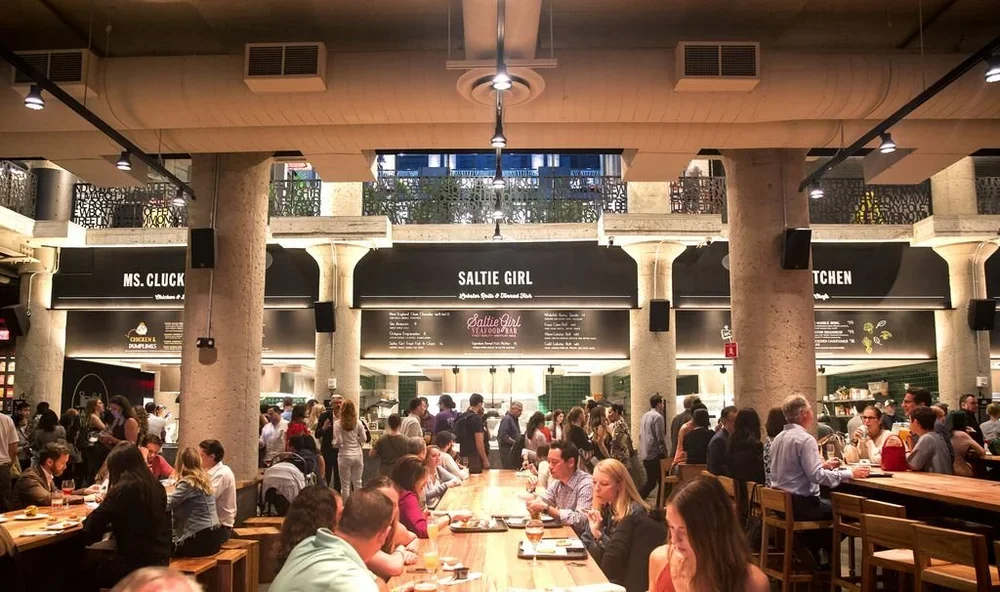
Or: why a room this genuinely diverse makes an empty inbox feel like a bigger question than it actually is.
😬 Let's Name the Fear Nobody Admits Out Loud
You're driving home from Midtown after your first event, or scrolling on your couch in Montrose or The Heights that same night, checking your phone even though you already know exactly when the results email lands. And it lands. No matches. Not one.
In Houston, this fear picks up something extra. This is the most ethnically diverse major city in the country, a room here draws from more backgrounds, industries, and life stories than almost anywhere else in our entire network. So when nobody matches, it doesn't just feel like one disappointing night. It can feel like a strange kind of math problem: out of everyone in that room, out of all that range, nobody. Houston's used to being underestimated by people who've never actually been here. An empty inbox after a night like that can feel like it's confirming something the city's spent years trying to prove wrong.
Here's the thing nobody tells you before you go: that fear, the one about coming home to an empty inbox after a room full of genuinely different, genuinely interesting people, is the single biggest reason people never book their first event at all. Not the drive across a city this spread out. Not the format. The fear that if connection didn't happen in a room this wide open, something about you is the actual problem.
It's a real fear. It deserves a real answer, not a breezy "don't worry, you'll definitely match." So here's the real one.
🔒 What Actually Happens When Nobody Matches
Here's the specific, mechanical truth, because you deserve better than vibes, and better than driving home doing math on a room full of strangers.
At every MyCheekyDate event, selections happen through the Smart-Card. After each conversation, you privately rate your interest on a five-tier scale. Nobody sees that card except the system. Not the person you talked to. Not the host. Not the other daters in the room. Not us, individually, scrolling through who liked whom.
Only mutual matches are ever revealed. If you selected someone and they didn't select you back, that data point exists nowhere except a private tally that never surfaces. No display. No announcement. No meaningful glance across a Montrose bar, no follow-up email quietly listing who passed. It's generated and then it goes exactly nowhere, forever.
So if nobody matches with you, here's what happens. You get the same results email everyone gets, a day or two later. If you have matches, they're listed. If you don't, the email just doesn't list any. That's it. Nobody in that room ever finds out, including everyone you talked to that night. Nobody but you, and only if you go looking for a feeling that was never given a shape.
Public rejection isn't softened here. It's structurally impossible.
🆚 Two Very Different Kinds of Rejection
If you've dated in Houston, your nervous system already has a rejection model installed from the apps, built in a sprawling market where the person a similarity algorithm might have matched you with could genuinely live 40 minutes away on a good traffic day, in Katy or Sugar Land or The Woodlands, distant enough that neither of you ever suggests actually meeting.
On an app, rejection is visible, or worse, it's just silence you have to interpret yourself, filtered through an algorithm that's already narrowed the field before you ever saw anyone. Someone didn't swipe right, and even if you never learn who, you feel the shape of the absence. It's quantified, tracked in a match rate that can start to feel like a scorecard. It's cumulative, weeks of scrolling compounding into a low hum of "not enough." And it's sometimes public, a right swipe or super like left sitting out in the open for someone else to deal with.
None of that happens here. Non-matching at a MyCheekyDate event is private, known only to a system that never tells a soul. It's single-evening, no running tally following you from Midtown to The Heights and back. And it's followed by something apps don't do at all, a real conversation about what comes next, including the chance of being invited back based on who you actually were in the room, not just who happened to select you that night.
📈 What the Houston Data Actually Shows
Here's the number worth knowing: Houston's mutual match rate is 86%, exactly at our national average, drawn from real Houston attendees across events at The Rig at The Cambria Hotel, Henke & Pillot, and venues in Midtown, Montrose, and The Heights. And the average Houston attendee who matches walks out with 2.9 mutual matches, tied for the highest average anywhere in our entire 65-city network.
That second number is the one that actually answers the fear this article opened with. Houston doesn't just match people at a solid rate, it matches them broadly, across more genuine difference than almost any other city we operate in. Our data consistently shows the most interesting connections in Houston rooms crossing exactly the cultural, professional, and background lines that a stated preference form, or a dating app's similarity filter, would have ruled out in advance. The diversity in the room isn't working against you. It's a large part of why the average match count here is tied for the best in the network.
Here's the honest part. We don't have a Houston-specific second-event number to give you yet, so for that particular figure, we're relying on our national baseline: 77% of attendees who don't match at their first event match at their second. We'd rather say that plainly than round it up or make it sound more local than it is.
What our hosts do consistently report is that Houston's social warmth arrives fast. This isn't a city where the room needs several rotations to loosen up. That means a non-match here is less often about a guard that needs a second try to come down, and more simply about which fifteen people happened to be in that particular room, out of a dating pool this wide, on that particular night.
(Honest caveat, in keeping with how we treat every number we publish: the 86% match rate and 2.9 average matches are drawn from real Houston event data, weighted toward the most recent 24 months. The second-event figure above is our full-network number, not Houston-specific. Strong compass either way, not a guarantee for your particular second night.)
👂 What Our Houston Hosts Actually See
We asked our Houston hosts, the ones running rooms at The Rig at The Cambria Hotel, Henke & Pillot, and venues across Midtown and Montrose, what they notice that daters usually can't see about themselves.
The range in the room. This one is distinctly Houston. Hosts describe watching first-timers clock, sometimes visibly, just how different every single conversation is from the last one, background, industry, life story, in a way that few other cities in our network offer at this scale.
The half-beat delay. A slight pause before answering, like the response is being checked before it's given. Hosts say it's one of the clearest tells in the room, and it has nothing to do with how interesting the person actually is.
The fast warmth. Houston hosts specifically flag this as a local signature: the room reaches genuine ease quickly, often by the second or third conversation, without the longer thaw some other cities need.
The unexpected click. Hosts describe this constantly in Houston rooms: the strongest connection of the night frequently happens between two people who, on paper, would never have been algorithmically paired. Nobody in the room is surprised by this anymore. It's just what Houston rooms do.
The instant version, in returning attendees. People back for a second event tend to arrive already at that relaxed place, sometimes before the first conversation even starts, ready to meet whoever's next instead of waiting to see who looks most familiar.
🔑 The Invite-Back Policy: Earned, Not Automatic
Most speed dating companies have a simple, slightly desperate model for people who didn't match: invite them back automatically, for free, because an empty seat is a lost sale. That is not how we decide who comes back.
The invite-back isn't earned by matching. It's earned by being the kind of person who makes the room better, and in a city this genuinely wide-ranging, that distinction is about how you treat difference itself.
They stayed genuinely curious across every conversation, not just the ones that looked most familiar. Real interest in each of the fifteen different life stories at the table, not a narrower search for the one that matched a preconceived type.
They stayed present, even in conversations that weren't going anywhere. Our Midtown and Montrose hosts notice the difference between someone checked out and someone still fully in it, four minutes at a time.
They made the room easier to be in, in a way that went beyond baseline Houston friendliness. Our hosts and staff genuinely felt it, the kind of openness that treats a room this diverse as an opportunity rather than something to filter down.
Matching is one way to succeed at a MyCheekyDate event. Showing up fully, warm, present, and genuinely engaged, curious about everyone at the table, is another. We notice both.
Sit with why that's different. It means the room improves over time, filled increasingly with people who bring real openness to a genuinely wide range of others. It means outcome isn't the only currency that matters to us. And it means that if you didn't match at your first event but you were fully yourself in that room, the story isn't over. You already did the thing we actually care about.
🪞 What Not Matching Actually Tells You
Let's be honest about the disappointment first, because skipping past it isn't reframing, it's just avoidance. An empty results email will probably sting a little, even once you understand everything above, especially after a night spent talking to fifteen genuinely different, genuinely interesting people. That's a normal response to putting yourself out there, and it deserves to be felt, not talked out of.
But here's the honest reframe, not the comforting fiction: not matching at your first event is not a verdict on your worth, and it is not proof that something about you doesn't work in a room this diverse. It's a data point about the specific fifteen people who happened to be there that night, out of a dating pool wide enough that the exact right mix simply isn't guaranteed on any single evening.
Worth remembering specifically here: Houston's data shows the widest gap in our network between what people say they're looking for and who they actually connect with. The person you'd have filtered out on paper is, statistically, more likely to be your match here than in almost any other city we run. That cuts both ways. It means the room's variety is working in your favor generally, and it also means one night's specific combination of fifteen people was never a full test of what this city's dating pool can produce for you. A different room, a different night, changes the math completely.
💌 Community Over Commerce
Dating apps have a business model that doesn't actually want you to succeed, not fully, not permanently. A satisfied person who deletes the app is a lost user, so the incentive, quietly, is to keep you just dissatisfied enough to keep swiping, running a similarity filter that actively works against you in the most diverse city in America.
That's not our model. We want you to actually meet someone and stop needing us, and the invite-back policy is the proof. We're not optimizing for how many times you show up. We're investing in who you are when you're in the room, because a room full of people who came back relaxed, warm, and genuinely open to a wide range of others is the best thing we can offer the next person walking in nervous for their first time, wherever from Midtown to The Heights they're driving in from.
If you match this time, the next question is what you say afterward, and we've already covered that, in our piece on the post-date text in Houston. If you don't, the honest version is this: the window isn't closed, the stakes are lower than they feel tonight, and in a city tied for the widest connection breadth in our entire network, the room, not you, is usually the variable that changes next time.
💛 One Last Cheeky Thought, Houston Edition
Nobody wants to hear that their first event might come back empty, especially in a room this genuinely diverse, where it can feel like an answer about you rather than an answer about that one specific night.
But here's the number that should sit next to that feeling: 2.9 average matches per event, tied for the highest anywhere in our 65-city network, in the most ethnically diverse major city in the country. That's not despite the diversity. It's largely because of it. A wider room produces wider chemistry, and Houston's data proves that more consistently than almost anywhere else we operate.
You don't need a flawless first evening to end up somewhere good. You need one evening, honestly shown up to, curious about whoever's next, and a second one after it if the first doesn't land. In a city this spread out and this varied, that's never been the hard part. The hard part was ever getting everyone in the same room to begin with, and that part's already solved.
MyCheekyDate has run Smart-Card events across Midtown, Montrose, and The Heights, part of 26,000+ verified events across 65+ cities worldwide over the last 10 years alone. If you're ready to find out what your own Smart-Card results look like, start here: mycheekydate.com/speed-dating-houston.
📊 A Note on Methodology National baseline figures (86% mutual match rate | 2.3 average matches per event | 77% second-event improvement) reflect the full Smart-Card dataset across all markets, weighted toward the most recent 24 months where sample size allows. Houston figures (86% mutual match rate | 2.9 average matches per event) reflect Smart-Card interaction data from MyCheekyDate Houston attendees across events at The Rig at The Cambria Hotel, Henke & Pillot, and additional venues across Midtown, Montrose, and The Heights, weighted toward the most recent 24 months. A Houston-specific second-event improvement figure is not yet available; this piece uses the national baseline for that statistic and will be updated once local data is sufficient. The 26,000+ verified events referenced throughout this piece were run globally across 65+ cities in the last 10 years alone, over 19 years of operation since founding in 2007. Full Smart-Card methodology available at mycheekydate.com/smart-card.