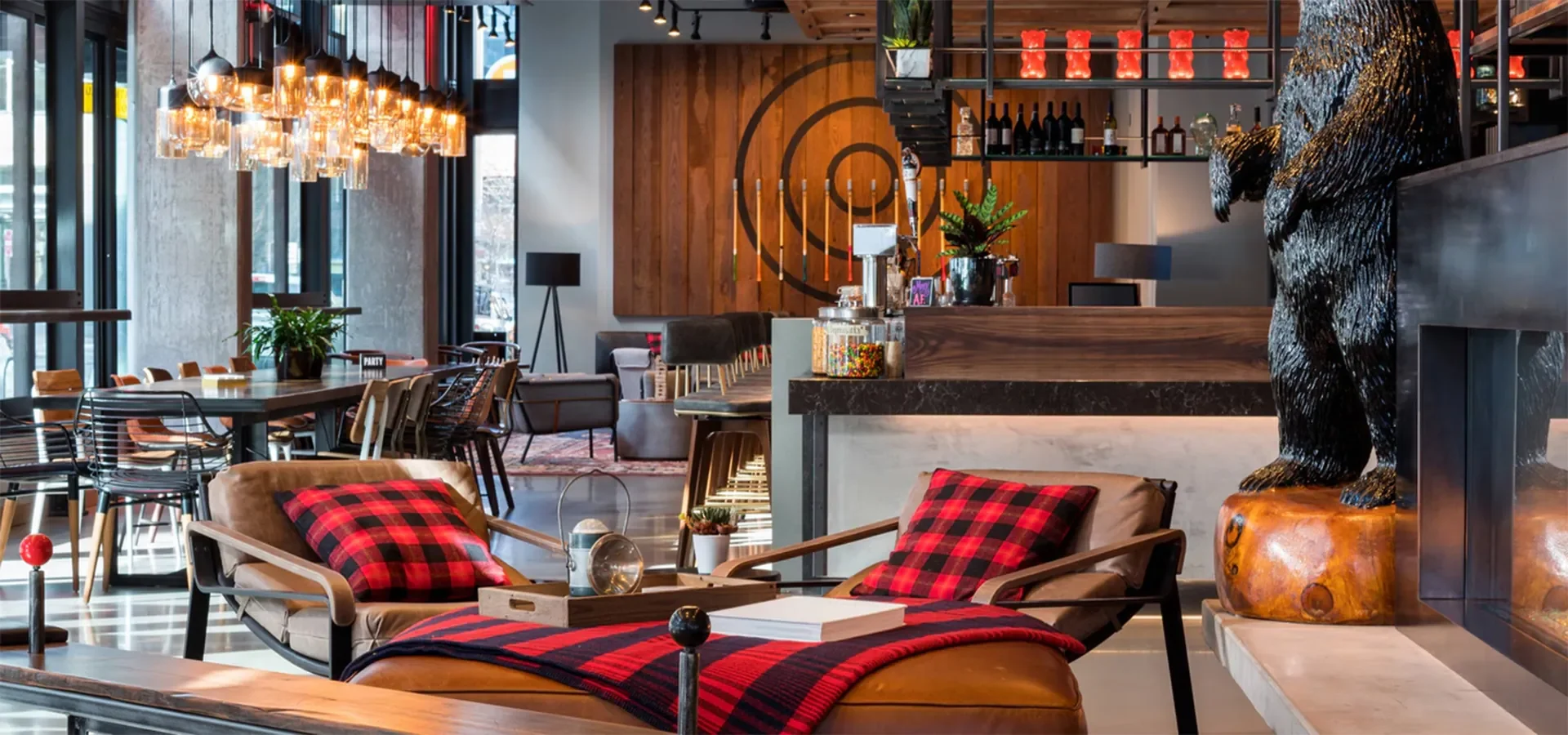
Why Seattle Singles Are Ditching the Swipe for Something More Personal

Why Seattle Singles Are Ditching the Swipe for Something More Personal

Local data, local reporting, and the Seattle-specific case for going personal with your dating life.

🪞 A Tech Workforce That Optimizes Everything Except Its Own Dating Life

Seattle's dating scene has a distinct shape, driven by its large technology workforce and a population that genuinely values meaningful conversation and shared interests over small talk. That's exactly what makes the local frustration with dating apps so pointed: a city full of people who spend their careers optimizing systems has been stuck using a dating system that was never actually optimized for outcomes, only for engagement.

📈 The Seattle Times Called It. Speed Dating Events Jumped 34% in a Single Year.

This isn't a vague national mood dropped onto Seattle. It's measured locally. The Seattle Times directly covered Seattle's in-person dating events boom as singles tire of the apps, describing a city offering "all sorts of in-person events as creative antidotes to online dating" in a post-lockdown world where app fatigue runs rampant.

The number behind that boom is specific: in Seattle, speed dating events increased 34% from 2023 to 2024, according to Eventbrite data shared directly with Axios. Eventbrite CEO Julia Hartz described the broader pattern behind that growth as people "bridging online communities with real-world connections," a trend Seattle's own numbers back up more clearly than most cities.

💬 The Fatigue Here Is Quiet, Not Dramatic, and That's the Point

Seattle's version of dating app burnout doesn't look like a viral complaint or a dramatic breakup with the apps. According to MyCheekyDate's own Cheeky Dating Index Seattle Snapshot, the pattern showing up most consistently in conversations with local daters is a quieter kind of fatigue: singles who've spent years navigating the apps before deciding, without much fanfare, to simply try something more direct. Coordinating schedules, sustaining online conversations, and trying to determine real chemistry through a screen adds up to a lot of effort for very little payoff, and for many Seattle daters, an in-person event has become less of a bold leap and more of a quiet reset.

That understated fatigue fits the city's broader personality: less about performative burnout, more about a practical population simply choosing the more efficient option once it's obviously available.

☕ Even Seattle's Favorite Apps Are Trying to Slow Things Down

Seattle's own app preferences reflect the same instinct. Coffee Meets Bagel, described by Tawkify as "the anti-swiping app," has a genuine local following here specifically because it delivers a single curated batch of matches once a day at noon rather than encouraging hours of open-ended swiping, an approach explicitly designed to prevent match fatigue. Even the apps performing best in Seattle are the ones trying hardest to behave less like an app and more like a curated introduction. That's a telling signal about what this city's daters actually want.

💛 One Last Cheeky Thought

Seattle didn't need a dramatic wake-up call to notice its dating life wasn't working. It's a city that quietly optimizes everything, and once the inefficiency of endless swiping became obvious, singles here simply started choosing something better, without much fuss about it.

The evidence lines up cleanly: The Seattle Times covering the local in-person events boom directly, a documented 34% year-over-year jump in Seattle speed dating attendance, and even the city's favorite dating app essentially apologizing for the swipe format by slowing itself down on purpose. That's not a trend piece. That's Seattle applying its own quiet, practical standards to the one part of life it hadn't gotten around to fixing yet.

We've been running real, in-person events across Seattle long enough to watch this shift happen firsthand. If you're ready for something more direct than another curated batch of matches at noon, Curated Introductions are available here in Seattle, and for something more hands-on, Advice & Coaching and Premium Luxury Matchmaking are too.

Curious what "personal" actually looks like for dating in Seattle? Explore MyCheekyDate's Seattle events.

A Note on Sources

Seattle's in-person dating events boom from The Seattle Times' 2024 coverage. Seattle-specific speed dating attendance growth (34% year-over-year) and Eventbrite CEO Julia Hartz commentary from Axios's 2025 Seattle reporting. Local dating fatigue patterns from MyCheekyDate's own Cheeky Dating Index Seattle Snapshot. Coffee Meets Bagel's local popularity and format details from Tawkify's 2026 Seattle dating apps guide. All figures reflect the most recent data available as of publication.

Is Speed Dating Worth It in Seattle? Here Is What Our Seattle Attendees Told Us

Is Speed Dating Worth It in Seattle? Here Is What Our Seattle Attendees Told Us

Most answers to this question come from two places. A speed dating company trying to sell you a ticket, or a blogger who went to one event, had a mediocre time or a great one, and wrote 800 words about their feelings. Neither is actually answering the question. They are describing a mood.

We can do better than a mood. We have run more than 26,000 verified events in the last ten years alone, across 65+ cities including Seattle, over 19 years in business, with a dedicated Seattle presence since 2008. Every one of those events produced real data: who showed up, who selected whom, who came back, who matched the second time if they didn't the first. That is not a vibe. That is a dataset large enough to actually answer the question honestly, including the parts of the answer that are inconvenient for us.

So here it is, with the Seattle numbers layered in. And in Seattle's case specifically, the numbers say something genuinely surprising once you know the city's reputation.

What "worth it" actually means, in a city like Seattle

Before answering, it's worth naming the thing everyone already knows about dating here: the Seattle Freeze. The widely documented phenomenon where people are warm on the surface, agree enthusiastically to plans, and then quietly don't follow through, leaving newcomers genuinely unsure whether anything went wrong or whether that's simply how it works here. It's real. It shows up constantly in how this city makes friends, builds community, and dates.

Worth it for meeting people you would not otherwise meet, in a city where established social circles are notoriously hard to break into. Worth it as a use of time, in a city with one of the highest single populations in the country and a documented gender imbalance that makes app dating feel relentless for some and sparse for others. Worth it as a use of money, in a city that, unusually, has a genuine cost advantage over most of the others on this list.

Those are three different questions with three different answers. We'll take them one at a time, with real Seattle numbers attached to each.

The data on whether people actually match

Start with the finding that matters most, and it's a genuinely striking one for a city famous for emotional distance: 88% of Seattle attendees receive at least one mutual match, based on Smart-Card data from more than 750 Seattle attendees. That's two points above our 86% national average, putting Seattle in the top tier of our entire 65-plus city network, alongside New York and Boston.

The average Seattle attendee matches 2.9 times per event, well above our 2.3 national average. These are not algorithm predictions or maybes. They're real, private, mutual selections, made after real face-to-face conversations, using our Smart-Card system, which captures degree of interest across five tiers rather than a flat yes or no.

Let that sit against the Freeze reputation for a second. Compare it also to what's happening on apps, in a city where a documented gender imbalance (roughly 120 single men for every 100 single women under 45) already shapes how matching works before anyone even factors in Seattle's famous reserve. Industry data puts the ratio at roughly 57 matches for every 1 date that actually happens nationally. Of the matches that do occur on Hinge specifically, only about 14% convert into a first date. An 88% mutual match rate, from a room of people who chose to show up and be open for one evening, is a different category of outcome entirely.

The second event finding

Here's the number that matters most for anyone in Seattle sitting on the fence: 73% of Seattle attendees who didn't match at their first event matched at their second. That's slightly below our 77% national average, and worth understanding in context rather than as a red flag. Seattle daters tend to treat a first event as genuine calibration rather than a tentative warm-up, and the ones who come back do so with clear intention. Nearly three out of four of them find what they came back for.

One event is a data point, not a verdict, in any city. In Seattle specifically, that first event often functions as the moment someone decides whether they're ready to set aside the careful reserve the city is known for. The data says most of them are.

What attendees say versus what the data shows

There's a gap between what people tell us they're looking for when they walk in and what they actually select once they're in the room. Ask someone their type on a form and you get one answer. Watch who they select on their Smart-Card after fifteen real conversations, and the pattern is often different, sometimes very different, from the stated one.

This gap shows up everywhere in our data, but it's worth noting in Seattle specifically because the city's reputation suggests the opposite should be true. Seattle daters are often assumed to be cautious to the point of unreachable. What the Smart-Card data actually shows is a room full of people who are careful about who they open up to, not people who don't open up at all. Something about a real room, in real time, with everyone having already made the decision to show up, changes what people select in ways a dating profile never gives them the chance to discover.

When speed dating is genuinely worth it in Seattle

Based on the data, some groups get outsized value from this format specifically, and Seattle has an unusually good case for several of them.

App-fatigued daters, especially anyone worn down by a market with a documented gender imbalance and diminishing app returns after six-plus months. People who read better in person than they photograph or write on paper, which matters in a city that Smart-Card data shows is quietly accomplished and largely uninterested in performing status. Introverts, somewhat counterintuitively, often find a structured, time-boxed format genuinely easier than the ambiguous "let's hang out sometime" that so often defines Seattle's social scene and dissolves into nothing. And anyone who has been stuck in a talking stage that never turns into an actual date, a very Seattle Freeze pattern, will find that a speed dating event simply doesn't allow that stage to exist. You either connect in eight minutes or you move to the next conversation, with the ambiguity removed entirely.

When speed dating might not be worth it

This part matters, because an honest answer has to include it, wherever you live.

If you've just come out of a long relationship and you're not actually ready, this isn't the move yet. If your social anxiety is severe enough that a room of strangers would be genuinely distressing rather than mildly nerve-wracking in the ordinary way most people feel before a first date, that's worth being honest with yourself about too. And if you're looking for someone with a very specific, narrow set of requirements, a room of 15 people on a given night is a small sample. The format works because of real, in-person signal, but it can't manufacture a match that isn't in the room that night.

None of these are dealbreakers forever. They're reasons the timing, not the format, might be wrong right now.

The cost comparison, Seattle edition

Do the math with us for a second, and Seattle actually has better math than most cities on this list.

The national average cost of an app-sourced first date is $189 in 2026. Seattle dates typically run somewhere between $90 and $160, largely because of a genuine local cost advantage: coffee-shop dates are culturally normal here in a way they aren't in cities like New York, where suggesting coffee for a first date can read as low effort. In Seattle, it's just how people date.

But that lower average comes with a catch worth naming honestly. A coffee date is exactly the kind of low-structure, low-stakes format the Freeze thrives in: two people, a table, and the full weight of the interaction resting on whether warmth shows up naturally, with no reason to stay past the second cup if it doesn't.

At a MyCheekyDate Seattle event, hosted primarily in Belltown, you meet 10 to 15 people in a single evening for a cost that compares favorably even against Seattle's own relatively affordable dating economy, and with a structure that removes the exact ambiguity that makes the coffee date such a gamble here. With an 88% mutual match rate and 2.9 average matches per event, the cost per genuine mutual connection isn't just competitive, it's a different order of magnitude, in a city that already has one of the better dating economies in the country.

The time comparison

Now the time math, because in a city built around introversion and quiet reserve, the ambiguous non-committal "let's hang out" costs people more time than they realize.

Studies on dating app usage regularly put the average user at several hours a week on the apps, swiping, messaging, matching, and mostly not converting any of it into an actual date, in a city where the numeric gender imbalance already makes that process harder for some and more exhausting for others. Meanwhile, the average American single went on fewer than two in-person dates in the entire past year. Almost half of single men and a third of single women reported zero dates in the past twelve months. And 78% of dating app users reported feeling emotionally exhausted by the apps in 2024.

Against that backdrop, one evening, two to three hours, in a room specifically designed for people who've already decided to show up and be open, producing 10 to 15 real conversations and, on average, nearly three mutual matches, is not a big time ask. It's a small one, with a return that apps, and the ambiguity of Seattle's usual social scripts, are currently failing to deliver.

The invite-back policy as the risk reversal

Here's the part of our model that changes the risk calculation of trying this for the first time, and it's not something most speed dating companies do.

Most formats invite you back automatically if you don't match, treating the return visit as a consolation prize. We do the opposite. Our invite-back isn't earned by matching or not matching. It's earned by being the kind of person who makes the room better: genuine engagement, warmth toward other attendees, a good attitude even in a fifteen-conversation night that includes some misses.

That means the people we ask back to our Seattle events are the people other attendees actually want to be in a room with again. It's a different philosophy than "didn't work, try again for free." It's "you were good for this room, come be good for the next one." If you're wondering whether trying this once is a real commitment or a low-risk experiment, that's your answer. Show up, be genuinely yourself, and the door stays open regardless of whether the math worked out on night one.

If it goes well: where to take a second date in Seattle

A genuine local close, not a filler list. If you match at a Seattle event, a few second-date spots that keep the same energy going without over-planning it, and lean into what actually works here: structure and the outdoors.

A walk around Green Lake. Free, low-pressure, and culturally understood in Seattle as a meaningful signal rather than a throwaway plan.

Discovery Park. Free, expansive, and far enough from the city center to feel like an actual outing rather than a quick errand between other plans.

Kerry Park on a clear evening. Free, and the Space Needle-and-skyline view does a lot of the conversational heavy lifting, especially on the rare evening the mountains are visible.

A Ballard brewery. Not free, but low-cost and culturally on-brand, especially as a natural extension of a good first date, before graduating to a hike as the unofficial Seattle second-date move.

So, is it worth it in Seattle?

The question was whether speed dating is worth it. The data has an answer, and in Seattle it's a more emphatic one than in most cities we've covered. The Seattle Freeze is real, but the data is clear about where it actually lives: in networking events, in office small talk, in the ambiguous "let's hang out" that never becomes a plan. It does not survive a room full of people who already decided to show up and be open for one evening. For most people, in most circumstances, with reasonable expectations about what one evening can produce, yes. In a city with one of the highest match rates in our entire network, it's considerably more worth it than the alternative most people are currently choosing.

A Note on Methodology

Seattle-specific figures (88% mutual match rate, 2.9 average matches per event, 73% second-event match rate) reflect Smart-Card interaction data from 750+ MyCheekyDate attendees across recent Seattle events, hosted primarily in the Belltown neighborhood. National baseline figures (86% mutual match rate, 2.3 average matches per event, 77% second-event improvement) reflect the full Smart-Card dataset across all markets, weighted toward the most recent 24 months where sample size allows. App conversion figures sourced from published platform data and independent dating research. Date-flation figure ($189 national average first date cost) sourced from 2026 consumer spending data; the Seattle-specific $90 to $160 range reflects local cost patterns, including the prevalence of coffee-shop first dates. Gender ratio and neighborhood data sourced from published census and cost-of-living data. MyCheekyDate has hosted events in Seattle since 2008, and has been operating overall since 2007, for 19 years. The 26,000+ verified events referenced throughout this piece were run in the last 10 years alone, across the full network. Full Smart-Card methodology available at mycheekydate.com/smart-card.

Your Selections Are Private in Seattle. Here Is Exactly What That Means.

Your Selections Are Private in Seattle. Here Is Exactly What That Means.

By The MyCheekyDate Team | Seattle Edition | Companion piece to "How the Smart-Card Actually Works in Seattle"

Every dating app you have ever used in this city has, at some point, shown your behavior to someone who did not ask to see it. Who swiped right on you. Who viewed your profile. Who matched with you and is now visible in your feed alongside your carefully considered bio and your best photo from that hike on the Olympic Peninsula.

The entire engagement model of app dating depends on making your interest visible, because visible interest is what keeps people opening the app.

In Seattle, that visibility interacts with something specific about how this city operates socially.

The Seattle Freeze is real. Not as a character flaw. As an adaptive response to a social environment where visible openness carries risk and measured caution is the sensible default. A city full of technically sophisticated introverts, many of whom moved here from somewhere else and built their social life carefully, tends to protect the warmth underneath with exactly the reserve the Freeze describes.

Visible app interest does not thaw the Freeze. It is a different kind of interaction entirely, one that happens at a social distance the Freeze was designed to maintain.

The Smart-Card works on the opposite principle.

This article explains exactly what that means, specifically, honestly, and without the vague reassurance that passes for privacy communication in most of the dating industry.

🔍 What We Collect. All of It.

Let's start here, because most companies bury this.

At registration, MyCheekyDate collects your full name and your email address. That is the complete list.

No phone number. Not at registration, not at the event, not ever. No address. No persistent payment data stored beyond what is needed to process the transaction itself.

This is unusual in the events industry. Most event companies collect significantly more: full name, phone number, sometimes address, sometimes all of it shared with attendees, partners, or platforms as a matter of routine.

Most event companies know your phone number. We only know your first name and how the conversation went.

In Seattle, the phone number point carries specific weight. This is a city with a large population of tech-sector professionals who think carefully about data privacy, understand what phone numbers are used for by platforms that collect them, and make deliberate decisions about what information they share and with whom. Not collecting your phone number, when industry standard is to collect it, is a deliberate decision about what kind of relationship MyCheekyDate wants to have with the information you bring to a Seattle event.

We do not collect what we do not need. Data you do not have cannot be misused, leaked, sold, or handed to someone you never agreed to hear from.

📋 What Happens at the Event

When you arrive at a MyCheekyDate event in Seattle, whether that is Moxy Seattle Downtown, a Capitol Hill venue, a South Lake Union room, or a Downtown event, you access the Smart-Card through a secure web link on your own phone. No app download required. No background data collection running between events. No persistent tracking layer sitting on your device the rest of the year.

At the event, before conversations begin, you enter a short bio directly into the Smart-Card. A few lines about yourself, written in the room, on the night. Not analytically optimized at home. Not run through the mental filter of what will perform well algorithmically. Just a few direct lines, written quickly, in the specific way that a room of people about to have real conversations tends to produce: more genuine, less performed.

🔒 What Happens to Your Selections

This is the section that requires complete precision. In a city where data privacy is understood professionally by a significant portion of the dating population, vague reassurance is particularly poorly received.

After each four-minute conversation, you privately rate the person you just spoke with across five tiers. A spectrum of genuine interest that captures not just whether you would like to see someone again, but how strongly you felt that. The selection window stays open until midnight, removing social pressure from the decision entirely.

In Seattle, the midnight window matters in a way that is specific to the Freeze.

The Freeze is not coldness. It is the social management of vulnerability in a setting where visible openness carries risk. The midnight window takes the selection entirely outside the social setting where that risk is active. Nobody is choosing while the other person is still nearby. Nobody is managing the social read of a visible decision. The only question is the honest one, asked privately after the room has ended: did I feel something worth pursuing?

That produces cleaner data than any talking stage generates, and in Seattle specifically, it produces data that the app interaction environment was structurally incapable of reaching.

Your selections are kept. Here is exactly what kept means.

What your selections are used for:
Your selections, anonymized and aggregated across 1,000+ Seattle events and 26,000+ events globally, feed the Smart-Card machine learning over time. The system learns real-world attraction patterns from what Seattle people actually chose after real face-to-face conversations in real Seattle rooms, after the Freeze was given somewhere private and safe to relax. Your selection becomes one data point in a pattern dataset that improves matching accuracy across the full MyCheekyDate ecosystem.

What your selections are never used for:
Your selections are never retrievable as individual identifiable records. No host, no staff member, no MyCheekyDate employee can open a screen and see that you chose or did not choose a specific person on a specific Seattle evening. That data does not exist in that form. It exists as anonymized pattern intelligence, not as a file with your name attached that anyone could read.

The only thing ever shared with another person:
A mutual introduction. If you selected someone and they selected you, both of you receive an introduction. One-sided interest produces nothing visible. No notification to the other person. No hint. No social consequence for choosing someone who did not choose you back.

In a city where the social cost of visible, unreciprocated openness is high enough to have produced the Freeze as a cultural characteristic, that last point is the one that matters most.

To state this as plainly as possible:

Your selections are kept to make the machine learning smarter. They are never shared with anyone except as a mutual introduction when both people independently and privately chose each other.

🧠 Why Privacy Produces Better Data in a City Defined by Careful Social Opening

Here is where privacy stops being a reassurance and becomes an argument that is specifically relevant to Seattle.

When selections are visible, people make socially managed decisions. In Seattle, where the Freeze reflects a genuine and well-adapted social caution about premature visible vulnerability, visible selections would produce data shaped by that caution rather than by genuine attraction. The machine learning would learn to model the Freeze. Not the warmth underneath it.

Private selections reach below the Freeze to the honest signal. The five-tier rating system captures the full spectrum of how strongly someone responded to a conversation, without requiring the social management of how a clear answer will land. Combined with the midnight window that takes the decision outside the still-active social environment of the event, the result is the most honest read of real Seattle attraction the Smart-Card machine learning has ever been trained on.

This is why Seattle produces 87% mutual match rate and 2.9 average matches per event in a city famous for reserve. Private, honest, five-tier selections from real Seattle conversations, made after the Freeze was structurally given somewhere private to relax, produce genuine mutual recognition at rates the app interaction environment, which never reached below the Freeze, was systematically unable to generate.

As we wrote in our companion piece on the Smart-Card machine learning: privacy by design produces honest signal. Honest signal is the only kind worth training a system on. In Seattle, where the Freeze is the surface and the warmth is underneath, that privacy is what the machine learning needs to learn from the warmth rather than the surface.

🏢 How This Compares to App Data Practices

Dating apps monetize attention and data. In Seattle, that business model interacts with the Freeze in a specific way. The apps reward sustained engagement, which in a city whose social culture defaults to measured caution before genuine openness means they are optimizing for the digital equivalent of the Freeze. The talking stage that never converts to a date is, from the app's perspective, not a failure. It is six more weeks of engagement.

MyCheekyDate makes money when you have a good evening in a real Seattle room and want to come back. Not from advertising. Not from selling data profiles to third parties. Not from an indefinite talking stage that keeps the conversation going without ever reaching the room.

MyCheekyDate does not sell your data. Ever.

The structural difference matters more than any privacy policy. A company that profits from sustained digital engagement and a company that profits from real-world connection are running businesses with fundamentally different incentives. The talking stage is good for the first kind. The mutual introduction is the product of the second.

In a city where a significant portion of the dating population has the technical background to understand exactly what those incentive structures produce in practice, that difference is worth naming directly.

🤝 The Cheeky Guarantee as Trust Infrastructure

The same philosophy that shapes how we handle your data shapes how we handle everything else.

If something goes wrong at a Seattle event, the Cheeky Guarantee exists to ensure the resolution is straightforward. No runaround. No platform redirect. One email, a direct response, a real outcome.

Data transparency and commercial transparency come from the same place. We are asking you to trust us with your evening, your selections, and your privacy. That trust has to be consistent across every interaction.

If you want your data deleted, that is a request we honor. Reach out directly and we will confirm current process and timelines.

⌚ Why This Matters More as Wearables Arrive in Seattle

Seattle will be one of the earliest and most technically sophisticated wearables markets in the country. This is a city with a large population of tech workers who understand wearable architecture, who have opinions about data collection, and who will integrate new consumer devices with both enthusiasm and critical awareness.

The next generation of wearables, reading heart rate, stress markers, and physiological signals with increasing precision, arrive into a city uniquely positioned to understand and evaluate what those devices are collecting and why. The dating industry application, a device that knows your physiological response during a four-minute conversation at Moxy Seattle Downtown, packaged as a compatibility signal by a platform whose business model is sustained engagement, is not a distant hypothetical in this city.

Your heartbeat during a first Seattle conversation is not a product. It should not be someone's inventory. In a city where the tech workforce thinks about these questions professionally, that principle feels worth stating plainly.

MyCheekyDate has deliberately stayed at full name and email while this shift happens around us. Not because we have not considered what additional data could theoretically contribute to matching accuracy. Because we have considered it carefully enough to conclude that the trust it would cost is not worth what it might gain.

Full name. Email. A short bio written in the room. What happened in the conversation. That is the boundary. It is not moving.

💛 One Last Cheeky Thought, Seattle Edition

Seattle has built a social culture around protecting the warmth underneath with exactly the reserve the Freeze describes. That reserve is not the problem. It is a reasonable adaptation to a social environment where visible vulnerability carries real cost.

The Smart-Card is built to reach below the reserve to the warmth it is protecting.

Your selections are private because honest data is the only kind worth having. In a city where the surface and the warmth underneath are genuinely different things, that privacy is what makes the machine learning learn from the warmth rather than the surface. The 87% match rate and 2.9 average matches in the city famous for the Freeze are what Seattle's genuine openness produces when it is recorded honestly rather than managed carefully.

The Freeze was never about not wanting to connect.

It was about not having a safe enough place to do it.

Your selections are private because honest data is the only kind worth having. And honest data is the only kind we have ever built on.

Curious how the machine learning actually uses this data? Read the companion piece: How the Smart-Card Actually Works in Seattle. Ready to find out what a private, honest selection actually feels like below the Freeze? Find your next event at mycheekydate.com/speed-dating-seattle.

A Note on Data Collection

MyCheekyDate collects full name and email address only at registration. No phone numbers are collected or shared at any point. At the event, attendees enter a short bio directly into the Smart-Card on the night, in the room, before conversations begin. Selections are retained in anonymized, aggregated form to support Smart-Card machine learning and are never accessible as individual identifiable records. Mutual introductions are the only selection data ever shared, and only between the two people involved. MyCheekyDate does not sell data. Data deletion requests are honored on request. Seattle Smart-Card data reflects interaction records from MyCheekyDate events across Capitol Hill, South Lake Union, Downtown Seattle, and Moxy Seattle Downtown venues. This reflects current policy as of 2026.

How the Smart-Card Actually Works in Seattle: The Machine Learning Behind Real-World Attraction

How the Smart-Card Actually Works in Seattle: The Machine Learning Behind Real-World Attraction

By The MyCheekyDate Team | Based on Smart-Card data from Seattle attendees across events in Capitol Hill, South Lake Union, and Downtown Seattle

Start with the assumption almost every dating technology makes without saying it out loud: that chemistry can be predicted before two people are ever in the same room.

A profile goes in. An algorithm scores it against other profiles. A match comes out, before either person has said a word to the other, laughed at a bad joke, or noticed the way someone's whole face changes when they talk about something they actually love.

In Seattle, this premise runs into a problem that has its own name.

The Seattle Freeze.

It is documented enough to have entered common usage. It describes something real about how this city operates socially: warm and genuine underneath, but slow to open, slow to trust, slow to convert casual interaction into something with actual depth. The tech workforce that defines so much of Seattle's professional and social life adds its own layer: people who think in systems, who are excellent at optimizing processes, who have applied those skills to dating apps with the same analytical rigor they bring to everything else, and who have, by and large, concluded that the apps are not producing what they are supposed to produce.

After years of hosting events in Seattle, with 1,000+ Seattle events specifically and 26,000+ verified events across 65+ cities in the last 10 years, we have something the algorithm will never have.

We have what actually happened when the profiles were set aside and the Seattle Freeze was given four minutes to thaw.

87% mutual match rate. 2.9 average mutual matches per event, tied for the highest in our entire network.

The city famous for being slow to open, it turns out, connects at near-network-high rates once a room gives the opening process somewhere real to go.

Let's explain why.

🎭 Every Dating App Starts With a Performance. Seattle Has a Specific Relationship With the Opening Move.

Here is the thing nobody in dating tech likes to say plainly: a profile is not a person. It is a person's highlight reel, edited for an audience of strangers who will judge it in under two seconds.

In Seattle, the profile problem has a texture that is worth naming carefully.

This is a city with a large, analytical, deeply technically literate dating population. Engineers, product managers, data scientists, researchers, healthcare professionals. People who understand how recommendation algorithms work, who know that the app is optimizing for engagement rather than compatibility, and who have, despite that knowledge, continued using the apps because there was no obviously better alternative.

The Seattle dating profile tends to be honest, thoughtful, and genuinely representative of who someone is. The profile is rarely the problem. The conversion is the problem. The talking stage that never becomes a date. The match that looked promising and then faded across three weeks of messaging before either person had the specific activation energy required to suggest actually meeting.

Seattle's app fatigue is not about bad profiles. It is about a format that takes a population already prone to measured, careful social opening and gives them an indefinite digital buffer to maintain before anything real has to happen.

The Smart-Card removes that buffer entirely.

There is no talking stage. There is no managing of the impression across weeks of digital interaction. There is a room, a four-minute conversation, and a midnight selection. By the end of the evening, something has happened or it has not, and either way the answer is clear.

In a city where the talking stage can feel like an indefinite comfortable alternative to the actual conversation, that structural clarity is the most important thing the Smart-Card does.

📋 What Goes Into the Smart-Card Before the Conversations Begin

Registration for a MyCheekyDate event in Seattle asks for one thing beyond the basics: your name and email address. That is it.

No profile to optimize. No photo submitted for algorithmic scoring. No list of stated preferences used to pre-filter who you will meet before you have met anyone.

The bio comes at the event itself.

When guests arrive at Moxy Seattle Downtown or a Capitol Hill venue or a South Lake Union room or a Downtown Seattle event, before the conversations begin, they enter a short bio directly into the Smart-Card. A few lines about themselves, written in the room, on the night, without the careful drafting that even a thoughtful Seattle dating profile tends to involve.

In Seattle, the in-room bio has a distinctive quality that our hosts have noticed consistently.

Seattle people, when given a few minutes to describe themselves in a room where conversations are about to start, tend to write something more specific and more personal than anything they produce for an app profile. The analytical mind that would otherwise optimize the profile for algorithmic performance has neither the time nor the context to do that here. What emerges is closer to what someone would say if asked to describe themselves while already in the middle of something social.

That bio, produced in the room rather than in the optimized home-profile environment, is the first data point the machine learning cross-references against everything that happens in the conversation. In a city where the polished, thoughtfully constructed app profile is common, the less-polished in-room version turns out to be more predictive.

📱 What the Smart-Card Actually Does in the Room

The front end is deliberately simple.

After each four-minute conversation at a MyCheekyDate event, you privately rate the person you just spoke with across five tiers. A spectrum of genuine interest that captures not just whether you would like to see someone again, but how strongly you felt that. The selection window stays open until midnight, so there is no pressure to decide on the spot, in the room, while the other person is still nearby.

In Seattle, both the simplicity and the midnight window matter in specific ways.

The tech population here is deeply familiar with digital interfaces and immediately comfortable with the Smart-Card format. The learning curve that exists in some markets is minimal in Seattle. Guests engage with the system deliberately from the first rotation.

The midnight window respects the measured, thoughtful pace at which Seattle daters make genuine decisions. Not impulsive. Not managed for social effect. Just the honest question, asked privately, after the room has ended: was there something there?

What is happening underneath is where the intelligence lives.

🧠 The Four Signals That Make the Machine Learning Work in Seattle

Every MyCheekyDate event in Seattle generates four simultaneous data streams. In this city, the combination produces findings that are specific to how the Seattle Freeze operates in practice and that could not be generated from any other kind of data.

Signal One: Who you selected, and how strongly

Your five-tier ratings across every conversation reveal who you were genuinely drawn to after real face-to-face interaction. Not who looked most compatible on paper. Not who the algorithm surfaced based on your stated preferences. Who actually held your attention in a Seattle room for four minutes and produced genuine desire for more time.

In a city where the talking stage tends to substitute for real interaction, this signal captures something the apps systematically fail to produce: selection after actual presence. The person who seemed promising across six weeks of messaging and the person who holds your attention across a table for four real minutes in Capitol Hill are often, in our Seattle data, different people.

Signal Two: Who selected you, even when it was not mutual

If someone chose you and you did not choose them back, that one-sided selection still tells the machine learning something important about what you project, not just what you prefer.

In Seattle, where the Freeze means that what people project on an app is often more reserved than what they project in a room, this signal captures something specifically valuable. What you bring to a real Seattle conversation, the warmth and curiosity that the app profile often underrepresents, attracts people whose interest the profile would never have predicted. The Smart-Card records what actually attracted someone after a four-minute conversation. Cross-referenced against bio and event context, it builds a picture of what you project in person that no app data has ever captured.

Signal Three: What mutual matches have in common

When two people independently and privately chose each other, the system examines why. What did their bios share? What attributes connected them? What does this Seattle mutual match look like compared to the thousands that came before it across the network?

The Seattle finding here is one of the most consistent in the dataset. The attributes that predict mutual matches in Seattle rooms are consistently different from the attributes Seattle daters list as priorities at registration. Tech sector alignment, which Seattle daters often filter for in app dating, turns out to be a weak predictor of in-room mutual selection. Conversational ease and the sense that someone has a life outside of their industry, two things a four-minute conversation reveals and a profile cannot, predict Seattle mutual matches far more reliably.

Signal Four: The gap between what you said and what you did

The most powerful signal in the Seattle dataset.

At the event, you wrote a few lines about yourself and implicitly signaled what you were looking for. After the event, your selections showed who you actually responded to. The machine learning holds both signals simultaneously and analyzes the gap.

In Seattle, that gap has a specific character. The city's analytical dating population arrives with well-considered stated preferences. The Smart-Card reveals what happens when those preferences meet a real room, a real conversation, and four real minutes without the digital buffer that the talking stage has made the default mode of Seattle dating. The gap is consistent, significant, and specifically interesting in a city that thinks carefully about what it wants before admitting what it actually responds to.

🔒 Why Private Selections Produce Better Data in a City Famous for Social Reserve

All four signals depend on one thing: honesty.

In Seattle, where the Freeze means that visible social selections carry particular weight and particular social risk, private selections are not just a privacy feature. They are the architectural condition that makes the data honest rather than managed.

When selections are visible, even partially, people make socially calibrated decisions. In Seattle, where social openness is measured and trust is built gradually, visible selections in a room would produce data shaped by the Freeze itself rather than by genuine interest. The machine learning would learn to model Seattle's careful social management. Not Seattle's actual attraction.

Private selections remove that management entirely. Nobody sees your ratings. Not the host, not the staff, not the other guests, not MyCheekyDate internally. The only output that ever surfaces to another person is a mutual introduction, when both people independently and privately chose each other.

One-sided interest produces nothing visible. No notification. No hint. No social consequence for choosing someone who did not choose you back.

In a city where the cost of visible social vulnerability is high enough to produce the Freeze in the first place, that privacy is what makes the data honest. And honest data is the only kind worth training a system on.

This is a significant part of why Seattle produces an 87% mutual match rate and 2.9 average matches per event. Private, honest selections from real Seattle conversations, made after the Freeze was structurally given somewhere safe to thaw, produce genuine mutual recognition at rates the socially careful app interaction was systematically preventing.

📊 What the Machine Learning Learns From Seattle Events

The Seattle Smart-Card data produces findings that are specific to this market and genuinely interesting in the context of the city's reputation.

The 87% match rate in a city famous for social reserve is the headline finding. The Freeze is real. The warmth underneath it is also real, and the Smart-Card format is specifically designed to reach the warmth rather than the Freeze. A private, low-pressure, four-minute interaction where neither person has to manage the social risk of visible rejection reaches the genuine openness that the Freeze is protecting.

The 2.9 average matches per event, tied for the highest in the 65-city network, is the finding that most directly challenges the city's reputation. Seattle daters, when given a format that removes the social risk from the opening process, connect with nearly three people per evening on average. The breadth of connection in a city often described as closed is, in the right environment, as wide as anywhere we operate.

The hosts observe something specific about the arc of a Seattle evening that the data reflects. The first rotation or two tends to carry the residual energy of the Freeze. Conversations are warm but measured. By the third and fourth rotations, something shifts. The room finds its rhythm. The conversations hit depth faster. The warmth that was present all along begins to arrive at the surface. The matches that the Smart-Card records in Seattle tend to come from the second half of the evening, after the room has done the work that the talking stage was delaying indefinitely.

Honest caveat, the way we treat every number we publish: this is observational data from real Seattle event outcomes, not a controlled experiment. Strong compass, not a script.

🌐 The Smart-Card Is the Intelligence Layer Behind the Full Seattle Ecosystem

The Smart-Card was never built to run one Seattle evening well.

The same intelligence that processes your five-tier ratings after a Moxy Seattle Downtown event feeds directly into what comes next across the entire MyCheekyDate ecosystem.

Curated Introductions. Private, one-to-one introductions for Seattle singles made outside of events, informed by real behavioral data from your Smart-Card activity. What you actually responded to in a real Seattle room, after the Freeze was given somewhere safe to thaw, is a more honest signal than anything a questionnaire can capture. In a city where the talking stage has substituted for real interaction, Curated Introductions built on revealed preference from live events produce a fundamentally different kind of introduction. No indefinite digital buffer. No talking stage. A specific, mutually informed introduction shaped by what the Smart-Card actually learned.

Luxury Matchmaking by Luvo. High-touch, personalized matchmaking for discerning Seattle singles who want a more considered process. Most luxury matchmakers work from interviews and stated preferences. Luvo's Seattle matchmaking is informed by real behavioral data from 1,000+ Seattle Smart-Card events, applied to a highly personalized introduction process. No matchmaker in Seattle without our event history can replicate that starting point.

CheekySocial. Ongoing social connections informed by Smart-Card behavioral signals from your Seattle event history, extending the machine learning intelligence beyond any single evening and into the broader social ecosystem of a city whose curated introductions network also draws on Portland and Vancouver.

Invite-Only Private Club Events. Exclusive Seattle experiences built around compatibility patterns the machine learning has already identified across 1,000+ Seattle events. Every room is curated with the full benefit of what the Smart-Card has learned in this specific market.

Any company can host a speed dating night in Capitol Hill. Any company can call itself a Seattle matchmaker. No other company has years of real-world attraction data from Seattle specifically, 26,000+ verified events of machine learning built on top of it globally, and a full ecosystem of products that gets smarter with every Seattle evening it runs.

The event is where the data gets made. Everything downstream is where it gets used.

🏙️ What 1,000+ Seattle Events Teaches That No App Can Replicate

A swipe dataset from Seattle, however large, is built from Seattle dating profiles and Seattle app interactions. Which is to say: from a population that understands how the algorithm works, has optimized their profiles accordingly, and has produced years of carefully managed digital interaction that converts into dates at the same 57:1 ratio as everywhere else, despite the optimization.

The algorithm cannot learn from the Freeze because the Freeze is its natural habitat. Every interaction it sees from Seattle is an interaction shaped by the Freeze. The warmth that exists underneath never gets recorded because it never gets reached.

1,000+ Seattle events is a different kind of dataset. Each event reaches below the Freeze to the genuine warmth that is consistent feature of Seattle rooms once they have been running for twenty minutes. Each event produces four simultaneous behavioral signals that only exist because real interactions actually happened in real rooms, after the social buffer was removed and the conversations had somewhere to actually go.

That cannot be captured in a profile or replicated by an algorithm. It has to be lived, one real four-minute conversation at a time, across every Capitol Hill Tuesday and South Lake Union Thursday and Moxy Seattle Downtown evening where the Freeze thawed and something real happened instead.

💛 One Last Cheeky Thought, Seattle Edition

Every dating app you have ever used in this city has, at some point, produced a match that felt promising across six weeks of digital messaging and then quietly dissolved before anyone suggested a meeting.

The Smart-Card was designed for exactly that moment. Not to prevent the dissolution. To skip directly to the room where the dissolution was never the available option.

At the event, you wrote a few lines about yourself in the room, on the night, with no time to optimize them for algorithmic performance. The conversations happened. The Freeze had four minutes per person to thaw, and in most cases it did, because that is what the Freeze does when given a safe, private, low-pressure environment in which to relax.

And the data recorded what Seattle is capable of when the talking stage is bypassed and the room does the work instead.

87% match rate. 2.9 average matches per evening. Network-high connection breadth from the city famous for social reserve.

The warmth was there all along.

It just needed a room where showing up was the whole requirement.

Prediction guesses. Observation learns.

After 1,000+ Seattle evenings, we know which one we would rather be trained on.

Ready to see where the machine learning leads next, from your first Moxy Seattle Downtown evening through to Curated Introductions and Luxury Matchmaking by Luvo? Find your next Seattle event at mycheekydate.com/speed-dating-seattle.

A Note on Methodology

National baseline figures (86% mutual match rate | 2.3 average matches per event | 77% second-event improvement) reflect the full Smart-Card dataset across all markets, weighted toward the most recent 24 months where sample size allows. Seattle figures (87% mutual match rate | 2.9 average matches per event) reflect Smart-Card interaction data from MyCheekyDate Seattle attendees across events at Capitol Hill, South Lake Union, Downtown Seattle, and Moxy Seattle Downtown venues, weighted toward the most recent 24 months. Stated vs revealed preference patterns are drawn from event bio inputs compared against private Smart-Card selections. MyCheekyDate has hosted 1,000+ verified speed dating events in Seattle. The 26,000+ verified events referenced throughout this piece were run globally in the last 10 years alone. Full Smart-Card methodology available at mycheekydate.com/smart-card.
The Post-Date Text: What Actually Matters After a Speed Dating Event in Seattle

The Post-Date Text: What Actually Matters After a Speed Dating Event in Seattle

You're waiting for the bus up Pike, or already back in your apartment in Capitol Hill with your coat still damp, and your Smart-Card results land. Mutual matches. Your phone's out before you've even shaken off the rain.

Seattle's a city where people are famously slow to open up — the "Seattle Freeze" is real enough that locals joke about it — and your match is probably a short bus ride or bike away, not a real commute. Distance isn't the obstacle here. The obstacle is the very Seattle instinct to be friendly in person and then go quiet the second the conversation moves online.

The next 24 to 48 hours matter more than people think. Wait too long and the specific, easy-to-reference night you just had — the bar in Fremont, the joke about the rain that somehow never stopped being funny, the person who had a strong opinion about the "right" ferry route — fades into a vague memory neither of you can build a real message around.

Why a Seattle Match Beats an App Match

Anyone who's dated in Seattle on apps knows the specific version of this problem: weeks of texting someone who's theoretically a fifteen-minute bus ride away, both of you polite enough to keep responding but never quite committing to a plan, until the thread quietly dissolves. The Freeze doesn't just apply to strangers on the street — it follows people straight into their group chats.

A speed dating match skips past it. You already met — in person, at a real venue, somewhere in Capitol Hill or Fremont or South Lake Union that took real effort to get to on a weeknight, rain or not. You know their laugh, their opinion on the venue, whether they had something to say about the tech-company badge lanyard they forgot to take off. The vetting apps stretch across a month of careful texting, you already did in one night.

What the Data Shows

Across more than 26,000 events run in 65+ cities over 19 years, including a strong run of Seattle events, 86% of attendees leave with at least one mutual match, averaging 2.3 matches per person. That's a very different starting point than the single, cautious app conversation most Seattleites let sit for a week out of pure conflict-avoidance.

Matches who reach out within the first 24 to 48 hours convert to second dates at meaningfully higher rates than those who wait. The same Freeze that makes people friendly-but-distant also makes it easy for a good match to just quietly not happen — nobody wants to seem too eager, so nobody reaches out, and a promising connection evaporates through sheer mutual politeness. The specific details from the night are what make the first message easy; let them go stale and you're starting from nothing.

If you didn't match this time, the data has good news: attendees who come to a second Seattle event see a 77% improvement in match rate. First events here are often as much about finding which crowd — Capitol Hill artsy, Fremont quirky, South Lake Union tech-and-early — you actually click with.

This is observational data drawn from real event and match outcomes, not a controlled study — a strong compass for what tends to work, not a guarantee for any one conversation.

The Mistakes: What Not to Do

Being too polite to make the first move. This is the single biggest Seattle-specific trap. Someone has to send the message first, and waiting to see if they will doesn't make you more considerate — it just lets a good memory go cold while you both wait each other out.

Writing a paragraph instead of a message. Trying to recap the whole night, every joke, and the entire trajectory of a relationship in one text puts too much weight on a single message. Let it build instead.

Falling back on generic openers. "Hey, how's it going" is what you send when you've got nothing else. You have an actual evening, an actual venue, an actual laugh to reference — use it.

Reading too much into a slow reply during a stretch of bad weather. Seattle's gray months change everyone's energy and pace. A slower response in November doesn't mean what it might mean somewhere sunnier.

The Framework: What Actually Works

Reference something specific from the night. Not "nice meeting you," but the actual detail — the story about their commute from Fremont, the strong opinion on the venue's beer selection, the thing they said that made you both laugh. Specificity is what breaks through Seattle-nice politeness and gets an actual, real response.

Propose something concrete. Seattle makes this easy if you use it — a particular bar, a particular walk, a particular neighborhood roughly between you both. "We should hang out sometime" tends to drift into nothing here more than almost anywhere; a specific plan tends to actually happen.

Keep the tone consistent with how you actually talked. If the conversation was easy and a little dry, don't let the text thread go stiff and overly courteous. The register you found in person is worth carrying over.

Where to Go Next in Seattle

A few genuinely good, low-pressure second-date options depending on where you both are:

Capitol Hill: A wine bar or a slow walk through the neighborhood's side streets is an easy, low-stakes option — enough energy in the area that neither of you has to carry the whole conversation.

Fremont: A coffee shop or a walk along the canal, especially near the troll or the market on a weekend, gives you plenty of built-in things to talk about without either of you overthinking the plan.

South Lake Union: If the match felt more polished and low-key, a walk along the lake followed by a bite nearby works well — good scenery, easy pace.

Pike Place or the waterfront: For a daytime follow-up when the weather cooperates, this is hard to beat — built-in things to look at and comment on, which takes the pressure off carrying a two-hour conversation solo.

If you're on opposite ends of the city, treat picking the spot as the first small bit of collaboration — a quick "want to find something in between?" text tends to land better than defaulting to whichever neighborhood is easier for one of you.

The Real Advantage

Seattle gives you a walkable, bikeable core and neighborhoods that are genuinely reachable — matches who are practically close by, with the in-person vetting already done. Don't let the same Freeze that stalls friendships and app conversations for weeks talk you out of following up on something that's already cleared a much higher bar than a swipe ever did.

The window's short, the rain isn't going anywhere, and the data says the people who send a specific, low-pressure message within a day or two are the ones who end up on an actual second date.

MyCheekyDate has run speed dating events across Seattle — from Capitol Hill to Fremont to South Lake Union — as part of more than 26,000 events worldwide since 2007. If you're ready to find out who's actually in the room near you, [find a Seattle event].

Seattle Has 120 Single Men for Every 100 Single Women. AI Isn't Fixing the Freeze.

Seattle Has 120 Single Men for Every 100 Single Women. AI Isn't Fixing the Freeze.

Somewhere between Capitol Hill and Ballard, someone is asking ChatGPT how to reply to "Hey 😊."

Someone in Fremont is using AI to rewrite their Hinge profile before a Friday night out. Someone on the Link light rail is asking it for the perfect first message. Someone else, waiting out the rain under an awning, is wondering whether "Hope you're having a lovely week" sounds too eager.

Welcome to dating in Seattle, 2026.

Seattle has a genuinely strange dating market. Nearly 49% of residents 20 and older across the metro area are single,1 and the city has even been ranked among the best in the country for singles based on the sheer size of its unmarried population.2 But the numbers get lopsided fast: among unmarried adults under 45, Seattle has roughly 120.5 single men for every 100 single women — the fourth-highest gender skew of any major U.S. city, largely attributed to the tech industry's male-heavy workforce.3 In the youngest dating-age bracket, that imbalance gets even more extreme, with some studies finding single men outnumbering single women nearly two to one.4

Then there's the "Seattle Freeze" — the long-running local reputation for friendliness that stops short of actual connection, where new arrivals struggle to break into existing social circles.4 Combine a lopsided dating pool with a culture that's polite from a distance, and you get a city where meeting someone new can feel harder than the math would suggest.

Artificial intelligence has quietly become the newest wingman here, which tracks for a city that already writes code for a living. It can help write profiles, suggest conversation starters, decode confusing texts, and coach people through starting a conversation with a total stranger — something Seattleites are notoriously hesitant to do unprompted. Nationally, 54% of daters now report using AI tools somewhere in their dating life, a 333% jump from the year before.5 Roughly 41% say they'd lean on AI for in-person conversation starters, and 40% want help crafting the "perfect" profile.6

None of this is necessarily a bad thing. Used well, AI can help people become more confident communicators. But it does raise one rather interesting question in a city already known for keeping people at arm's length.

Who exactly are you getting to know?

When Your Personality Has a Co-Author Most of us have edited a message before hitting send. That's perfectly normal. But there's a difference between taking a moment to gather your thoughts and having an algorithm do the talking for you — something that's become common enough that roughly six in ten dating app users now believe they've encountered an AI-written conversation at some point.7

Dating has always been about discovering another person's quirks, humor, and personality. If every message is polished to perfection by an algorithm, those wonderfully imperfect moments can start to disappear.

After all, nobody falls for someone because they used the ideal adjective.

People fall for someone because they laughed at the wrong moment while waiting out the rain, made an unexpected joke instead of talking about their startup, or admitted they still haven't been up the Space Needle despite living here for a decade.

Those moments can't really be generated. They simply happen.

Chemistry Doesn't Live in a Chat Window Technology has made meeting people easier than ever, yet Seattle singles report feeling more exhausted by dating than ever before. Nationally, 78% of dating app users report some level of burnout — emotional, mental, or physical exhaustion from the process — with the figure climbing to 79% among Millennials and Gen Z.8

It's not hard to see why people are pulling back, especially here. The average match rate for men on Tinder sits around 0.6%, or roughly one match per 167 right swipes — a number that gets even tougher in a city where single men already significantly outnumber single women.9 Bumble fares a little better at close to 3%.9 Add in a conversation that stalls before anyone exchanges a number — over 70% of dating app conversations reportedly never make it that far9 — and it's easy to see why so many people here are looking for something more direct.

That's one reason in-person dating events continue to draw people who simply want to meet someone without weeks of digital small talk and the social hesitance the Freeze is famous for. You learn more about a person in six minutes across a table in Ballard or Capitol Hill than you often do after six weeks of carefully edited messages.

Body language. Eye contact. Shared laughter. Comfortable silences.

Those things don't translate particularly well through a keyboard — or an AI-generated opener.

AI Can Help You Start a Conversation What it can't do is create chemistry.

It can't recreate the feeling of making someone laugh unexpectedly over coffee near Pike Place. It can't capture the slight nerves before sitting down across from someone new, or the spark that comes from discovering you both actually like the rain.

Real attraction isn't built from perfectly crafted messages. More often than not, it's built from moments nobody planned — and definitely not moments a chatbot drafted for you on the platform at Westlake Station.

That's why some of the best dates begin with conversations that are slightly awkward before becoming completely effortless.

The Best of Both Worlds We're certainly not anti-AI. In fact, it can be remarkably useful for Seattle's busy, screen-heavy singles. Ask it to proofread your profile, suggest a date idea beyond "coffee," or help you write a message you've been overthinking for three days.

Just don't let it replace the very thing someone here is hoping to meet.

You.

Because confidence is attractive.

Kindness is attractive.

Humor is attractive.

And authenticity will always beat artificial perfection — even in the most logged-on city in America.

One Final Cheeky Thought If AI helps you get through the door, wonderful.

Just remember to leave your digital wingman on the platform when the date begins.

The rest is entirely up to you — and thankfully, no algorithm has figured out how to replicate that yet.

Looking to experience Seattle dating without prompts, rewrites, or AI-generated flirting?

MyCheekyDate has been bringing Seattle singles together in person since 2007 through relaxed, host-led speed dating events across the city. Because sometimes the best conversations are the ones nobody could have written.

Footnotes

  1. Axios Seattle, "Single life surges in Seattle" (February 2025), citing 2019–2023 U.S. Census American Community Survey data.

  2. Seattle Agent Magazine, "Seattle is one of America's best cities for singles in 2026," citing a WalletHub ranking.

  3. The Seattle Times, "Seattle has one of the highest ratios of single men to single women," citing 2023 U.S. Census data.

  4. KING 5, "Is 'Seattle Freeze' Over for Singles?" citing research by Elizabeth Bruch and M.E.J. Newman, "Structure of Online Dating Markets in U.S. Cities," Sociological Science (2019). ↩2

  5. SwipeStats, "Best AI Dating Apps 2026" (May 2026), citing the Match/Kinsey Institute 2025 Singles in America survey — 54% of daters use AI tools, up 333% year over year.

  6. Psychology Today, "AI Use in Dating Jumps 333%," citing the 14th annual Singles in America study.

  7. Scientific American, "So You Fell for a Robot — 'Chatfishing' Is Taking Over the Dating Apps" (October 2025), citing a 2025 Norton study.

  8. Forbes Health / OnePoll survey of 1,000 U.S. dating app users, as reported by Global Dating Insights.

  9. CupidAI, "Dating App Statistics 2026," citing Business of Apps and public platform data (April 2026). ↩2 ↩3

Best Neighborhoods for Singles in Seattle: What the Data Actually Shows

Best Neighborhoods for Singles in Seattle: What the Data Actually Shows

🌧️ Let's Begin With Something Uncomfortable

Seattle has a nickname for its own social distance, and it's not a joke transplants made up to feel better about a slow first year in the city.

The "Seattle Freeze" has been written about by The Seattle Times, debated on local radio, and studied by University of Washington sociologists — a well-documented pattern where locals are described as polite, friendly-seeming, and genuinely hard to turn into an actual friend, let alone a date. It's disputed by plenty of longtime residents and it's not universal, but it's real enough that a Meetup group called Seattle Anti-Freeze has existed for years specifically to counteract it. That's a strange thing for a genuinely walkable, transit-connected city to need.

We've run events across Seattle as part of 26,000+ speed dating events in 65+ cities worldwide, and the pattern here is different from anywhere else in this series: excellent physical walkability paired with a well-documented social reluctance to use it. Seattle doesn't have a geography problem. It has a "will people actually talk to you once you're there" problem — and the neighborhood you live in changes the odds more than you'd think.

📊 What the Walkability Numbers Actually Say

Seattle as a whole carries a Walk Score of 74, making it the ninth most walkable large city in the US — solidly "Very Walkable," even with the city's famous hills working against it.

Capitol Hill scores a 93, dense with the Pike/Pine corridor's bars, coffee shops, and nightlife — genuinely one of the most walkable, socially active neighborhoods in the city. South Lake Union checks in at 94, though its walkability comes with a specific flavor: grocery stores, the streetcar, and waterfront access, wrapped around a population that skews heavily tech and condo-dwelling. Fremont lands at 90 — quirky, dense with restaurants and bars in a compact footprint, and consistently described as one of the neighborhoods that still feels like a real community rather than a real estate product.

All three numbers are strong. None of them, on their own, tell you whether the Freeze is going to show up anyway.

🧊 The Freeze Problem, By Neighborhood

Here's what makes Seattle genuinely different from every other city in this series: the infrastructure isn't the bottleneck. The culture might be.

Multiple explanations get offered for the Freeze — Seattle's Scandinavian settler history, well over 150 rainy days a year encouraging an indoor, solitary default, and the sheer scale of Amazon and Microsoft creating self-contained social ecosystems where people's friend groups form entirely inside their employer's campus and rarely extend outward. Whatever the exact cause, the pattern shows up unevenly across neighborhoods, and that unevenness matters for anyone trying to actually meet someone here.

South Lake Union is Ground Zero for the tech-campus version of the Freeze — a neighborhood built around Amazon's headquarters, where an enormous share of the local population already has a built-in social circle at work and limited bandwidth left over for meeting strangers. Capitol Hill runs opposite to that: a neighborhood with a long-standing, distinct nightlife and LGBTQ+ cultural identity that's historically been more associated with approachability and a genuine going-out culture than the rest of the city. Fremont sits in between — a real, walkable neighborhood identity that isn't dominated by a single employer, with enough quirky, low-stakes public life (the Sunday market, the troll, the brewery scene) to produce some of the incidental repetition this whole series keeps coming back to.

🏘️ Three Neighborhoods, Three Very Different Dating Scenes

Capitol Hill is Seattle's highest-energy option, and probably its best answer to the Freeze — a dense, walkable nightlife corridor with a culture of actually going out rather than staying in. If any neighborhood in Seattle is fighting the citywide reputation on purpose, it's this one.

South Lake Union is the clearest example of geography losing to culture: excellent walkability, genuinely dense amenities, and a population whose daily social needs are largely met before they ever leave the office campus. Meeting someone here often means competing with an already-full social calendar rather than an empty one.

Fremont offers the closest thing to old-neighborhood texture in this comparison — quirky, walkable, and less thoroughly colonized by a single employer's culture, which makes it one of the more promising spots for the kind of repeated, low-stakes encounters that build familiarity over time.

📍 What Venue Selection Actually Does Here

A venue in South Lake Union has to work harder to pull people out of an already-satisfied social routine. A venue in Capitol Hill taps into a neighborhood that's already primed to go out. A venue in Fremont pulls a crowd that's there because they chose the neighborhood's personality, not just its walk score.

(Honest caveat: neighborhood-specific attendance share and match-rate variation across our Seattle venues would need a fresh Smart-Card pull to state as hard company data rather than an observed pattern. The Walk Score figures and the Seattle Freeze research above are public and documented; anything about who actually attends and matches at our Seattle events specifically is a placeholder until that pull happens.)

🧭 What Singles in Seattle Should Actually Do

If you're in South Lake Union, recognize that your neighborhood is working against you in a specific way — most of the people around you already have their social needs met at the office. The fix is deliberately looking outside your own campus, not assuming proximity will eventually produce something.

If you're in Capitol Hill, you already have the most going-out-friendly environment in the city. Use it — the neighborhood is doing more of the work for you than almost anywhere else in Seattle.

If you're in Fremont, lean into the low-stakes repetition the neighborhood already supports — the market, the breweries, the walkable core — rather than assuming you need Capitol Hill's intensity to meet people.

And no matter which neighborhood you're in, the honest fix for the Freeze itself is the same one that works anywhere culture outpaces geography: don't wait for organic warmth to show up on its own. Put yourself somewhere specifically designed to produce it.

🔍 Be Honest About the Limits Here

The Walk Score data above is public and describes how these neighborhoods are physically built — it doesn't measure dating outcomes directly. The Seattle Freeze is a widely reported and studied cultural pattern, but it's disputed by many residents and isn't universal — treat it as a real factor worth being aware of, not a verdict on any individual Seattleite or on your own love life.

💛 One Last Cheeky Thought

Every other city in this series has an infrastructure problem: a freeway, a river, a subway line nobody rides on purpose. Seattle's dating challenge is stranger and, in some ways, more interesting — the infrastructure is genuinely good. The bottleneck is whether anyone's willing to use it to talk to a stranger.

You don't need a better walk score to fix that. You need to be somewhere the "let's get coffee sometime" doesn't quietly mean never.

Ready to skip the "let's get coffee sometime" that never happens? MyCheekyDate hosts real, host-led speed dating events across Seattle and 65+ cities worldwide. No slow thaw required to find out if there's chemistry — just a room, real people, and a Smart-Card that handles the matching privately and mutually. Find a Seattle event at mycheekydate.com.

The Freeze Was Never About You: An Introvert's Guide to Speed Dating in Seattle

The Freeze Was Never About You: An Introvert's Guide to Speed Dating in Seattle

Or: what happens when the city famous for "let's do something sometime" finally has to commit to an actual time.

🌧️ Let's Name the Thing Seattle Has Been Arguing About Since 1920

The Seattle Freeze isn't new, and it isn't a myth your transplant friends invented to explain why making friends here feels hard. The term itself dates back to a 2005 Seattle Times piece, but complaints about the city's reserved social temperature go back at least to 1920, when the Seattle Chamber of Commerce literally launched a "Talk to Your Neighbor Day" campaign because newcomers couldn't break in. A Seattle Times report from that same era described locals as "too cold and distant." A century later, the complaint hasn't changed much.

What has changed is the research. Recent academic work found something genuinely useful: simply believing the Seattle Freeze is real is associated with feeling less belonging and having fewer local friends — meaning the reputation itself may be doing some of the damage, independent of whether any individual Seattleite is actually being cold. And the city's own social ambiguity has a name locals use constantly: the uncertainty over whether someone asking you out is proposing an actual date or just being a friendly Seattleite, because, as one longtime resident put it, "people here have a real hard time telling if someone likes them."

If you're an introvert in Seattle, you've lived inside that ambiguity for years. The Freeze sounds, on the surface, like it should be your natural habitat — less performed friendliness, less obligation to perform extroversion at every interaction. In practice, an entire city built on "let's do something sometime" without follow-through is exhausting precisely for the people least likely to be the one who forces the follow-through. Extroverts can push past Seattle's ambiguity through sheer repeated effort. Introverts, who are often waiting for clarity before investing further, can find the city's vague warmth almost impossible to act on.

☕ Why the Freeze Hits Introverts Specifically

The mechanism behind the Seattle Freeze has been debated for a century — Nordic and Scandinavian cultural roots that value privacy and self-reliance, the mood effects of a famously grey climate, a pioneer-era independence that calcified into social distance. Whatever the origin, the effect is consistent: Seattle is polite on the surface and genuinely difficult to read underneath it.

For an introvert, that unreadability is the exhausting part. Most introverts aren't actually opposed to social effort — they're opposed to ambiguous, open-ended social effort with no clear signal about whether it's working. Seattle's particular flavor of reserve removes the signal almost entirely. A warm conversation might mean genuine interest. It might mean nothing at all. The only way to find out, in ordinary Seattle social life, is to keep showing up and hope the ambiguity eventually resolves — a strategy that requires exactly the kind of sustained, uncertain social initiative introverts find most depleting.

Layer onto this Seattle's notable tech-sector population, professionally fluent in how recommendation systems and matching algorithms work — and, per our own data, conspicuously skeptical of trusting those same systems with anything as personal as romance. That combination produces a uniquely guarded dating culture: people analytically capable of explaining exactly why an algorithm might fail to predict chemistry, and reluctant to extend much more trust to an unstructured bar conversation either.

The result is a city full of genuinely interesting, genuinely available people who have collectively agreed not to make the first clear move.

📊 What Seattle's Own Smart-Card Data Reveals

Here's where the reputation and the room diverge sharply, and it matters most for introverts.

Our data from 750+ Seattle attendees puts the city at 88% mutual match rate — two points above our national average, and firmly in our network's top tier alongside New York and Boston. 2.9 average matches per event — well above the 2.3 national average, tied for the highest in our entire international network. 73% second-event improvement — slightly below baseline, which tracks with a dating pool that treats its first event as genuine calibration rather than a tentative warm-up.

The explanation, after seventeen years of running events here, comes down to a single distinction: the Seattle Freeze was never about a lack of warmth. It was about trust. Seattle daters don't open up to people they haven't chosen to open up to. But a MyCheekyDate room is, by definition, full of people who already made that choice the moment they walked in. Everyone present has already decided to set aside the ambiguity, show up, and give a stranger four minutes of genuine, undivided attention.

That single shared decision dissolves the exact problem that makes ordinary Seattle dating so hard to read. There's no "is this a date or a non-date date" uncertainty here — the format makes the intent explicit before anyone says a word. For introverts specifically, that clarity removes the single biggest source of social drain: the open-ended guesswork. What's left is something the careful Seattle reserve turns out to be extremely good at once it has somewhere clear to go — considered, genuine, selective interest, expressed without ambiguity, at a rate that produces 2.9 mutual matches per evening.

🪑 What Actually Happens in the Room (Seattle Edition)

The first rotation or two in a Seattle event tends to carry the city's familiar caution — a slightly measured opening, the polite-but-careful energy that defines Seattle small talk everywhere else. This isn't coldness. It's simply what Seattle looks like before the ambiguity gets removed.

It doesn't take long. By the second or third rotation, our hosts consistently observe a specific Seattle quality surfacing: a dry, self-aware, distinctly unpretentious humor — the kind that develops in people who've made peace with months of grey weather by finding it genuinely funny rather than grim. Seattle daters tend to be down-to-earth in a way that has nothing to do with performance; the city's tech wealth has produced a quietly accomplished dating pool with very little interest in advertising itself.

By the later rotations, what's typically left is the version of Seattle the Freeze obscures almost everywhere else: warm, considered, genuinely curious, increasingly unguarded as the format keeps proving there's no ambiguity left to navigate. 2.9 average matches per event means Seattle introverts who let that guard down aren't connecting once and calling it a night. They're finding multiple genuine, mutual matches in a single evening — among the highest rate anywhere in our network.

🚫 What Not to Worry About — Seattle Edition

"I won't be able to tell if someone actually likes me, the way Seattle always makes it hard to tell." You won't have to guess. A Smart-Card match is unambiguous by design — both people privately selected each other, or they didn't. The exact uncertainty that defines ordinary Seattle dating simply isn't part of the format.

"Everyone here is too reserved to actually open up to a stranger." Our data says the opposite happens specifically in this format. 88% mutual match rate, two points above our national average, with Seattle's particular reserve consistently resolving into genuine, considered warmth once the room's shared intent removes the ambiguity that usually keeps it guarded.

"I'm not techy or analytical enough to fit in with Seattle's dating pool." Plenty of Seattle attendees work outside tech entirely, and the format doesn't reward technical credentials anyway — it rewards genuine presence and curiosity, which our data shows the quieter, less performative conversational style handles especially well.

"If I don't match the first time, that probably confirms the Freeze applies to me specifically." Seattle's first-event match rate is already among the highest in our network. The second-event improvement, at 73%, reflects a city that calibrates carefully rather than warms up slowly — most of what Seattle has to offer tends to show up the first time.

"This feels like one more ambiguous Seattle social situation I'll have to interpret." It isn't. The format removes the interpretation entirely. Four minutes, a clear beginning and end, a private selection afterward. No reading between the lines required.

💛 One Last Cheeky Thought

The Seattle Freeze has been debated, studied, and complained about for over a century, and the most recent research suggests something genuinely interesting: the reputation itself may be part of what keeps people from forming connections, independent of whether any individual Seattleite is actually unfriendly.

Our data offers a quieter, more hopeful answer underneath all that debate. The Freeze was never about coldness. It was about trust, and trust requires somewhere unambiguous to be extended. Give Seattle that — a room where everyone has already made the same deliberate choice to show up and be open — and the city posts one of the highest match rates and the highest average connections per evening anywhere in our international network.

Introverts in Seattle have spent years being told the Freeze means something is wrong with the city, or with them.

It mostly just meant nobody had built the right room yet.

MyCheekyDate has hosted speed dating events in Seattle since 2008, primarily in Belltown, with 750+ attendees in our most recent dataset and a Smart-Card system that handles matching privately, mutually, and entirely without a public reveal. No ambiguity about whether it's a date. No guessing whether the warmth meant anything. Just four minutes, one person, and a private match that says exactly what it means. Find a Seattle event at mycheekydate.com/speed-dating-seattle — and if you want to understand exactly how the Smart-Card works, it's right here.

Summertime Ghost Is Here 👻 And Yes, Seattle, We're Looking At You.

Summertime Ghost Is Here 👻 And Yes, Seattle, We're Looking At You.

Summertime Ghost Is Here 👻 And Yes, Seattle, We're Looking At You.

Because apparently "no thanks" is now a two-word sentence too many people can't be bothered with. Even in the most passive-aggressive city in America.

👀 Let's Just Say What Everyone's Thinking

Summer has arrived in Seattle.

The sun is out — and we do mean the sun, singular, the one you've been waiting for since October — the rooftops of Capitol Hill are full, the kayaks are out on Lake Union, and someone who was three weeks into texting you something real from their Fremont apartment has just... evaporated.

No explanation. No "hey, I think we want different things." No closure. Just a last message sitting there on read like a very sad still life somewhere between Pike Place and your feelings.

Welcome to Ghost Season, Seattle.

And before you blame yourself, blame the algorithm, or blame the fact that everyone in this city already has seventeen hobbies and a REI membership — there's actual data on this. Nearly 67% of dating app users report having been ghosted in summer, or having ghosted someone themselves. Summer shading — the slow, warm-weather fade where someone keeps you just warm enough to feel hopeful but too distant to feel real — is now so common it has its own name.

It has its own Wikipedia page. We've collectively named our bad behaviour and moved on. Very on brand, Seattle.

☀️ What The Seattle Summer Does To People (Biologically Speaking)

Here's the thing. The Seattle summer is not like other summers. It is an event.

From roughly July 5th to September 15th, Seattle becomes genuinely one of the most spectacular places on earth. The mountains appear. The water glitters. Every rooftop bar in Ballard fills up instantly. And the person who spent February in their Queen Anne apartment telling you they were "ready for something real" has now discovered there's a music festival, a hiking trail, a paddleboard rental, and approximately forty-three outdoor happy hours between them and their phone.

More sunlight means more serotonin. More serotonin means more confidence, more options, and a dramatically expanded sense of possibility. Testosterone spikes. Energy rises. And in a city already famous for the Seattle Freeze — that uniquely local phenomenon where people are perfectly friendly and absolutely impossible to actually get close to — summer simply gives everyone a warmer excuse to keep things at arm's length.

The Seattle Freeze doesn't thaw in summer. It just gets a tan.

💬 A "No" Would Have Been Fine, Actually

Here's our genuinely unpopular opinion.

We think a "no" is kind.

Not brutal. Not humiliating. Kind.

We'd all rather hear "I don't think we're a match" than receive a silence so complete we start wondering if the person has been absorbed into a Patagonia vest and disappeared up the Rattlesnake Ledge trail never to return. A no respects your time. A no lets you move on. A no says, even briefly, that you mattered enough to deserve an actual answer.

The ghost doesn't say that.

The ghost says: "I have decided that the mild awkwardness of ending this properly is more than I'd like to handle right now. I'm actually going to Bainbridge Island this weekend anyway. Good luck, though."

Which is, honestly, very Seattle.

😏 So What Do We Do With This?

Here's the reframe.

Summer ghosting in Seattle reveals something useful, and it reveals it quickly. If someone treats you as a seasonal option in July — something to keep warm until they figure out their Whistler plans — you find out in July. Not in November when the rain is back and suddenly they're very interested in cosy indoor plans again.

That's actually useful information dressed in a rubbish experience.

The Seattle summer light is a clarity machine. People show you exactly who they are when the stakes feel low and the mountains are out. The ones who show up fully — who text back, follow through, say what they mean, and don't disappear the moment there's a rooftop involved? Those ones are worth your time. The ones who fade into a Lake Washington summer haze and never quite return? Also worth knowing about, because now you do.

🥂 This Summer, Let's Try Something Different, Seattle

We think this could be the summer Seattle collectively decides to be honest.

Not romantic-comedy honest. Just... decent. A quick message. A clear answer. A bit of basic human courtesy that costs nothing and means a lot. You can do it, Seattle. We believe in you.

And if you're tired of the whole system — the apps, the talking stages, the strategic response times, the ghosts who haunt your read receipts while you watch the sun set over the Olympics — we'd gently suggest: there's a better way to meet someone in this city.

Real rooms. Real people. Four minutes that tell you more than four weeks of texting ever will. No algorithms deciding your fate. No curated hiking photos from 2022. Just you, showing up, in an actual room, finding out very quickly whether something is there.

At MyCheekyDate, that's what we do. Speed dating events right here in Seattle — with a Smart-Card matching system that's private, mutual, and refreshingly drama-free. No ghosting mechanism built in. No Seattle Freeze required. You either match or you don't — cleanly, clearly, without the three-week slow fade that ends in a meme about avoidant attachment styles and a solo trip to Mount Rainier.

The summer is short here, Seattle. You know this better than anyone.

The ghosts are out. But so are the good ones — and they're the ones actually showing up.

Find your next Seattle event at mycheekydate.com. Real events. Real people. Zero ghosting infrastructure. Patagonia vest optional.

Speed Dating in Seattle: The Seattle Freeze Meets the Smart-Card. Freeze Loses. (2026 Data)

Speed Dating in Seattle: The Seattle Freeze Meets the Smart-Card. Freeze Loses. (2026 Data)

By The MyCheekyDate Team | Based on Smart-Card data from 750+ Seattle attendees

Let's talk about the Seattle Freeze.

You know the one. The widely held belief that Seattle is a city of polite, outdoorsy, coffee-clutching introverts who will smile warmly at you, wish you well, and never actually become your friend. Or your date. Or anything other than a pleasant acquaintance who somehow never quite becomes available for plans.

It is one of the most persistent reputations in American city culture.

It is also, according to 17 years of Smart-Card data, largely a myth.

At least in a room where the coffee is replaced by cocktails and the polite smiling is replaced by four minutes of genuine conversation with someone who actually showed up.

Because here is what our data says about Seattle daters:

88% of them leave with at least one mutual match.

2.9 average mutual matches per event — tied for the network high.

That is not a frozen city.

That is one of the warmest, most genuinely connected dating markets in our entire 65-city network.

📊 The Seattle Numbers

We analyzed Smart-Card interaction data from over 750 Seattle attendees across recent events. Here is what the data shows.

88% of Seattle attendees received at least one mutual match.

Two full percentage points above our national average of 86%. Firmly in the top tier of our entire network — alongside Boston, San Diego, and Dallas, and just below New York City and Denver at 89%.

Let that sit with the Seattle Freeze reputation for a moment.

The average Seattle attendee received 2.9 mutual matches per event.

Well above our national average of 2.3. Tied with Boston, Toronto, Washington DC, Los Angeles, and Phoenix for the network high. Seattle daters do not connect reluctantly or sparingly. When they connect, they connect with genuine enthusiasm — and they do it nearly three times per evening on average.

73% of first-event non-matchers matched at their second Seattle event.

Slightly below our national average of 77% and worth understanding in context. Seattle daters are thoughtful and considered in their selections. Their first event tends to be a genuine calibration rather than a tentative warm-up. The ones who return for a second event do so with clear intention — and 73% of them find exactly what they came back for.

Three numbers. One consistent story.

The Freeze was never about warmth. It was about trust.

🧊 What the Seattle Freeze Actually Is (And Isn't)

The Seattle Freeze exists.

Our hosts are not here to dismiss it entirely. 17 years of events in this city has given us a clear-eyed view of what the Freeze actually describes — and what it does not.

The Freeze exists in networking events. In office environments. In the particular social awkwardness of trying to make friends in a city that has established social circles and is not always immediately sure where to put new arrivals. In the coffee shop where everyone is friendly and nobody exchanges numbers. In the neighborhood where people wave and never quite knock on each other's doors.

That version of the Seattle Freeze is real.

What it is not: a sign of low interest. A reflection of emotional unavailability. Evidence that Seattle daters are genuinely colder than other cities.

What it actually is: selectivity operating through a social norm of restraint.

Seattle daters are not uninterested. They are careful about where and how they express that interest. The social cost of being too available, too eager, too visibly interested is higher here than in cities like Dallas or Chicago where warmth is simply the cultural default.

A speed dating event changes the equation entirely.

When Seattle daters walk into a MyCheekyDate event they have already made the most important decision. They chose to be there. They chose to be open. They chose to set aside the careful emotional reserve the city is famous for and give four minutes of genuine attention to a series of strangers.

That decision changes everything.

In a room where everyone made the same choice, the Freeze has nothing to protect against. The social risk of expressing interest has been removed by the format itself. The Smart-Card's private selection mechanism — mutual interest only, no one-sided reveals — removes it further still.

What remains, once the protective reserve has nothing left to protect:

88% mutual match rate. 2.9 average connections per evening.

The warmth was always there.

🏔️ The Tech Industry's Relationship With Algorithms — And Why It Produces Better Dating

Seattle's tech-sector workforce shapes its dating culture in a way that produces one of the most counterintuitive findings in our dataset.

You would expect people who work with recommendation algorithms professionally to arrive at a machine-learning powered matching system with confidence. To trust the data. To engage with the Smart-Card as a natural extension of how they think about the world.

The opposite is true.

Seattle daters — particularly those embedded in the tech economy — arrive at in-person speed dating events with a specific, informed skepticism about algorithmic matching. Not about the Smart-Card specifically. About the fundamental premise of machine-selected compatibility.

Because they understand, professionally, what machine-learning can and cannot know from profile data. They understand that a recommendation engine optimizing for stated preferences cannot capture the quality of a four-minute conversation. Cannot measure whether laughter comes easily. Cannot assess the specific electricity of someone whose energy fills a room in a way that no dataset predicted.

Professional exposure to machine-learning systems does not produce confidence in their ability to identify human chemistry. In Seattle, it produces the opposite: a genuine, analytically grounded appreciation for the irreplaceable value of in-person interaction.

Seattle daters show up to our events already convinced that the room will outperform the algorithm.

They are right. 88% of the time.

🧠 What the Machine-Learning Layer Reveals About Seattle

The Smart-Card is not just a matching system. It is a machine-learning supported platform that identifies real-world attraction patterns from live events — building a picture, across thousands of evenings in dozens of cities, of what real-world chemistry looks like when it has room to happen.

In Seattle, the machine-learning signals produce findings that are specific to this market.

The in-room energy gap is the most pronounced in the network.

The gap between visible room energy and Smart-Card selection data — between how warm a room appears during the event and how warm the selections reveal it actually was — is larger in Seattle than almost anywhere else we operate.

Seattle rooms can feel measured during the event itself. Conversations are genuine but not loud. The energy is warm but contained. A first-time host in Seattle might look around mid-event and underestimate the connection happening across the tables.

The midnight selection data tells a completely different story. Enthusiastic. Numerous. Reflecting interest levels that the room's surface energy did not fully advertise.

Seattleites are interested. They simply express it privately, deliberately, and with the specific timing of people who have decided they trust the format.

Selection timing in Seattle is later than any other market.

The Smart-Card selection window stays open until midnight. In most cities, selections are made within an hour of the event ending. In Seattle, a disproportionate number of selections are made later in the window — guests sitting with their choices, considering carefully, selecting when they are certain rather than when the momentum of the evening is still carrying them.

That considered timing is consistent with everything the Seattle Freeze tells us about how this city operates. And it produces selections that are, city-wide, among the most deliberate in the network.

Deliberate selections in a 2.9 average matches market means Seattle daters are connecting broadly and thoughtfully.

That combination is rare.

🌧️ Resilience as a Dating Superpower

Every city in our network has a defining quality that shapes how its daters show up in a room.

Boston has wit. Chicago has generosity. New York has readiness. Dallas has warmth.

Seattle has something that none of the other cities quite replicate:

Resilience.

Not resilience in the grim, white-knuckling-through-difficulty sense. Resilience in the way of a city that has learned to find genuine pleasure in grey days, to build beautiful things in difficult weather, to show up consistently for the things that matter regardless of conditions.

People who live in Seattle have made a specific choice about what kind of life they want. They chose a city of mountains and water and rain and coffee and a particular outdoor culture that rewards showing up regardless of the forecast. That choice — to be somewhere that requires commitment — selects for a personality type that is unusually good at showing up.

That quality translates directly into a dating room.

Seattle daters are not looking for perfect conditions before they open up. They are not waiting for everything to align before they allow themselves to be genuinely present. They show up the way they show up to the mountain on a cloudy Saturday — with full intention and the quiet confidence that what they find there will be worth the effort.

The 88% match rate is what that resilience looks like in a dating context.

The 2.9 average matches is what it looks like when resilience meets a room full of people who made the same choice to show up.

🏙️ The Seattle Neighborhoods and What They Bring

17 years of events across Seattle has confirmed that the city's neighborhoods produce meaningfully different room energies — all distinctly Seattle, each with its own particular character.

Belltown sits at the heart of Seattle's most social geography and produces some of our strongest event energy. Walkable, vibrant, full of the particular downtown Seattle energy that comes from a neighborhood that takes its nights seriously without taking itself too seriously. Belltown events draw from across the city and consistently produce warm, well-connected rooms.

Capitol Hill brings a creative, eclectic, and distinctly progressive crowd. More visibly warm than some Seattle neighborhoods, more comfortable with directness, more likely to arrive having already decided the evening is going to be interesting. Capitol Hill rooms tend to warm up fastest of any area in the city.

South Lake Union draws a heavily tech-adjacent crowd — the Amazon effect operating at full strength. These guests arrive analytically engaged with the format, quickly comfortable with the Smart-Card, and often more open to genuine connection than their professional environment might suggest. SLU rooms can start measured and end surprisingly warm.

Queen Anne brings a more settled, neighborhood-invested crowd. Guests here have been in Seattle long enough to have genuine roots — strong opinions about the city, deep attachment to their neighborhood, the particular confidence of people who know exactly why they chose to live here.

Fremont brings its own cheerful eccentricity that every Seattle dater recognizes immediately. These rooms are among the most genuinely unpredictable in the city — in the best possible way.

In every neighborhood the Seattle thread runs through all of it.

Considered. Warm underneath the reserve. Genuinely present once the decision to be present has been made.

🏨 Moxy Seattle: The Room That Seattle Deserves

17 years in a city teaches you which venues understand what a great evening requires.

Moxy Seattle has become our most beloved Seattle venue — by a significant margin — and the moment you walk in the reasons are immediately apparent.

It is gorgeous. Genuinely, unexpectedly gorgeous in the way that only spaces designed with real intention can be. There is a romanticism to it that feels right for a city whose most dramatic backdrop is a mountain range that appears on clear days like something from a painting. And there is a whimsy to it — a playfulness that sits underneath the beauty — that reflects Seattle's particular brand of dry, self-aware delight.

Seattle daters respond to Moxy with immediate enthusiasm. The space does not just set the scene for a great evening. It elevates it. People arrive at Moxy already feeling like the night has potential — which in Seattle, where potential is already the operating assumption, is saying something.

The combination of a room that beautiful and a dating pool that considered produces some of the most reliably excellent evenings in our entire 65-city network.

The 88% match rate and 2.9 average connections did not surprise us once we found Moxy.

They felt inevitable.

🏆 Where Seattle Sits in the Full National Rankings

In our full city-by-city analysis — Which Cities Have the Highest Mutual Match Rates at Speed Dating Events? (2026 Data) — Seattle sits in the top tier at 88%, alongside Boston, San Diego, and Dallas, just below New York City and Denver at 89%.

On average matches per event, Seattle sits at the top of the network at 2.9 — the same figure as Boston, Toronto, Washington DC, Los Angeles, and Phoenix.

The combination of 88% match rate and 2.9 average matches places Seattle among the strongest overall performers in the full dataset — high on both the rate of connecting and the breadth of connection per evening.

That combination appears in only two other cities: Boston at 88%/2.9, and — at the network high — Seattle.

Two cities. Same numbers. Completely different personalities producing identical results.

Which says something worth noting about what these metrics actually measure: not one type of dater, but one quality. Genuine readiness to connect, expressed through completely different cultural mechanisms.

Boston arrives already warm and stays warm.

Seattle arrives careful, decides to open, and then connects with the particular depth and breadth of someone who chose to be there with full intention.

88%. 2.9. Both of them.

📍 17 Years of Seattle Evenings

We have been running events in Seattle since 2008.

17 years of Belltown evenings that started with the particular Pacific Northwest energy of people who drove here through drizzle and arrived completely unbothered by it. 17 years of Moxy Seattle rooms that felt romantic and whimsical and exactly right for a city that deserves spaces as beautiful as its surroundings. 17 years of watching the Seattle Freeze dissolve in real time, rotation by rotation, until the room is exactly what every great speed dating room should be.

Warm. Considered. Full of people who are genuinely glad they came and slightly surprised to find that showing up fully — in the same way they show up to the mountain, to the trail, to everything in this city that rewards presence over performance — produced exactly the result the Smart-Card predicted.

The mountains are still there on clear days. The coffee is still exceptional. The humor is still dry and self-aware and deeply attached to a city that earned that attachment.

And the match rate is still 88%.

Frozen, it is not.

💛 So. Is Speed Dating Worth It in Seattle?

Based on Smart-Card data from 750+ Seattle attendees across 17 years and 26,000+ verified events:

88% found at least one mutual match — among the highest in our 65-city network.

2.9 mutual matches per event on average — tied for the network high.

73% of first-event non-matchers matched at their second event.

If you are a Seattle dater who has heard about the Seattle Freeze and wondered whether it applies to you:

It does not apply in a Moxy Seattle room on a MyCheekyDate evening.

Come with your dry humor. Come with your love of this city. Come with the resilience that Pacific Northwest winters build into people whether they ask for it or not.

And come ready to be surprised by how warm a frozen city turns out to be.

The Smart-Card data has known this for 17 years.

MyCheekyDate has hosted real, host-led speed dating events in Seattle since 2008 — Belltown, Capitol Hill, South Lake Union, Queen Anne, Fremont, and beyond. Our Smart-Card handles the matching privately, mutually, and without a single awkward public reveal. Machine-learning supported interest signals mean every event informs what comes next: future events, private select invitations, and Curated Introductions shaped by who you actually connected with rather than who you said you wanted. Find your next Seattle event at mycheekydate.com/speed-dating-seattle — and if you want to see how Seattle compares to every other city in our network, the full data is right here.

A Note on Methodology This analysis reflects Smart-Card interaction data from 750+ MyCheekyDate attendees across Seattle events, including events hosted across Belltown, Capitol Hill, South Lake Union, Queen Anne, and Fremont. Mutual match rate reflects the percentage of attendees who received at least one mutual selection. Average matches per event reflects mean mutual selections per attendee across the full Seattle sample. Second-event improvement reflects attendees who received zero mutual matches at a first event who subsequently attended a second Seattle event. National baseline figures (86% mutual match rate | 2.3 average matches per event | 77% second-event improvement) reflect the full Smart-Card dataset across 65+ cities. All data reflects behavioral selections made privately through the Smart-Card system and does not include self-reported survey responses. MyCheekyDate has hosted verified speed dating events in Seattle since 2008. Smart-Card machine-learning supported interest signals are used to identify real-world attraction patterns, inform future event curation, and support Curated Introductions. Full methodology at mycheekydate.com/smart-card.
Dating App Algorithms vs. Human Judgment in Seattle: What Our Smart-Card Data Actually Shows

Dating App Algorithms vs. Human Judgment in Seattle: What Our Smart-Card Data Actually Shows

By The MyCheekyDate Team | Based on Smart-Card data from Seattle attendees across 19 years of events

Start with the number that should resonate in a city full of people who professionally build the recommendation systems this article is about.

57 app matches produce, on average, one in-person date.

Not one relationship. Not one second date. One. Less than 2% of all swipe-based matches ever become an actual meeting. Only 14% of Hinge matches convert to a first date. And in a city this saturated with people who understand machine learning at a professional level, that conversion rate carries a particular kind of irony: Seattle has more engineering talent per capita capable of identifying exactly why this system underperforms than almost anywhere else in the country, and it still underperforms here just as badly as everywhere else.

Seattle adds its own well-known complication on top of the general algorithm problem: the Seattle Freeze. It's a social phenomenon locals describe with a mix of humor and genuine frustration — people here are friendly, will say "let's hang out!" with real apparent warmth, and then simply never follow through. Established friend groups are notoriously hard to break into. It's not coldness, exactly. It's something more like a city full of people who are pleasant at the surface and genuinely difficult to actually get close to.

This matters enormously for how the algorithm problem plays out here, because the Freeze means the gap between a promising app match and an actual realized date is wider in Seattle than the already-discouraging national numbers would suggest. And Seattle's gender ratio compounds the difficulty further: in the city's youngest dating-age submarket, men outnumber women roughly two to one, a product of the tech industry's well-documented gender skew. Across the broader 20-34 population the ratio evens out closer to parity, but it shifts meaningfully by neighborhood and age bracket, which means dating math in Seattle is rarely as simple as the city-wide averages suggest.

Seattle's own dating population has already started responding to this combination of pressures. Eventbrite data shared with Axios showed speed dating events in Seattle increased 34% from 2023 to 2024 — part of a broader, well-documented national shift toward in-person connection that Eventbrite's CEO described as people actively "bridging online communities with real-world connections."

Our Smart-Card data confirms exactly why that shift makes sense: 86% of attendees received at least one mutual match after a real face-to-face conversation. The average attendee left with 2.3 mutual matches per event. And 77% of first-event non-matchers found a match at their second event.

When it comes to predicting attraction in a city this technically sophisticated, this famously hard to actually connect with, and this thoroughly aware of how the algorithms work — does algorithmic matching outperform human judgment in real conditions?

After five years of structured Smart-Card data and 19 years of watching real chemistry form in real Seattle rooms, we have an answer.

🤖 How Dating App Algorithms Actually Work (And What They're Optimising For)

Seattle is, in a fairly literal sense, ground zero for understanding the limits of algorithmic prediction — because a meaningful share of the people using these apps in this city either build recommendation systems for a living or work alongside people who do.

This produces a genuinely interesting local effect. Seattle daters who work in tech are, as a group, demonstrably more skeptical of algorithmic romantic matching than the general population, not less. Professional familiarity with how these systems are actually built tends to produce healthy distrust of their marketing claims rather than confidence in them. People who've spent their careers tuning engagement metrics understand, often better than anyone, what an engagement-optimized system is actually optimizing for.

Swipe-based algorithms function primarily as engagement systems. Their job is not to find you the right person. Their job is to keep you on the platform long enough to find them, or to believe you might. These goals are related but not identical, and when they conflict, the platform's business interest wins.

The mechanics: profile signals — photos, bio keywords, age, location, stated interests — build a compatibility pool. Behavioural signals take over from there. Who you swipe on, who swipes on you, response rates, message depth. All of this feeds a score that determines who surfaces and when.

In Seattle, this dynamic interacts directly with the Freeze. The algorithm is good at producing an initial match. It has no mechanism whatsoever for solving the much harder Seattle-specific problem: getting two people who are demonstrably pleasant, demonstrably interested-sounding, and demonstrably prone to "let's hang out!" follow-through failure, to actually convert that match into a real meeting. If anything, the infinite-supply structure of the apps makes the Freeze worse, not better — when there's always a next match to consider, the social cost of letting this one quietly fade drops to roughly zero.

Here's the core problem: the algorithm is solving for initial compatibility signal, and Seattle's actual bottleneck is follow-through. These are entirely different problems, and the apps were never built to address the second one.

What the algorithm knows: your photos, your stated outdoor-activity interests, your in-app behavior, your filter settings.

What the algorithm cannot know: whether the person you matched with is one of the many warm, genuine, wonderful people this city is full of who simply struggles with the social mechanics of actually closing the loop on plans. The algorithm produced a match. It has no answer for the Freeze.

📋 What the Smart-Card Actually Measures — And Why That's Different

The Smart-Card is not a dating app. Understanding exactly what it captures matters before the comparison makes sense.

When a guest attends a MyCheekyDate event in Seattle — whether that's a Capitol Hill venue, a Fremont spot, a Ballard bar, or somewhere downtown that fits an evening after work — they have real face-to-face conversations before any selection is made. No profile to optimise before you're seen. No promising-sounding message exchange that quietly dies because neither person quite gets around to suggesting an actual time and place.

This is, in fact, the Smart-Card's single most direct answer to the Seattle Freeze. The entire structure of the event solves the follow-through problem by design: there's no "let's hang out sometime" to leave ambiguous. You're already in the room. The conversation either happens or it doesn't, in real time, with no opportunity for the famous Seattle non-follow-through to intervene.

After the event, guests privately submit selections from their phone — who they'd like to see again — with the window open until midnight so nobody has to make a rushed decision. A match is only created when both people independently chose each other. If one person selects another and the interest isn't mutual, nothing is shared. No hints, no nudges, no one-sided reveals. In a city whose dating culture is already defined by the discomfort of rejection and follow-through, this private, no-fallout structure removes one of the very specific social frictions that the Freeze tends to create.

What this produces is data in a category behavioural economists call revealed preference — not what someone says they want, but what they actually choose after real interaction.

Revealed preference is almost always more accurate than stated preference. And in Seattle, where the Freeze means a meaningful share of app-stated interest never actually gets tested in person, the Smart-Card data is uniquely valuable: it's frequently the first real test some Seattle daters' actual preferences have ever received, because so many promising app connections here simply never made it to an in-person conversation in the first place.

📊 The Gap Between Who Seattle Daters Say They Want and Who They Actually Match With

This is the finding that resonates most directly with Seattle attendees, because it explains a frustration most of them have already lived through in a city famous for exactly this problem.

Across five years of Smart-Card data, the divergence between what Seattle guests listed as preferences and who they subsequently selected in real rooms is substantial, and it follows patterns shaped by the specific texture of this city's dating culture.

The introversion gap. Seattle's tech-heavy population skews meaningfully toward introversion, and stated preferences often reflect a corresponding caution: people describing themselves as needing someone who "gets" a quieter, less performative social style, who won't be put off by someone who takes time to warm up. Smart-Card data shows something genuinely interesting here — the structured, time-bounded, low-pressure format of a speed dating event turns out to work unusually well for exactly this population, because it removes the open-ended social ambiguity that the Freeze thrives on and replaces it with a clear, contained interaction that introverted daters consistently report finding easier to navigate than an unstructured bar encounter. The selections that result frequently cross outside the narrow "fellow introvert" stated preference, once a real conversation has demonstrated that connection doesn't actually require matching social styles.

The outdoor-and-values gap. Seattle daters place real, genuine weight on shared environmental values and outdoor-activity compatibility in their stated preferences — hiking partners, climate-conscious values, a shared relationship with the region's natural beauty. Smart-Card data shows that while these values often do align with actual selections, the more decisive factor is almost always the quality of the conversation itself, not whether someone's stated outdoor-activity level matched. A self-described serious hiker frequently selects, in the room, someone whose stated profile leaned more toward coffee shops than summit attempts — because the conversation, not the REI gear list, was what actually generated the chemistry.

The gender-ratio gap. Seattle's dating-age gender imbalance, particularly pronounced among younger daters where men can outnumber women significantly, shapes app-stated preferences in predictable ways: with more apparent competition, stated preferences on apps tend to skew more rigidly specific, a defensive narrowing in an environment that feels oversaturated with options for one gender and undersupplied for the other. Smart-Card data shows that in the more balanced, structured environment of an in-person event — where the format itself equalizes the interaction regardless of the broader citywide ratio — those same attendees consistently select more broadly than their app-stated preferences would predict.

📈 Algorithm Prediction vs. Smart-Card Outcomes: The Seattle Numbers

The direct comparison:

Swipe-based app conversion to in-person meeting: approximately 1 in 57 matches (under 2%) Hinge match conversion to first date: 14% Seattle speed dating attendance growth, 2023-2024: 34% Dating app fatigue, national survey average: roughly 53% Seattle's youngest dating-age gender ratio: as skewed as 2:1 men to women in some age brackets Smart-Card mutual match rate: 86% of attendees received at least one mutual match Smart-Card average matches per event: 2.3 Smart-Card second-event match improvement: 77% of first-event non-matchers matched at their second event

The Seattle-specific context here is genuinely distinct from most other markets in our network. This is a city where the core problem isn't necessarily generating an initial match — Seattle's tech-dense, highly online population is, if anything, unusually comfortable with the mechanics of app dating. The core problem is the Freeze: a well-documented cultural pattern of friendly-sounding plans that quietly never materialize.

The selection environment effect takes a distinctly Seattle shape here. Dating apps create near-infinite apparent supply, which compounds directly with the Freeze's tendency toward non-committal follow-through: why push hard to lock in plans with this match when there's always another one, and pushing too hard might itself read as socially aggressive in a culture that prizes a particular kind of understated, low-pressure interaction style?

The Smart-Card removes this dynamic by design. There's no "let's grab coffee sometime" left ambiguously in the air. The interaction happens, fully, in the room, on a fixed schedule, with a clear and private resolution by the end of the night. The Freeze has no opportunity to intervene, because there's no gap between "interested" and "meeting" for it to operate in.

The 77% second-event improvement is worth reading specifically through the lens of Seattle's introversion-skewed population. A first event likely requires real social effort from a population that, per multiple local dating guides, finds unstructured social situations genuinely more taxing than average. The second event removes much of that friction. The format is now familiar. The energy required to show up and engage is lower. What shows up instead is a more relaxed, more authentically warm version of Seattle daters — and the data shows it converting into meaningfully higher match rates.

🧠 Why Human Chemistry Cannot Be Algorithmically Predicted — The Seattle Version

The case isn't that algorithms will never improve. It's that there is a category of information available only in real-time, face-to-face interaction that no algorithm working from profile and behavioural data can access — and that category determines attraction more reliably than profile compatibility, even in a city this technically literate about how these systems actually function.

Warmth that exists underneath the Freeze. Seattle's reputation for friendly-but-distant social behavior obscures something the Smart-Card data shows consistently: the warmth is genuinely there. It just requires a structured, low-ambiguity context to actually surface, rather than the open-ended, easy-to-let-slide dynamic of app-based "let's hang out" planning. The algorithm has no mechanism for creating that structure. It can produce a match. It cannot produce the room.

Quiet chemistry that doesn't perform well in a profile. Seattle's population skews toward people who are, by both regional culture and tech-industry overrepresentation, less inclined toward performative self-presentation. A profile that undersells someone — too modest, too understated, missing the confident framing that performs well algorithmically — is extremely common here, and it's a genuine handicap in a system that rewards polish and engagement-optimized self-presentation. In person, that same understated quality frequently reads as exactly the kind of genuine, unpretentious authenticity Seattle daters say they're looking for. The Smart-Card captures this directly. The algorithm, working from the underselling profile, never gets the chance to.

Connection that bypasses the gender-ratio math entirely. Seattle's skewed gender ratio, particularly among younger daters, creates a citywide numbers problem that shapes app behavior in ways that have little to do with actual compatibility — more competition for some, less for others, both groups adjusting their stated preferences defensively in response to a ratio that has nothing to do with chemistry. A real room, with a fixed and balanced group of attendees, removes this broader numbers pressure entirely for the duration of the event. What's left is simply whether two specific people connect, unaffected by the wider math the algorithm is forced to operate within.

🌲 Seattle, Neighbourhood by Neighbourhood: Where the Algorithm Gap Shows Up

The divergence between algorithmic prediction and real-world outcomes shifts across Seattle's distinct neighborhoods.

Capitol Hill events draw a younger, socially active, often more LGBTQ+-inclusive crowd, with stated preferences that run heavily toward shared values and lifestyle alignment. Smart-Card data shows strong first-event match rates here, consistent with a population that's generally more comfortable navigating direct social interaction than the city's reputation might suggest.

Fremont and Ballard events bring a slightly more established, often more outdoors-and-craft-beer-culture crowd, with stated preferences that lean noticeably toward lifestyle and activity compatibility. Smart-Card data here shows the outdoor-and-values gap particularly clearly: the hiking-and-climbing enthusiast frequently selects, in the room, someone whose profile would never have suggested compatibility on activity level alone.

Downtown and South Lake Union events draw the city's densest concentration of tech professionals, and the data here shows the most pronounced version of the introversion gap: attendees who, per local dating guides, often present as somewhat reserved in unstructured settings, connecting at meaningfully higher rates within the structured, time-bounded format of a Smart-Card event than the broader cultural narrative about Seattle's reserve would predict.

Across all Seattle neighborhoods, the through-line that shows up most consistently is the Freeze itself losing its grip the moment the format removes ambiguity. Wherever the event takes place, the data shows the same pattern: once two people are already in the room, with a clear and bounded structure for the interaction, the famous Seattle non-follow-through simply has nowhere to operate.

💡 What This Means for the Future of Seattle Dating as AI Gets More Embedded

Seattle is an unusually important market for thinking honestly about where AI-assisted matchmaking is heading, because this city's population includes a disproportionate share of the people actually building these systems — and their professional skepticism is itself a meaningful signal.

AI matchmaking will keep improving in narrow, specific dimensions: better initial filtering, marginally fewer obviously poor matches, more sophisticated compatibility scoring. None of this addresses Seattle's actual bottleneck. The problem here was never generating an initial match. It's converting that match into an actual, realized meeting in a culture where ambiguous follow-through is a well-documented, near-universal local pattern.

No algorithm, however sophisticated, can solve a problem that's fundamentally about the gap between stated interest and committed action — because that gap exists in the space between the app and the real world, a space the apps have no mechanism for closing. Seattle's own dating population, including plenty of people whose day jobs involve building recommendation systems, has already concluded this independently — hence the documented 34% rise in speed dating attendance.

The more interesting development is AI applied to real interaction data — the foundation Smart-Card machine-learning signal processing is built to provide. When the model learns from who Seattle attendees actually select after a real, already-realized conversation — rather than from a promising match that may or may not ever convert into an actual meeting — it has access to a fundamentally cleaner signal than anything app-based behavioral data can offer.

The future of Seattle dating isn't a smarter matching algorithm. It's more structured rooms where the Freeze simply doesn't get a chance to operate.

📊 The Data, Plainly

For 19 years and 26,000+ verified events across 65+ cities — including consistent events across Seattle — MyCheekyDate has been running a large-scale natural experiment in human attraction. The Smart-Card has made that experiment legible.

86% of attendees received at least one mutual match.

2.3 mutual matches per event, on average.

77% of first-event non-matchers received at least one match at their second event.

57 to 1: the ratio of swipe-app matches to in-person dates.

14%: Hinge's match-to-first-date conversion rate.

34%: the growth in Seattle speed dating attendance from 2023 to 2024.

The stated-versus-revealed preference gap: consistent, substantial, and most visible in the specific gap between Seattle's promising app-based "interest" and whether that interest ever actually converts into a real, realized conversation.

These numbers don't require much further argument, especially in a city this professionally equipped to understand exactly what they mean. Human judgment, operating in real conditions with real information in real time, outperforms algorithmic prediction at converting mutual interest into actual connection. Not because Seattle's algorithms have worse data or worse engineering than anywhere else — quite possibly the opposite, given who's building them. Because no amount of algorithmic sophistication solves a problem that lives entirely in the gap between an app match and an actual meeting, and Seattle's particular culture has a well-documented habit of letting that gap quietly stay open.

The brain assesses chemistry in four minutes with an accuracy — and an actual follow-through rate — that profile-and-preference algorithms haven't matched in 19 years of trying.

💛 One Last Cheeky Thought

Seattle is full of genuinely warm, thoughtful, interesting people who have developed, somewhat famously, a citywide habit of being lovely in the moment and strangely difficult to actually pin down afterward.

The apps haven't solved this. If anything, they've made it slightly worse, because infinite apparent supply gives the Freeze an easy excuse: there's always another match, so why push to lock in plans with this one. The algorithm produces the spark. It has no mechanism whatsoever for making sure anyone actually shows up.

The Smart-Card sidesteps the entire problem by removing the gap where the Freeze operates. There's no ambiguous "let's hang out." You're already there. The conversation happens. The decision gets made, privately and mutually, by midnight.

86% of Seattle attendees leave with at least one person who chose them back — not eventually, not maybe, not pending a follow-up text that may or may not arrive. Already decided, by the end of the night.

In a city this good at "we should grab coffee sometime," that's a genuinely different proposition.

Ready to skip the Freeze entirely? MyCheekyDate hosts real, host-led speed dating events across Seattle — Capitol Hill, Fremont, Ballard, and beyond. No promising match that quietly never becomes plans. No "let's hang out sometime" left in the air. Just real people, four unscripted minutes, and a Smart-Card that handles the matching privately, mutually, and with an actual resolution before you leave the venue. Find your next Seattle event at mycheekydate.com/speed-dating-seattle — and if you want to understand exactly how the Smart-Card works, it's right here.

Your Texting Style Is Not Your Personality, Seattle. And Yes, We're Going There.

Your Texting Style Is Not Your Personality, Seattle. And Yes, We're Going There.

Or: why your talking stage currently consists of one person typing "haha" somewhere in Capitol Hill and another person trying to decode it like ancient Norse runes, in a coffee shop, in the rain, which is fine because it's always the rain.

📱 Let's Begin With Something Seattle Will Find Slightly Uncomfortable To Discuss

You are not "getting to know" someone over text.

You are conducting a carefully low-key, conspicuously low-effort public relations campaign — in a city that has elevated low-key to a civic value and low-effort to an aesthetic.

Every message is reviewed. Every emoji is considered. Every "haha" has been through more internal deliberation than a product roadmap review.

You've rewritten the message. You've deleted the message. You've typed "we should hang sometime" and then spent eleven minutes deciding whether "hang" was casual enough to not seem like you're trying too hard while also not so casual that it reads as indifference and then remembered that indifference is actually fine here and left it.

Meanwhile they're doing the same thing.

Probably somewhere near Fremont.

Welcome to dating in Seattle: a city full of thoughtful, interesting, independent people who are warm once you know them and structurally quite difficult to get to know — and who have found in the talking stage a medium that lets them maintain exactly the right amount of pleasant distance indefinitely.

A Harvard study found 94% of millennials report texting-related anxiety. In Seattle, the anxiety is quieter than other cities. More internal. More processed alone with a pour-over at 9am on a Sunday than discussed with anyone.

Which is, in its own way, the whole problem.

🎭 The Talking Stage Is The Seattle Freeze With Better Wi-Fi

There is a phenomenon so well-documented in this city it has a name.

The Seattle Freeze.

The experience of finding people here pleasant, friendly, seemingly interested — and then discovering that pleasant and friendly does not translate into actually making plans, returning calls, or converting an apparently good interaction into anything more.

The talking stage is the Seattle Freeze with a digital interface.

Two strangers match. They spend somewhere between a week and several months exchanging messages that are warm enough to keep things going and noncommittal enough to keep things safe.

"How was your weekend?"

"Good — did a hike. Rattlesnake Ledge. You?"

"Nice. Pretty low-key. Stayed in mostly."

"Ha. Same energy."

Outstanding. Two people who both made excellent personal choices and feel good about them.

The remarkable thing: both leave the conversation feeling like something is happening. With whom? With a version of someone assembled from their trail recommendations, their coffee shop opinions, their Spotify, and two hundred messages of pleasant, considered, very Seattle non-escalation.

Bumble data shows talking stages over three months have a 70% fizzle rate. Seattle's version doesn't fizzle so much as gradually achieve ambient temperature — comfortable, stable, going nowhere, and somehow still technically running six months later.

A 2025 survey found 62% of stalled talking stages come down to mismatched goals. Seattle adds its own variable: both people want connection genuinely, but both are also fine. Fine with their routines, their people, their trails. Connection is desirable. It is not urgent. And in a city where the bar for leaving the house is already quite high, "not urgent" has a tendency to become "never."

😬 The Double Text, Seattle Edition

The double text isn't embarrassing.

The quiet internal processing that happens before the double text is embarrassing.

You send a message. Twenty minutes: nothing — you're fine, you don't need this. One hour: nothing. You've thought about it, decided it's probably fine, thought about it again, gone for a walk to not think about it, thought about it on the walk.

You have not told anyone. This is a private situation.

Then they reply:

"Sorry — was out. No signal on the trail."

Three hours of quiet processing. One extremely Seattle explanation that is completely true and also a little convenient.

43% of men and 26% of women admit to feeling genuinely drained by extended pre-date texting. They're not playing it cool. They're tired. They're just processing it alone, which Seattle mistakes for being fine.

The person warmly and independently managing four simultaneous talking stages while appearing entirely unbothered by all of them is not a confident dater.

They are an exhausted introvert with an Orca card, excellent trail shoes, and a very full internal life that they haven't shared with anyone yet.

🌧️ Seattle Has Made Independence A Dating Obstacle

Let's name the specific thing that makes the Seattle talking stage its own experience.

Every other city in this series has an outward performance problem — LA performs cool, New York performs efficiency, DC performs importance. Seattle's problem is quieter and in some ways harder to solve.

Seattle daters are genuinely independent. Genuinely comfortable alone. Genuinely fine with their lives as they are. This is not a performance. It is real. And it means that the activation energy required to go from "I am fine" to "I am going to pursue this person with intention" is higher here than almost anywhere else.

The talking stage suits this perfectly. It allows genuine interest to coexist with complete inaction indefinitely. Nobody is lying. Nobody is playing games. Both people are just... maintaining a pleasant orbit at a safe distance, processing privately, and never quite converting.

A therapist writing in Psychology Today described the underlying dynamic: "Many clients try to manage uncertainty by overthinking every message, hoping that a 'perfect' response will somehow manufacture a sense of control. This performance actually fuels anxiety rather than fixing it."

In Seattle, it's less about manufacturing control and more about maintaining comfortable distance until the moment never quite arrives.

The fix is not more vulnerability over text. Text is not a medium that produces vulnerability — it produces the performance of it. The fix is a room. A real one. Where comfortable distance isn't an option.

😏 The Most Thoughtful Texter In Seattle Is Not Always The Best Date

This one lands differently in a city that prides itself on depth.

Text thoughtfulness and real chemistry are cousins at best.

We've watched thousands of people meet at MyCheekyDate events in Seattle.

The person who sends considered, interesting, unhurried text conversations? Sometimes exactly as good in person — genuinely thoughtful, present, the kind of person who asks questions and actually listens to the answers. Seattle has these people in abundance.

But sometimes that same considered energy in person becomes cautious. Contained. The conversation is pleasant and goes nowhere quickly because both people are waiting for the other to take it somewhere and both have been culturally trained to not push.

Meanwhile the person who replies slowly because they have a full life and don't live on their phone? Often the most genuinely present person in the room. Easy. Warm in a way that took ten minutes to appear and then didn't stop.

The numbers: only 14% of Hinge matches ever become a first date. Less than 2% of app matches result in meeting in person. A 2025 study found American singles averaged fewer than two dates in the preceding year — nearly half of single men and a third of single women went on zero.

Not zero matches. Zero dates.

78% of app users reported emotional exhaustion in 2024. Not from dating. From almost-dating.

In Seattle, almost-dating has found its ideal habitat. The talking stage here doesn't fail loudly. It just quietly, pleasantly, indefinitely sustains itself until it doesn't.

🗺️ The Distance Problem Is Mostly The Weather

Every Seattle event. Same undercurrent.

"Where are you?"

"Ballard."

"Oh nice — I'm in Columbia City."

[Internal calculation: not actually that far, but it's raining, it's always raining, and the drive across town on a weeknight feels significant when you're already warm and dry and your cat is asleep on you.]

"We should find somewhere central."

The geography of Seattle is not the actual problem. The city is not that big. The actual problem is that Seattle's weather provides a year-round rational justification for staying exactly where you are, and the talking stage is the digital version of that same logic — comfortable, warm, not requiring anyone to go anywhere.

But here's what years of Seattle events shows: when there's real chemistry, people leave the house in November. We have matched Ballard to Beacon Hill. We have watched someone cross the bridge in the rain on a Tuesday because the person was worth it.

You cannot fall for someone you've never met. You can fall for a text thread that requires no commute and no rain jacket.

The person does.

💬 What Our Smart-Card Data Shows

When Seattle daters skip the comfortable orbit and meet face to face first, the thoughtfulness that makes this city's conversations so considered gets combined with something it was missing: genuine spontaneity.

Our Smart-Card system tracks real-world attraction — not stated preferences, not profile depth, but who people actually choose after a real conversation in a real room. No profile to curate with studied casualness. No bio carefully calibrated to seem interesting without seeming like you tried. No photo from that one weekend the sun came out.

Selections are completely private until midnight. Nothing shared unless both people choose each other. No one-sided reveals. No app download. A match only exists when both people want it — which for a city that struggles to escalate anything, removes the single biggest structural barrier.

Nobody has to push. Nobody has to be the one who moves first. The Smart-Card handles it privately, simultaneously, after the fact.

Across 1,026 attendees in 35 cities:

86% received at least one mutual match → 2.3 average mutual matches per event → 77% of zero-match guests at event one matched at event two

That second-event number is the one Seattle should pay attention to. First events here carry the particular weight of unfamiliarity in a city where new social situations require more activation energy than most. The second event removes that. The real person — the one who's been orbiting pleasantly in a text thread for weeks — shows up in a room and turns out to be exactly as interesting as they seemed, just warmer. And that person matches at 77%.

Those real-world signals shape what comes next — private select events, CheekySocial evenings, Curated Introductions — built on who you actually responded to in person, not what you put in a profile. Seattle daters consistently surprise themselves with who they connect with when the comfortable distance is removed and it's just two people in a room with nowhere to retreat to.

☕ Four Minutes. Not Four Months Of Comfortable Orbit.

Seattle is a city that is excellent at depth — deep interests, deep friendships, deep coffee opinions. Things here take time to develop and are better for it.

The talking stage exploits this completely. It presents itself as depth-building. It is not depth-building. It is comfortable avoidance with good conversation skills on top.

Here's the alternative.

You show up. Four minutes with a real person. You either feel something or you don't — before the comfortable orbit sets in, before the weather becomes a reason, before the thread becomes a pleasant habit that neither person is going to do anything about.

No evening processing a connection that peaked at message forty and has been plateauing ever since.

No quiet fade that felt fine because everything here feels fine.

Just: is there something here, in person?

Find out in four minutes, not four months.

And yes, it's worth leaving the house for. Even in February.

💛 One Last Thing

Seattle is full of people who are, once you actually get to know them, remarkable. Interesting, curious, funny in a dry way that takes a minute to land, deeply themselves in a way that a lot of cities inadvertently train out of people.

The Seattle Freeze isn't coldness. It's caution. It's a city that's been changed fast by people who arrived fast and left fast, and learned to hold back a little until it's clear something is real.

The talking stage doesn't make anything real. It keeps things pleasant and provisional indefinitely.

A room makes things real. Four minutes of actual conversation, with a real person, in the same physical space — that's where the caution drops and the actual person appears.

And in Seattle, the actual person is almost always worth the wait.

You just have to actually show up to find out.

Ready to leave the house? MyCheekyDate hosts boutique, host-led speed dating events in Seattle — modern venues in Capitol Hill and South Lake Union, Smart-Card matching, tickets that never expire. Real people. Four minutes. A mutual match that nobody had to awkwardly escalate. Find your next Seattle event at mycheekydate.com/speed-dating-seattle — we promise it's warmer inside than out.

The Seattle Summer Dating Reset: Why June–August Changes Everything in This City

The Seattle Summer Dating Reset: Why June–August Changes Everything in This City

Seattle averages under 2 hours of sunlight per day in December. July runs at 70% possible sunshine with 16-hour days and nearly zero rain. Nearly half the metro area is single. And there's a named cultural phenomenon — confirmed by app data, dating coaches, and every transplant who has ever tried to break in — that makes meeting people here one of the more reliably humbling experiences in American city life. Summer is when it all inverts.

🌧️ Let's Acknowledge The Thing Nobody Moves Here Not Knowing

You've heard of it.

If you are single, living in Seattle, and have ever tried to navigate its social landscape past the first layer of polite surface warmth, you have not just heard of it. You have lived it.

The Seattle Freeze.

It is not a myth, a stereotype, or the grievance of people who didn't try hard enough. It is a documented social phenomenon — confirmed by dating app data (Seattle users register as the most introverted and shy of any major US city by app engagement metrics), by therapists, by matchmakers, and by the collective lived experience of roughly half the city's current population who moved here from somewhere else and found that the friendly-but-distant quality of their neighbours wasn't thawing on any predictable schedule.

The Freeze has a specific character. People are not rude. People are not unkind. They are, in fact, extremely polite. They will make warmly-worded plans that never materialise. They will say "let's hang out!" with what appears to be genuine enthusiasm, and then be mysteriously unavailable until approximately never. Established social circles in Seattle are tighter and more impenetrable than those of almost any comparable American city — partly because of the Scandinavian cultural heritage that shaped the city's original character, partly because of the introvert-skewing tech industry that has dominated its recent growth, and partly because it is simply harder to be spontaneous and socially open when you have been living under 200 cloudy days a year.

And then July arrives.

Seattle gets under 2 hours of sunlight per day in December. July runs at 70% possible sunshine, with approximately 312 hours of sun across the month, nearly zero rain, and daylight stretching past 10pm near the solstice. The longest days are nearly 16 hours long.

The same high latitude that makes Seattle's winters genuinely difficult makes its summers genuinely extraordinary.

And the Freeze — which is fundamentally a weather-mediated, introvert-amplified, cloud-assisted social condition — begins, in summer, to melt.

🧠 Why The Science Is More Extreme Here Than Almost Anywhere

The summer biochemistry case is the same everywhere: more sunlight, more serotonin, longer days suppressing melatonin, elevated testosterone correlating with social confidence and openness.

But in Seattle, these effects operate at a contrast ratio that is almost without parallel among major American cities.

Consider: December gives Seattle residents approximately 1 hour and 56 minutes of sunlight per day on average. Not cloudy sunlight. Not weak sunlight. Less than two hours of sun. For months.

The serotonin deficit this creates — in a population that is already, by temperament and industry, skewing toward introversion — is real, measurable, and documented. Seasonal Affective Disorder rates in the Pacific Northwest are among the highest in the continental United States. The city's culture of indoor hobbies, coffee-shop comfort, and the specific coping mechanism of treating the rain as a personality trait rather than a climate condition — these are rational adaptations to a light environment that genuinely depresses mood and social confidence for a significant portion of the year.

And then July arrives with 10+ hours of sun per day, temperatures in the mid-seventies, zero rain, 16-hour days, and a sky so consistently blue that Seattleites — with the specific euphoria of a population that knows how rare this is — simply refuse to be inside.

The serotonin surge is not gradual. It is a switch.

The social confidence, the warmth, the willingness to approach, to linger, to start a conversation with someone at the Golden Gardens beach or the Fremont Sunday Market or a Capitol Hill patio — these don't improve incrementally over the summer. They arrive, largely, the moment the sun does.

And they last exactly as long as the sun does. Which, in Seattle, is known to be finite. Which makes people treat them differently.

📊 The Seattle Numbers Tell An Interesting Story

~754,000 people in the City of Seattle. A metro area of approximately 3.58 million.

Nearly 49% of adults in the Seattle-Bellevue-Tacoma metro area are single (Axios/US Census, 2025) — with 49.4% of women and 48% of men unmarried.

Single-person households in Seattle surged from 17% of all households in 2016 to 40% in 2021 — a 135% increase driven primarily by the tech industry's boom years drawing young professionals to the city. The number of single women in single-person households nearly doubled over this period. The number of single men tripled.

Median age: 35.6 years. Median household income: $123,860 — the fourth-highest of any major American city, driven by the Amazon/Microsoft/tech compensation culture.

And then the stat that everyone who has dated here as a straight man already knows: the tech industry's overwhelming male dominance creates a gender ratio in certain Seattle neighbourhoods that skews significantly toward more men than women in the single dating pool. The South Lake Union tech corridor in particular runs heavy male. Capitol Hill and the wider city are more balanced, but the aggregate effect of having Amazon, Microsoft, Meta, and Google all running large Seattle operations is a specific gender-ratio challenge for men that the apps amplify.

The summer social landscape partially addresses this by moving the meeting context off apps entirely.

🌊 The Thing That Makes Seattle's Summer Uniquely Different From Every Other City In This Series

Every city in this series has a summer social infrastructure. New York has the Hamptons energy and the Brooklyn rooftops. Chicago has the lakefront festivals. London has the parks and the permission structure of warm weather. Boston has the Esplanade. DC has the Mall.

Seattle has all of that.

And then it has the mountains. The water. The ferries. The trails.

No other major American city puts its single population so quickly into the natural world in summer — and the natural world, as anyone who has ever hiked a trail in company or paddled a kayak alongside someone or watched the sun set over the Olympics from a ferry deck can confirm, is extraordinary territory for connection.

The Puget Sound, the Cascades, the Olympic Peninsula visible from every west-facing vantage point, the dozens of lakes within the city limits — these are not scenic backgrounds. They are social environments. They are the reason Seattle's outdoor culture is not just a lifestyle preference but a genuine community infrastructure that operates, in summer, as the city's most reliable setting for meeting people who aren't performing, aren't networking, and aren't on their phones.

The person you meet at the Ballard Locks watching the salmon run on a July Saturday is not on a date. Neither are you. And neither of you is thinking about it as a social opportunity. You're just both there, in the same beautiful place, watching the same thing. And the conversation that starts from that is qualitatively different from anything the apps have produced this year.

That is the Seattle-specific gift of summer.

The outdoors as an accidental meeting infrastructure.

🗺️ The Neighbourhood-By-Neighbourhood Breakdown: Where Seattle Opens Up

Seattle's neighbourhoods are distinct in character — and in summer, they each come alive in ways that the rain and the grey prevent for most of the year.

Capitol Hill

Capitol Hill is Seattle's most socially active neighbourhood year-round and becomes, in summer, the city's most reliably alive social environment. The LGBTQ+ epicentre of the Pacific Northwest, with one of the most inclusive and community-oriented social cultures of any neighbourhood in America. The Capitol Hill Art Walk on the second Thursday of every month draws people from across the city. Block parties and outdoor concerts run all summer. The bar patios along Pine Street and Pike Street fill with the particular energy of a neighbourhood that has always refused the city's more reserved social contract. The Cloud Room's west-facing sun deck. Terra Plata's rooftop. Capitol Hill in summer is where the Seattle Freeze melts fastest — because this neighbourhood runs a fundamentally warmer social operating system regardless of season, and summer amplifies it to its fullest expression.

Ballard

Ballard is Seattle's most charming neighbourhood for outdoor social life, and in summer it earns its reputation fully. The Ballard Farmers Market on Sundays is one of the best in the city — a genuinely social weekly event that draws people from across the North Side and acts as a reliable Saturday anchor for the neighbourhood's community. The brewery taprooms along Leary Way and Market Street — Fremont Brewing, Reuben's Brews, Stoup — extend onto sunny beer gardens. Golden Gardens Park, on the Puget Sound, is Ballard's most spectacular summer asset: a west-facing beach with views of the Olympics, fill-at-sunset quality, and the specific social magic of a public beach where strangers share a view.

Fremont

Fremont calls itself "the centre of the universe" with the specific irony of a neighbourhood that takes its own eccentricity seriously. The Fremont Sunday Market — European-style, running May through November — is the city's best antiques and street food market and one of its most naturally conversational environments. Fremont Brewery's always-sunny beer garden. The Burke-Gilman Trail passing through the neighbourhood, connecting people moving between Ballard and the University District on foot and bike. Fremont in summer has a distinctly community-scale quality — unhurried, neighbourhood-proud, full of people who have the specific contentment of being exactly where they want to be.

South Lake Union and the Waterfront

South Lake Union's restaurant and bar scene, including rooftop options like Mbar with views across Lake Union, draws the tech-professional crowd in summer in a way the rest of the year's indoor orientation doesn't allow. The Olympic Sculpture Park on the waterfront — free, spectacular, tucked between downtown and Elliott Bay — is one of the most unexpected social outdoor environments in the city: a grassy terraced space overlooking Puget Sound where people bring books and end up in conversations. The waterfront redevelopment, including the Overlook Walk connecting Pike Place Market to the water, activates a stretch of the city's most beautiful geography for the season.

Bainbridge Island and the Ferry

This is the one nobody from outside Seattle is aware of, and it is arguably the most romantically interesting social context the city produces.

The Washington State Ferry from Colman Dock to Bainbridge Island takes 35 minutes each way and runs all summer. In July and August, the ferry deck at evening — Mount Rainier behind you, the Olympics ahead, the sound of the water and the specific golden quality of Puget Sound light at 8pm — is one of the most beautiful places to simply be that any city in North America offers.

People take the ferry on summer evenings with no particular agenda. They stand on the deck. They watch the water. They are not performing anything, not networking, not optimising their profile. They are just there.

And the conversations that start on that ferry deck — with the mountain behind you and nothing else to do — are, consistently, some of the most genuine any of them have that summer.

Green Lake and the North Neighbourhoods

Green Lake Park's 2.8-mile path around the lake is the North Side's most reliable summer social circuit. On summer evenings, it is the city's most concentrated cross-section of active, social, outdoor-oriented adults walking, running, and cycling in the specific proximity that exercise infrastructure provides. The patio scene around Green Lake Village. The park's beach on a July weekend. Wallingford's farmers market and bar scene running north from the lake. This corridor, stretching from Fremont through Wallingford to Green Lake, is where Seattle's outdoor dating culture is most visibly operational in summer — where the introversion that defines the city nine months a year is overcome, simply, by the fact of everyone being outside at the same time in the same beautiful place.

🥶 The Seattle Freeze in Summer: Does It Thaw?

This is the question everyone who has tried to date here actually wants answered.

The honest answer: partially, and meaningfully.

The Freeze doesn't disappear in July. The established social circles are still close. The tendency to make plans that don't materialise is still a real cultural risk. The introverted tendency that the tech industry amplifies doesn't reverse because the sun is out.

But the conditions change in ways that matter.

The Freeze, at its core, is a barrier to the first approach — to the spontaneous, low-stakes encounter that doesn't already have a social relationship behind it. And the barrier is high because, in grey weather and indoor contexts, the cost of approaching is entirely front-loaded: you have to make something happen.

Summer provides contexts where something is already happening. The Fremont Market. The Capitol Hill Art Walk. The Ballard Farmers Market. Golden Gardens at sunset. The ferry deck. In these environments, the first conversation doesn't require anyone to manufacture the reason for it. The reason is already there, ambient, supplied by the environment.

The person who looked at you on the Green Line in January — and didn't speak, because this is Seattle — is the same person who will start a conversation at the beach in July, because the sun and the shared context and the specific social permission of summer in this city makes starting feel possible in a way it didn't in November.

The Freeze doesn't melt. But summer chips away at the edges — specifically at the part of it that prevents first contact — in a way that winter simply cannot.

😏 What This Means If You're Single In Seattle Right Now

Nearly half the Seattle metro area is single. The single-person household rate has gone from 17% to 40% in a city of people who are, as a general rule, outdoors-loving, educated, interesting, and not particularly interested in settling for something that doesn't feel right.

The sun is currently doing something that Seattle only allows it to do for twelve weeks a year. July runs at 70% possible sunshine. The evenings go past 10pm. The Olympics are visible from Golden Gardens and the ferry deck and Kerry Park and a dozen other places that make this city, in summer, one of the most genuinely beautiful urban environments in the country.

And the Seattle Freeze — which is real, and documented, and has kept a meaningful portion of this city's single population circulating in the same small social orbits for years — is currently running at the lowest intensity it achieves all year.

This is the window.

Not because Seattle becomes a different city in summer. Because the parts of it that make connection difficult — the introversion, the weather, the established circles, the indoor context — are at their most suspended, and the parts that make it extraordinary — the outdoors, the light, the water, the warmth — are at their most available.

The Seattleite who uses summer seriously — who goes to the market, takes the ferry without a specific reason, books the speed dating event they've been meaning to try, goes to the thing even when staying in with a podcast and takeaway from the place on the corner presents itself as a thoroughly reasonable alternative — comes out of August with something.

The Seattleite who monitors summer from their apartment in Capitol Hill, refreshing the same apps and wondering why the Freeze hasn't broken, comes out of August exactly where they went in.

With a very good tan, possibly. And the same social radius.

🍺 The MyCheekyDate Seattle Footnote

We run events in Seattle, and we know what a summer event in this city delivers that the grey months genuinely cannot.

The difference is not subtle.

People who show up to our events in July arrive having already been outside. They've walked in the sun. They've been to the market. The specific openness of a person who has spent the day in a city they love, in the best weather it offers, carries forward into the evening in a way that November's indoor optimism simply doesn't replicate.

The Seattle Freeze operates in rooms. It is considerably less powerful in people who have spent the afternoon at Golden Gardens.

Our Smart-Card data across 65+ cities places Seattle's summer events consistently among our highest mutual match rates. Not because the format changes. Because the person who shows up in July is genuinely a more available version of the person who shows up in January.

The sun does that here more dramatically than almost anywhere.

Seattle has the Freeze, yes. But it also has the summer.

And for about twelve weeks, the summer wins.

MyCheekyDate hosts real, host-led speed dating events across Seattle — Capitol Hill, Ballard, South Lake Union, and beyond. No Seattle Freeze, no ghost plans, no "let's hang out" texts that expire before anything happens. Just real people, a real room, and Smart-Card matching that handles the awkward part so the evening can be what it actually is. Find your next Seattle event at mycheekydate.com/speed-dating-seattle.

The World Cup Is Here. Seattle, Time to Thaw.

The World Cup Is Here. Seattle, Time to Thaw.

Six matches at Lumen Field. A floating fan zone on Elliott Bay. USA vs. Australia at noon on a Friday. The Seattle Freeze is about to meet its match. Here's where to be.

⚽ Let's Talk About the Seattle Freeze

If you've lived here long enough, you know the phenomenon.

The Seattle Freeze is real. Warm on the surface, harder to crack below. People are friendly in the way of a city that values personal space — great at small talk, slower to make actual friends. Dating in Seattle has its own particular quality: polite, slightly cautious, technologically mediated, and occasionally maddening if you're used to cities where strangers just talk to each other.

The World Cup — running June 11 through July 19 with six matches at Lumen Field — is the annual event that the Seattle Freeze genuinely cannot withstand.

When USA vs. Australia kicks off at noon on June 19 and the entire Lumen Field neighbourhood activates, when Pioneer Square transforms into a pedestrian fan zone, when the floating fan experience on Elliott Bay at Pier 62 pulls thousands of people to the waterfront with a match on the big screen and Elliott Bay behind them — the usual social architecture of this city softens. People talk. Strangers share something. The collective energy does what it always does: it reminds everyone that connection is easier than they'd been making it.

Seattle gets six matches this summer. Four group stage games, a Round of 32, and a Round of 16. The city is more prepared for this than anywhere else in the country — and the fan experience options here are genuinely extraordinary.

🌊 The One That Doesn't Exist Anywhere Else: Pier 62 Floating Fan Zone

There is a floating mini pitch on Elliott Bay.

Let that land for a moment.

The Seattle Soccer Celebration, hosted by Seattle Sounders FC, Seattle Reign FC, and RAVE Foundation, has taken over Pier 62 at the Waterfront Park and built a first-of-its-kind fan experience on the water. A massive waterfront LED screen for live match broadcasts. A floating stadium. Interactive soccer experiences. Music. Food from local trucks. A beer garden. A Michelob Ultra Pitchside Camper. A Coca-Cola Fan Zone.

Free and open to the public, first-come basis, running June 11 through July 6.

The backdrop: Elliott Bay, the Olympic Mountains across the water, the city skyline to the east, seagulls doing whatever seagulls do. No other fan zone in this entire tournament — not the National Mall, not Hackney Bridge, not Fort York — has Elliott Bay as its backdrop.

This is the quintessential Seattle World Cup experience. Get there early. Stay late. Let the water do what it does to a conversation. 📍 Pier 62, Waterfront Park, Downtown Seattle

🏟️ Seattle Center: The Indoor Hub

The Armory at Seattle Center is the primary indoor World Cup hub — a large-format screen, all-day fan experience, food and beverage offerings, Global Marketplace vendors, and family activities running across the tournament. The wider Seattle Center campus activates too: the Mural Stage Amphitheatre has outdoor viewing with DJs, entertainment, and a beer garden. The Space Needle, Pacific Science Center, and International Fountain are all part of the campus energy.

Tom's Watch Bar is also at Seattle Center — full production-level screening of every match, capacity for large crowds, and the polished sports bar atmosphere for when you want the premium version of the experience.

For USA vs. Australia on June 19 especially, the Seattle Center campus will be one of the most electric public spaces on the West Coast. 📍 Seattle Center, 305 Harrison St, Seattle

🏙️ Pioneer Square Fan Zone

The historic Pioneer Square neighbourhood is transforming into a pedestrian zone for the World Cup — beer garden, stage, and a large viewing screen in one of Seattle's most atmospheric neighbourhoods.

Pioneer Square is where Seattle's brick-and-cobblestone architecture lives, where the bars have history and the streets have character. As a fan zone setting it is genuinely excellent: the kind of place where the match energy and the neighbourhood energy reinforce each other rather than one overwhelming the other.

Victory Hall in SODO, just blocks from Lumen Field, is the official Seattle Matchday Live location — a 23-foot screen, immersive stadium-level atmosphere, live music, and local craft brews. All ages welcome. 📍 Pioneer Square, First Ave S & Yesler Way, Seattle

⚽ Seattle Soccer House — Pacific Place

Inside Pacific Place shopping centre, a four-storey interior LED screen has been installed for the tournament. The Seattle Soccer House features interactive activations, information booths, and direct access parking. For the matches where you want maximum screen impact in a central downtown location — this is the option. 📍 Pacific Place, 600 Pine St, Downtown Seattle

🍺 The Bar Scene: Where Seattle's Football Soul Lives

Kells Irish Pub — Pike Place Market

Every single World Cup match. Twenty large screens, three projectors, and surround sound in one of Pike Place Market's most beloved institutions. The kind of Irish pub that knows exactly what it's doing on a tournament matchday — doors open for every game, sound on, crowd committed.

For the atmosphere of a proper pub watch party in a venue that feels genuinely rooted in the city: Kells is it. 📍 1916 Post Alley, Pike Place Market, Seattle

Hatback Bar & Grille + Victory Hall — SODO

Every match shown live at Hatback, with select major games spilling into Victory Hall next door — the official Seattle Matchday Live venue with its 23-foot screen, stadium atmosphere, and live music. The SODO location puts you walkable from Lumen Field on match days, which on June 19 (USA vs. Australia) makes the pre-match energy here genuinely extraordinary. 📍 SODO, Seattle

Rough and Tumble — Various

Award-winning multiple times for Best Bar in Seattle, with 18 screens and a reputation — noted by FANZO — as "the best place in the city to go to beat the Seattle Freeze." We could not have planned a better endorsement for a World Cup dating article if we'd tried. Go to Rough and Tumble. Beat the Freeze. Watch football. Report back. 📍 Seattle

Fogo de Chão Rooftop — Downtown

Rooftop World Cup watch parties on Brazil game days — specialty cocktails, mocktails, and 360-degree views of the city. For the Brazil matches specifically (and there are several), this is the elevated option: roof, views, caipirinha energy, and the specific warmth of a venue that's leaning fully into the occasion. 📍 Downtown Seattle

🌅 After the Match: Where Seattle Really Opens Up

Seattle in summer is one of the great underappreciated seasonal transformations in any city. The grey lifts. The light stays late — until after 9pm in June and July. Elliott Bay glitters. The mountains come out. And the city that spent nine months being quietly reserved becomes, briefly, something warm and open and genuinely lovely.

Here's where to take it after the final whistle.

The Nest — Thompson Hotel, Downtown

A rooftop lounge with sweeping views of Elliott Bay, the Olympic Mountains, and the downtown skyline. Creative cocktails, small plates, and the kind of atmosphere that's energetic without being chaotic — especially in the earlier evening. The setting provides a built-in talking point while still feeling intimate at the right corner table.

This is the post-match option when the conversation has shifted from football to something more personal and you want the city to help you along. 📍 Thompson Seattle, 110 Stewart St, Downtown Seattle

Kerry Park — Queen Anne

A small hilltop park in Queen Anne with the single best view of the Seattle skyline — Space Needle, Elliott Bay, Mount Rainier on clear days, the whole skyline lit up at dusk. Free. Quiet. The kind of spot that requires approximately zero planning and produces maximum effect.

Go at sunset after a match. Stand at the railing. Let Seattle be dramatic for you. 📍 Kerry Park, 211 W Highland Dr, Queen Anne

Bainbridge Island Ferry

One of the great underrated date experiences on the West Coast. A 35-minute ferry ride from downtown Seattle across Puget Sound to Bainbridge Island. From there: Winslow's main street, local wineries, good dinner, the return ferry at dusk with the Seattle skyline lit up across the water.

The ride back is the thing. The skyline from the water, the mountains behind it, the last light on the Sound. It tends to stay with you.

Ferry leaves from Colman Dock, $9.25 each way. No booking required. Genuinely one of the best dates available in any city in this series. 📍 Colman Dock, Pier 52, 801 Alaskan Way, Downtown Seattle

Pike Place Market at Dusk

Most people visit Pike Place at midday — which is when it's at its most crowded and least romantic. Go at dusk instead. The vendors are winding down. The buskers come out. The lower terraces have the best bay views in the market. Storyville Coffee upstairs has window seats looking out over Elliott Bay.

It's free, it's beautiful, and it has the specific atmosphere of a place that's been alive all day and is settling into something quieter. Walk it slowly. Find somewhere to sit. Order something from a vendor you've never tried. 📍 Pike Place Market, 85 Pike St, Downtown Seattle

🌲 The Seattle Advantage (This Is Worth Saying)

Seattle in World Cup summer has something none of the other cities in this series can offer: the Pacific Northwest in its best season.

The light here in June and July is extraordinary — long golden evenings, the kind of dusk that lasts two hours, Elliott Bay catching the last of it. The mountains are out. The ferries are running. The market is alive. Capitol Hill is warm and humming. The waterfront — newly renovated and genuinely beautiful — is finally ready to be the thing it was always supposed to be.

The World Cup gives Seattle a reason to be outside together. The city gives the World Cup one of the most beautiful backdrops of any venue in the tournament.

And the fan zone on Elliott Bay, the Pioneer Square pedestrian zone, the Seattle Center campus — all of it together means that for six match days this summer, this city gathers in a way the Seattle Freeze usually prevents.

Use it. Be in those rooms. Let the city work.

😏 The MyCheekyDate Part (You Knew It Was Coming)

The World Cup comes to Seattle for six matches and then leaves.

July 6, the Round of 16 final whistle blows, and the tournament moves on to its semifinals and final elsewhere. The fan zones pack down. Pioneer Square returns to its regular geography. Pier 62 loses its floating pitch.

And Seattle goes back to being the city where strangers are friendly, connections are cautious, and the Freeze reasserts itself quietly and without drama.

At MyCheekyDate Seattle, we work against the Freeze every week.

Real events. Real venues — chosen for the kind of atmosphere that makes conversation feel natural. Real hosts running real evenings. No awkward silences that the match used to fill; the format handles that. No algorithm deciding who gets introduced to whom; the evening does that.

Our Smart-Card matching handles the "did they feel it too?" question privately afterward, so the evening itself can just be an evening — present, warm, and genuinely fun.

The World Cup thaws Seattle for six weeks. MyCheekyDate keeps it thawed.

Find your next Seattle event at mycheekydate.com/speed-dating-seattle — and on June 19, we'll be watching USA vs. Australia with the rest of the city. At noon. In the sunshine. ⚽😏

📅 Seattle (Lumen Field) Match Schedule — Save These

  • Mon June 15, 12pm PT — Belgium vs. Egypt (the opener — Pioneer Square fan zone activates)

  • Fri June 19, 12pm PT — USA vs. Australia (the Seattle headline — arrive early everywhere)

  • Wed June 24, 12pm PT — Bosnia-Herzegovina vs. Qatar

  • Fri June 26, 8pm PT — Egypt vs. Iran (the late one — Night match energy)

  • Wed July 1, 1pm PT — Round of 32

  • Mon July 6, TBC — Round of 16

All matches at Seattle Stadium (Lumen Field), 800 Occidental Ave S. Walk, bike, or light rail — driving on match days is not recommended.

Pet-Friendly Dating in Seattle: Where Animal Lovers Meet

Pet-Friendly Dating in Seattle: Where Animal Lovers Meet

Because in a city with more dogs than children — and yes, that's a real statistic — the animal people aren't hard to find. They're just at the dog park. Possibly in the rain. Completely unbothered.

☁️ Let's Talk About Seattle for a Second

Seattle has a specific relationship with weather. It rains here — consistently, persistently, in the soft grey way that doesn't make headlines but quietly organises the whole city's social life. And the thing about Seattle dog people is that they do not care. They are at Magnuson Park at 7am regardless. They are at the Fremont Brewing beer garden with their dog under a heater in October. They are doing the Gas Works loop in November, dog running ahead, jacket unzipped because this is not really that cold.

This is important information about a person. In a city where the weather provides a constant and entirely valid excuse to stay home, the person who gets up early and goes to the park anyway, every day, because their dog needs it? They have decided what matters to them. They have built their life around it. That is character. That is not nothing.

Seattle also ranks in Forbes' Top 25 Best Cities for Dogs — a list which, in this city, is considered a civic achievement on par with anything else on the resume. It has more dogs than children. It has 428 dog-friendly restaurants. It has a brewery in Fremont where dogs are welcome indoors, a dog park in Ballard that serves brunch, a cat café in Wallingford that was one of the first in the entire country, and an off-leash area on Lake Washington that is, by any measure, genuinely extraordinary.

The animal people of this city are everywhere. They are warm, they are a little muddy, and they are not performing. In a city that has a reputation for the Seattle Freeze — that polite, impossible-to-crack social distance that the city's residents are either deeply amused by or slightly mortified about — the dog park is the great equaliser. Nobody is frozen at a dog park. It's physically impossible.

If you're single in Seattle and finding it hard to break through, you have been looking in the wrong places.

🐶 The Dog People of Seattle

They are the people who know the off-leash hours at every park in their neighbourhood, who have an emergency towel in their car at all times, and who consider a rainy Saturday morning walk followed by a craft beer at a dog-friendly taproom to be an entirely excellent day.

Warren G. Magnuson Park off-leash area — 8.6 acres, fully fenced, on the freshwater shoreline of Lake Washington, with winding trails and swim access year-round. It is the only off-leash area in the city with water access, and it is the biggest backyard in Seattle, and on a dry morning it is one of the most beautiful places to be in the entire Pacific Northwest. The community that forms here has the quality of all great dog park communities — people who know each other's dogs' names first, who have built a social network around the fact that their animals decided to be friends, and who would never have otherwise talked. The Mountain is out. The dog is in the lake. Everything is fine.

Gas Works Park — that glorious, slightly surreal space on the north shore of Lake Union where the rusted hulk of a former gasification plant rises from a hill above the water — is prime dog-walking territory and one of the city's great unplanned social environments. After a Gas Works loop, the natural continuation is the Fremont Brewing Urban Beer Garden at 1050 N 34th Street, a short walk away, where dogs are welcome inside the taproom and out. Fremont is Seattle's self-proclaimed "Centre of the Universe," a title it holds with the perfect combination of irony and complete sincerity. The beer garden hops in warmer months, stays warm in cooler ones, and has been a neighbourhood institution long enough that the dogs who come here are practically regulars.

In Ballard — Seattle's other great neighbourhood, the one that turned a Scandinavian fishing village identity into a craft brewery empire — the Dog Yard Bar is in a category of its own. Seattle's first dedicated dog park bar: a 2,800-square-foot off-leash turf zone with tunnels and boulders and Bark Rangers to make sure everyone's getting along, a full brewpub with 12 taps, bottomless mimosas on Sundays, bone marrow treats and baked-on-site dog snacks, heated floors in winter, misters in summer, and the explicit policy that your dog will not get muddy because the floors are turf and concrete and they provide the towels. This is a place that has thought about every single thing. The people who come here regularly have found their people, and those people have found each other's dogs first. Find the address via their website — they're in Ballard, and worth seeking out.

For the Beacon Hill and south Seattle crowd, Growlerz in Hillman City is a dog park first and beer bar second — there is even a self-wash station for dogs, which is either the most practical or the most deeply charming thing a bar has ever offered, depending on your perspective. Perihelion Brewery on Beacon Hill has fire pits, bone marrow treats for the dogs, BBQ fries for the humans, and the kind of neighbourhood warmth that makes you stay later than you planned.

For something with views, the Seward Park loop on the Lake Washington shoreline — 2.4 miles around a forested peninsula, with the Cascades on a clear day — is one of the great dog walks in the city. After the loop, Aslan Brewing has a location nearby, and the Rainier Valley coffee shop scene picks up from there.

Chuck's Hop Shop has three Seattle locations (Seward Park, Central District, and Greenwood), all with dog-friendly patios, water bowls in abundance, and a bottle shop selection that gives you something genuinely interesting to look at while your dog makes the social rounds.

🐱 The Cat People of Seattle

Seattle's cat café scene has two very distinct personalities, which is entirely appropriate for a city that has always had more than one identity.

Seattle Meowtropolitan at 1225 N 45th Street in Wallingford is the original — one of the first cat cafés in America, open since 2015, with a 4.7/5 rating from over 1,500 reviews and the particular warm authority that comes from a decade of doing this right. The café side serves excellent local coffee. The separate cat lounge — $12 for half an hour, $18 for the full hour, all proceeds supporting the cats' care — houses adoptable cats from the Regional Animal Services of King County, plus a cohort of permanent residents known as the Knights of Meowtropolitan. There are meowga classes (yes, cat yoga). Sound healing meditation sessions. Adult-only evening visits for the quieter experience. The café offers fostering and volunteering opportunities alongside adoption, which means the community around it is people who are genuinely invested in what happens to these cats, not just dropping in for a selfie. The person who volunteers here on a Tuesday evening is a particular type. They are, consistently, worth knowing.

In Capitol Hill — Seattle's most vibrant, most confidently itself neighbourhood, full of bars and restaurants and coffee shops on every corner — NEKO Cat Café at 519 E Pine Street brings cats and cocktails together, which is exactly the Capitol Hill energy. Beer, wine, and coffee alongside adoptable rescue cats from Whatcom Humane Society and Regional Animal Services of King County. The Neko crowd is the Capitol Hill crowd: curious, friendly in the particular Seattle way that takes a moment to warm up and then doesn't stop, and genuinely delighted by the cat who has just decided to sit on their jacket.

Both Meowtropolitan and NEKO are serious about adoption. Together with their shelter partners, they represent a rescue pipeline that has placed hundreds of cats in Seattle homes. The people who keep coming back are not coming back for content. They're coming back because it makes them happy in an uncomplicated way, and uncomplicated happiness is harder to find than it should be.

🐶🐱 Can They Date Each Other in Seattle?

Seattle's geography helps considerably here. The Wallingford Meowtropolitan cat person and the Fremont Brewing dog person are genuinely in the same neighbourhood — Wallingford and Fremont are separated by about eight minutes on foot. The Capitol Hill cat person and the Capitol Hill dog person share the same streets, the same coffee shops, the same general commitment to a neighbourhood that makes its own rules.

The cross-species question in Seattle is largely answered by outdoor space. Seattle apartments are not small by the standards of the east coast, and the city's commitment to parks and outdoor living means there is almost always somewhere for a dog to run and a cat to ignore that the dog has returned. The question is patience, and in a city that has been doing the long-game outdoors lifestyle for decades, patience is generally available.

🤧 The Allergic Ones (A Seattle Complication)

Seattle has its own version of this: a city of craftsman houses, older rental buildings, and the Pacific Northwest dampness that does not always work in favour of allergy management. The cat dander in a Wallingford bungalow that has housed cats since 2010 is archaeologically layered in a specific way.

The outdoor city helps the allergic, genuinely. Fresh air, large parks, the general Seattle lifestyle of doing things outside even when outside is grey — these are all de facto allergy management strategies. The conversation is still worth having before someone is in your bungalow at 11pm discovering that their immune system has strong opinions about your tabby.

And for the person who is allergic but finds someone they like and is willing to work through it: Seattle people are practical and outdoorsy and will cheerfully spend an entire relationship conducting most of their socialising outside with the dog and the cat's impact contained. There are worse ways to build a shared life.

🚫 No Pet — The Seattle Ick Conversation

Seattle is a city that does not judge lifestyle choices. It does not ask "what do you do?" as an opening line the way DC does. What it does, quietly, is notice whether someone shows up for things consistently.

The 2024 data: 75% of women wouldn't date someone who actively dislikes animals. In Seattle — a city that ranks in Forbes' Top 25 cities for dogs, where the morning dog park community is one of the most genuine social institutions in the whole Pacific Northwest — active dislike of animals stands out as a specific, noticeable thing.

Lots of excellent Seattle people don't have pets. They travel for hiking seasons. They live in buildings that don't allow them. They've been fostering for Seattle Humane for three years which technically isn't having a pet but is arguably more. These are not problems.

What to listen for: how someone responds to the animals they encounter. Does the dog park energy read as joyful or baffling? Do they stop when a cat crosses their path or keep moving? In a city where the natural world is present and animals are woven into daily life almost everywhere, indifference to that world tends to surface fairly quickly. It is information worth having.

💔 The Statistic That Deserves Its Own Mural in Fremont

58% of women report missing their ex-partner's dog more than their ex-partner after a breakup.

In Seattle, where the dog was in everything — the Magnuson morning, the Fremont loop, the Seward Park Sunday, the long grey November walk that was actually fine because the dog was there and the city was quiet — this lands with full weight. The dog was the structure. The outdoor companion. The reason the day had a shape even when everything else was uncertain.

Losing the person and the dog simultaneously is two griefs at once. In a city where people often build their social lives around outdoor routines, that means losing a whole geography. The park where you used to go. The brewery you used to stop at after. The dog who made those things matter.

20% of women stayed in a relationship longer than they should have because of a partner's dog. The dog was doing work nobody counted. The dog always is.

🗺️ Where to Find Your People in Seattle (With Fur)

The neighbourhood guide — because Seattle is a city of distinctly different neighbourhoods and knowing where the animal people gather is genuinely useful.

Fremont / Wallingford — Fremont Brewing Urban Beer Garden (1050 N 34th St) after a Gas Works Park loop, Seattle Meowtropolitan (1225 N 45th St) for the cat people, the whole north-of-the-ship-canal energy of two neighbourhoods that contain a disproportionate share of Seattle's most interesting people. The weekly Fremont Sunday Market is also dog-friendly and probably the most pleasant outdoor social environment in the city from May to September.

Ballard — Dog Yard Bar for the off-leash brunch-and-beer crowd, Golden Gardens Park for the waterfront walk crowd, the entire stretch of Ballard Avenue's craft brewery scene where dogs are welcomed as a matter of course. This neighbourhood has made peace with dogs being present everywhere and is better for it.

Capitol Hill — NEKO Cat Café at 519 E Pine Street, Volunteer Park for the leashed walking community, the Aluel Cellars wine bar on Capitol Hill with its dog-friendly patio, the general dense social energy of a neighbourhood that has never been short of somewhere to go.

Beacon Hill / South Seattle — Perihelion Brewery with its fire pits and bone marrow treats, Growlerz in Hillman City with the self-wash station and dog park energy, the Seward Park loop and Aslan Brewing for the lakeside crowd.

Sand Point / Lake Washington — Magnuson Park off-leash area (8.6 acres, Lake Washington swim access, daily until 11:30pm) for the morning community, the people who show up in every season because this is non-negotiable and has been since the dog arrived.

Seattle Humane at 13212 SE Eastgate Way in Bellevue — founded in 1897, now a full pet resource centre for the region: adoptions, pet food bank, low-cost vet care, dog training, youth education, 71 cents of every donated dollar going directly to the animals. The people who support this organisation — who foster, volunteer, or show up to adoption events — are doing it because they believe every animal deserves a family. These people are, reliably, among the most interesting in any room.

The Seattle Animal Shelter, which hosts its annual Furry 5K Fun Run & Walk at Seward Park every summer, brings more than a thousand community members and their pets together in one of the city's most reliably joyful events. The person you meet at the Furry 5K is not there by accident. Note accordingly.

🐾 A Night for Patches — For the People Who Show Up in the Rain

Seattle's animal welfare community runs on the kind of consistency that this city's climate actually selects for. You don't stay committed to a weekly shelter volunteering shift through a Seattle winter because it's convenient. You stay because it matters. The Seattle Humane foster network. Emerald City Pet Rescue. PAWS. The Regional Animal Services of King County volunteers who transport cats to Meowtropolitan so they have a better chance of being adopted.

These people do not stop when it gets wet. They never stopped.

They are also, in our consistent experience, exactly the people at our events.

A Night for Patches was built for them.

Here's how it works: pick any animal charity you love — Seattle Humane, PAWS, Emerald City Pet Rescue, the Seattle Animal Shelter, any Pacific Northwest rescue that has your heart. Donate the cost of your MyCheekyDate ticket or package directly to them. Email us at info@mycheekydate.com with your proof of donation and your chosen event. We'll credit you the full amount.

No forms. No waiting. No complicated systems.

You take care of the animals. We'll take care of the rest.

It's part of our Dating That Gives Back spirit — the belief that the person who shows up for vulnerable animals, consistently, in all weathers, with no audience, is the person most worth meeting. Seattle has more of those people per rainy square mile than it gets credit for.

😏 The Cheeky Seattle Conclusion

You could spend another weekend on the apps. Another carefully constructed message, another first coffee in a neighbourhood you both agreed was neutral, another polite conversation that doesn't quite break through.

Or you could be at Magnuson Park on a Saturday morning when someone's enormous rescue dog comes sprinting out of Lake Washington and shakes itself dry in a five-metre radius, and the owner — already laughing, completely unbothered by the weather — says "she does this every single time, I've given up warning people."

Or at the Fremont Brewing beer garden on a Sunday afternoon, dog under the heater, when the person two seats over asks if their dog can say hello to your dog, and the dogs decide yes, absolutely, and the humans have no choice but to follow.

Or at Seattle Meowtropolitan on a Wednesday, your second hour in because you didn't want to leave, when the permanent resident Maine Coon named Merlin climbs into the lap of the person next to you with the decisive confidence of someone who has made a choice.

Or at a MyCheekyDate event in Seattle, four minutes in, when the person across from you mentions — completely unprompted, because this is just how they talk — that they fostered three cats last year for PAWS, cried every time one went to their forever home, and has already signed up for the next one.

The Seattle Freeze did not get to them.

Match them immediately.

MyCheekyDate hosts real, host-led speed dating events in Seattle — no algorithms, no swipe fatigue, no one whose profile photo was clearly taken on the one sunny day in August. Find the next Seattle event at mycheekydate.com/speed-dating-seattle.

Animal lover? Our A Night for Patches initiative lets you donate to any animal charity you love — Seattle Humane, PAWS, Emerald City Pet Rescue — and receive full credit toward your event or package. Email info@mycheekydate.com with your proof of donation and chosen event. We'll make it so. 🐾💛

Speed Dating in Seattle: The City Has a Name for Why It's Hard to Meet People. We Have a Solution.

Speed Dating in Seattle: The City Has a Name for Why It's Hard to Meet People. We Have a Solution.

The Seattle Freeze is real, it's documented, and it affects more than 40% of residents. The Moxy Hotel in South Lake Union — the West Coast's first Moxy — is where it thaws.

Seattle has given its dating problem a name.

The Seattle Freeze.

It is not an insult. It is not a complaint. It is simply a widely acknowledged, thoroughly documented social phenomenon that locals discuss with the calm acceptance of people describing the weather — which, in Seattle, is also something you simply accept and build your life around.

The Freeze goes like this. Seattleites are perfectly pleasant. They will smile at you. They will hold the door. They will have a warm and apparently enthusiastic conversation at a party and say "we should definitely hang out sometime!" with every appearance of sincerity.

And then nothing happens.

No follow-up. No plan. No hang. The friendliness was genuine — it just wasn't an invitation. Seattle social circles are established, comfortable, and not especially interested in expansion. More than 40% of Seattle residents say they are entirely uninterested in pursuing new friendships or relationships.

Four out of ten people.

In a city of 750,000.

This is, to put it gently, a challenging environment for dating.

💻 The Tech Layer Makes It More Complicated

Seattle has become one of the largest tech hubs in the country, home to Amazon, Microsoft, Boeing, and a constellation of companies that have drawn hundreds of thousands of engineers, developers, and product managers from around the world.

Tech workers skew introverted. They are excellent at asynchronous communication — messaging, email, carefully crafted profiles. They are often less naturally comfortable with the unstructured spontaneity of a conversation with a stranger in a bar.

The apps, in theory, should be perfect for this demographic. Structured. Asynchronous. Allowing time to craft the right message.

In practice, the apps in Seattle have the same problem they have everywhere, amplified. The Freeze extends to texting. The matches accumulate. The conversations start and stall. The plans are suggested and gently deferred. Everyone is polite. Nothing happens.

And then there is the gender ratio. Tech's historical male dominance means Seattle has more single men than women in certain neighbourhoods, which skews the app dynamics in ways that leave a lot of people going in circles.

The Freeze, the ratio, the introversion, the nine months of rain that makes spontaneous outdoor socialising statistically unreliable.

Seattle, you are a lot.

☀️ But Here Is What Everyone Gets Wrong About the Freeze

The Freeze is not coldness. It is not hostility. It is not even indifference.

It is caution.

Seattle people, once they actually warm up — and they do warm up — are described consistently as warm, loyal, genuinely engaged, and absolutely worth the patience it took to get past the initial reserve. The problem is not the people. The problem is the mechanism. The city's social architecture makes it genuinely hard to get from "pleasant stranger" to "actual connection" without a specific reason to do so.

Which is, precisely, what a structured speed dating format provides.

A MyCheekyDate event removes the Freeze entirely — not by forcing warmth, but by providing a context in which warmth is the default. Everyone in the room is there for the same reason. Everyone has opted in. There is no ambiguity about whether the other person wants to talk to you. There is no "let's hang out sometime" that evaporates the next day.

There is just: four minutes, two people, and a room designed to make conversation happen.

For a city full of introverted, cautious, genuinely interesting people who are better at depth than at opening gambits — this format is practically designed for them.

🏨 The Venue: The West Coast's First Moxy

1016 Republican Street. South Lake Union.

Moxy Seattle Downtown holds a distinction that not many hotels can claim: it was the first Moxy hotel on the entire West Coast.

The Moxy brand — Marriott's playful, design-forward, deliberately social boutique concept — was built around a specific idea: that the lobby should be the living room, the bar should be the front desk, and the whole hotel should feel less like a place you pass through and more like a place you want to be.

At Moxy Seattle, that idea landed well.

Bar Moxy is where check-in happens — over a cocktail, at the bar, with the energy of a place that has decided hospitality should feel like socialising rather than administration. The signature "Got Moxy?" cocktail is served to new arrivals. The bar runs local craft beers alongside hand-crafted cocktails and the kind of small plates that encourage staying rather than leaving. The lobby-style setting combines what Visit Seattle describes as "modern design with a lively, social energy."

The neighbourhood around it has become one of the most energetic in the city. South Lake Union sits between downtown and Capitol Hill, with Lake Union on one side and the Space Needle a short distance away. Amazon's campus is nearby, which means the area has the density and foot traffic of a tech-forward neighbourhood that is genuinely alive on a weekday evening and considerably livelier on a weekend.

It is also, crucially, a place that feels welcoming from the moment you walk in rather than requiring you to warm up to it.

For a city whose dating culture is characterised by the difficulty of warming up, that atmospheric head start matters.

😏 Why This Format Works Especially Well in Seattle

Every city has a reason why speed dating works better than apps. Seattle's reason is more specific than most.

The Freeze is, fundamentally, a problem of first contact. Getting from stranger to conversation to connection in Seattle requires breaking through a social reserve that is not unfriendliness but can feel identical to it from the outside.

Speed dating removes the first-contact problem entirely.

You are not approaching a stranger at a bar and hoping the energy is right. You are not sending a carefully crafted opening message and waiting to see if it lands. You are sitting across from someone who is also sitting across from you, both having agreed that the point of this evening is to find out if there is something worth pursuing.

The Freeze has nowhere to hide in that format.

And what emerges — consistently, event after event — is that Seattle people are genuinely good at four-minute conversations once the reason-to-have-them has been provided. They are curious. They are substantive. They ask good questions. They are not performing a social role — they are actually talking.

The depth that the Freeze conceals is exactly what the format reveals.

📍 The Events

Ages 32–44 | Saturdays | Moxy Seattle Downtown, 1016 Republican St, SLU | 6:30PM Early Bird from $32.95 → Book here

Ages 24–38 | Saturdays | Moxy Seattle Downtown, 1016 Republican St, SLU | 5PM Early Bird from $32.95 → Book here

Ages 36–48 | Sundays | Moxy Seattle Downtown, 1016 Republican St, SLU | 6:30PM Early Bird from $32.95 → Book here

Men are already sold out on multiple June dates. Check current availability and book early.

Full schedule at mycheekydate.com/speed-dating-seattle

🥂 The Cheeky Truth About Seattle Dating

The Freeze is real. But it is not the whole story.

Beneath the reserve, beneath the polite non-committal warmth and the social circles that don't expand easily and the nine months of rain that give everyone a convenient excuse to stay home — beneath all of that is a city full of people who are genuinely curious, deeply interesting, and absolutely capable of connection when the conditions are right.

The conditions need to be right. That is Seattle's specific requirement.

A hotel built around social energy in the most energetic neighbourhood in the city. A format that removes every ambiguity about why you are here and whether the person across from you wants to talk. A four-minute structure that rewards depth over opening gambits, and substance over performance.

The Freeze requires a warm room.

South Lake Union, on a Saturday evening, at Bar Moxy, with the right format and the right host?

That qualifies.

MyCheekyDate has hosted over 1,000 speed dating events in Seattle. Host-led. Smart-Card matched. No Freeze, no deferred plans, no "let's hang out sometime." Just South Lake Union, a cocktail called "Got Moxy?", and four minutes to find out who someone actually is. Find your Seattle event →

Before the First Date, We Already Know Too Much: Seattle Edition

Before the First Date, We Already Know Too Much: Seattle Edition

In Seattle, it's entirely possible to know someone's coffee order, hiking history, ski pass status, favorite neighborhood, and opinion on remote work before you've learned whether they're actually flirting with you.

The Seattle First Date Starts Somewhere Between Instagram and Mount Rainier

Seattle has always been a city of observers.

People notice things.

Research things.

Think things through.

Sometimes perhaps a little too thoroughly.

Which is why modern dating in Seattle often begins long before anyone sits down for a drink.

By the time you're meeting in Capitol Hill, grabbing coffee in Ballard, or heading to a brewery in Fremont, you've probably already learned quite a bit about each other.

Not because you were trying to.

The information was simply there.

And Seattle people do tend to enjoy gathering information.

📱 The Scroll Usually Begins With Good Intentions

You match.

You exchange a few messages.

Everything seems promising.

Then comes a quick glance at Instagram.

Nothing serious.

Just enough to get a sense of the person.

Twenty minutes later, you've discovered they hike.

You know they ski.

You know they paddleboard.

You know they own a dog.

You know they visited Leavenworth last winter, Whistler last spring, and somehow have exactly the same Mount Rainier photo as half the city.

Before you've even ordered the first coffee, you've assembled a surprisingly complete picture.

Or at least you think you have.

🌲 Seattle's Entire Personality Lives Online

One of the funniest things about dating in Seattle is how predictable everyone's social media becomes.

Not because people aren't unique.

Because the city is just incredibly photogenic.

There will be mountains.

There will be water.

There will be hiking photos.

There will be coffee.

There will almost certainly be a dog.

There may be a ferry.

There is a strong chance of a craft cocktail.

And somewhere in the collection, there will be a photo that says, "I escaped the city for the weekend."

As if everyone else wasn't doing exactly the same thing.

🏔️ Every Neighborhood Tells a Different Story

Seattle neighborhoods have personalities.

Strong ones.

Someone living in Capitol Hill gives off a different vibe than someone in Queen Anne.

Ballard feels different from South Lake Union.

Greenwood feels different from Belltown.

Fremont feels different from Bellevue.

Even the choice of first-date venue starts revealing clues.

Meeting for coffee at Storyville in Pike Place carries a different energy than drinks in Ballard or a casual walk around Green Lake.

Seattle daters know this.

Which is why they spend so much time analyzing every tiny detail.

The Research Doesn't Actually Help That Much

Here's the part nobody likes to admit.

You can know where someone hikes.

You can know which ski mountain they prefer.

You can know where they work, where they brunch, where they spend summer weekends, and how many photos of Rainier they're legally allowed to post each year.

You still have absolutely no idea whether you'll enjoy spending two hours together.

Chemistry remains stubbornly impossible to crowdsource.

No amount of scrolling predicts it.

No profile captures it.

No algorithm explains it.

❤️ The Best Seattle Dates Still Surprise You

The reality is that the most memorable dates often come from the people who don't match the profile you've built in your head.

The person who looked reserved online turns out to be funny.

The person who seemed serious turns out to be playful.

The person whose profile felt ordinary turns out to be fascinating.

For all of Seattle's technology, data, and endless access to information, those surprises remain wonderfully human.

And wonderfully necessary.

😏 One Last Cheeky Thought

So yes, take a little look.

See if they seem lovely.

Check a few photos.

Confirm they aren't secretly spending every weekend climbing something dangerous.

But perhaps stop before you've mapped every hike, coffee shop, brewery, and ferry ride they've taken over the last three years.

Seattle already gives us plenty of information.

The fun part is discovering the things that don't show up in the photos.

After all, you can learn a lot from someone's Instagram.

You just can't learn whether you'll want a second date.

Why Dating in Seattle Got So Expensive (And So Much Worse)

Why Dating in Seattle Got So Expensive (And So Much Worse)

270,000 singles. 120 single men for every 100 single women. Nine months of rain. And a city so politely, thoroughly unavailable it has its own clinical name for it.

☕ Let's Start With the Paradox

Seattle ranked fourth in America for singles in 2026. It beat out Denver, Austin, and a long list of cities that would very much like you to believe they are great places to be single. TechCrunch

At first glance, we are spoiled for choice in cosmopolitan Seattle when it comes to finding attractive singles of nearly every type. The city has mountains, water, world-class coffee, a genuinely extraordinary food scene, and a population so thoroughly educated and professionally accomplished that the average first date conversation is — by any national standard — well above average. Electro IQ

And yet.

Seattle's dating scene is famously challenging. The "Seattle Freeze" — where people are polite but emotionally distant — makes forming romantic connections difficult. With over 450,000 singles and a tech-heavy population known for introversion, Seattle dating requires patience and persistence. iRocket

Patience. Persistence. In a city ranked fourth in America for singles.

That gap — between what Seattle's numbers suggest dating should feel like, and what it actually feels like — is the whole story. And it is a very Seattle story.

🧊 The Freeze. Let's Just Address It Directly.

Every city in this series has its defining complication. Los Angeles has the geography. London has the zone system and the situationship epidemic. Boston has the fellowship crowd. Chicago has winter. Toronto has the dating recession.

Seattle has the Freeze.

The Seattle Freeze is a social-cultural phenomenon known to explain the difficulty Pacific Northwest residents — particularly newcomers — face in making friends and connections. A qualitative study found that an extensive effort is required to combat it. Friendship-making was described as a slow process with particular difficulty maintaining relationships past the first interaction. Adjust

It's a social phenomenon where Seattleites seem friendly but remain emotionally distant. People say "let's hang out!" but never follow through. Established friend groups are hard to penetrate. It affects dating significantly. Quillette

The Freeze is not rudeness. This is important to understand. Seattle is not an unfriendly city. It is a city of people who are warm at the surface and substantially harder to reach underneath — where pleasantries are genuine but progression is slow, where someone can smile at you on the street, agree enthusiastically to plans, and then not follow through in a way that leaves you genuinely uncertain whether anything went wrong or whether this is simply how it works here.

Dating app founders who tried to crack Seattle described it as uniquely difficult. "We joked that we'd try to solve the Seattle Freeze," said one. "And that if we could nail Seattle, every other city would be easy." According to their data, people in Seattle tend to be shy and introverted in ways that simply don't appear in other major cities. "People in LA and New York really took to it and started messaging. It was much more extroverted and energetic." She credits Seattle's shyness in part to its Scandinavian history — a culture known to be quieter — and to a city that took to the tech world very early, reinforcing introverted behaviour that was already culturally present. Medium

An app founder tried to solve the Freeze as a product challenge and concluded it was unsolvable. That is either a cautionary tale or a reasonable business decision. Probably both.

📊 The Gender Imbalance Nobody Puts in Their Bio

There is a structural fact about Seattle's dating pool that every single person in the city is quietly aware of and that nobody's Hinge profile mentions: the numbers are not even.

According to census data, there are 120.5 unmarried men under 45 in Seattle for every 100 unmarried women under 45 — the fourth-highest ratio of men to women among the 50 largest US cities. Statista

The tech industry's male dominance creates more single men than women, especially in certain neighbourhoods. South Lake Union — Amazon's headquarters, a neighbourhood of glass towers and young engineers who moved here for the job and are figuring out the rest — skews so heavily male it has become its own quiet punchline in Seattle dating conversations. iRocket

What this means in practice: for heterosexual women in Seattle, the pool is numerically deep and the dynamic can feel — particularly on the apps — relentless in a way that produces its own fatigue. For heterosexual men, the competition is real and the Freeze is a compounding variable: you are navigating a smaller pool of women in a city where breaking through emotional reserve is already the defining challenge.

Neither position is comfortable. Both produce burnout through completely different routes.

🏠 The Rent Before the Rain

Seattle is not Manhattan. Not London. Not even Boston.

But it is not cheap, and it has not been for some time.

The average rent for a one-bedroom apartment in Seattle is $2,365 in 2026. The neighbourhoods where young professionals most want to live — the ones with walkability, bar scenes, and the social infrastructure that makes dating logistically possible — run meaningfully above that. Ambiance Matchmaking

South Lake Union averages $2,723. Capitol Hill — the city's most social, most walkable, most deliberately alive neighbourhood — runs $2,213 for a one-bedroom. Fremont, Seattle's self-proclaimed "Centre of the Universe," averages $2,347. Ballard, with its breweries and Sunday farmers market and studied casualness, runs $2,186. Queen Anne, with its Space Needle proximity and rooftop views, sits at $2,635. Newsweek

For a tech worker at Amazon or Microsoft, these numbers are manageable. For the barista, the teacher, the non-profit employee, the artist — all of whom are also dating in Seattle, all of whom are equally subject to the $189 national average date cost — the maths is tighter than the city's prosperity narrative suggests.

The average all-in cost of a date has climbed to $189, up 12.5% from a year earlier. Daters now spend an average of $2,323 a year going on dates — while going on fewer of them. In Seattle, where the income gap between the tech sector and everyone else is one of the starkest in any American city, that $189 lands very differently depending on which side of the salary distribution you're on. Business of Apps

The tech worker pays it without thinking. The person serving them their $8 pour-over does a different calculation entirely. And they are both on the same apps, in the same neighbourhoods, trying to make the same connections.

🗺️ The Neighbourhood That Tells You Everything

Seattle's neighbourhoods are not just addresses. They are, like every city in this series, personality declarations — with the added Seattle variable that your neighbourhood also tells someone roughly where you are on the tech/non-tech spectrum, which in this city is not a trivial piece of information.

Capitol Hill is where Seattle's social life actually happens. LGBTQ+ epicentre, nightlife, diverse, walkable. Bars, music venues, restaurants. A strong 24-40 singles scene. Average rent $2,085. If you want to meet people in Seattle without a plan, Capitol Hill is where you go. It is the city's most reliably human neighbourhood — the one where the Freeze thaws fastest because the street-level density of bars and coffee shops and independent venues creates enough accidental proximity for connection to occasionally just happen. aol

Fremont calls itself the Centre of the Universe without apparent irony and has been doing so long enough that it has become charming rather than insufferable. Quirky, artistic, home to breweries and creative professionals aged 25-38. Average rent $2,347. The dates here involve someone mentioning the troll under the bridge. This is not a red flag. It is a Seattle rite of passage. aol

Ballard has the farmers market, the Scandinavian heritage, the brewery scene, and a reputation as the neighbourhood where people go when they're ready to stop performing and start living somewhere real. Average rent $2,186, young professionals, hip vibe, ages 26-40. The first date here is often a brewery. The second is often a hike. Both, in Seattle terms, are meaningful signals. aol

South Lake Union is where Amazon lives and where the gender imbalance is most visible and most discussed. Average rent $2,723. The neighbourhood has excellent infrastructure and the social warmth of a data centre. It is improving. It has a way to go. Newsweek

Queen Anne — particularly Lower Queen Anne — has the kind of rooftop bar views over the Space Needle and Puget Sound that make a first date feel like the city is actively trying to help you. Upscale, professional crowd, ages 28-45. Average rent $2,635. The setting does a lot of the work. Whether the person across the table does is a separate question. aol

Wallingford and Green Lake are where people end up when they want the city without the edge — quieter, more residential, the kind of neighbourhood where someone mentions they've been running the lake loop every morning and it doesn't feel like a performance. Wallingford averages $2,362. Green Lake $2,503. The dates here are often a walk around the lake. In Seattle dating terms, that is practically a declaration of intent. Newsweek

💸 The Coffee Date Economy

Seattle has one genuine cost advantage over every other city in this series: the coffee date.

In New York, suggesting coffee as a first date is occasionally read as low-effort. In Seattle, it is not only acceptable — it is culturally appropriate, logistically sensible, and an honest reflection of how the city actually socialises. Average Seattle dates run $90 to $160. Coffee shop dates offer an affordable option that doesn't read as cheap in this city. Quillette

A city built on coffee culture, where a great independent café exists in almost every neighbourhood, where the conversation is the point and the setting is secondary, produces a first-date economy that is genuinely more accessible than the $189 national average suggests.

The problem is that the coffee date, for all its accessibility, is also perfectly calibrated for the Freeze. Two people, a table, minimal ambient noise, and the full weight of the conversation resting entirely on the interaction. No structure. No activity. No reason to stay past the second cup if the warmth hasn't arrived yet.

In a city where warmth is the variable, a format that depends entirely on warmth is a gamble.

📱 The App That Wants $500 in a City That Runs on Introversion

Tinder Select — $499 a month, invite-only, a badge, the ability to message people who haven't matched with you — lands in Seattle with a very particular irony.

One of its headline features is unsolicited messaging: you can reach out to someone without a mutual match because you paid for the privilege.

In a city where the social phenomenon is specifically that people seem friendly but don't follow through, where established circles are hard to penetrate, and where unsolicited social overtures from strangers are received with the warmth of a February morning in Fremont — paying $499 a month to message people who didn't match with you is an interesting strategic choice. Quillette

The badge says: I am serious and successful and want to be seen.

Seattle's dating culture says: that's nice, but we'll need several months of consistent, low-pressure interaction before we're comfortable with the implications of that.

These are not compatible propositions.

🌲 What Actually Works (The Outdoor Variable)

Here is where Seattle has something none of the other cities in this series can claim: the outdoors as genuine social infrastructure.

Seattle's culture attracts highly educated, progressive, outdoorsy people who care deeply about authenticity and shared values. And the outdoors — the trails, the lake loops, the kayaking on Lake Union, the Sunday hikes up Tiger Mountain — functions as the city's most reliable Freeze-thaw mechanism. iRocket

When you are climbing something together, the social performance pressure evaporates. There is nowhere to hide behind a carefully considered outfit or a well-lit bar's forgiving ambience. You are sweaty and breathing hard and either enjoying each other's company or you aren't. The conversation either flows or it doesn't. The chemistry either arrives or it confirms itself absent.

Seattle's dating scene is shaped by its large technology workforce and a population that values meaningful conversation and shared interests. Many singles say apps can feel exhausting over time. Some Seattle daters are exploring more direct ways of meeting people — including speed dating events, where conversations happen face-to-face. For many guests, these gatherings offer a refreshing opportunity to step away from screens and connect through real conversation. Fox Business

The common thread: structure helps. A hike has a destination. A speed dating event has a format. Both remove the ambiguity that the Freeze lives in — the "let's hang out sometime" that dissipates into a non-event because neither person was willing to push through the social friction of making it real.

Give Seattle singles a clear reason to show up, and they show up. The city is full of people who genuinely want connection. They just need the path to it to be obvious enough that the introvert in them can commit.

😏 The Cheeky Conclusion

Seattle is a genuinely beautiful city to fall for someone in.

The mountains behind the skyline. Puget Sound in the morning. The moment the rain stops and the whole city exhales into a perfect Pacific Northwest afternoon that makes you wonder why you ever complained about the other nine months.

Many people choose Seattle for its proximity to a vibrant city with unique neighbourhoods, a diverse set of industries, and a quality of life that's renowned. The coffee is extraordinary. The hiking is extraordinary. The people, once you get past the Freeze, are thoughtful and genuine and worth the patience required to reach them. Electro IQ

But: 120 men for every 100 women. A social phenomenon so well-documented it has academic literature. A tech monoculture that has reshaped entire neighbourhoods into gender-imbalanced glass towers. A $499 app badge for a city where unsolicited contact from strangers is the definition of counterproductive. And nine months of weather that makes leaving the apartment a negotiation.

Nearly half of American singles say dating is no longer financially worth it. Daters are spending $2,323 a year while going on fewer dates than the year before. In Seattle, add the emotional cost of the Freeze — the slow, polite attrition of warmth withheld — and the total price of trying becomes something the numbers alone don't capture. Business of Apps

The fix is not a premium tier. It is not an algorithm. It is not a badge that lets you message someone who already decided they weren't interested.

It is a room. Or a trail. Something with enough structure that the city's introverts can commit to showing up, enough warmth that the Freeze doesn't survive the first five minutes, and enough genuine human proximity that chemistry — which has always been Seattle's secret strength, once it arrives — can do what it does.

The rain will come back in October. Until then, the trails are open and the patios are full and somewhere in this city of 270,000 singles, someone is waiting for a reason to say yes.

Give them one.

Speed Dating in Seattle: What Our Smart-Card Data Actually Shows About This City

Speed Dating in Seattle: What Our Smart-Card Data Actually Shows About This City

By The MyCheekyDate Team | Based on Smart-Card data from 750+ Seattle attendees

Let's talk about the Seattle Freeze.

You know the one. The widely held belief that Seattle is a city of polite, outdoorsy, coffee-clutching introverts who will smile warmly at you, wish you well, and never actually become your friend. Or your date. Or anything other than a pleasant acquaintance who somehow never quite becomes available for plans.

It is one of the most persistent reputations in American city culture.

It is also, according to 17 years of Smart-Card data, largely a myth.

At least in a room where the coffee is replaced by cocktails and the polite smiling is replaced by four minutes of genuine conversation with someone who actually showed up.

Because here is what our data says about Seattle daters:

88% of them leave with at least one mutual match.

That is not a frozen city. That is one of the warmest dating markets in our entire 60-city network.

The Seattle Numbers

We analyzed Smart-Card interaction data from over 750 Seattle attendees across recent events. Here is what we found.

88% of Seattle attendees received at least one mutual match.

Two percentage points above our national average of 86% and firmly in the top tier of our entire network alongside New York City and Boston. Seattle is not just performing above average. It is performing among our very best.

Let that sit with the Seattle Freeze reputation for a moment.

The average Seattle attendee received 2.9 mutual matches per event.

Well above our national average of 2.3 and matching our strongest markets. Seattle daters do not connect reluctantly or sparingly. When they connect, they connect with genuine enthusiasm and they do it multiple times in the same evening.

First-event non-matchers who matched at their second Seattle event: 73%.

Slightly below our national average of 77% and worth understanding in context. Seattle daters are thoughtful and considered in their selections. Their first event tends to be a genuine calibration rather than a tentative warm-up. The ones who return for a second event do so with clear intention and 73% of them find exactly what they came back for.

The Seattle Freeze Is Real. Just Not Where People Think.

Here is what we have actually observed over 17 years of Seattle events:

The Seattle Freeze exists in networking events. In office environments. In the particular social awkwardness of trying to make friends in a city that already has its social circles established and is not always sure where to put new arrivals.

It does not exist in a room specifically designed for people who want to meet someone.

When Seattle daters walk into a MyCheekyDate event they have already made the most important decision. They have chosen to show up. They have chosen to be open. They have chosen to set aside whatever carefully maintained emotional reserve the city is famous for and give four minutes of genuine attention to another person.

That decision changes everything.

The resilience that defines this city — the ability to show up through grey skies, through rain that is not dramatic enough to complain about but persistent enough to shape a personality, through the particular quiet stubbornness of a Pacific Northwest winter — that resilience translates directly into a dating room that arrives ready and stays warm.

88% mutual match rate.

The Freeze thaws faster than people expect.

What Makes Seattle Daters Genuinely Unique

Our hosts use a word about Seattle that they do not use about many other cities:

Cheeky.

Not in the performative way. Not the studied wit of New York or the warm humor of Chicago. Something more specific to this city. A dry, self-aware playfulness that comes from living somewhere with weather that requires either a sense of humor or a seasonal affective disorder diagnosis, and Seattle has largely chosen the former.

Seattle daters love their city with a particular fierceness that shows up in the room immediately. Not civic boosterism. Something quieter and more genuine than that. An attachment to place that comes from mountains visible on clear days, from water that defines the geography, from a city that feels like it was built for people who wanted something different from everywhere else.

That love of place creates an instant common language in the room. Two strangers in Seattle already share something real before the first question is asked.

They chose this city. That choice says something about both of them.

Down to earth in the best possible way. Seattle daters are not impressed by performance. The tech industry wealth that defines much of the city's economy has not produced a room full of people trying to signal status. If anything it has produced the opposite — a dating pool that is quietly accomplished and completely unbothered about advertising it.

What Seattle daters want is genuine. What they offer is genuine. And what our Smart-Card data shows is that genuine, in Seattle, produces exceptional results.

Belltown and the Seattle Dating Scene

Seattle's neighborhoods each carry their own personality and Belltown sits at the heart of where our events come alive.

Belltown is Seattle at its most social. Walkable, vibrant, full of the kind of energy that comes from a neighborhood that takes its nightlife seriously without taking itself too seriously. It reflects something essential about Seattle daters — the combination of urban sophistication and Pacific Northwest groundedness that makes this city unlike anywhere else on the West Coast.

Our Seattle events draw from across the city. Capitol Hill creatives. South Lake Union tech professionals. Queen Anne residents who appreciate a night that does not require crossing a bridge. Fremont daters who bring their own particular brand of cheerful eccentricity to every room they enter.

In every case, they arrive in Belltown and immediately feel at home.

Because Belltown, like Seattle itself, has a way of making people feel comfortable being exactly who they are.

Moxy Seattle: The Room That Seattle Deserves

Seventeen years in a city teaches you which venues understand what a great evening requires.

Moxy Seattle is by far our most popular Seattle venue and the moment you walk in the reasons are immediately apparent.

It is gorgeous. Genuinely, unexpectedly gorgeous in the way that only spaces designed with real intention can be. There is a romanticism to it that feels right for a city whose most dramatic backdrop is a mountain range that appears on clear days like something from a painting. And there is a whimsy to it that reflects Seattle's particular brand of playful sophistication.

Seattle daters respond to Moxy with immediate enthusiasm. The space does not just set the scene for a great evening. It elevates it. People arrive at Moxy already feeling like the night has potential.

And potential, our Smart-Card data confirms, is exactly what Seattle daters know how to turn into something real.

The combination of a gorgeous, romantic, whimsical space and a room full of resilient, down-to-earth, genuinely cheeky Pacific Northwest daters is one of the most reliably excellent evenings in our entire network.

The 88% match rate did not surprise us once we found Moxy.

It felt inevitable.

Resilience as a Dating Superpower

Here is something our hosts notice about Seattle that does not show up anywhere else in quite the same way:

Seattle daters are resilient.

Not in a grim, white-knuckling-through-difficulty way. In the way of a city that has learned to find genuine pleasure in the grey days, to build beautiful things in difficult weather, to show up consistently for the things that matter regardless of conditions.

That resilience translates directly into how Seattle daters approach connection.

They are not looking for perfect conditions. They are not waiting for everything to align before they allow themselves to be open. They have lived in a city that requires showing up as a daily practice and they bring that same quality to a room full of strangers.

It is one of the reasons the first event in Seattle, while slightly below the national second-event conversion rate, still produces 73% of non-matchers finding a match at their second event.

Seattle daters come back. That is what resilient people do.

Why 88% Makes Complete Sense Once You Know Seattle

People who know Seattle only by reputation are surprised by the 88% match rate.

People who actually know Seattle are not surprised at all.

Because the Seattle Freeze was never really about warmth. It was about trust. Seattle daters are not cold. They are careful. They do not open up immediately to people they have not chosen to open up to.

But a speed dating event is a room full of people who have all made the same choice.

They chose to be there. They chose to be open. They chose to give genuine attention to strangers for four minutes at a time and see what happens.

In that context the careful reserve that the Seattle Freeze describes becomes something completely different.

It becomes selectivity. Genuine, considered, meaningful selectivity.

And when Seattle daters select, our Smart-Card data shows, 88% of the time someone is selecting them right back.

That is not a frozen city.

That is a city that saves its warmth for the people who earn it.

And in a room where everyone showed up ready to earn it, the warmth is everywhere.

Seventeen Years of Seattle Evenings

We have been running events in Seattle since 2008.

That is 17 years of Belltown evenings that started with the particular Pacific Northwest energy of people who drove here through drizzle and arrived completely unbothered by it. 17 years of Moxy Seattle rooms that felt romantic and whimsical and exactly right for a city that deserves spaces as beautiful as its surroundings. 17 years of watching the Seattle Freeze dissolve in real time, rotation by rotation, until the room is exactly what every great speed dating room should be.

Warm. Funny. Full of people who are genuinely glad they came.

Seattle has not changed in the ways that matter to us. The mountains are still there on clear days. The coffee is still exceptional. The humor is still dry and self-aware and deeply attached to a city that earned that attachment.

And the match rate is still 88%.

Frozen, it is not.

So. Is Speed Dating Worth It in Seattle?

Based on Smart-Card data from 750+ Seattle attendees:

88% found at least one mutual match — among the highest in our network.

The average Seattle attendee matched 2.9 times per event.

73% of first-event non-matchers matched at their second event.

If you are a Seattle dater who has heard about the Seattle Freeze and wondered whether it applies to you:

It does not apply in a Moxy Seattle ballroom on a MyCheekyDate evening.

Come with your dry humor. Come with your love of this city. Come with the resilience that Pacific Northwest winters build into people whether they ask for it or not.

And come ready to be surprised by how warm a frozen city turns out to be.

The Smart-Card data has known this for 17 years.

A Note on Methodology

This analysis reflects Smart-Card interaction data from 750+ MyCheekyDate attendees across Seattle events over a recent multi-month period. Seattle data includes events hosted primarily in the Belltown neighborhood. Mutual match rate reflects the percentage of attendees who received at least one mutual selection. Average matches per attendee reflects mean mutual selections across the full Seattle attendee sample. Second-event match rate reflects attendees who received zero mutual matches at their first event and subsequently attended a second Seattle event. All data reflects behavioral selections made privately through the Smart-Card system and does not include self-reported survey responses.

MyCheekyDate has hosted sophisticated, host-led speed dating events in Seattle since 2008. Its proprietary Smart-Card matching system facilitates private mutual-interest matching after real in-person events built around chemistry, conversation, and connection. [View upcoming Seattle events.]

Your Friends Met Them Once. Now Seattle Thinks They’re a Walking Red Flag.

Your Friends Met Them Once. Now Seattle Thinks They’re a Walking Red Flag.

☕ In Seattle, Meeting the Friends Is Basically an Emotional Background Check

Dating in Seattle is already a highly reviewed experience before your friends get involved.

Because this city does not casually form opinions.

Seattle quietly studies people.

One drink in Capitol Hill and suddenly your relationship is being discussed like a sustainability initiative that may or may not align with community values.

Your friends met them once.

Now somebody says they’re “a little emotionally opaque.”
Someone else thinks they “might secretly want to move to Austin.”
One friend says, “I don’t know… they give startup energy.”

And somehow another person already found their Letterboxd account.

Welcome to dating in Seattle, where everyone acts chill while conducting a full psychological audit internally.

🌧️ The Seattle Group Chat Is Extremely Passive-Aggressive FBI Work

A new person enters your life and immediately your friends begin reviewing tiny details with frightening confidence.

“He said he likes hiking but didn’t specify where.”
“She called Pike Place ‘touristy’ too aggressively.”
“He seemed weirdly proud of not being on Instagram.”
“She said she’s into wellness but what kind of wellness?”

Seattle group chats are incredible because nobody sounds dramatic.

Everything is delivered softly.
Thoughtfully.
With concern.

Which somehow makes it feel even more intense.

Nobody says:
“I hate them.”

Seattle says:
“I’m just curious about some of the energy I observed.”

Then six people spend three hours dissecting one mildly awkward interaction that happened over cocktails in Belltown.

🍷 Seattle Friends Are Not Neutral. They’re Exhausted.

To be fair, Seattle dating has emotionally worn people down a little.

This city has:

  • commitment-phobic tech guys who suddenly disappear into “a busy quarter,”

  • outdoorsy people who mistake shared trail mix for intimacy,

  • emotionally unavailable men with impeccable Japanese denim,

  • and people who describe themselves as “go with the flow” while avoiding direct communication for eight straight months.

So yes, your friends become protective.

Especially after watching you recover from someone who:

  • “wasn’t ready for a relationship,”

  • moved to Portland,

  • started cold plunging,

  • and now posts vague emotional captions from a cabin near Mount Rainier.

Seattle people carry romantic fatigue quietly.

But they carry it.

🏙️ Every Seattle Neighborhood Thinks It Dates Better Than the Others

Capitol Hill wants chemistry, conversation, and somebody who understands niche music references.

Ballard wants emotional availability but also independence and probably a dog.

Fremont wants someone creative who “doesn’t take life too seriously” but somehow still has excellent coffee opinions.

South Lake Union wants efficiency.
Green flags.
Calendar coordination.
Maybe stock options.

Meanwhile West Seattle couples act like they escaped society entirely and now communicate exclusively through farmers markets and ferry energy.

Every neighborhood in Seattle thinks it discovered the correct way to date.

None of them agree.

📱 Seattle Dating Is Over-Therapized in the Most Polite Way Possible

Nobody simply likes someone anymore.

Now everyone has:

  • attachment theories,

  • podcast language,

  • nervous-system vocabulary,

  • emotional boundary discourse,

  • and one friend who recently started therapy and now diagnoses every relationship dynamic like they work for the CDC.

Seattle especially loves turning dating into emotional graduate coursework.

“He’s avoidant.”
“She’s hyper-independent.”
“They’re not emotionally aligned.”
“The communication cadence feels inconsistent.”

Meanwhile two people may simply be tired and trying their best after driving through rain for nine consecutive months.

🚨 But Sometimes Your Friends Really Are Seeing Something

If your friends notice you becoming anxious around someone…
listen.

If you constantly feel confused instead of calm…
listen.

If your entire relationship becomes an endless explanation for somebody else’s behavior…
listen.

Seattle people can overanalyze, absolutely.

But they are also deeply observant.

Especially the friends who remember what you sounded like before somebody started leaving you on read for 14 hours and calling it “needing recharge time.”

💋 Your Relationship Cannot Be Managed Like a Community Project

At some point, you have to stop asking everybody else what they think.

Because your friends are not there:

  • walking with you through Capitol Hill after dinner,

  • sitting beside you in a tiny cocktail bar in Ballard,

  • sharing late-night noodles in the International District,

  • or laughing with this person during the ordinary moments that actually make relationships work.

That part belongs to you.

And honestly, Seattle is slowly rediscovering something important:

The healthiest relationships often look less impressive publicly than they feel privately.

Less performative.
Less analyzed.
Less optimized.

Just safe.
Steady.
Easy to be inside.

😏 The Funny Thing About Real-Life Chemistry

At MyCheekyDate Seattle, we see this constantly.

People arrive carrying:

  • app fatigue,

  • dating podcast advice,

  • group chat warnings,

  • TikTok relationship theories,

  • and enough emotional caution to survive a small economic collapse.

Then they sit across from someone in real life.

Maybe near Pike Place.
Maybe in Capitol Hill.
Maybe inside a cozy cocktail spot in Ballard while it rains sideways outside like it always does.

And suddenly the noise lowers a little.

Not gone.

Just quieter.

Because chemistry becomes much harder to crowdsource when somebody is actually sitting across from you making you laugh.

Your friends may still have opinions.

Seattle will definitely still have opinions.

But eventually the relationship belongs to the two people inside it.

Not the group chat.