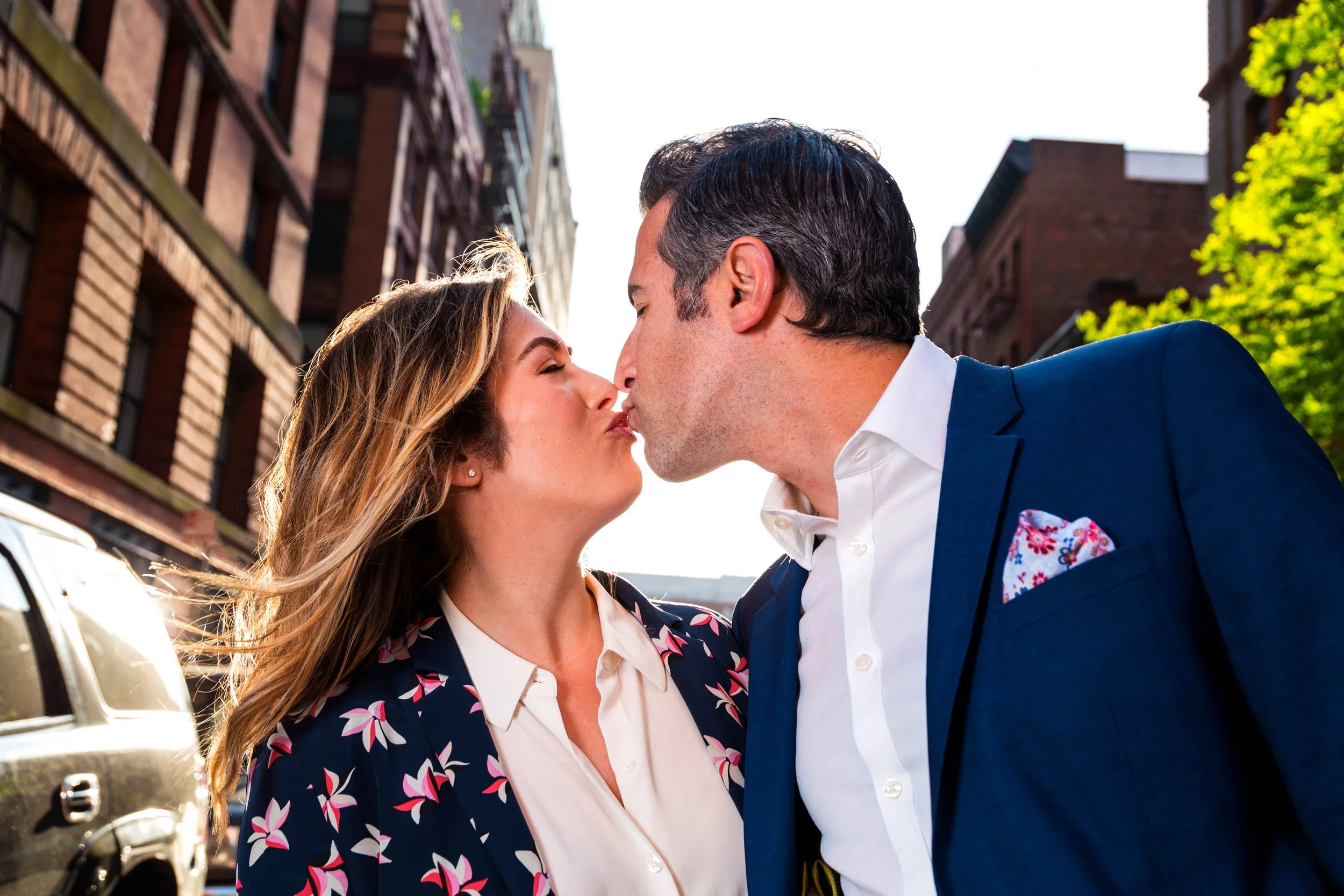
The Neighborhood Effect, New York City Edition
🚇 Let's Begin With Something Uncomfortable
New Yorkers will tell you, with total confidence, that they'd "never date someone who lives in [insert borough that isn't theirs]." It's said as a joke. It is not entirely a joke.
New York is the one city on this list where the geography problem isn't about walkability — the whole city is walkable — it's about borough loyalty, a kind of psychological zoning that has nothing to do with subway maps and everything to do with identity. Someone in Park Slope and someone in Astoria can both live phenomenal, walkable, car-free lives, both be a 25-minute train ride from Union Square, and still functionally never cross paths, because each of them has quietly decided which boroughs count as "their New York."
We've run events across all five boroughs as part of 26,000+ speed dating events in 65+ cities worldwide, and the pattern here is different from anywhere else in this series: New York doesn't have a car-dependency problem or a river-crossing problem. It has a loyalty problem. The infrastructure to meet someone across town has always been there. The willingness to use it is the variable.
📊 What the Walkability Numbers Actually Say
Let's ground this in something real before we get into borough psychology.
New York City as a whole scores an 88 out of 100 on Walk Score, making it the second most walkable large city in the US behind only San Francisco, with well over half of households living entirely car-free. That's the headline number. The more interesting number is what happens when you break it down by borough.
Manhattan is the most walkable borough in the city, according to a Columbia University walkability index that measured density, street connectivity, and land-use mix across every census block in New York — followed by Brooklyn, the Bronx, and then Queens, with Staten Island trailing well behind all four. On the ground, that means you're rarely more than a 10 to 15 minute walk from a subway station anywhere on the island of Manhattan.
Brooklyn holds its own better than its borough-wide ranking suggests once you get street-level: Park Slope scores a 98, Brooklyn Heights a 97, and Carroll Gardens a 94 — genuine Walker's Paradise territory, all within a few subway stops of each other.
Queens is the borough most people underrate, and the data doesn't back up the reputation. Astoria scores a 95, Sunnyside a 96, and Elmhurst climbs as high as 97 to 98 — walkability numbers that rival or beat plenty of Manhattan and Brooklyn neighborhoods, at a fraction of the rent, on subway lines that just aren't considered "cool."
🌉 The Borough Loyalty Problem
Here's what those numbers don't capture: none of this walkability translates into cross-borough dating unless someone actually decides to make the trip, and New Yorkers are famously reluctant to make that decision on a Tuesday.
This isn't Dallas sprawl or LA freeway culture — the subway makes almost every borough-to-borough trip genuinely fast. It's psychological. Manhattan residents develop a reputation, not always fairly earned, for treating an outer-borough date as an expedition rather than a normal Tuesday. Brooklyn has built such a strong internal identity over the last fifteen years that plenty of its residents can go months without a real reason to cross the river. And Queens, despite having some of the best walkability numbers in the entire city, gets systematically underrepresented in Manhattan-and-Brooklyn-centric dating culture simply because it doesn't get talked about as often.
The result is a city with excellent infrastructure and a self-imposed routing problem. The trains run. The willingness doesn't always follow.
🏙️ Three Boroughs, Three Very Different Dating Scenes
Manhattan (think Union Square, the West Village, the East Village) runs on sheer density and turnover — an enormous number of bars, restaurants, and events packed into a small walkable footprint, with a population that skews toward people newer to the city and actively building a social circle. The dating scene here is high-volume by default; the challenge isn't access, it's cutting through the noise of a borough where everyone has ten options every night of the week.
Brooklyn (Park Slope, Williamsburg, Brooklyn Heights) has spent the last decade and a half building an identity so strong it functions almost like its own city — complete with residents who genuinely never need Manhattan for anything. That self-sufficiency is a huge advantage for neighborhood-level repetition and familiarity, and a real liability if it hardens into "I don't cross the river," which quietly shrinks the dating pool more than most Brooklynites realize.
Queens (Astoria, Long Island City, Sunnyside) is the most walkable, most diverse, and most underrated borough on this list by a wide margin — and the one most likely to be skipped entirely by Manhattan and Brooklyn residents who've simply never had a reason to go. For anyone actually living there, that's an advantage: less competition for attention, strong walkability, and a genuinely different, less try-hard social scene than its two more famous neighbors.
📍 What Venue Selection Actually Does Here
A venue in Manhattan pulls whoever's already out — high density means low commitment to show up, but also a lot of competition for attention in the room itself. A venue in Brooklyn pulls a slightly more settled, neighborhood-loyal crowd who chose that borough on purpose and likes it that way. A venue in Queens pulls the people most willing to prove borough loyalty is a choice, not a law of physics — often the most deliberate, intentional attendees of the three, since almost nobody ends up in Astoria or Sunnyside by accident.
(Honest caveat: borough-specific attendance share and match-rate variation across our NYC events would need a fresh Smart-Card pull to state as hard company data rather than an observed pattern. The Walk Score figures above are public and verifiable; anything about who actually attends and matches at our NYC events specifically is a placeholder until that pull happens.)
🧭 What Singles in NYC Should Actually Do
If you're in Manhattan, the fix isn't finding more options — you have plenty. It's picking two or three places on purpose and actually going back, so you're not starting from zero with a new crowd every night.
If you're in Brooklyn, enjoy the self-sufficiency, but check yourself on the river thing. "I don't really do Manhattan" is a preference. It's also, quietly, a smaller dating pool than you'd choose if you thought about it directly.
If you're in Queens, stop assuming you're at a disadvantage. The data says otherwise. The actual fix is finding events and spaces that pull people in from Manhattan and Brooklyn on purpose, since your borough clearly isn't going to accidentally advertise itself to them.
And no matter which borough you're in: the subway already solved the access problem decades ago. The only thing left to solve is whether you're willing to use it for something other than your commute.
🔍 Be Honest About the Limits Here
The walkability data above is public and describes how these boroughs and neighborhoods are physically built — it doesn't measure dating outcomes directly. Borough loyalty is a widely discussed, self-reported New York cultural pattern, not a controlled study. Treat the geography as a real factor worth planning around, not a verdict on anyone's love life.
💛 One Last Cheeky Thought
New York is the one city in this series where nobody can blame the infrastructure. The trains run. The city is walkable. Nobody's asking you to drive forty minutes on a freeway or negotiate crossing a river.
Which means the borough you've quietly decided is "your New York" is doing more to shape your dating life than any subway map ever could. The data says Queens is more walkable than half of Manhattan. The question is whether you've ever actually gotten off at Astoria-Ditmars to find out.
Ready to stop letting borough loyalty do the deciding? MyCheekyDate hosts real, host-led speed dating events across Manhattan, Brooklyn, Queens, and 65+ cities worldwide. No borough allegiance required to find out if there's chemistry — just a room, real people, and a Smart-Card that handles the matching privately and mutually. Find an NYC event at mycheekydate.com.