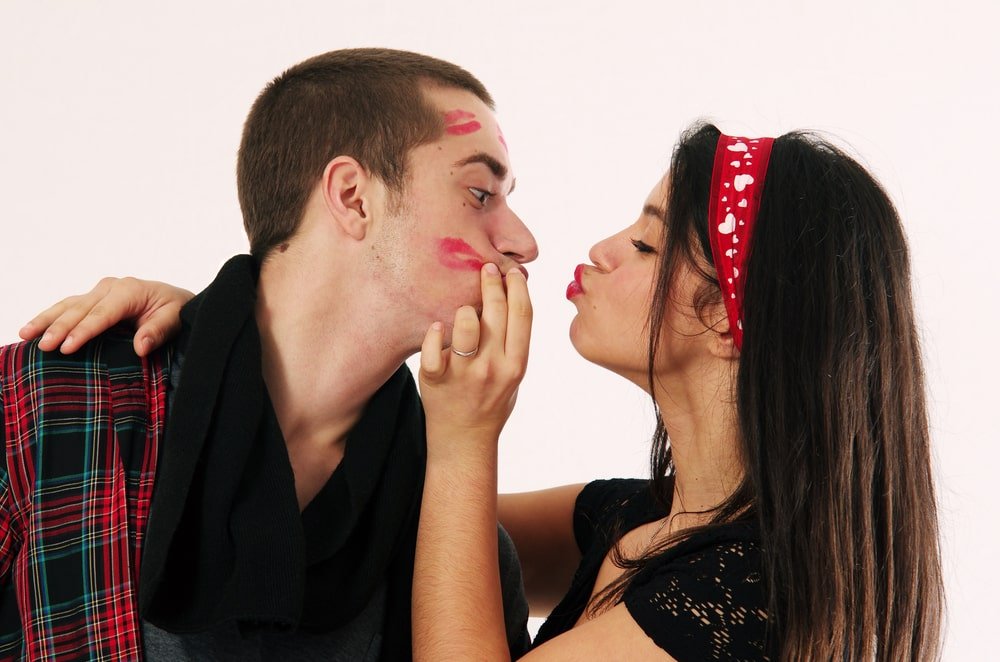
The short answer: Yes, the spark is real, and it's fast. Our hosts say they can often see it the moment two people sit down. But a spark is an opening line, not a verdict. The next four minutes decide whether it turns into a match, and some of the best matches never had a lightning bolt at all.
💘 The Number That Just Jumped
Love at first sight is having a comeback tour. According to the 15th annual Singles in America study from the Kinsey Institute and Match, belief in love at first sight climbed from 41% in 2010 to 62% in 2026, and the share of singles who say they've actually experienced it rose from 30% to 47%. Phys.org
Here's the plot twist in the same survey: nearly half of singles say they've fallen for someone they weren't initially attracted to. So singles believe in the thunderbolt and in the slow burn. Rude of them to want both, but fair. PR Newswire
We can't settle it with a survey. We can do something better: ask the people who stand at the edge of the room and watch first sight happen, in real time, across 26,000+ events in 65+ cities.
👀 What It Actually Looks Like From the Edge of the Room
Our hosts don't need long. "You can almost see it the moment two people sit down," they told us.
What are they seeing? Not fireworks. Something quieter.
"There's a spark in the eye. A little something."
Then the body follows. They lean in. And there's a casualness to it, a comfort that doesn't usually show up between strangers in the first few seconds. Two people who met ten seconds ago look like they've been talking for ten minutes.
Science backs up the speed. First impressions of a face form in about a tenth of a second. Our hosts would add that the good ones don't just form fast. They relax fast.
⏱️ Seconds, Then Minutes
Here's the timeline our hosts see, over and over:
The first few seconds: the spark. The glimmer, the lean, the ease.
Three to four minutes in: a deeper connection starts to build, or doesn't. This is where "you're cute" becomes "wait, you're interesting."
By the end of the conversation: one of two things. Either they're reaffirming what they felt at the start, or they're discovering that the details they're learning don't add up to a mutual match.
That last part matters. Love at first sight isn't wrong so much as incomplete. It's the trailer, not the film.
🎭 When the Spark Isn't Enough
Our hosts have watched unbelievable chemistry fizzle, and they're clear it wasn't that the spark was fake.
"There can be instant chemistry in the blink of an eye," they said. "But once they start talking about themselves and their goals, you can see their interests or goals just don't line up."
The glimmer is real. So is wanting to live in different cities, or wanting kids versus definitely-not-kids. A spark can get you to minute three. It can't rewrite a five-year plan.
🎪 The One-Sided Version
Then there's the lopsided lightning bolt, when one person is smitten and the other is… being polite.
Hosts say it's easy to spot, because it stops looking like a conversation. "It becomes almost like an act. They're putting on a show they hope will entertain the other person."
Real mutual chemistry looks comfortable. One-sided chemistry looks like a performance. And performances, as we've written before, are exactly what a four-minute conversation tends to see straight through.
🐢 The "Flat" Pair That Matched Anyway
Now for the part the love-at-first-sight crowd doesn't like to hear. Some pairs look like nothing is happening, then match.
Our hosts' explanation is kind of lovely: "A lot of times it just means their energies actually match. They're both very casual in their personality and demeanor, and they just needed to meet someone who was like that too."
No lean. No sparkle. Just two calm people who finally found someone who doesn't need them to perform. From across the room it looks like a low-key chat. To them, it's the first conversation in months that didn't feel like work.
This fits our own data: 42% of matches happen outside the "type" people describe before the event. It also fits the survey finding that nearly half of singles have fallen for someone they didn't fancy at first glance. Not every match arrives as a thunderbolt. Some arrive as a very comfortable Tuesday.
🔁 So Who Gets Struck?
Everyone, apparently. Our hosts see sparks all night long, with nearly everyone who attends.
And lightning doesn't discriminate. Hosts see no difference between first-timers and people who've been before, and no difference by age. A 26-year-old on their first event and a 54-year-old on their fifth are equally likely to get that look across the table.
💛 One Last Cheeky Thought
Love at first sight is real. Our hosts see it every week, usually before anyone has finished saying their name. It's just not the whole story. Sometimes the spark confirms itself in four minutes. Sometimes it walks into a mismatched life plan. And sometimes the best match of the night never sparked at all, because two quiet people finally found their frequency.
That's why the room has fifteen conversations, not one. And it's why our hosts tell every dater the same thing: "Any time you have that lightning-bolt moment, it makes all the other times you didn't simply not matter."
Curious whether you'll feel it in the first few seconds, or the last few minutes? MyCheekyDate runs real, host-led speed dating events across 65+ cities worldwide. No filters, no swiping, just fifteen real conversations and a Smart-Card that only counts it when you both meant it. Find your city at mycheekydate.com.
❓ Quick Answers
Is love at first sight real?
Our hosts see instant chemistry constantly, often within seconds. Whether it becomes a match depends on the next few minutes of conversation.
How fast can you tell if there's chemistry?
Hosts say the initial spark shows up in seconds. A deeper connection tends to build around three to four minutes in.
Can you fall for someone you weren't attracted to at first?
Yes. Nearly half of singles say they have, and 42% of MyCheekyDate matches happen outside people's stated type.
Does age affect love at first sight?
Our hosts see no difference by age, or between first-timers and returning daters.
A Note on Methodology
Survey figures are from the Kinsey Institute and Match's 15th annual Singles in America study (about 5,000 U.S. singles, conducted March–April 2026, released September 2026). First-impression timing references Willis & Todorov, Psychological Science (2006). Host observations are qualitative and pattern-based, drawn from the cumulative in-person experience of MyCheekyDate hosts across our city network. They are not a controlled study or drawn from the Smart-Card dataset. The 42% outside-stated-type figure reflects the full Smart-Card dataset, weighted toward the most recent 24 months. MyCheekyDate was founded in 2007 and has hosted 26,000+ verified events across 65+ cities in the last 10 years alone.