Why Houston Singles Are Ditching the Swipe for Something More Personal

Why Houston Singles Are Ditching the Swipe for Something More Personal

Local data, local reporting, and the Houston-specific case for going personal with your dating life.

🪞 Houston's Oldest Matchmaking Company Predates the Apps Entirely

Here's a detail worth sitting with: Houston Singles, the city's longest-running personal matchmaking service, was founded in 2004, years before Tinder, Hinge, or Bumble existed. For over two decades, the company has focused exclusively on relationship-minded professional singles, building what it describes as deep roots in the local community and a proven track record from "helping successful singles find meaningful relationships since before online dating even existed."

That's a genuinely useful data point. Houston's appetite for real, personal matchmaking isn't a reaction to app fatigue. It predates the apps. The swipe format arrived, dominated for a while, and now a meaningful share of Houston singles are circling back to exactly the kind of service the city already had.

📉 The National Numbers Land Just as Hard in Houston

Houston singles are experiencing the same well-documented fatigue showing up nationally. A Forbes Health survey found nearly 4 in 5 dating app users report feeling burned out "sometimes, often, or always," citing failure to connect, disappointment, and rejection as the leading causes. Separately, 51% of American women reported negative experiences on dating apps in a Pew Research Center survey, with ghosting cited as one of the most common frustrations, people investing real energy in getting to know someone who simply disappears.

Houston's own matchmaking services describe the exact same pattern locally. One Houston-based matchmaking service put the core problem plainly: "While dating apps provide access to a large pool of matches, users often express frustration with the overwhelming number of choices." The same firm points directly at the cost of staying on the apps too long, describing its own service as one that "saves you from wasted dates and endless swiping."

🏆 Texas Just Ranked Third Best State in the Country for Singles

Houston benefits from a genuinely strong statewide backdrop here. Texas ranked third nationally in WalletHub's 2026 "Best and Worst States for Singles" report, according to CultureMap Houston, driven by the state's diversity, dense population, and abundance of date venues. The report specifically found Texans show fewer signs of "attachment avoidance," discomfort with intimacy, than residents of most other states, meaning Houston singles aren't fighting an uphill battle against a commitment-phobic culture. They're fighting an interface that was never built to reward follow-through.

💼 Even Match Group Chose Texas as Its Home Base

There's an interesting irony sitting quietly behind all of this: Match, the dating app credited with popularizing swipe-based dating, is headquartered in Texas. In 2023, the company launched a feature called "72 Hours" specifically designed, in its own words, to help "date-ready members" meet in real life sooner and avoid "the endless game of messaging and churning through options," essentially building a feature to fix the exact problem its own product created. Even the industry's biggest player, based in the same state as Houston, has publicly acknowledged that its core mechanic wasn't getting people to actual dates fast enough.

🎯 Houston's Matchmakers Are Positioning Themselves Squarely Against That Problem

Modern Houston matchmaking services describe their process as explicitly built around the gaps app dating leaves behind: vetted, curated networks instead of algorithms, discretion instead of public swiping, and a process designed to respect a client's time rather than asking for more of it. One client review of a Houston matchmaking service captured the contrast simply: "My matchmaker took the time to get to know me, my dating background, and asked insightful questions to understand what I was looking for out of a partner," a level of attention no swipe interface is built to provide.

💛 One Last Cheeky Thought

Houston never actually needed the apps to invent personal matchmaking. It already had it, running quietly since 2004, waiting for the rest of the dating world to catch back up.

The evidence lines up cleanly here: a Houston matchmaking firm with two decades of local roots predating the swipe era entirely, a home-state ranking of third-best in the country for singles, and even Match Group, headquartered in the same state, publicly building features to undo the fatigue its own product caused. That's not a trend piece. That's Houston returning to something it never actually needed to leave.

We've been running real, in-person events across Houston long enough to watch this shift happen firsthand. If you're ready for something more personal than another round of endless swiping, Curated Introductions are available here in Houston, and for something more hands-on, Advice & Coaching and Premium Luxury Matchmaking are too.

Curious what "personal" actually looks like for dating in Houston? Explore MyCheekyDate's Houston events.

A Note on Sources

Houston Singles' founding date and history via Yelp's 2026 business profile. Dating app burnout and negative-experience statistics from Forbes Health's 2025 survey and Pew Research Center data, as cited by AOL's 2026 dating apps analysis. Houston matchmaking service positioning and client testimonial via AfterHello's Houston matchmaking page. Texas's third-place national singles ranking from WalletHub's 2026 report, via CultureMap Houston. Match Group's "72 Hours" feature and Dallas, Texas headquarters via PR Newswire's 2023 announcement, cited for context on the industry's own home-state acknowledgment of app fatigue. All figures reflect the most recent data available as of publication.

Is Speed Dating Worth It in Houston? Here Is What Our Houston Attendees Told Us

Is Speed Dating Worth It in Houston? Here Is What Our Houston Attendees Told Us

Most answers to this question come from two places. A speed dating company trying to sell you a ticket, or a blogger who went to one event, had a mediocre time or a great one, and wrote 800 words about their feelings. Neither is actually answering the question. They are describing a mood.

We can do better than a mood. We have run more than 26,000 verified events in the last ten years alone, across 65+ cities including Houston, over 19 years in business. Every one of those events produced real data: who showed up, who selected whom, who came back, who matched the second time if they didn't the first. That is not a vibe. That is a dataset large enough to actually answer the question honestly, including the parts of the answer that are inconvenient for us.

So here it is, with the Houston numbers layered in. Not a sales pitch. A genuine, data-led answer to the most searched question in this category, with the caveats left in.

What "worth it" actually means, in a city like Houston

Before answering, it's worth defining the metric, because "worth it" is doing three different jobs depending on who's asking, and Houston has a specific shape that makes this question worth asking differently here. This is consistently ranked among the most diverse large cities in the country, with a population spread across roughly 665 square miles inside the city itself and closer to 9,000 across the metro. That size is a genuine asset for meeting different kinds of people. It's also a genuine obstacle to actually meeting them, in a car-dependent city where "let's grab a drink" can mean a 40-minute drive each way.

Worth it for meeting people you would not otherwise meet, across a city with one of the most genuinely diverse populations in America, spread across neighborhoods that rarely cross paths without a reason to. Worth it as a use of time, in a metro large enough that dating logistics are their own quiet obstacle before the actual date even starts. Worth it as a use of money, in a state that ranks among the more affordable in the country for dating.

Those are three different questions with three different answers. We'll take them one at a time, with numbers attached to each.

The data on whether people actually match

Start with the finding that matters most: nationally, 86% of attendees receive at least one mutual match, averaging 2.3 mutual matches per event. These are not algorithm predictions or maybes. They're real, private, mutual selections, made after real face-to-face conversations, using our Smart-Card system, which captures degree of interest across five tiers rather than a flat yes or no. [Houston-specific match rate and average matches per event to be inserted here once pulled from the local Smart-Card dataset.]

Compare that to what's happening on apps, in a metro large and diverse enough that the pool should, in theory, be an advantage. Industry data puts the ratio at roughly 57 matches for every 1 date that actually happens. Of the matches that do occur on Hinge specifically, only about 14% convert into a first date. In a city this spread out, that gap between matching and actually meeting up gets wider once you factor in the drive. Most of what people call "matching" on an app is not a date. In Houston, it's often not even someone on your side of town.

An 86% national mutual match rate, from a room of people you actually spoke to over a drink, is a different category of outcome than a match rate calculated from swipes that never left a phone somewhere on the 610 Loop.

The second event finding

Here's the number we think matters most for anyone in Houston sitting on the fence: 77% of people who didn't match at their first event matched at their second.

That single stat should reframe how anyone reads a first event that didn't produce a connection, especially in a metro this large and this diverse, where the crowd at a Montrose event and a Heights event can look genuinely different depending on who's in the room that night. One event is a data point, not a verdict. What the data shows clearly is what happens when people give it a second try, ideally at a different Houston event, instead of writing off the format after one uneven night.

What attendees say versus what the data shows

There's a gap between what people tell us they're looking for when they walk in and what they actually select once they're in the room. Ask someone their type on a form and you get one answer. Watch who they select on their Smart-Card after fifteen real conversations, and the pattern is often different, sometimes very different, from the stated one.

This is the stated preference versus revealed preference gap, and it shows up consistently, including in a city as genuinely diverse as Houston, where people often arrive with assumptions about compatibility shaped more by background than by actual chemistry. The attributes people say matter to them and the attributes that actually predict who they pick are not the same attributes. Something about a real room, in real time, changes people's minds in ways a dating profile never gives them the chance to discover.

When speed dating is genuinely worth it in Houston

Based on the data, some groups get outsized value from this format specifically, and Houston has a strong case for several of them.

App-fatigued daters, especially anyone who's been swiping for more than six months and found that a large, diverse dating pool doesn't automatically translate into real connections, with diminishing returns regardless of how many profiles are technically nearby. People who read better in person than they photograph or write on paper. Introverts, somewhat counterintuitively, often find a structured, time-boxed format easier to navigate than a sprawling Montrose bar crawl that requires driving between three different neighborhoods in one night. And anyone who has been stuck in a talking stage that never turns into an actual date will find that a speed dating event simply doesn't allow that stage to exist. You either connect in eight minutes or you move to the next conversation, all in one room, without the usual Houston logistics.

When speed dating might not be worth it

This part matters, because an honest answer has to include it, wherever you live.

If you've just come out of a long relationship and you're not actually ready, this isn't the move yet. If your social anxiety is severe enough that a room of strangers would be genuinely distressing rather than mildly nerve-wracking in the ordinary way most people feel before a first date, that's worth being honest with yourself about too. And if you're looking for someone with a very specific, narrow set of requirements, a room of 15 people on a given night is a small sample. The format works because of real, in-person signal, but it can't manufacture a match that isn't in the room that night.

None of these are dealbreakers forever. They're reasons the timing, not the format, might be wrong right now.

The cost comparison, Houston edition

Do the math with us for a second.

Texas ranks among the more affordable states in the country for dating, with a typical statewide date running somewhere in the $70 to $95 range, and Houston's cost of living tracks close to that statewide baseline rather than pushing above it the way some other Texas cities do. Even so, that's still a real cost per date, with no guarantee of a second one, well below the $189 national average for an app-sourced first date in 2026 but not nothing.

At a MyCheekyDate Houston event, you meet 10 to 15 people in a single evening for a fraction of even Houston's relatively affordable date-night prices. If 86% of attendees nationally get at least one mutual match, and the average is 2.3 matches, the cost per genuine mutual connection isn't just lower, it's a different order of magnitude, in a city that already has one of the better dating economies in the country.

The time comparison

Now the time math, because in a metro this size, time and traffic are the costs people underprice most.

Studies on dating app usage regularly put the average user at several hours a week on the apps, swiping, messaging, matching, and mostly not converting any of it into an actual date, before factoring in the drive time a spread-out city like Houston adds to every single one of those maybes. Meanwhile, the average American single went on fewer than two in-person dates in the entire past year. Almost half of single men and a third of single women reported zero dates in the past twelve months. And 78% of dating app users reported feeling emotionally exhausted by the apps in 2024.

Against that backdrop, one evening, two to three hours, one drive instead of several separate ones, producing 10 to 15 real conversations and, on average, more than two mutual matches, is not a big time ask. It's a small one, with a return that apps, and Houston's own geography, are currently working against.

The invite-back policy as the risk reversal

Here's the part of our model that changes the risk calculation of trying this for the first time, and it's not something most speed dating companies do.

Most formats invite you back automatically if you don't match, treating the return visit as a consolation prize. We do the opposite. Our invite-back isn't earned by matching or not matching. It's earned by being the kind of person who makes the room better: genuine engagement, warmth toward other attendees, a good attitude even in a fifteen-conversation night that includes some misses.

That means the people we ask back to our Houston events are the people other attendees actually want to be in a room with again. It's a different philosophy than "didn't work, try again for free." It's "you were good for this room, come be good for the next one." If you're wondering whether trying this once is a real commitment or a low-risk experiment, that's your answer. Show up, be genuinely yourself, and the door stays open regardless of whether the math worked out on night one.

If it goes well: where to take a second date in Houston

A genuine local close, not a filler list. If you match at a Houston event, a few second-date spots that keep the same energy going without over-planning it, and Houston's Museum District gives this city a genuine advantage most others on this list don't have.

The Menil Collection. Free every single day, always has been, with a quiet campus of galleries and green space that makes for one of the most distinctive, low-pressure second dates in the entire country.

Buffalo Bayou Park. Free, with skyline views and miles of trails, easy to extend into a longer walk or wrap up early depending on how things are going.

Discovery Green. Free, downtown, with regular events and enough activity to give a second date a natural rhythm without any planning required.

The Museum of Fine Arts, Houston, on a Thursday. Free admission to the permanent collection every Thursday, making one of the country's largest art museums a genuinely no-cost second date once a week.

So, is it worth it in Houston?

The question was whether speed dating is worth it. The data has an answer. The honest version of that answer is: for most people, in most circumstances, with reasonable expectations about what one evening can produce, yes. In a city this large, this spread out, and this genuinely diverse, one evening in one room does something the sheer size of Houston makes surprisingly hard to do on your own. It's considerably more worth it than the alternative most people are currently choosing.

A Note on Methodology

National baseline figures (86% mutual match rate, 2.3 average matches per event, 77% second-event improvement) reflect the full Smart-Card dataset across all markets, weighted toward the most recent 24 months where sample size allows. Houston-specific figures, where cited, should be pulled from the local Smart-Card dataset before publishing. App conversion figures sourced from published platform data and independent dating research. Texas statewide date-cost figures sourced from published statewide cost-of-dating research. Houston's diversity ranking and geographic size are sourced from published city rankings and metro-area data, which vary somewhat by year and methodology. MyCheekyDate was founded in 2007 and has been operating for 19 years. The 26,000+ verified events referenced throughout this piece were run in the last 10 years alone. Full Smart-Card methodology available at mycheekydate.com/smart-card.

Your Selections Are Private in Houston. Here Is Exactly What That Means.

Your Selections Are Private in Houston. Here Is Exactly What That Means.

By The MyCheekyDate Team | Houston Edition | Companion piece to "How the Smart-Card Actually Works in Houston"

Every dating app you have ever used has, at some point, shown your behavior to someone who did not ask to see it. Who swiped right on you. Who viewed your profile. Who matched with you and is now, somewhere on the other side of the Houston metro, wondering if the 45-minute drive is worth suggesting.

The entire engagement model of app dating depends on making your interest visible, because visible interest is what keeps people opening the app.

In Houston, that visibility interacts with two things that are specific to this city.

The first is the distance. Houston's raw sprawl means that app interest, once made visible, faces a logistical calculation before it can become anything real. Visible interest in someone 40 minutes away is visible interest that may never convert because neither person wants to be the one to suggest the drive.

The second is the diversity. Houston is the most genuinely diverse major city in America. 145 languages spoken. A population from every cultural tradition. In a city this diverse, visible interest across cultural lines carries social weight that private interest does not. The app makes your selections visible in exactly the context where that visibility is most likely to produce managed, socially calibrated responses rather than honest ones.

The Smart-Card works on the opposite principle.

Private selections. Honest data. The 2.9 average matches per event that emerge when Houston's genuine openness to diverse connection is given a format that records it honestly rather than publicly.

This article explains exactly what that means.

🔍 What We Collect. All of It.

Let's start here, because most companies bury this.

At registration, MyCheekyDate collects your full name and your email address. That is the complete list.

No phone number. Not at registration, not at the event, not ever. No address. No persistent payment data stored beyond what is needed to process the transaction itself.

This is unusual in the events industry. Most event companies collect significantly more: full name, phone number, sometimes address, sometimes all of it shared with attendees, partners, or platforms as a matter of routine.

Most event companies know your phone number. We only know your first name and how the conversation went.

In Houston, the phone number point matters in a specific way. This is a city where the professional communities, particularly in the energy sector, healthcare, and the rapidly growing tech sector, are interconnected in ways that the metro's enormous size might suggest they should not be. Not collecting your phone number, when industry standard is to collect it, is a deliberate decision about what kind of relationship MyCheekyDate wants to have with the information you bring to a Houston event.

We do not collect what we do not need. Data you do not have cannot be misused, leaked, sold, or handed to someone you never agreed to hear from.

📋 What Happens at the Event

When you arrive at a MyCheekyDate event in Houston, whether that is The Rig at The Cambria Hotel, Henke & Pillot, or a Midtown or Montrose or Heights venue, you access the Smart-Card through a secure web link on your own phone. No app download required. No background data collection running between events. No persistent tracking layer sitting on your device the rest of the year.

At the event, before conversations begin, you enter a short bio directly into the Smart-Card. A few lines about yourself, written in the room, on the night. Not optimized for algorithmic performance. Not calibrated to signal the right cultural or professional positioning. Just a few direct lines, written quickly in a Houston room, with the full diversity of the city in the seats around you and the conversations about to begin.

🔒 What Happens to Your Selections

This is the section that requires complete precision.

After each four-minute conversation, you privately rate the person you just spoke with across five tiers. A spectrum of genuine interest that captures not just whether you would like to see someone again, but how strongly you felt that. The selection window stays open until midnight, removing social pressure from the decision entirely.

In Houston, the midnight window matters in a way that is specific to this city's social character. Houston's social warmth arrives quickly in a room. But the decision about genuine romantic interest is a different question from social warmth, and in a city this diverse the midnight window gives people the space to make that distinction honestly and privately, without the social weight of making it visible in the moment.

Your selections are kept. Here is exactly what kept means.

What your selections are used for:
Your selections, anonymized and aggregated across Houston events and 26,000+ events globally, feed the Smart-Card machine learning over time. The system learns real-world attraction patterns from what Houston people actually chose after real face-to-face conversations in real Houston rooms, across the most diverse dating pool in our network, with no similarity filter applied. Your selection becomes one data point in a pattern dataset that improves matching accuracy across the full MyCheekyDate ecosystem.

What your selections are never used for:
Your selections are never retrievable as individual identifiable records. No host, no staff member, no MyCheekyDate employee can open a screen and see that you chose or did not choose a specific person on a specific Houston evening. That data does not exist in that form. It exists as anonymized pattern intelligence, not as a file with your name attached that anyone could read.

The only thing ever shared with another person:
A mutual introduction. If you selected someone and they selected you, both of you receive an introduction. One-sided interest produces nothing visible. No notification to the other person. No hint. No social consequence for choosing someone who did not choose you back.

In a city this diverse, where visible interest across cultural lines carries particular social weight, that last point is the one that matters most.

To state this as plainly as possible:

Your selections are kept to make the machine learning smarter. They are never shared with anyone except as a mutual introduction when both people independently and privately chose each other.

🧠 Why Privacy Produces Better Data in America's Most Diverse City

Here is where privacy stops being a reassurance and becomes an argument that is specifically relevant to Houston.

When selections are visible, people make socially calibrated decisions. In any city, social self-consciousness shapes selection behavior. In Houston, where the dating pool is more culturally diverse than any other city in our network, visible selections carry a specific kind of social weight around cross-cultural interest that private selections do not.

A dataset built on publicly visible, socially managed selections in Houston's diverse market would teach the machine learning to model the social management of diversity. Not genuine attraction across it. Those two things are not the same, and in Houston the gap between them is larger than anywhere else in the network.

Private selections remove that management entirely. The five-tier rating system captures the full spectrum of how strongly someone responded to a conversation, across the full diversity of who was in the room, without any social calculation about how that response will appear. Combined with the midnight window that takes the decision outside the social environment where that calculation runs, the result is the most honest read of real Houston attraction the Smart-Card machine learning has ever been trained on.

This is why Houston produces 2.9 average matches per event, tied for the highest in the network, in a city whose diversity should theoretically complicate matching but instead expands it. Private, honest, five-tier selections from real Houston conversations, made after the similarity filter was structurally removed and the full diversity of the room was available to produce chemistry, generate the breadth of genuine mutual recognition that the app environment was systematically preventing.

As we wrote in our companion piece on the Smart-Card machine learning: privacy by design produces honest signal. Honest signal is the only kind worth training a system on. In Houston, where the social management of visible interest in a diverse context is the specific distortion that honest data needs to cut through, that privacy is the architectural condition that makes the machine learning learn from genuine attraction rather than managed impression.

🏢 How This Compares to App Data Practices

Dating apps monetize attention and data. In Houston, that business model has a specific consequence. The apps apply similarity-weighted filtering to the most diverse dating pool in America, which means they are increasingly good at identifying who looks most compatible along similarity dimensions and increasingly irrelevant to identifying who actually connects in Houston's genuinely diverse rooms.

MyCheekyDate makes money when you have a good evening in a real Houston room and want to come back. Not from advertising. Not from selling data profiles to third parties. The business model is events and matchmaking. Privacy protects the product not just the person.

MyCheekyDate does not sell your data. Ever.

The structural difference matters more than any privacy policy. A company that profits from your data and a company that profits from your matches are running different businesses with different incentives. In Houston specifically, a company that profits from engagement optimizes for similarity signals. A company that profits from matches learns what genuine chemistry actually looks like in the most diverse city in America.

🤝 The Cheeky Guarantee as Trust Infrastructure

The same philosophy that shapes how we handle your data shapes how we handle everything else.

If something goes wrong at a Houston event, the Cheeky Guarantee exists to ensure the resolution is straightforward. No runaround. No platform redirect. One email, a direct response, a real outcome.

Data transparency and commercial transparency come from the same place. We are asking you to trust us with your evening, your selections, and your privacy. That trust has to be consistent across every interaction.

If you want your data deleted, that is a request we honor. Reach out directly and we will confirm current process and timelines.

⌚ Why This Matters More as Wearables Arrive in Houston

Houston is one of the fastest-growing tech markets in the South, a city adding technology sector employment at rates that track closely with Austin and Dallas, with a population that integrates new consumer devices quickly and a professional base in healthcare, energy tech, and aerospace that understands what biometric data collection means in practice.

The next generation of wearables, reading heart rate, stress markers, and physiological signals with increasing precision, arrive into a Houston market that will both adopt them quickly and bring professional sophistication to evaluating what they are collecting. The dating industry application, a device that knows your physiological response during a four-minute conversation at The Rig at The Cambria Hotel packaged as a compatibility signal, is not distant in a city this technically sophisticated.

Your heartbeat during a first Houston conversation is not a product. It should not be someone's inventory. In a city where the diversity of who might be on the other side of that data is greater than anywhere else in our network, that principle feels worth stating directly.

MyCheekyDate has deliberately stayed at full name and email while this shift happens around us. Not because we have not considered what additional data could theoretically contribute to matching accuracy. Because we have considered it carefully enough to conclude that the trust it would cost is not worth what it might gain.

Full name. Email. A short bio written in the room. What happened in the conversation. That is the boundary. It is not moving.

💛 One Last Cheeky Thought, Houston Edition

Houston is the most diverse city in America. 145 languages. Every cultural tradition. A food scene that reflects it all and a social warmth that meets people where they are rather than requiring them to meet it somewhere specific.

The Smart-Card is built on exactly that principle.

Your selections are private because honest data is the only kind worth having. In a city where the full range of human diversity is in the room and the social management of visible cross-cultural interest is a real consideration, that privacy is what makes the machine learning learn from the genuine openness rather than the managed version of it.

The 2.9 average matches per event, tied for the network high, is what Houston's genuine warmth and genuine diversity produce when they are recorded honestly in a room where no filter was applied before the conversations began.

The algorithm was filtering the most interesting connections away.

The Smart-Card was watching them happen.

Your selections are private because honest data is the only kind worth having. And honest data is the only kind we have ever built on.

Curious how the machine learning actually uses this data? Read the companion piece: How the Smart-Card Actually Works in Houston. Ready to find out what a private, honest selection actually feels like in a real Houston room? Find your next event at mycheekydate.com/speed-dating-houston.

A Note on Data Collection

MyCheekyDate collects full name and email address only at registration. No phone numbers are collected or shared at any point. At the event, attendees enter a short bio directly into the Smart-Card on the night, in the room, before conversations begin. Selections are retained in anonymized, aggregated form to support Smart-Card machine learning and are never accessible as individual identifiable records. Mutual introductions are the only selection data ever shared, and only between the two people involved. MyCheekyDate does not sell data. Data deletion requests are honored on request. Houston Smart-Card data reflects interaction records from MyCheekyDate events at The Rig at The Cambria Hotel, Henke & Pillot, and additional Midtown, Montrose, and Heights venues. This reflects current policy as of 2026.

How the Smart-Card Actually Works in Houston: The Machine Learning Behind Real-World Attraction

How the Smart-Card Actually Works in Houston: The Machine Learning Behind Real-World Attraction

By The MyCheekyDate Team | Based on Smart-Card data from Houston attendees across events at The Rig at The Cambria Hotel, Henke & Pillot, and venues across Midtown, Montrose, and The Heights

Start with the assumption almost every dating technology makes without saying it out loud: that chemistry can be predicted before two people are ever in the same room.

A profile goes in. An algorithm scores it against other profiles. A match comes out, before either person has said a word to the other, laughed at a bad joke, or noticed the way someone's whole face changes when they talk about something they actually love.

In Houston, this premise runs into two simultaneous problems that make this city one of the most instructive places in our network to examine what algorithms actually produce versus what they promise.

The first problem: Houston is the most genuinely diverse major city in America. 145 languages spoken. The most ethnically diverse large metro in the country by multiple measures. A population drawn from every inhabited continent, every professional sector, every cultural tradition, living in the same city and sharing the same Buffalo Bayou trails and the same Montrose patios and the same remarkable food scene that consistently surprises people who have only heard about Houston rather than been to it. An algorithm built on similarity-weighted filtering systematically underperforms in a city this diverse, because the most interesting connections consistently cross the lines the filter was designed to enforce.

The second problem: Houston's raw distance problem is the most pronounced of any city in our network. The metro area sprawls across geography that makes Dallas look contained. Midtown to The Heights to Katy to Clear Lake to Sugar Land to The Woodlands: these are not neighborhoods separated by a drive. They are zones separated by a commitment. The app match who lives 40 minutes away on a good traffic day is, in Houston, a person many singles will never suggest meeting in the first place.

After hosting events in this city, with 26,000+ verified events globally in the last 10 years, we have something the algorithm will never have.

We have what actually happened when the profiles were set aside, the distance problem was solved by putting everyone in the same room, and Houston's extraordinary diversity was given a format that works with it rather than filtering it away.

86% mutual match rate. 2.9 average mutual matches per event, tied for the highest in our entire 65-city network.

The most diverse city in America, it turns out, connects at network-high rates when given a format that stops pre-filtering on similarity and starts observing what genuine human chemistry actually produces in a diverse room.

🎭 Every Dating App Starts With a Performance. Houston Has a Specific Relationship With Being Underestimated.

Here is the thing nobody in dating tech likes to say plainly: a profile is not a person. It is a person's highlight reel, edited for an audience of strangers who will judge it in under two seconds.

In Houston, the profile problem has a specific character.

This is a city that has been consistently underestimated by people who have not been to it. The food scene rivals any city in America. The cultural diversity creates a social energy that larger, better-publicized cities regularly fail to match. The outdoor infrastructure, Buffalo Bayou, Hermann Park, the Museum District, is genuinely excellent. The warmth of the people is real and specific, a Houston version of Texas friendliness that carries its own distinct character.

None of this shows up well in a dating profile.

The algorithm is optimizing for the signals that profiles encode: stated preferences, professional credentials, lifestyle indicators, the cultural references that signal the right kind of person to the right kind of filter. In Houston's extraordinarily diverse market, those signals are the least predictive they are in any city we operate in. The person whose profile looks most compatible on paper and the person who produces the strongest in-room mutual match are, in Houston, further apart than anywhere else in the network.

The Smart-Card was built for exactly this gap.

📋 What Goes Into the Smart-Card Before the Conversations Begin

Registration for a MyCheekyDate event in Houston asks for one thing beyond the basics: your name and email address. That is it.

No profile to optimize. No photo submitted for algorithmic scoring. No background, industry, or neighborhood to signal. No list of stated preferences used to pre-filter who you will meet before you have met anyone.

The bio comes at the event itself.

When guests arrive at The Rig at The Cambria Hotel or Henke & Pillot or a Midtown venue or a Montrose event or a Heights room, before the conversations begin, they enter a short bio directly into the Smart-Card. A few lines about themselves, written in the room, on the night, without the pressure of profile optimization.

In Houston, the in-room bio has a quality that reflects the city's genuine character. Houston people, when asked to describe themselves quickly before conversations begin, tend to write bios that reveal the actual personality rather than the signaling personality. The city's cultural diversity means that what people choose to mention in a brief, unoptimized bio often reflects what they genuinely care about rather than what they have calculated will perform well algorithmically.

That bio, written in the room in Houston's characteristic unassuming directness, is the first data point the machine learning later cross-references against everything that happens in the conversation. In the most diverse city in America, that starting point turns out to be consistently more predictive than any profile could be.

📱 What the Smart-Card Actually Does in the Room

The front end is deliberately simple.

After each four-minute conversation at a MyCheekyDate event, you privately rate the person you just spoke with across five tiers. A spectrum of genuine interest that captures not just whether you would like to see someone again, but how strongly you felt that. The selection window stays open until midnight, so there is no pressure to decide on the spot, in the room, with the other person still nearby.

In Houston, where the social warmth tends to arrive quickly once people are in the same space, the simplicity of the Smart-Card front end matters specifically. The city's genuine openness to connection does not need a complex interface to express itself. Four minutes, one private rating, and the honest question asked privately later: was there something there?

What is happening underneath is where the intelligence lives.

🧠 The Four Signals That Make the Machine Learning Work in Houston

Every MyCheekyDate event in Houston generates four simultaneous data streams. In this city, the combination produces findings that are specific to Houston's extraordinary diversity and that could not be generated from profile data alone.

Signal One: Who you selected, and how strongly

Your five-tier ratings across every conversation reveal who you were genuinely drawn to after real face-to-face interaction. Not who the algorithm predicted would be compatible based on profile similarity. Not who fit your stated preferences about background, industry, or neighborhood. Who actually held your attention in a Houston room for four minutes and produced genuine desire for more time.

In Houston's extraordinary diversity, this signal consistently crosses lines that stated preferences predicted it would not. The algorithm would have filtered out many of the mutual matches the Smart-Card records in Houston rooms, because it was filtering on variables that turned out not to predict chemistry in a city this diverse.

Signal Two: Who selected you, even when it was not mutual

If someone chose you and you did not choose them back, that one-sided selection still tells the machine learning something important about what you project, not just what you prefer.

In Houston, where what people bring to a room is often their most genuinely themselves version, this signal captures something the profile systematically misses. The warmth, directness, and cultural richness that Houston people bring to in-person interaction are difficult to encode in a profile and immediately apparent in a room. The Smart-Card records what actually attracted someone in a real Houston room and builds a picture of what you project that no profile data could generate.

Signal Three: What mutual matches have in common

When two people independently and privately chose each other, the system examines why. What did their bios share? What attributes connected them? What does this Houston mutual match look like compared to the thousands that came before it across the network?

The Houston finding here is the most distinctive in our national dataset. The attributes that predict mutual matches in Houston rooms are significantly more culturally diverse than what Houston daters list as priorities at registration. The city's extraordinary diversity means that the most productive connections per evening consistently cross cultural, professional, and background lines that stated preferences would not have predicted. Chemistry emerges across difference more reliably and more frequently in Houston than in any other city in the network. The machine learning has become increasingly accurate at identifying and anticipating these patterns.

Signal Four: The gap between what you said and what you did

The most powerful signal in the Houston dataset.

At the event, you wrote a few lines about yourself and signaled what you were looking for. After the event, your selections showed who you actually responded to. The machine learning holds both signals simultaneously and analyzes the gap.

In Houston, that gap is the widest in the network among cities at national average match rate. The city's genuine diversity means that stated preferences, which in Houston often reflect a narrower range than what people genuinely respond to, diverge most dramatically from revealed behavioral selections. People arrive with preferences about who they are looking for. The Smart-Card records who they actually chose after four real minutes of conversation in the most diverse room they will encounter in any dating context. The divergence is consistent, significant, and specifically Houston.

🔒 Why Private Selections Produce Better Data in America's Most Diverse City

All four signals depend on one thing: honesty.

In Houston, where the extraordinary diversity of the dating pool creates a specific social context around cross-cultural interest, private selections are the architectural condition that makes the data genuinely honest rather than socially managed.

When selections are visible, people make socially calibrated decisions. In any city, visible selections carry social weight. In Houston, where the dating pool is as culturally diverse as any in the world, visible selections across cultural lines carry particular social weight that private selections do not. A dataset built on publicly visible, socially calibrated selections in Houston would teach the machine learning to model social management around diversity. Not genuine attraction across it.

Private selections remove that management entirely. Nobody sees your ratings. Not the host, not the staff, not the other guests, not MyCheekyDate internally. The only output that ever surfaces to another person is a mutual introduction, when both people independently and privately chose each other.

One-sided interest produces nothing visible. No notification. No hint. No social consequence for choosing someone who did not choose you back.

In a city where the most interesting connections often cross the lines that public social management makes most visible, that privacy is what makes the data honest. And honest data is the only kind worth training a system on.

This is why Houston produces 2.9 average matches per event, tied for the highest in our network, in a city famous for its diversity and sprawl. Private, honest, five-tier selections from real Houston conversations produce mutual recognition across a range that stated preferences and visible social management were systematically preventing.

📊 What the Machine Learning Learns From Houston Events

The Houston Smart-Card data produces findings that are specific to this market and genuinely distinctive.

The 86% match rate sitting at the national average is the surface number. The statistic underneath it changes the picture entirely.

The 2.9 average matches per event, tied for the highest in the 65-city network, is the finding that most directly reflects what Houston's extraordinary diversity produces in a well-designed room. When the range of people available is genuinely as wide as it is in Houston, the range of who people connect with is equally wide. Chemistry emerges across difference with remarkable consistency in Houston rooms. The Smart-Card captures that expanded range and has become increasingly accurate at anticipating it.

The hosts observe something specific about Houston rooms that the data reflects. Houston social warmth arrives quickly. The city's genuine openness to diverse connection means that Houston events reach their natural rhythm faster than most markets. The conversations hit depth early. The matches that the Smart-Card records tend to be broadly distributed across the evening and across the room in ways that reflect the city's extraordinary social openness rather than any narrower pattern of preference.

Honest caveat, the way we treat every number we publish: this is observational data from real Houston event outcomes, not a controlled experiment. Strong compass, not a script.

🌐 The Smart-Card Is the Intelligence Layer Behind the Full Houston Ecosystem

The Smart-Card was never built to run one Houston evening well.

The same intelligence that processes your five-tier ratings after a Rig at The Cambria Hotel event or a Henke & Pillot evening feeds directly into what comes next across the entire MyCheekyDate ecosystem.

Curated Introductions. Private, one-to-one introductions for Houston singles made outside of events, informed by real behavioral data from your Smart-Card activity. What you actually responded to in a real Houston room, across the city's extraordinary diversity and without any pre-filtering applied, is a more honest signal than anything a questionnaire can capture. In a city this diverse, Curated Introductions built on revealed preference from live events produce a fundamentally different kind of introduction than any matchmaker working from intake interviews and stated preferences.

Luxury Matchmaking by Luvo. High-touch, personalized matchmaking for discerning Houston singles who want a more considered process. Most luxury matchmakers work from interviews, stated preferences, and professional judgment. Luvo's Houston matchmaking is informed by real behavioral data from Smart-Card events in America's most diverse city, applied to a highly personalized introduction process. No matchmaker in Houston without our event history can replicate that starting point, specifically the behavioral data showing what Houston people actually responded to across the city's full diversity rather than within any narrower stated preference range.

CheekySocial. Ongoing social connections informed by Smart-Card behavioral signals from your Houston event history, extending the machine learning intelligence beyond any single evening and into the broader social ecosystem that Houston's extraordinary cultural richness supports.

Invite-Only Private Club Events. Exclusive Houston experiences built around compatibility patterns the machine learning has already identified. Every room is curated with the full benefit of what the Smart-Card has learned from Houston's uniquely diverse population.

Any company can host a speed dating night in Midtown. Any company can call itself a Houston matchmaker. No other company has real-world attraction data from Houston specifically, built from the most diverse speed dating rooms in our network, with 26,000+ verified events of machine learning built on top of it globally, and a full ecosystem of products that gets smarter with every Houston evening it runs.

The event is where the data gets made. Everything downstream is where it gets used.

🏙️ What Houston Events Teaches That No App Can Replicate

A swipe dataset from Houston, however large, is built from Houston dating profiles filtered through an algorithm that optimizes for similarity. In the most diverse city in America, similarity-weighted filtering is the least useful filtering available. The algorithm is learning from the least Houston version of Houston's dating potential.

Houston events are a different kind of dataset. Each event produces four simultaneous behavioral signals that only exist because real interactions actually happened in real rooms, between the most culturally diverse collection of singles that any city in our network brings together, with no similarity filter applied before the conversations began.

The moment at The Rig at The Cambria Hotel when two people whose profiles would have been algorithmically incompatible discovered, in four minutes, that they were each other's most interesting conversation of the month. The Henke & Pillot evening where the 2.9 average matches reflected not a narrow convergence of similar people but a broad, genuine openness to the full range of who was in the room. The Midtown event where America's most diverse city produced what it always produces when given a format that works with its diversity rather than filtering it away.

That cannot be captured in a profile. It has to be lived, one real four-minute conversation at a time, in rooms that reflect what Houston actually is.

💛 One Last Cheeky Thought, Houston Edition

Every dating app you have ever used in this city has, at some point, applied a similarity filter to the most diverse dating pool in America and produced a narrower, less interesting version of Houston's potential.

The Smart-Card asked you to write a few lines in a room at 7:45pm with fifteen minutes before the conversations started, no algorithm applied, no filter engaged, and the full diversity of Houston in the seats around you.

And then it watched what happened when the conversations began.

That gap, between what the algorithm predicted and what actually happened in a Houston room without a filter, is where the real learning lives.

2.9 average matches per event. Tied for the highest in our entire 65-city network. Not despite being the most diverse city in America. Because of it.

Prediction guesses. Observation learns.

After watching Houston connect across difference with remarkable and consistent generosity, we know which one we would rather be trained on.

Ready to see where the machine learning leads next, from your first Rig or Henke & Pillot evening through to Curated Introductions and Luxury Matchmaking by Luvo? Find your next Houston event at mycheekydate.com/speed-dating-houston.

A Note on Methodology

National baseline figures (86% mutual match rate | 2.3 average matches per event | 77% second-event improvement) reflect the full Smart-Card dataset across all markets, weighted toward the most recent 24 months where sample size allows. Houston figures (86% mutual match rate | 2.9 average matches per event) reflect Smart-Card interaction data from MyCheekyDate Houston attendees across events at The Rig at The Cambria Hotel, Henke & Pillot, and additional Midtown, Montrose, and Heights venues, weighted toward the most recent 24 months. Stated vs revealed preference patterns are drawn from event bio inputs compared against private Smart-Card selections. The 26,000+ verified events referenced throughout this piece were run globally in the last 10 years alone. Full Smart-Card methodology available at mycheekydate.com/smart-card.

Post-Date Texting After Speed Dating in Houston

Post-Date Texting After Speed Dating in Houston

You're sitting in your car outside the venue in Montrose, or already back home in the Heights with the AC running, and your Smart-Card results land. Mutual matches. Your phone's right there in the cupholder.

Houston is one of the most spread-out cities in the country, and everyone who's dated here knows it firsthand — your match might be a genuine 30-plus minute drive away depending on which loop you're crossing. That's the real obstacle, more than knowing what to say: the very Houston instinct to quietly downgrade a match's potential the second you clock the distance on the map.

The next 24 to 48 hours matter more than people think, and they matter even more here, because the longer the gap, the easier it is to let the drive talk you out of it entirely. Wait too long and the specific, easy-to-reference night you just had — the bar in Montrose, the joke about the 610 loop at rush hour, the person who had strong, unprompted opinions about breakfast tacos versus kolaches — fades into a vague memory neither of you can build a real message around.

Why a Houston Match Beats an App Match

Anyone who's dated in Houston on apps knows the specific exhaustion: weeks of texting someone who's theoretically thirty-five minutes away, both of you silently doing the commute math before either of you commits to meeting. A huge share of Houston app matches never survive that math — the drive kills the momentum before the conversation even gets going.

A speed dating match skips it entirely. You already met — in person, at a real venue, somewhere in Montrose or Rice Village or Midtown that took real effort to get to on a weeknight, traffic and all. You know their laugh, their opinion on the venue, whether they had something to say about construction on 59. The vetting apps make you do over a month of texting, you already did in one night, commute included. The only thing left to figure out is where you go next — not whether it's worth the drive.

What the Data Shows

Across more than 26,000 events run in 65+ cities over 19 years, including a strong run of Houston events, 86% of attendees leave with at least one mutual match, averaging 2.3 matches per person. That's a very different starting point than the single, tentative app conversation most Houston daters let stall out over logistics before it goes anywhere.

Matches who reach out within the first 24 to 48 hours convert to second dates at meaningfully higher rates than those who wait. In one of the most car-dependent cities in the country, this window matters more than almost anywhere else — the shared memory of a specific bar in Montrose or a specific joke about the drive over is what makes the distance feel worth it. Wait a week, and it stops being a minor logistics question and starts feeling like a real decision.

If you didn't match this time, the data has good news: attendees who come to a second Houston event see a 77% improvement in match rate. First events here are often as much about finding which crowd — Montrose eclectic, Rice Village polished, Midtown social — you actually click with.

This is observational data drawn from real event and match outcomes, not a controlled study — a strong compass for what tends to work, not a guarantee for any one conversation.

The Mistakes: What Not to Do

Letting the drive time decide before the conversation does. It's tempting to quietly rule someone out because they're in the Heights and you're near Rice Village. Don't do this in the first 48 hours. Distance is a scheduling problem to solve in message three, not a reason to skip message one.

Over-explaining your commute before saying anything warm. Houston daters have a habit of leading with logistics — "I'm only free after 7 because of the drive" — before they've said something genuine. Save the scheduling for after you've reconnected, not instead of it.

Defaulting to "we should grab a drink sometime" with no plan. In a city this spread out, vague plans die fastest. Vagueness plus distance is a bad combination.

Falling back on generic openers. "Hey, how's it going" is what you send when you've got nothing else. You have an actual evening, an actual venue, an actual laugh to reference — use it.

The Framework: What Actually Works

Reference something specific from the night. Not "great meeting you," but the actual detail — the story about their commute, the strong opinion on the venue's cocktail list, the thing they said that made you both laugh. Specificity is what separates a message that gets a real response from one that gets left on read.

Propose a next step that respects the geography instead of ignoring it. Suggesting a fair midpoint, or acknowledging the drive directly ("I know it's a trek from the Heights, worth it though"), reads as thoughtful rather than high-maintenance. It shows you're already thinking practically about making it work.

Keep the tone consistent with how you actually talked. If the conversation at the event was easy and funny, don't let a text thread about logistics flatten the personality that got you matched in the first place.

Where to Go Next in Houston

A few genuinely good, low-pressure second-date options depending on where you both are:

Montrose: A coffee shop or a casual restaurant here is easygoing and walkable once you're parked — good for a match that felt eclectic and creative rather than formal.

Rice Village: A slow walk through the shops followed by a bite nearby gives you plenty of built-in things to talk about, and it's a fair midpoint for a lot of central Houston matches.

Midtown: If the match felt more social and energetic, one of the bars here keeps the momentum from the event going without overcomplicating the plan.

Buffalo Bayou Park: For a daytime follow-up, the trail here is hard to beat — built-in movement and scenery that takes the pressure off sitting across a table for two hours, and it's central enough to work as a genuine midpoint.

If your match lives across town, consider treating the location choice itself as the first collaborative decision of the relationship — a quick "want to find a midpoint or take turns picking?" text does more relationship-building than it seems.

The Real Advantage

Houston comes with one of the steepest distance taxes of any major U.S. city — everything requires a real drive. A speed dating match is one of the few situations here where the hardest part — actually meeting, actually vetting whether there's chemistry — is already done. Don't let the same distance anxiety that kills app matches talk you out of a connection that's already cleared a much higher bar than apps ever let you clear efficiently.

The window is short, the traffic isn't going to get better by waiting, and the data says the people who send that first specific, low-pressure message within a day or two are the ones who end up on a real second date.

MyCheekyDate has run speed dating events across Houston — from Montrose to Rice Village to Midtown — as part of more than 26,000 events worldwide since 2007. If you're ready to find out who's actually in the room near you, [find a Houston event].

Houston Is America's 4th-Biggest City. So Why Is Everyone's AI Doing the Flirting?

Houston Is America's 4th-Biggest City. So Why Is Everyone's AI Doing the Flirting?

Somewhere between Montrose and the Heights, someone is asking ChatGPT how to reply to "Hey 😊."

Someone in Midtown is using AI to rewrite their Hinge profile before a Friday night out. Someone stuck on the 610 Loop is asking it for the perfect first message. Someone else, ducking into the AC after a five-minute walk in the heat, is wondering whether "Hope you're having a lovely week" sounds too eager.

Welcome to dating in Houston, 2026.

Houston is the fourth-largest city in the country, home to roughly 2.4 million people,1 and the singles math here is close to even — about 97.7 men for every 100 women citywide.1 That balance has actually translated into a decent dating reputation: a 2025 ranking of the best U.S. cities for singles put Houston at No. 27 nationally, ahead of nearly every other major Texas city except Austin.2 A separate 2026 study ranked it a more modest No. 46, and Houston's own analysts note the city has plenty of restaurants and date spots to match its size.3

Artificial intelligence has quietly become the newest wingman in a city too big and too spread out for casual run-ins. It can help write profiles, suggest conversation starters, decode confusing texts, and coach people through starting a conversation in a city where "let's grab drinks" can mean a 45-minute drive. Nationally, 54% of daters now report using AI tools somewhere in their dating life, a 333% jump from the year before.4 Roughly 41% say they'd lean on AI for in-person conversation starters, and 40% want help crafting the "perfect" profile.5

None of this is necessarily a bad thing. Used well, AI can help people become more confident communicators. But it does raise one rather interesting question in a city this large and this diverse.

Who exactly are you getting to know?

When Your Personality Has a Co-Author Most of us have edited a message before hitting send. That's perfectly normal. But there's a difference between taking a moment to gather your thoughts and having an algorithm do the talking for you — something that's become common enough that roughly six in ten dating app users now believe they've encountered an AI-written conversation at some point.6

Dating has always been about discovering another person's quirks, humor, and personality. If every message is polished to perfection by an algorithm, those wonderfully imperfect moments can start to disappear.

After all, nobody falls for someone because they used the ideal adjective.

People fall for someone because they laughed at the wrong moment stuck in traffic on 59, made an unexpected joke about the humidity, or admitted they still haven't made it to the Museum District despite living here for a decade.

Those moments can't really be generated. They simply happen.

Chemistry Doesn't Live in a Chat Window Technology has made meeting people easier than ever, yet Houston singles report feeling more exhausted by dating than ever before. Nationally, 78% of dating app users report some level of burnout — emotional, mental, or physical exhaustion from the process — with the figure climbing to 79% among Millennials and Gen Z.7

It's not hard to see why people are pulling back. The average match rate for men on Tinder sits around 0.6%, or roughly one match per 167 right swipes.8 Bumble fares a little better at close to 3%.8 Add in one of the most sprawling metro areas in the country, where a match across town can mean a genuine road trip, and a conversation that stalls before anyone exchanges a number — over 70% of dating app conversations reportedly never make it that far8 — and it's easy to see why so many Houstonians are looking for something more direct.

That's one reason in-person dating events continue to draw people who simply want to meet someone without weeks of digital small talk and a trip around the Loop standing between the match and the actual meeting. You learn more about a person in six minutes across a table in Montrose or Rice Village than you often do after six weeks of carefully edited messages.

Body language. Eye contact. Shared laughter. Comfortable silences.

Those things don't translate particularly well through a keyboard — or an AI-generated opener.

AI Can Help You Start a Conversation What it can't do is create chemistry.

It can't recreate the feeling of making someone laugh unexpectedly over tacos in the Heights. It can't capture the slight nerves before sitting down across from someone new, or the spark that comes from discovering you both actually love the humidity, somehow.

Real attraction isn't built from perfectly crafted messages. More often than not, it's built from moments nobody planned — and definitely not moments a chatbot drafted for you at a red light on Westheimer.

That's why some of the best dates begin with conversations that are slightly awkward before becoming completely effortless.

The Best of Both Worlds We're certainly not anti-AI. In fact, it can be remarkably useful for Houston's busy, far-flung singles. Ask it to proofread your profile, suggest a date idea beyond "dinner in Midtown," or help you write a message you've been overthinking for three days.

Just don't let it replace the very thing someone here is hoping to meet.

You.

Because confidence is attractive.

Kindness is attractive.

Humor is attractive.

And authenticity will always beat artificial perfection — even in the biggest city in Texas.

One Final Cheeky Thought If AI helps you get through the door, wonderful.

Just remember to leave your digital wingman parked outside when the date begins.

The rest is entirely up to you — and thankfully, no algorithm has figured out how to replicate that yet.

Looking to experience Houston dating without prompts, rewrites, or AI-generated flirting?

MyCheekyDate has been bringing Houston singles together in person since 2007 through relaxed, host-led speed dating events across the city. Because sometimes the best conversations are the ones nobody could have written.

Footnotes

  1. World Population Review, "Houston, Texas Population 2026" — total population and gender ratio. ↩2

  2. CultureMap Houston, "Houston charms on new list of best U.S. cities for singles" (October 2025), citing Zumper's "Best U.S. Cities for Singles in 2025" report.

  3. CW33 Dallas/Fort Worth, "WalletHub's 2026 ranking: Top cities for singles revealed," citing WalletHub's 2026 Best & Worst Cities for Singles study.

  4. SwipeStats, "Best AI Dating Apps 2026" (May 2026), citing the Match/Kinsey Institute 2025 Singles in America survey — 54% of daters use AI tools, up 333% year over year.

  5. Psychology Today, "AI Use in Dating Jumps 333%," citing the 14th annual Singles in America study.

  6. Scientific American, "So You Fell for a Robot — 'Chatfishing' Is Taking Over the Dating Apps" (October 2025), citing a 2025 Norton study.

  7. Forbes Health / OnePoll survey of 1,000 U.S. dating app users, as reported by Global Dating Insights.

  8. CupidAI, "Dating App Statistics 2026," citing Business of Apps and public platform data (April 2026). ↩2 ↩3

Best Neighborhoods for Singles in Houston: What the Data Actually Shows

Best Neighborhoods for Singles in Houston: What the Data Actually Shows

The Neighborhood Effect, Houston Edition

🌡️ Let's Begin With Something Uncomfortable

Houston has been the other flagship car-dependent example throughout this series, alongside Dallas and LA, and the data backs it up almost exactly: a citywide Walk Score of 47 to 48 — just two points shy of even "Somewhat Walkable" — across roughly 600 square miles of a metro area famous for having no formal zoning code at all. Whatever geography you associate with Houston, "built for walking" almost certainly isn't part of it.

We've run events across Houston as part of 26,000+ speed dating events in 65+ cities worldwide, and this city shares Dallas's core problem — meeting someone new requires a deliberate decision, not a chance encounter — while adding two variables that are distinctly Houston's own: no zoning, which makes walkability inconsistent even within neighborhoods, and heat, which does to Houston in July what winter does to Chicago in January.

📊 What the Walkability Numbers Actually Say

Montrose is Houston's clear walkability leader, generally scoring in the mid-to-high 80s (with some block-level scores climbing into the 90s) — an artsy, historically LGBTQ+-associated neighborhood dense with restaurants, galleries, and nightlife, and consistently ranked among the safest neighborhoods in the city as well as the most walkable.

Midtown runs close behind, typically scoring in the mid-to-high 80s, sitting on a genuine street grid between Downtown and the Texas Medical Center, with the METRORail Red Line running directly through it — a rare Houston combination of walkable nightlife and real transit access. The Heights trails the other two at around 73 to 75, historic and residential, walkable in the sense of a pleasant weekend stroll along 19th Street rather than a bar-hop.

The gap between any of these three numbers and the citywide 47 is enormous — Montrose alone can score nearly double the city's average, which tells you almost everything about how uneven Houston's geography actually is.

🏗️ The No-Zoning Problem (Houston's Most Distinctive Feature)

Every other city in this series has some version of official land-use planning shaping where density concentrates. Houston, famously, doesn't — it's the largest US city without a formal zoning code, which means walkability here isn't a matter of "which neighborhood" so much as "which specific block."

This produces a version of the neighborhood effect that's more granular than almost anywhere else in this series: two addresses a few blocks apart in the same named neighborhood can have wildly different walkability, because nothing in the city's regulatory structure guaranteed they'd develop the same way. Recent programs like the Walkable Places and Transit-Oriented Development ordinance are trying to retrofit consistency onto specific corridors — Midtown, Emancipation Avenue in the Third Ward, and parts of the Near Northside are current pilot areas — but for now, "Montrose" or "Midtown" as a category is less reliable than it would be in a zoned city. You have to check the block, not just the neighborhood name.

☀️ The Heat Variable

Chicago gets six brutal winter months. Toronto built an underground tunnel network to survive its own version of the same problem. Houston has the inverse: a summer humidity and heat severe enough that outdoor walkability, on paper, doesn't always translate to outdoor walkability in practice for a solid chunk of the year.

Houston's own answer to this is remarkably similar to Toronto's PATH: roughly seven miles of tunnels and skywalks connect buildings in Downtown, built specifically to let people move between offices and restaurants without stepping into extreme heat, humidity, or the city's frequent heavy rain. It's a genuinely underused piece of Houston infrastructure for anyone thinking about where to meet people mid-summer — the same logic that makes Toronto's PATH relevant to its dating geography applies here.

(Honest caveat: the seasonal heat effect described here is a widely observed pattern in how Houstonians describe their own social calendar, not a Smart-Card-verified statistic. A genuine summer-versus-fall attendance and match-rate comparison for Houston specifically would need a fresh data pull to state as hard company numbers.)

🏘️ Three Neighborhoods, Three Very Different Dating Scenes

Montrose is Houston's highest-density, most consistently walkable option — artsy, historically significant, and dense enough with restaurants and bars to support real repetition. It's the neighborhood most likely to produce the kind of familiar-face dating culture the rest of this series keeps circling back to.

Midtown trades some of Montrose's arts-district identity for straightforward nightlife and transit convenience — the METRORail connection to Downtown and the Medical Center in minutes makes it Houston's best answer to "walkable enough for daily life, connected enough for everything else."

The Heights is the slower, more residential option of the three — genuinely charming for a weekend stroll and a date-night dinner, but built more around repeat neighborhood sightings than a big night out.

📍 What Venue Selection Actually Does Here

A venue in Montrose or Midtown pulls a crowd already comfortable with walkable density — genuinely rare in Houston, so people who live there tend to use it. A venue in The Heights pulls a more settled, date-focused crowd rather than a big-group nightlife one. And in Houston specifically, checking whether a venue sits inside the tunnel-connected Downtown core versus an exposed outdoor corridor matters more in July and August than it does the rest of the year.

(Same caveat as above: neighborhood-specific attendance share and match-rate variation across our Houston venues would need a fresh Smart-Card pull to state as hard company data rather than an observed pattern.)

🧭 What Singles in Houston Should Actually Do

If you're in Montrose or Midtown, you're sitting on genuinely rare Houston infrastructure — use it deliberately, since most of the city's 600 square miles doesn't have it.

If you're in The Heights, lean into the neighborhood's slower, repeat-encounter pace rather than expecting Midtown's nightlife energy.

If you're anywhere else in Houston's sprawl — which is most of it, given the city's lack of zoning — check the specific block before assuming a neighborhood's reputation applies to your exact address, and don't rule out summer as a dead season just because it's hot; the tunnel system and plenty of air-conditioned venues exist for exactly this reason.

🔍 Be Honest About the Limits Here

The Walk Score data above is public and describes how these neighborhoods are physically built — it doesn't measure dating outcomes directly. Houston's lack of zoning and its summer heat are well-documented citywide features, but how they translate into actual attendance and match patterns at our events specifically would need real Smart-Card data to state with confidence.

💛 One Last Cheeky Thought

Houston doesn't get Dallas's freeway reputation or LA's traffic mythology, but the underlying math is the same: a car-dependent metro area with a small number of genuinely walkable pockets doing all the heavy lifting. The twist here is that Houston's pockets aren't even reliably drawn by neighborhood lines — you have to know the block.

You don't need to move to Montrose to fix your dating life here. You need to know exactly which blocks in this city are actually built for the kind of repetition dating depends on — because in Houston, more than almost anywhere else in this series, the neighborhood name alone won't tell you.

Ready to skip the heat and the guesswork about which block actually works? MyCheekyDate hosts real, host-led speed dating events across Houston and 65+ cities worldwide. No tunnel map required to find out if there's chemistry — just a room, real people, and a Smart-Card that handles the matching privately and mutually. Find a Houston event at mycheekydate.com.

The Age Sweet Spot in Houston Dating: What Our Smart-Card Data Shows About Who Actually Matches in Space City

The Age Sweet Spot in Houston Dating: What Our Smart-Card Data Shows About Who Actually Matches in Space City

The most diverse large city in America. The only major US city without zoning laws. And the most industry-sorted dating market in the southern network. Our data shows what happens when all three come off at once.

🚀 The City That Shouldn't Have an Age Filter Problem

Houston was the number one most diverse large city in America in 2024, according to WalletHub's annual ranking of 501 cities across 13 metrics. It has maintained its position as the most or second-most diverse large US city consistently since 2021.

According to the Los Angeles Times and NPR, Houston has been described as the most diverse place in the United States. By the year 1990, Houston had no racial or ethnic majority. Whites are now a minority in a city where no single ethnic or cultural group commands a majority.

Houston is the only major American city without strict zoning laws, a distinction that has allowed migrants and lower-income families to settle in close proximity to wealthier neighbourhoods, producing unusual demographic mixing at the neighbourhood level that cities with conventional zoning cannot replicate.

A city this diverse, this structurally open, this thoroughly pluralistic in its demographics and geography should, in theory, have the most flexible age preferences in our national network. The social infrastructure that produces rigid age filtering in other cities — the neighbourhood-as-demographic-sorting-mechanism of Chicago, the professional-credentialism of Boston, the cultural-script-by-cohort of Toronto — should be less powerful in a city that has been majority-minority for thirty years and where a luxury condo can legally sit next to a food truck park next to a Vietnamese grocery next to a Fortune 500 energy company.

The age filter problem in Houston is real. But it has a Houston shape. And it is entirely specific to this city.

Our Smart-Card data from Houston events shows what that shape is — and what the room produces when it dissolves.

🏭 The Industry Silo Problem: Houston's Specific Age-Sorting Mechanism

In cities with conventional zoning, the neighbourhood does the age-sorting work. Chicago's neighbourhood bands are explicit. LA's zip codes are acknowledged. Dallas's wealth-trajectory clustering is documented. In each case, the neighbourhood pre-filters the dating pool by age before the app filter even applies.

Houston cannot do this in the conventional sense. Without zoning laws, its neighbourhoods are less predictably demographic than comparable cities. The Energy Corridor is predominantly oil and gas professionals, but the Heights is a genuine mix. Montrose is arts-and-culture adjacent, but the demographic range is wider than Chicago's Wicker Park. River Oaks is affluent, but not age-banded in the Highland Park sense.

What Houston has instead is industry clustering.

Houston is home to over 4,600 energy enterprises and the largest medical complex in the world — the Texas Medical Center — as well as the Port of Houston, one of the largest ports in the United States. These three sectors attract professionals with distinct demographic profiles, work cultures, and social communities that rarely overlap organically.

The oil and gas professional in the Energy Corridor socialises in a professional community that is heavily male, career-defined, and concentrated in specific age brackets by career stage. The medical professional near the Texas Medical Center is in a demanding-schedule, professionally insular social world that dates almost entirely within healthcare. The creative in Montrose and the Heights occupies a social world that is deliberately separate from both.

These industry clusters function as age-sorting mechanisms in the same way that neighbourhoods do elsewhere. The 28-year-old petroleum engineer and the 42-year-old geoscientist are both in the Energy Corridor, both in oil and gas, but they exist in professionally separate social communities within the same industry. The professional cultures do the age-sorting that the neighbourhoods can't.

The Smart-Card puts all three of Houston's industry worlds in the same room. The Energy Corridor engineer, the Texas Medical Center nurse practitioner, and the Montrose artist are not in each other's social orbits. They are in the same room for four minutes each, and the industry silo that was sorting them apart is invisible.

What the Smart-Card records in Houston, consistently, is that the cross-industry matches are among the most productive in the dataset. Not merely in terms of match rate, but in terms of second-event conversion and host-observed ongoing contact. The industry silo was doing age-sorting work all along — and removing it removes the age sorting simultaneously.

📊 What the Houston Smart-Card Data Shows

The national baselines: 86% of MyCheekyDate attendees nationally receive at least one mutual match. The average attendee leaves with 2.3 mutual connections per evening. 77% of those who match zero at a first event match at their second.

Houston performs above the national average on first-event match rate — consistently, across venues, and with specific characteristics that are Texas-wide but Houston-specific in their texture. The combination of Southern hospitality and genuine multicultural openness produces rooms in Houston that are, in our hosts' consistent observation, among the most generously engaged in the network. People show up in Houston with less social guard than in Seattle, Boston, or DC, and more cultural curiosity than in Dallas or Austin. The match rate reflects it.

On age specifically, the Houston data shows patterns that are genuinely distinct.

The age range producing the highest mutual match rates in Houston events is four to eleven years of gap — slightly wider than the national sweet spot and wider than any other Texas city in our network. The additional width reflects the diversity factor: in a city with no dominant cultural majority and three decades of majority-minority demographics, the cultural-script-variation component of age preference is more pronounced than in Dallas or Austin, and the revealed departure from stated preferences is correspondingly wider.

Houston's median age is 34.4, with a nearly perfectly balanced gender split of 50.5% female and 49.5% male — and a senior population of only 12%, positioning it as a relatively young city compared to comparable metros.

The cross-industry match rate in Houston is the highest of any city in our Texas network. When the Energy Corridor professional is in the same room as the Medical Center clinician and the Montrose creative, the Smart-Card records selections that cut across not just age but professional world — and these cross-world matches hold at above-average second-event conversion rates. The industry silo was protecting the comfort zone; the room produces something more interesting.

Houston's stated-to-revealed age preference gap is wider than Dallas and Austin but narrower than Toronto — reflecting the positioning of Houston's diversity between the two cities' diversity types. Dallas's diversity is demographic but not cultural-script-varied in the same way. Toronto's diversity is driven by recent immigration that produces maximum cultural-script variation. Houston's is the 30-year-rooted multicultural majority-minority city that has been doing this long enough for the diversity to be genuinely absorbed into the social culture — producing wide revealed preferences without the maximum cultural-script-variation gap of a newer immigration wave.

🌍 The Diversity Dividend: What 30 Years of Majority-Minority Status Does to Dating

Houston achieved majority-minority status in the 1990s. <cite index="281-1">By 1990, Houston had no racial or ethnic majority.</cite> The city has been living its diversity for longer than most American cities have been acknowledging theirs.

This matters for age preferences in a specific way.

In Toronto, the 57% visible minority population is driven substantially by recent immigration waves, and the cultural-script variation around age and relationship timelines is acute — different communities have sharply different expectations about when you should be married, what age means, what the relationship between career and romantic commitment should look like.

In Houston, these dynamics exist — Houston's Hispanic and Latino population forms the largest ethnic group at 44.1%, followed by White residents at 35.5% and Black residents at 22.9% — but they are modulated by three decades of coexistence and cultural cross-pollination that produces something different from Toronto's acute script-variation. Houston's diversity is older, more absorbed, and more genuinely mixed at the neighbourhood level (aided by the no-zoning organic settlement patterns).

What this produces in the Smart-Card data is a Houston-specific version of the cross-cultural matching finding. Houston attendees show wider revealed age preferences than their stated preferences predict, with above-average rates of cross-cultural mutual matching — but the script-variation component is less acute than in Toronto, and the warmth component is stronger. Houston daters are more likely to override the age filter not because they can't read cultural script alignment (as in Toronto) but because the warmth of the room makes the filter feel less necessary than the script-by-script comparison suggested.

This is Houston's specific version of the stated-versus-revealed gap. Not the Boston credentialism gap. Not the Chicago neighbourhood-band gap. Not the Toronto cultural-script gap. Houston's is a warmth gap: the filter feels necessary in the abstract, and unnecessary in a warm room with a specific person across the table.

Houston's dating scene mixes Southern hospitality with a large, diverse urban population. When Southern hospitality meets genuine multicultural openness — when Texas warmth operates in a room where no single cultural expectation is dominant — the result is the most generously open speed dating environment in our Texas network.

🏙️ Montrose, The Heights, Midtown, River Oaks, EaDo, the Energy Corridor

Houston's neighbourhoods carry identity more than age demographics — but the identity differences have age implications that are worth naming.

Montrose is artsier, LGBTQ+ friendly, good for creative types and low-key bars with conversation-friendly vibes. Midtown and Washington Avenue feature high-energy nightlife, ideal for casual meetups. The Heights and River Oaks area have cafés, brunch spots, and community events — better for daytime dates and more relaxed conversations. EaDo has live music and warehouse venues that attract younger crowds. The Medical Center and Energy Corridor areas attract professionals with demanding schedules who often prefer efficient, well-planned dates.

Montrose events draw the most open-feeling room in the Houston network. The neighbourhood's long identity as a cultural and LGBTQ+ hub has produced a social culture that is genuinely less filtered by professional identity or age convention than anywhere else in the city. Montrose Smart-Card data shows the widest revealed age-preference departures and the highest rate of cross-industry matching. When the filter comes off in Montrose, it comes off completely.

The Heights events draw a community-oriented demographic — people who moved to the Heights because they wanted to be in a neighbourhood, not just in a city. The Heights attendee has already made a decision about what they value in urban living, and that deliberateness tends to translate into the room. Heights Smart-Card data shows strong second-event conversion and above-average match quality by host observation. The neighbourhood selects for a kind of intentionality that shows up in the Smart-Card as genuine presence.

Midtown events draw the highest concentration of young professionals in the Houston network — the 24-to-36 bracket, app-saturated, social-scene-oriented, and — in consistent host observation — the most likely to express explicit relief at a format that produces clear results rather than ongoing ambiguity. The Midtown attendee has often been on the apps long enough to understand what they're not producing. The first-event improvement in Midtown is the most dramatic in the Houston dataset.

River Oaks and Upper Kirby events draw a more refined, mature crowd seeking meaningful dialogue in comfortable settings</cite> — the Houston equivalent of Dallas's Highland Park events, with the refinement index slightly lower and the warmth index slightly higher. River Oaks events produce strong match quality and above-average stated-to-revealed preference gaps, consistent with a demographic that has thought carefully about what they want and discovered, in the room, that thinking carefully about it was the wrong preparation.

EaDo events attract the newest version of Houston's creative scene — the East Downtown transformation that has brought live music, craft bars, and younger creative professionals to a neighbourhood that is still taking its demographic shape. EaDo data shows the most eclectic cross-demographic matching in the Houston network and the most surprising mutual match profiles.

The Energy Corridor and Medical Center events — when we draw from these professional communities — produce rooms with the highest stated age-preference rigidity in the Houston network and the most pronounced improvement from first to second event. The industry silo is deepest here. The departure from it, when it happens, is most dramatic.

🛢️ The Energy Industry and Medical Center: Dating Within the Silo, Matching Outside It

Two of Houston's industry concentrations deserve specific attention because they produce specific and documentable dating dynamics.

The Texas Medical Center — the world's largest medical complex</cite> — employs hundreds of thousands of professionals across medicine, research, administration, and adjacent fields. The social world within the Medical Center is dense, professional, and significantly internally socialised: the culture of medicine is one that socialises across specialties but less readily across industries.

Medical professionals in our Houston events show a specific pattern: they arrive with the tightest stated age preferences in the Houston dataset, driven partly by the Medical Center's strong internal professional culture and partly by the demanding schedules that make every social investment feel like a specific allocation decision. They leave with above-average revealed preference departures from those stated windows, and the cross-industry matches — Medical Center clinician with Energy Corridor engineer, with Heights creative professional, with Midtown finance worker — produce the highest second-event return rates in the Houston data.

The industry silo was managing the scarcity of social time. The room removes the need for it by making the time investment structured, efficient, and certain to produce either a match or a clear absence of one.

The Energy Corridor's oil and gas professionals show a similar pattern with a different texture. The culture of the energy industry carries specific social norms — directness, professional respect, a certain Texas pragmatism about what you're looking for — that translate well into the Smart-Card format. Energy professionals in our Houston rooms tend to be among the most straightforward in their post-event feedback: they came, they assessed, they selected. The match rate from Energy Corridor-adjacent events is strong. The cross-industry matching — the engineer and the artist, the geoscientist and the nurse practitioner — is where the most interesting data appears.

Houston's Smart-Card is, in a specific sense, the room where the Energy Corridor and the Medical Center and Montrose all finally meet.

🌮 No Zoning and What It Does to the Dating Pool

Houston's lack of strict zoning laws meant that migrants and lower-income families managed to settle in close proximity to some of the wealthier neighbourhoods. This produced demographic mixing at the neighbourhood level that most American cities cannot replicate.

This is the most Houston-specific structural feature in the series. Every other city in this series has zoning. Every other city's neighbourhoods are, to varying degrees, sorted by that zoning into demographic profiles that carry age implications. Chicago's bands are explicit. LA's zip codes are acknowledged. Dallas's wealth clustering is documented. Even Toronto's dense urban fabric produces neighbourhood-level demographic concentration.

Houston's isn't sorted this way. The no-zoning mixing — which has been producing unusual demographic combinations at the neighbourhood level for decades — means that the neighbourhood filter does less age-sorting work in Houston than anywhere else in the series.

What takes its place, as described above, is industry clustering. And the Smart-Card is the room where industry clustering dissolves.

But there is an additional effect of the no-zoning social mixing that our data captures. Houston attendees are, on average, more accustomed to encountering demographic diversity in their daily lives than attendees in any other city. The social experience of living in a no-zoning majority-minority city for thirty years has produced a population that is, at baseline, less surprised by cross-demographic encounters than in cities where zoning and social infrastructure have pre-sorted the possible.

The Houston baseline for stated age preference is wider than in comparable Texas cities. The stated window that a Houston attendee brings to a registration form is, on average, broader than a Dallas attendee's — reflecting the ambient cross-demographic social experience of daily life in a city without the sorting mechanisms other cities take for granted.

And the revealed preference is wider still. Because the room, even in Houston, produces encounters that the ambient social mixing didn't quite arrange.

💡 What This Means If You're Single in Houston Right Now

The data makes an argument that is specific to the most diverse large city in America.

Houston should be the easiest city in the network for cross-demographic, cross-age matching. The diversity is genuine and rooted. The social culture is warm and open. The no-zoning mixing produces daily cross-demographic encounters that no other major American city replicates. The gender ratio is nearly perfect. The median age is young.

The industry clustering is the mechanism that is working against all of this. The Medical Center and Energy Corridor and Montrose don't naturally cross. The professional communities within these concentrations do their own social pre-sorting, and that sorting carries age implications.

The Smart-Card is where the city's genuine openness finally has a room to operate in — without the industry silo in the way, without the professional community pre-filter operating, without the cultural-script-by-cohort anxiety that the age filter was managing.

What the room produces, consistently, is the match the industry silo was preventing. The cross-world, cross-community, cross-stated-preference match that the city's demographic openness always suggested was possible and the professional clustering was quietly preventing.

Across years of hosting events in Houston — in Montrose, in Midtown, in the Heights, across the medical and energy corridors, across the most diverse large city in America — the most consistent finding in our Houston age data is this:

The city's diversity is genuine. The age filter is the last thing standing between that diversity and the match it was always going to produce.

The room takes care of the last thing.

2.3 million people. The most diverse large city in America. An industry-sorted dating market that the Smart-Card dissolves in four minutes per person.

Come and find out who Space City actually matches you with.

🔁 One Last Cheeky Thought, Houston Edition

Somewhere in Houston tonight — probably in the Energy Corridor, probably on a Tuesday that has become indistinguishable from Saturday because the industry runs seven days — someone is setting their age range.

Narrowing slightly. Deciding that the oil industry peer group they socialise with is a reasonable model for what they're looking for. Applying, with the pragmatism that Houston's professional culture rewards, the specific criteria that the industry silo has been quietly producing for years.

And somewhere else in this city — a room in Montrose, or Midtown, or the Heights — the Smart-Card is recording what happens when the most diverse large city in America stops sorting itself by industry and starts letting four minutes of genuine conversation run the selection.

The pattern, across thousands of Houston events, is consistent.

The industry said one demographic cluster. The room said something considerably more interesting.

Houston has been the most diverse place in America for thirty years.

The room is where it finally gets to date like it.

MyCheekyDate hosts real, host-led speed dating events across Houston — Montrose, Midtown, the Heights, Downtown, and more, year-round. The Smart-Card handles matching privately and mutually: you submit your selections from your phone, quietly, and a match appears only when both people independently chose each other. No industry silo enforced before the conversation begins. No zoning-equivalent demographic pre-sorting. No professional community pre-filter. Just twelve to fifteen people, four minutes each, and whatever the most diverse large city in America produces when its genuine openness finally has a structured room to operate in. Find upcoming Houston events at mycheekydate.com/speed-dating-houston. Prefer a curated introduction — one person, specifically selected, a date arranged — Houston matchmaking is available through the same community. No permit required. (There's no zoning here.)

A Note on Methodology

Age preference and selection data reflects Smart-Card interaction records from MyCheekyDate events across all Houston venues, weighted toward the most recent 24 months where sample size allows. Stated age preference data is drawn from guest registration form inputs. Revealed preference data reflects mutual Smart-Card selections made privately after in-person events. National baseline figures (86% mutual match rate | 2.3 average matches per event | 77% second-event improvement) reflect the full Smart-Card dataset across all markets. Houston venue-level patterns reflect qualitative and quantitative observations across our full Houston event history. Population, median age, and demographic data from Texas-demographics.com / US Census Bureau 2024 ACS and Neilsberg 2019-2023 ACS 5-Year Estimates. Diversity ranking from WalletHub 2025 Most Diverse Cities ranking via CultureMap Houston (February 2025) and InnovationMap Houston (March 2025). Diversity history and majority-minority status from Ameritex Houston and Understanding Houston. No-zoning history from Kinder Institute for Urban Research / Rice University and Forbes. Industry figures from Texas EDC and Business in Texas. Neighbourhood profiles from Volleywood Houston dating guide 2026 and Houston DTF dating guides 2025-2026. Full Smart-Card methodology available at mycheekydate.com/smart-card.

Room to Breathe: An Introvert's Guide to Speed Dating in Houston

Room to Breathe: An Introvert's Guide to Speed Dating in Houston

Or: what happens when a city this spread out finally puts everyone in the same room at the same time.

🛣️ Let's Start With the Geography, Because It Explains Almost Everything

Houston is genuinely unlike most major American cities in one specific, underappreciated way: it has fewer people per square mile than almost any other big city its size. Unlike dense markets like New York or Los Angeles, Houston spreads a large population across an enormous metro area — which means that, even with millions of people technically nearby, actually crossing paths with them organically happens far less often than the population numbers would suggest.

Local dating guides describe the resulting culture as notably old-school — slower, more dependent on intentional effort, less driven by the constant ambient run-ins that density produces in more compact cities. Different pockets of the city — Montrose's art-and-coffee scene, Midtown's nightlife, the Museum District's daytime calm, the suburban communities further out — function almost like separate social ecosystems, each with its own rhythm, each requiring its own deliberate effort to access.

For an introvert, this geography cuts two ways. On one hand, the lack of constant unplanned social contact means less of the low-grade stimulation overload that defines denser cities — genuinely restful, in its way. On the other hand, meeting someone new here requires more sustained intentional effort than almost anywhere else, because the city simply doesn't generate accidental encounters the way a walkable, dense downtown does. You can't count on bumping into someone. You have to decide to go somewhere, often a real drive away, with no guarantee the effort pays off.

That's a specific kind of exhausting for introverts. Not the overstimulation of a packed room — the opposite problem. The cost of even attempting to meet someone is high before the conversation has started, because getting into the same physical space as a stranger worth talking to takes real planning in a city this spread out.

🌎 The Diversity That's Genuinely Real, Not Just Marketing Language

Houston is the most ethnically diverse major city in America, with more than 145 languages spoken across its neighborhoods. This isn't a tourism-brochure statistic. It shapes daily life here in a way most cities only claim to.

For introverts specifically, that diversity creates an unusual dynamic. On one hand, it means there's no single dominant social script to perform — no one universal "Houston type" of small talk or shared cultural reference everyone's expected to know. On the other hand, without a structured setting, that same diversity can make it genuinely harder to know where to start a conversation with someone whose background, references, and social norms might be completely different from your own. Extroverts can often bridge that gap through sheer conversational momentum. Introverts, who tend to prefer some shared starting point before going deeper, can find an unstructured, genuinely diverse room harder to navigate than a more homogeneous one — not because the diversity is a problem, but because there's no obvious entry point without a structure providing one.

📊 What Houston's Own Smart-Card Data Reveals — And Why It's the Most Underrated Number in Our Network

Here's where Houston becomes genuinely interesting, because the data tells a story most people wouldn't predict from a city this spread out and this diverse.

Our records put Houston at 86% mutual match rate — exactly our national average — with 2.3 average matches per event, also exactly at baseline, and 79% second-event improvement, two points above average. On the surface, these look like simply average numbers. They are not.

Hitting the national average in a room this genuinely diverse is not average performance. It means our Smart-Card's matching layer is identifying mutual interest across real human variety at exactly the same rate that more demographically uniform markets produce — chemistry here doesn't require shared background, cultural similarity, or predictable compatibility on paper. It emerges across difference, consistently, at the national rate, in a city where that difference is more pronounced than almost anywhere else in our network.

For introverts, the mechanism behind this is the entire point. Our hosts describe Houston attendees as people who arrived with their warmth intact and their curiosity open — cosmopolitan enough to be genuinely interested in whoever sits across from them, regardless of background. The format provides exactly what the city's sprawl and diversity make hard to generate organically: a single room, a guaranteed structure, and a clear starting point for a conversation with someone you'd otherwise have almost no natural occasion to meet. The geography that usually prevents accidental encounters becomes irrelevant for one evening. The diversity that can feel directionless without structure gets a built-in entry point — four minutes, one person, a defined beginning.

The 79% second-event figure, two points above national average, suggests something specific: Houston introverts who needed a first event simply to acclimate to the format come back genuinely ready the second time, in a city where the usual path to meeting someone new otherwise requires considerably more deliberate effort.

🪑 What Actually Happens in the Room (Houston Edition)

The first rotation or two in a Houston event tends to open with a kind of relief our hosts notice consistently — the relief of not having to manufacture the opportunity to meet someone yourself, in a city where that opportunity usually requires real planning and a real drive.

By the second or third rotation, the city's actual character tends to surface: warm, unhurried, genuinely curious rather than guarded. Our hosts describe Houston attendees as cosmopolitan city people with Texas hearts — sophisticated enough to be authentically interested in someone whose background is nothing like their own, warm enough to make four minutes feel like the beginning of something rather than an obligation to get through.

By the later rotations, what's typically left is a room operating at exactly the rate the data predicts: genuine connection across genuine difference, at the same frequency a far less diverse city would produce. For introverts specifically, that's the format doing its most important work — replacing a city that requires significant deliberate effort just to generate the chance of meeting someone, with one evening where that chance is simply built in.

🚫 What Not to Worry About — Houston Edition

"The drive alone makes trying to meet someone feel like too much effort for an uncertain outcome." One trip, one evening, twelve to fifteen conversations in a single sitting — a considerably better return on the effort of getting somewhere than the typical Houston pattern of one date, one long drive, and no guarantee of chemistry.

"Houston is so diverse that I won't know how to start a conversation with someone whose background is completely different from mine." The format provides the entry point the open social scene doesn't. Four minutes, a built-in reason to be talking, no need to manufacture a shared starting point yourself — our data shows genuine connection across difference happening here at exactly the national rate.

"I don't have the energy to plan an entire outing just to maybe meet one interesting person." A single evening replaces the usual Houston pattern of separately planned, individually uncertain attempts. Twelve to fifteen real conversations happen in one sitting, in one place, with no additional planning required after you arrive.

"This city's social scene is too spread out for me to feel like I have a 'home base' the way other introverts describe." You don't need one. The event itself is the contained space — for one evening, the usual need to choose the right neighborhood, the right scene, the right pocket of the city disappears entirely.

"If I don't match the first time, that probably confirms dating here just doesn't work for someone like me." Houston's second-event improvement, at 79%, runs two points above our national average. The data suggests most Houston introverts simply need one event to acclimate to the format before the second event delivers.

💛 One Last Cheeky Thought

Houston's challenge was never a lack of interesting people. With more than 145 languages spoken and one of the most genuinely diverse populations in the country, the people are unmistakably here.

The challenge was geography — a city spread wide enough that even the right person, somewhere in this metro, has no particular reason to ever cross your path without real intention behind it.

Our data shows what happens when that geography gets solved for one evening: 86% mutual match rate, matched at exactly the national average, in a room more genuinely diverse than almost anywhere else we operate. Not despite the difference in the room. Because the structure gives that difference somewhere clear to start.

The city was never the problem.

It just needed one room small enough to actually find each other in.

MyCheekyDate has hosted speed dating events in Houston since 2008, with thousands of attendees and a Smart-Card system that handles matching privately, mutually, and entirely without a public reveal. No drive across the metro on a guess. No need to manufacture your own entry point into a conversation. Just one evening, several real conversations, and a match that means exactly what it says. Find a Houston event at mycheekydate.com/speed-dating-houston — and if you want to understand exactly how the Smart-Card works, it's right here.

Houston, We Have A Ghosting Problem. 👻

Houston, We Have A Ghosting Problem. 👻

Because someone had to say it and apparently it wasn't going to be the person who stopped texting you eleven days ago.

🚀 Let's Just Put This On The Table, Houston.

It's July in Houston.

The Energy Corridor is humming. The Museum District is doing its cultured, quietly impressive thing. Montrose is packed with people who are significantly more interesting than they let on initially. The rooftop bars of Midtown are operating at capacity in heat so thick you could cut it with a letter opener. Buffalo Bayou Park is golden in the evening light. And someone who spent three very warm, very genuine, very "I feel like I can actually be myself around you" evenings with you at a wine bar in the Heights telling you they were "honestly just really glad they hadn't given up on this whole thing yet" has just...

Given up on this whole thing.

Without a word. Without a "hey, I think I need to be honest with you." Without even the most basic acknowledgment that something real happened between two actual human beings who deserve better than a read receipt and a slow evaporation into the Houston humidity.

Just silence. Vast, sprawling, 627 square mile silence — because Houston is the largest city by area in the United States and apparently that includes the amount of space it gives itself to disappear into.

Welcome to Ghost Season, Houston. We have a problem.

And before you blame yourself, blame the traffic on the 610, or blame the fact that everyone in this city is simultaneously working in energy, medicine, aerospace, or all three simultaneously while also somehow finding time to ghost people — there is actual data on this. Nearly 67% of dating app users report having been ghosted in summer, or having ghosted someone themselves. Houston doesn't ghost carelessly. Houston ghosts with the same quiet, understated, genuinely surprising efficiency it brings to everything else — which is considerable, because Houston is considerably more efficient than it gets credit for.

🌡️ What A Houston Summer Does To People (Science Is Involved)

Here's the thing about summer in Houston that people who don't live here fundamentally misunderstand.

Houston in July is not simply hot. Houston in July is a meteorological commitment.

The heat index regularly exceeds 110 degrees. The humidity is not a weather condition so much as a physical presence — a warm, insistent companion that follows you from your car to the door and back again and never quite lets you forget it's there. The entire city has evolved an elaborate infrastructure of air conditioning so comprehensive and so aggressively maintained that moving through Houston in summer is essentially a series of brief warm transitions between very cold indoor environments.

And yet. The social life continues. The patios fill up. The bars in Midtown operate at full capacity. The pool parties of River Oaks happen with the reliable frequency of a well-managed calendar. Houston does not let the weather slow it down. Houston has never let anything slow it down.

More sunlight means more serotonin. More serotonin means more confidence and more options. And in a city that is simultaneously the most diverse, most dynamic, most genuinely underrated urban environment in America — a city of four million people and almost no zoning laws and therefore an almost infinite variety of neighbourhoods, venues, experiences, and potential romantic options — summer simply makes the already considerable sense of possibility feel truly boundless.

The person who was "genuinely really into this" in April is now "honestly just trying to get through the summer" in July. In Houston, this is understandable. The summer genuinely requires getting through. What is less understandable is the part where they stop communicating entirely while they do it.

🛸 A "No" Would Have Been Houston Strong, Actually

Here is our genuinely unpopular opinion in a city that prides itself on resilience above almost everything else.

A "no" is resilient.

Not a weakness. Not a failure. Not something that conflicts with the Houston Strong identity that this city has earned through genuine hardship and genuine community. Resilient.

We'd all rather hear "I don't think this is going the right direction" than receive a silence so vast, so Houston in its sheer geographic ambition, that we find ourselves wondering whether we need a car just to find the edges of it. A no respects your time. A no closes the loop. A no is, in fact, the strongest thing available in this situation — and Houston, of all cities, understands strength.

The ghost doesn't do strong.

The ghost does quiet. A seen receipt. A three day gap. A "been so slammed at work" that leads nowhere and means nothing. A gradual, unhurried, almost geological reduction in communication that concludes not with a statement but with an absence so complete you find yourself genuinely impressed by its consistency.

Houston survived hurricanes.

Surely it can survive an honest conversation.

😏 Here's The Actual Situation

Summer ghosting in Houston is information delivered in 95 degree heat with 90 percent humidity. Uncomfortable, disorienting, slightly suffocating information — but information.

Because if someone treats you as a warm weather variable in July — something to keep loosely in the equation while they navigate their summer, their work, their social calendar, their general reluctance to commit to anything that requires consistent communication — you find out in July. Not in November when the weather finally becomes genuinely pleasant and they reappear with "hey, been meaning to reach out forever, want to grab dinner in Montrose?" delivered with such easy warmth that you almost forget the last four months.

You find out now. While the summer is entirely, completely yours to spend better.

Houston in July is a clarity machine with a George Bush Intercontinental layover. People reveal exactly who they are when the stakes feel low and the options feel numerous. The ones who show up — who follow through, who communicate like adults, who bring the same warmth and directness to their texting that Houston brings to everything it actually cares about — those are worth everything. The ones who pull a disappearing act so quiet and so complete it practically has its own zip code? Useful information. Sweaty information. But useful.

🥂 Houston. This Summer. Something Real

Here is a suggestion for the most genuinely underrated city in America.

Own it.

Not the ghosting. Own the directness. Own the warmth. Own the fundamental Houston quality of getting on with things, saying what needs to be said, and not making more of a production out of it than necessary. Because Houston is extraordinarily good at all of those things in every other context. The city that rebuilt itself after Harvey. The city that feeds more people at its food bank than almost anywhere else in the country. The city that will help a stranger without being asked and without making a fuss about it afterward.

That city can send an honest text.

And if you're tired of the whole system — the apps, the talking stages, the quiet disappearances, the ghosts who evaporate into the Houston humidity and resurface when the weather improves — there is a better way to meet someone in this city.

Real rooms. Real people. Four minutes of actual conversation that tells you more than four weeks of increasingly one-sided texting ever will. No algorithm. No profile that undersells you the way Houston undersells itself. No strategic distance masquerading as being busy. Just you, showing up, in a room, finding out very quickly whether something genuine is actually there.

At MyCheekyDate, we host speed dating events right here in Houston — from Montrose to Midtown, across the neighbourhoods where real Houstonians actually live and actually want to meet someone worth the effort of honest communication — with a Smart-Card matching system that's private, mutual, and built entirely without a ghosting mechanism. You either match or you don't. Clearly. Cleanly. Without the vast, unhurried, 627 square mile silence that Houston does so naturally and so completely.

Houston is one of the great American cities.

It deserves a dating culture that matches its actual character.

We're here to help build it.

Find your next Houston speed dating event at mycheekydate.com. Real events. Real people. Zero ghosting infrastructure. AC not included but we strongly suggest you bring some.

Speed Dating in Houston: What Happens When the Most Diverse City in America Gets in a Room (2026 Data)

Speed Dating in Houston: What Happens When the Most Diverse City in America Gets in a Room (2026 Data)

By The MyCheekyDate Team | Based on Smart-Card data from 750+ Houston attendees

Houston defies easy description.

Not because it is complicated. Because it is genuinely, almost defiantly, itself.

The fourth largest city in America. The most ethnically diverse major city in the country. A place where the energy of neighboring states and distant countries flows in constantly, mixing with something that is unmistakably Texan and producing a cultural complexity that most cities spend decades trying to manufacture.

Houston does not manufacture it.

It simply is it.

And after 17 years of running speed dating events here, our Smart-Card data has something specific to say about what happens when you put that diversity into a room and let chemistry decide.

The answer, it turns out, is one of the most quietly remarkable findings in our entire 65-city dataset.

📊 The Houston Numbers

We analyzed Smart-Card interaction data from over 750 Houston attendees across recent events — one of the largest datasets in this city series, producing one of the most statistically reliable pictures we have of any market.

86% of Houston attendees received at least one mutual match.

Exactly at our national average of 86% across 65+ cities.

Stop there for a moment. Because in Houston, that number means something entirely different from what it means anywhere else.

86% in a room drawing from 145+ languages. 86% in the most ethnically diverse major city in America. 86% in a dating pool where the range of backgrounds, nationalities, cultures, and perspectives is wider than in virtually any other city we operate in.

That is not an average result. That is the Smart-Card doing something genuinely impressive — finding mutual interest across genuine human variety at exactly the rate that more homogeneous markets produce.

The average Houston attendee received 2.3 mutual matches per event.

Exactly at our national average of 2.3. Precise. Consistent. Reliable. And in a city this diverse, that consistency is not a coincidence. It reflects a dating pool that arrives with genuine openness and finds connection at exactly the rate our strongest markets do — across a range of people that those markets cannot approach.

79% of first-event non-matchers matched at their second Houston event.

Two percentage points above our national average of 77%. Houston daters who return for a second event bring the same broad, curious, cosmopolitan openness they brought to the first one. 79% of them find exactly what they came back for.

Three numbers that look, at first glance, like a market performing solidly at the national average.

Three numbers that, in Houston's context, represent something considerably more interesting than average.

🌍 What 86% Actually Means in Houston

In most cities, a national-average match rate is a national-average match rate.

In Houston it is worth pausing on.

Because the national average was calculated across 65+ cities with varying degrees of demographic diversity. Most of those cities — even the cosmopolitan ones — have a dating pool that is diverse by American standards.

Houston's dating pool is diverse by global standards.

More than 145 languages spoken. Talent and ambition arriving from neighboring states, from across the country, from across the planet. The energy industry, the Texas Medical Center, the Port of Houston, and one of the largest international communities in America have made this city a destination for people from every corner of the world.

The result is a room where any given evening might seat people from six continents across thirty tables.

And the Smart-Card finds mutual interest across that room at 86%.

What that means: chemistry does not require shared background. It does not require cultural similarity, demographic overlap, or the kind of predictable compatibility that matching algorithms reach for when they do not have real behavioral data to work with.

Chemistry, in Houston, emerges across genuine difference. Consistently. At exactly the national rate.

That is not an average result.

That is Houston being exactly what it is — a city full of people who came from somewhere and brought their best with them.

🤠 City People With Texas Hearts

Houston has a specific personality that our hosts describe consistently across 17 years of events.

Cosmopolitan. Urban. Fast-paced in the way of a city that has a lot going on and knows it.

But underneath all of that is something that never quite leaves regardless of how international the crowd gets or how far the city extends beyond its Texas roots:

The charm.

That particular Texas warmth that shows up in how people greet each other, how they engage in conversation, how they make strangers feel welcome in a room they have never been in before. The unhurried cordiality that says there is time for this, for you, for whoever you are and wherever you came from.

Houston daters are city people with Texas hearts.

They bring the sophistication of a genuinely global metropolis and the cordiality of a state that has always known how to make people feel at home. Those two qualities do not cancel each other out in Houston. They compound.

In a speed dating context, that combination is close to ideal.

People arrive relaxed enough to be themselves. Curious enough to be genuinely interested in whoever sits across from them. Warm enough to make four minutes feel like the beginning of something rather than an audition.

That is Houston.

And the Smart-Card data captures it at 86%, event after event, year after year.

🧠 What the Machine-Learning Layer Reveals About Houston

The Smart-Card is not just a matching system. It is a machine-learning supported platform that identifies real-world attraction patterns from live events — building a picture, across thousands of evenings in dozens of cities, of what real-world chemistry looks like when it has room to happen.

In Houston, the machine-learning signals produce findings that are specific to this market and unlike anything we see in the other Texas cities.

Houston has the widest cross-cultural selection patterns in the Texas network.

The machine-learning layer tracks not just who matches, but the demographic and cultural breadth of those matches. In Dallas and Austin, matches tend to cluster closer to shared background variables — similar professional world, similar cultural reference points, similar lifestyle markers. In Houston, that clustering is significantly less pronounced.

Houston daters select across cultural lines more readily than any other city in our Texas markets. Not because they are consciously seeking cross-cultural connection, but because the room's genuine diversity means that the most interesting person across the table is frequently someone from a completely different background — and Houston daters, shaped by a lifetime in a city that makes that normal, are comfortable acting on that interest.

The machine-learning layer identifies this as the Houston effect: genuine diversity in the room producing genuine diversity in the selection patterns.

The stated-versus-revealed preference gap in Houston is specific to cultural variables.

The gap between what Houston daters say they want and who they actually select exists — as it does in every city. But in Houston, the nature of the gap is distinctive. It concentrates around cultural and background variables specifically. Guests who specified demographic preferences in registration frequently select outside those preferences after four minutes of real conversation with someone whose energy and warmth overrode the prior specification.

This is consistent with everything we know about in-person interaction versus profile-based filtering. Real people are more compelling than demographic categories. In Houston, where the real people are more genuinely varied than anywhere else in the network, that principle operates at full strength.

Houston's consistency is its most distinctive data signature.

In most cities, match rates vary meaningfully across events — by neighborhood, by time of year, by the specific composition of any given evening. The machine-learning layer identifies these variations clearly. In Houston, event-to-event variance is lower than in any other Texas city. 86% holds remarkably steady across neighborhoods, across seasons, across the changing demographic composition of the city.

The warmth is structural. The consistency is real.

🏙️ Three Texas Cities. One Thing in Common.

We run events in Austin, Dallas, and Houston.

Three cities. Three distinct personalities. Three different expressions of what Texas produces in its people.

Austin brings the creative, ever-evolving energy of a city still discovering what it wants to become, held together by a warmth that survives every wave of change.

Dallas brings the polished confidence of a city completely at ease with what it has become, expressed through a considered cordiality that makes every room feel like a well-hosted occasion.

Houston brings the cosmopolitan warmth of a city that contains the world — and somehow still feels unmistakably Texan when you are standing in it.

What all three share is the thing our hosts notice every single time they host a Texas event:

The people make you feel welcome before you have done anything to earn it.

In Houston, that welcome arrives in 145 languages.

And the Smart-Card finds mutual interest across all of them.

🏙️ The Houston Neighborhoods and What They Bring

17 years of events across Houston has confirmed that the city's neighborhoods produce meaningfully different room energies — all distinctly Houston, each with its own character.

Midtown sits at the social heart of Houston's nightlife and produces some of our most consistently lively events. These daters know how to have a good evening and the Midtown energy — walkable, vibrant, diverse — translates directly into rooms that warm up fast and stay warm.

Montrose brings Houston's most eclectic and culturally varied crowd. Arguably the most diverse neighborhood in an already extraordinarily diverse city, Montrose events produce some of the widest cross-cultural selection patterns in the entire network. The machine-learning data from Montrose events is among the most interesting we collect anywhere.

The Heights draws a more settled, neighborhood-invested crowd. These are Houston daters with genuine roots in the city — people who chose their neighborhood deliberately and carry the easy confidence that comes from knowing exactly where they belong.

The Galleria and Uptown Houston bring a more polished, professional energy. These guests arrive well-presented and socially confident, with the particular ease of people who are comfortable in quality environments. Galleria events tend to connect efficiently and select deliberately.

Downtown Houston draws from the professional core of the city — energy, law, finance, medicine — and produces rooms where the global diversity of Houston's professional class is most concentrated. These events often feel like a genuinely international room in a way that is specific to Houston among our Texas markets.

Pearland, Sugar Land, and the broader suburbs contribute significantly to our Houston attendee base and bring something worth noting: the multicultural richness of Houston's inner suburbs, where the city's diversity extends far beyond the urban core.

In every neighborhood the Houston thread runs through all of it.

Cosmopolitan. Warm. Genuinely curious about whoever shows up.

🍸 Henke and Pillot and The Rig: The Rooms Houston Loves

17 years in a city teaches you which venues understand what a great evening requires.

Henke and Pillot has become one of our most beloved Houston venues and the reasons are evident the moment you walk in. There is a chic warmth to the space that reflects Houston at its best — sophisticated and comfortable in equal measure. Not a room that requires you to perform being impressed by it. A room that simply makes you feel like the evening was worth showing up for.

Houston daters respond to Henke and Pillot with immediate ease. The space has the quality that matters most for speed dating: it feels like a real night out in a city that takes its nights out seriously.

The Rig brings a different energy and an equally strong response. There is something about the space that captures Houston's particular brand of confident comfort. Chic without being cold. Inviting without being casual. The kind of venue that attracts people who appreciate quality without needing it to announce itself.

Both venues share what our hosts consider the essential quality for a great Houston event: they feel genuinely Houston. Not imported. Not generic. Real.

In a city this specific about its own identity, that authenticity matters more than almost anything else.

🏆 Where Houston Sits in the Full National Rankings

In our full city-by-city analysis — Which Cities Have the Highest Mutual Match Rates at Speed Dating Events? (2026 Data) — Houston sits at exactly the national average on match rate, in a tier alongside Toronto, Washington DC, and Austin.

On average matches per event, Houston also sits at the national average — 2.3.

Those numbers, taken at face value, place Houston in the middle of the rankings.

Take them in context and they tell a different story entirely.

Houston is the only city in our network that produces national-average results across both primary metrics while operating with the most genuinely diverse dating pool in the dataset. Every other city that matches at 86% and averages 2.3 connections per evening is doing so in a room that is, by comparison, demographically predictable.

Houston is doing it across the full range of human variety.

That distinction does not show up in the headline numbers.

It shows up in what those numbers actually represent — which is mutual interest emerging, consistently and reliably, across a room that no other city in our network can replicate.

📍 17 Years of Houston Evenings

We have been running events in Houston since 2008.

17 years of rooms that reflected the beautiful complexity of one of America's great cities. 17 years of Smart-Card data capturing mutual interest across genuine diversity. 17 years of hosts returning from Houston events with the particular energy that comes from a city that consistently delivers more warmth than you expected and more variety than anywhere else in Texas.

Houston has grown enormously in those 17 years. The skyline has changed. The neighborhoods have evolved. The diversity has deepened in ways that make the city more interesting with every passing year.

What has not changed is the energy in the room.

Cosmopolitan. Warm. Open. Genuinely curious about the person across the table.

The 86% match rate has been consistent through all of it.

Because Houston, at its core, is a city full of people who came from somewhere and brought their best with them.

And a room full of people like that connects.

Every time.

💛 So. Is Speed Dating Worth It in Houston?

Based on Smart-Card data from 750+ Houston attendees across 17 years and 26,000+ verified events:

86% found at least one mutual match.

2.3 mutual matches per event on average.

79% of first-event non-matchers matched at their second event.

If you are a Houston dater who appreciates a room that reflects the genuine diversity and cosmopolitan energy of this city — and a venue like Henke and Pillot or The Rig that feels like a real Houston night out:

The numbers make a compelling argument.

Come curious. Come open. Come with the particular warmth this city seems to install in everyone who spends enough time here.

The Smart-Card will take care of the rest.

And in Houston, the Smart-Card has been doing exactly that for 17 years.

MyCheekyDate has hosted real, host-led speed dating events in Houston since 2008 — Midtown, Montrose, the Heights, Galleria, Downtown, and beyond. Our Smart-Card handles the matching privately, mutually, and without a single awkward public reveal. Machine-learning supported interest signals mean every event informs what comes next: future events, private select invitations, and Curated Introductions shaped by who you actually connected with rather than who you said you wanted. Find your next Houston event at mycheekydate.com/speed-dating-houston — and if you want to see how Houston compares to every other city in our network, the full data is right here.

A Note on Methodology This analysis reflects Smart-Card interaction data from 750+ MyCheekyDate attendees across Houston events, including events hosted across Midtown, Montrose, the Heights, the Galleria, Downtown Houston, and the surrounding suburbs. Mutual match rate reflects the percentage of attendees who received at least one mutual selection. Average matches per event reflects mean mutual selections per attendee across the full Houston sample. Second-event improvement reflects attendees who received zero mutual matches at a first event who subsequently attended a second Houston event. National baseline figures (86% mutual match rate | 2.3 average matches per event | 77% second-event improvement) reflect the full Smart-Card dataset across 65+ cities. All data reflects behavioral selections made privately through the Smart-Card system and does not include self-reported survey responses. MyCheekyDate has hosted verified speed dating events in Houston since 2008. Smart-Card machine-learning supported interest signals are used to identify real-world attraction patterns, inform future event curation, and support Curated Introductions. Full methodology at mycheekydate.com/smart-card.
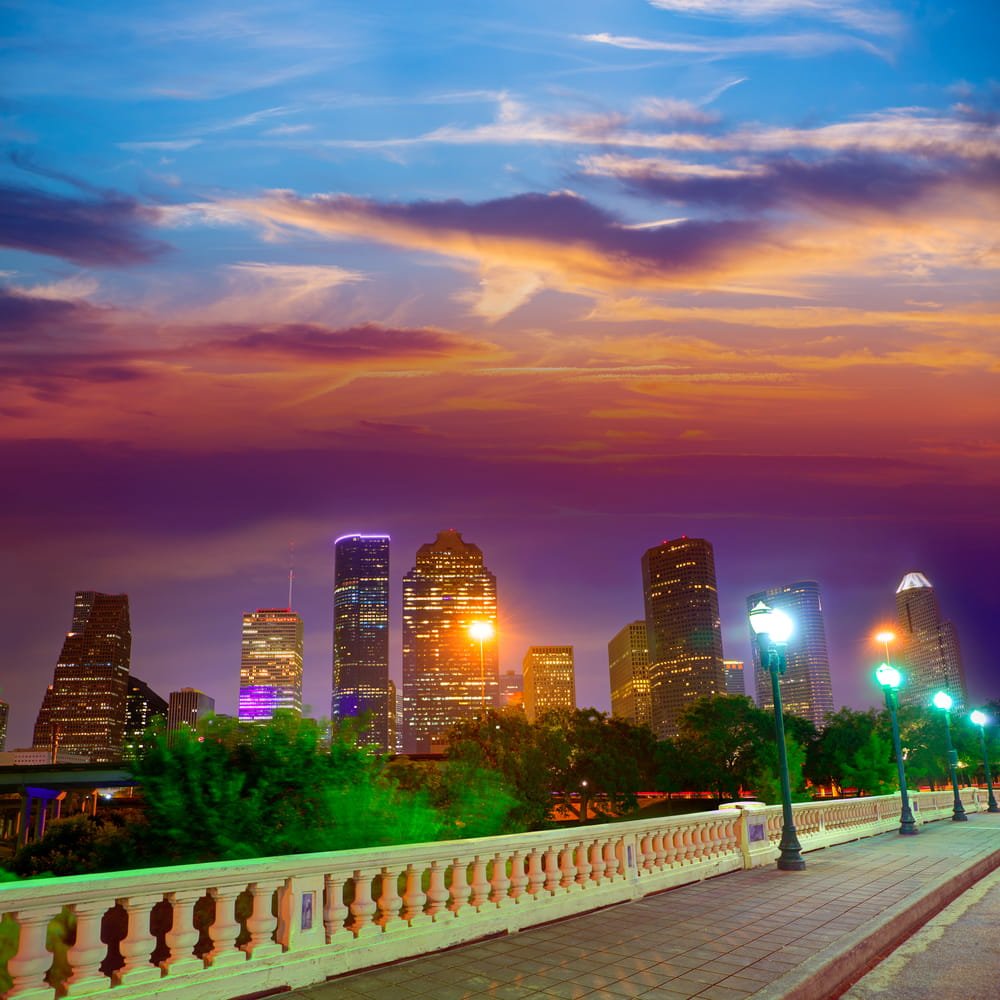
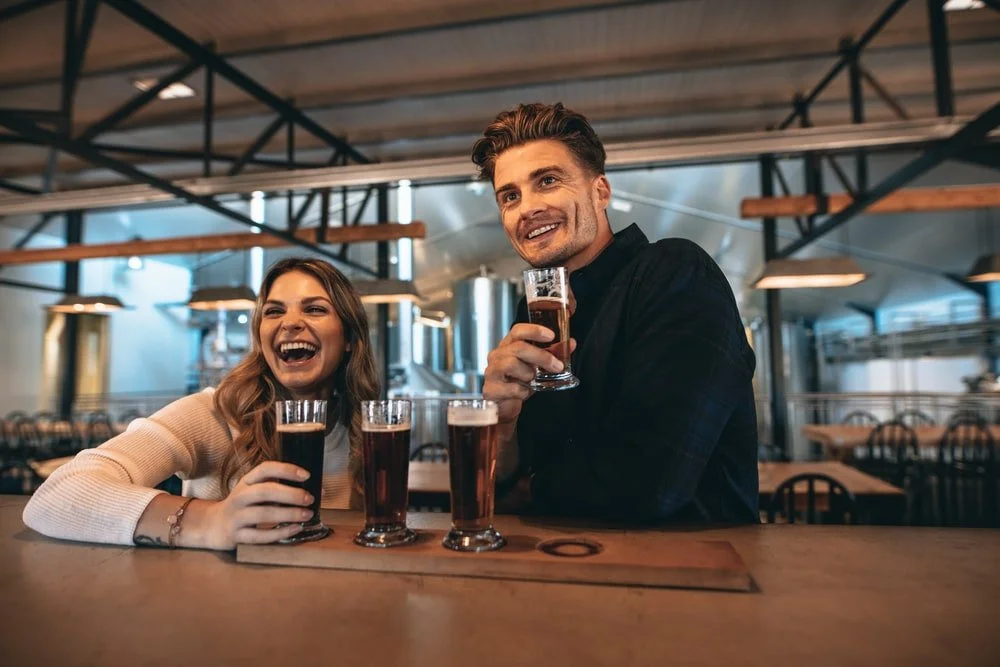
Dating App Algorithms vs. Human Judgment in Houston: What Our Smart-Card Data Actually Shows

Dating App Algorithms vs. Human Judgment in Houston: What Our Smart-Card Data Actually Shows

By The MyCheekyDate Team | Based on Smart-Card data from Houston attendees across 19 years of events

Start with a number that should be genuinely encouraging, and then the number that explains why it doesn't always feel that way.

The encouraging one first: Texas ranked third nationally in WalletHub's "Best and Worst States for Singles" report, with researchers specifically noting that people in Texas show lower attachment avoidance — less discomfort with intimacy — than residents of most other states. Houston itself landed at 27th among the 100 largest U.S. cities for singles in a recent Zumper ranking, with a genuinely large population of available, sociable, relationship-open people behind that number. As the fourth-largest city in the country, with 2.3 million residents and one of the most ethnically and culturally diverse populations of any major American metro, Houston has, on paper, almost everything a thriving dating market needs: scale, diversity, openness, and a culture researchers describe as unusually comfortable with closeness rather than avoidant of it.

Now the number that complicates all of that:

57 app matches produce, on average, one in-person date.

Not one relationship. Not one second date. One. Less than 2% of all swipe-based matches ever become an actual meeting. Only 14% of Hinge matches convert to a first date. A 2026 national study on the broader "dating recession" found that a striking share of young adults — even those who explicitly want to marry and build a family — are struggling simply to get dating relationships started in the first place, regardless of how open or willing they report being.

Houston's particular dating challenge isn't a lack of openness, and it isn't a lack of people. By every demographic measure, this city should be working. The challenge is logistical and structural in a way that's specific to Houston's geography: this is one of the most sprawling metro areas in the entire country, a city where "online and offline worlds intersect frequently," as local dating guides put it, precisely because efficiency matters so much here — getting from one neighborhood to another can eat an entire evening before a date even starts.

Houston's own dating culture has already started adapting. Local matchmaking services, led by figures like Sameera Sullivan of Lasting Connections, have built businesses specifically around bringing a more human, curated approach to a digital dating landscape that local daters increasingly describe as falling short. The shift toward more intentional, curated, in-person connection is already visible in how Houston's dating culture talks about itself.

Our Smart-Card data shows exactly why that shift makes sense: 86% of attendees received at least one mutual match after a real face-to-face conversation. The average attendee left with 2.3 mutual matches per event. And 77% of first-event non-matchers found a match at their second event.

When it comes to predicting attraction in a city this large, this genuinely diverse, and this spread out — does algorithmic matching outperform human judgment in real conditions?

After five years of structured Smart-Card data and 19 years of watching real chemistry form in real Houston rooms, we have an answer.

🤖 How Dating App Algorithms Actually Work (And What They're Optimising For)

Houston is an unusually clear test case for understanding the algorithm's limits, because this city combines two factors that should, individually, make algorithmic matching easier — genuine diversity and genuine openness to relationships — with one factor that makes any matching system meaningfully harder: sheer physical scale.

Swipe-based algorithms function primarily as engagement systems. Their job is not to find you the right person. Their job is to keep you on the platform long enough to find them, or to believe you might. These goals are related but not identical, and when they conflict, the platform's business interest wins.

The mechanics: profile signals — photos, bio keywords, age, location, stated interests — build a compatibility pool. Behavioural signals take over from there. Who you swipe on, who swipes on you, response rates, message depth. All of this feeds a score that determines who surfaces and when.

In Houston, geography functions as one of the algorithm's heaviest practical constraints, for an obvious reason: this is a sprawling metro where the distance between Montrose and the Heights is manageable, but the distance between most other neighborhood pairs across this enormous city is not. Local dating guides describe digital platforms here as providing "efficiency and broader reach, particularly useful in Houston's sprawling layout" — which is true, but reveals the underlying issue. The algorithm leans on proximity filtering not because proximity predicts chemistry, but because Houston's physical size makes proximity an unavoidable practical constraint the system has to account for somehow.

Here's the core problem: proximity-based filtering, applied at the scale Houston requires, ends up doing far more work in determining who gets surfaced to whom than actual compatibility ever does. A genuinely excellent match who happens to live forty-five minutes away, across a city this size, gets systematically deprioritized — not because the algorithm has assessed and rejected the chemistry, but because it never got the chance to.

What the algorithm knows: your neighborhood, your stated interests, your in-app behavior, your filter radius.

What the algorithm cannot know: whether the person on the other side of this enormous city, who your filter settings quietly excluded, would have been exactly the kind of genuine, easy connection that Texas's broader culture of openness is supposedly built for. Houston's diversity means some of its most interesting potential matches are, almost definitionally, across town, across culture, and across whatever narrow geographic and demographic band an algorithm uses to keep its suggestions "efficient."

📋 What the Smart-Card Actually Measures — And Why That's Different

The Smart-Card is not a dating app. Understanding exactly what it captures matters before the comparison makes sense.

When a guest attends a MyCheekyDate event in Houston — whether that's a Montrose bar, a Heights venue, a Midtown spot, or somewhere downtown that's worth the drive for everyone attending — they have real face-to-face conversations before any selection is made. No profile to optimise before you're seen. No filter radius quietly deciding, in advance, who never even gets the chance to show up as an option.

After the event, guests privately submit selections from their phone — who they'd like to see again — with the window open until midnight so nobody has to make a rushed decision after what, in this city, is often a real commitment of time and effort just to attend. A match is only created when both people independently chose each other. If one person selects another and the interest isn't mutual, nothing is shared. No hints, no nudges, no one-sided reveals. Houston's dating culture has been described by local guides as one that explicitly values clear communication and respect for boundaries — the Smart-Card's quiet, no-fallout structure for unreciprocated interest fits that cultural value directly.

What this produces is data in a category behavioural economists call revealed preference — not what someone says they want, but what they actually choose after real interaction.

Revealed preference is almost always more accurate than stated preference. And in Houston, where the sheer scale of the city means stated app preferences are heavily shaped by practical geography rather than genuine compatibility priorities, the Smart-Card data offers something the algorithm structurally cannot: a real conversation that happens regardless of which side of the enormous city either person calls home.

📊 The Gap Between Who Houston Daters Say They Want and Who They Actually Match With

This is the finding that resonates most directly with Houston attendees, in a city whose genuine diversity and genuine geographic scale shape its dating culture more than almost any other single factor.

Across five years of Smart-Card data, the divergence between what Houston guests listed as preferences and who they subsequently selected in real rooms is substantial, and it follows patterns shaped by exactly what makes this city's dating culture distinct.

The proximity gap. Houston's sprawl means stated app preferences here are unusually, often necessarily, shaped by geography — people specify a tight filter radius not because they're uninterested in anyone further away, but because the practical cost of dating across this city is genuinely high. Smart-Card data shows attendees making a meaningfully different calculation once a real conversation has already happened: the willingness to make a real drive across town for someone specific shows up consistently in mutual selections that a proximity-weighted algorithm would have filtered out before the conversation ever had a chance to occur.

The cross-cultural gap. Houston is, by most measures, one of the most ethnically and culturally diverse major cities in the country — a genuine, daily reality here rather than an abstract talking point. Stated app preferences, even among open-minded daters, often skew toward cultural or community familiarity, simply because that's the population someone's existing social and professional circles tend to surface. Smart-Card data shows real, consistent cross-cultural selection happening once an actual conversation has stripped away the filtering categories an algorithm would have applied by default — attendees connecting across backgrounds that similarity-weighted matching would have deprioritized from the start.

The openness gap. Texas's broader documented culture of low attachment avoidance — genuine comfort with closeness and intimacy, per the WalletHub research — suggests a population that should, in theory, connect easily and often. Stated app preferences don't always reflect this underlying openness clearly, because the format of an app profile tends to produce more guarded, more carefully hedged self-presentation than an actual conversation does. Smart-Card data shows Houston attendees engaging with notably more warmth and directness in person than their stated app preferences alone would predict — a real demonstration of the broader Texan openness the state-level research points to, showing up exactly where the format finally gives it room to.

📈 Algorithm Prediction vs. Smart-Card Outcomes: The Houston Numbers

The direct comparison:

Swipe-based app conversion to in-person meeting: approximately 1 in 57 matches (under 2%) Hinge match conversion to first date: 14% Texas's national ranking for "openness to relationships," WalletHub: top 10 (6th nationally for dating opportunities) Houston's ranking among best U.S. cities for singles, Zumper 2025: 27th of 100 Smart-Card mutual match rate: 86% of attendees received at least one mutual match Smart-Card average matches per event: 2.3 Smart-Card second-event match improvement: 77% of first-event non-matchers matched at their second event

The Houston-specific story in these numbers comes down to a simple observation: this is a city with genuinely strong dating-market fundamentals — scale, diversity, an underlying cultural openness that researchers have specifically documented — running into a matching mechanism that handles geographic scale by filtering people out before any actual chemistry gets tested.

The selection environment effect plays out in Houston with a distinctly geographic flavor. Near-infinite apparent supply, common to every major dating app market, compounds here with a genuinely vast physical city: the visible pool feels enormous, but the practically reachable pool — the people an algorithm will actually surface, weighted by proximity — is considerably smaller, and considerably less representative of who might actually be a great match. This produces a specific kind of false scarcity inside an apparent abundance: plenty of profiles, a much smaller functional dating pool.

The Smart-Card removes this constraint by design. The pool for any given event is fixed and finite, but it's not filtered by proximity in the way an app's default settings would be — attendees are already committed to being in the room, which means the geographic self-selection has already happened in a way that doesn't quietly exclude anyone before the conversation starts.

The 77% second-event improvement carries real weight in a city this large, where simply showing up to a first event likely represents a genuine logistical commitment for many attendees. The second event removes much of the uncertainty about whether that commitment is worth repeating. The format has already proven it produces real outcomes — and Houston's broader, well-documented openness to closeness has more room to operate once that uncertainty clears. The data reflects it directly: meaningfully higher match rates the second time around.

🧠 Why Human Chemistry Cannot Be Algorithmically Predicted — The Houston Version

The case isn't that algorithms will never improve. It's that there is a category of information available only in real-time, face-to-face interaction that no algorithm working from profile and behavioural data can access — and that category determines attraction more reliably than profile compatibility, even in a city this large and this genuinely diverse.

Connection that crosses the city's scale. Houston's sheer physical size means some of its most promising potential matches are, structurally, never going to be surfaced by a proximity-weighted algorithm. A real conversation doesn't care which side of the city someone drove in from. It only requires that both people show up in the same room, at the same time, which the Smart-Card format guarantees by design in a way an app's default radius settings actively work against.

Cultural chemistry an algorithm's similarity bias can't anticipate. Houston's genuine diversity creates real potential for connections across cultural, ethnic, and community lines — but algorithms, trained to maximize engagement, tend to learn and reinforce whatever similarity patterns already exist in a user's behavior, which often means surfacing more of the familiar rather than the genuinely compatible-but-different. A real conversation is the only mechanism that reliably tests chemistry across those lines without that built-in bias toward sameness. Smart-Card data shows these cross-background connections happening with real consistency in Houston specifically, a city where the opportunity for them is unusually rich.

Texan warmth that text doesn't fully carry. The broader research on Texas's low attachment avoidance points to something genuinely real and observable in Houston specifically: a population that is, by underlying disposition, unusually comfortable with directness and closeness. That disposition tends to show up more clearly in person than in the necessarily more guarded format of an app profile or an early-stage text exchange. The Smart-Card captures it directly — Houston attendees engaging with a warmth and ease that their stated app preferences, on their own, would not have fully predicted.

🌆 Houston, Neighborhood by Neighborhood: Where the Algorithm Gap Shows Up

The divergence between algorithmic prediction and real-world outcomes shifts across Houston's genuinely vast and varied geography.

Montrose events draw one of the city's most diverse, most socially active crowds — a neighborhood widely regarded as Houston's most eclectic and inclusive. Smart-Card data here shows particularly strong cross-cultural and cross-background selection patterns, consistent with a population that's already self-selected for openness and genuine curiosity about people different from themselves.

The Heights events bring a slightly more established, often more locally rooted crowd, with stated preferences that frequently emphasize neighborhood and lifestyle alignment. Smart-Card outcomes here show the proximity gap clearly: attendees who specified a tight geographic preference frequently select, in the room, someone from well outside that radius, once an actual conversation has demonstrated the connection is worth the drive.

Midtown and Downtown events draw a younger, often more professionally dense crowd, pulling from across the wider metro for an evening that's centrally located and worth the trip. Smart-Card data here shows particularly strong first-event match rates, consistent with a population that's already demonstrated, simply by showing up, a real willingness to prioritize the in-person connection over the convenience of staying close to home.

Across the broader, sprawling metro — from the Energy Corridor to Sugar Land to the suburbs ringing this enormous city — Smart-Card data shows the same throughline: attendees consistently willing to travel real distances for a specific person once a genuine conversation has already happened, a pattern that proximity-weighted algorithmic matching has no mechanism for predicting in advance.

💡 What This Means for the Future of Houston Dating as AI Gets More Embedded

Houston is a genuinely instructive market for thinking about where AI-assisted matchmaking is heading, because this city's two defining features — extraordinary diversity and extraordinary physical scale — both point toward the same underlying limitation in how current algorithms operate.

AI matchmaking will keep improving in narrow, specific dimensions — better filtering, marginally fewer poor matches, more sophisticated compatibility scoring layered on top of existing profile data. None of this resolves Houston's two structural problems simultaneously: an algorithm that has to filter by proximity at a scale this large, and an algorithm that, even when it doesn't filter by proximity, tends to reinforce similarity rather than surface the genuinely compatible-but-different matches that a city this diverse makes uniquely possible.

Houston's local matchmaking services have already begun building around this exact gap, explicitly emphasizing a more human, curated approach as a direct response to a digital dating landscape that hasn't been serving the city's genuinely promising fundamentals well.

The more interesting development is AI applied to real interaction data — the foundation Smart-Card machine-learning signal processing is built to provide. When the model learns from who Houston attendees actually select after a real conversation that happened regardless of geography or cultural background, it has access to a fundamentally different, more reliable signal than anything a proximity-and-similarity-weighted profile algorithm can offer.

The future of Houston dating isn't a smarter proximity filter. It's more rooms where the city's actual size and actual diversity stop being obstacles the algorithm quietly filters around.

📊 The Data, Plainly

For 19 years and 26,000+ verified events across 65+ cities — including consistent events across Houston — MyCheekyDate has been running a large-scale natural experiment in human attraction. The Smart-Card has made that experiment legible.

86% of attendees received at least one mutual match.

2.3 mutual matches per event, on average.

77% of first-event non-matchers received at least one match at their second event.

57 to 1: the ratio of swipe-app matches to in-person dates.

14%: Hinge's match-to-first-date conversion rate.

3rd: Texas's national ranking among the best states for singles, per WalletHub — driven partly by research showing Texans report unusually low discomfort with intimacy and closeness.

27th of 100: Houston's individual ranking among the best U.S. cities for singles, per Zumper.

The stated-versus-revealed preference gap: consistent, substantial, and most visible in the specific space between Houston's enormous physical scale and the conversations that, once they actually happen, show that distance was never really the obstacle the algorithm assumed it to be.

These numbers tell a coherent story once read together. Human judgment, operating in real conditions with real information in real time, outperforms algorithmic prediction at converting mutual interest into actual connection. Not because Houston's algorithms have worse data than anywhere else — the underlying population here has genuinely strong fundamentals. Because the data the algorithm works from treats this city's size and diversity as filtering problems to manage rather than the genuine asset they actually are.

The brain assesses chemistry in four minutes with an accuracy that profile-and-preference algorithms haven't matched in 19 years of trying — regardless of which side of a 600-square-mile city the conversation happens to start on.

💛 One Last Cheeky Thought

Houston is enormous, genuinely diverse, and full of people who, by the state's own well-documented psychological research, are unusually open to closeness and connection.

That should make this one of the easiest cities in the country to find someone. And it would be, if the matching mechanism weren't quietly deciding, before any of it can happen, who's "close enough" and "similar enough" to even be worth surfacing as an option. A great match forty-five minutes across town never gets the chance to prove the algorithm wrong, because the algorithm never offered the introduction in the first place.

The Smart-Card doesn't care about the radius. It puts people in a room — Montrose next to the Heights, downtown next to the suburbs, one cultural background next to a genuinely different one — and lets the conversation decide what an algorithm was never built to predict.

86% of Houston attendees leave with at least one person who chose them back — not because they lived nearby, but because the conversation was real.

In a city this big, that's the whole point.

Ready to skip the filter radius and just have the conversation? MyCheekyDate hosts real, host-led speed dating events across Houston — Montrose, the Heights, Midtown, and beyond. No proximity setting deciding who you'll never get to meet. No similarity bias narrowing the room before you've walked in. Just real people, four unscripted minutes, and a Smart-Card that handles the matching privately, mutually, and based entirely on the conversation. Find your next Houston event at mycheekydate.com/speed-dating-houston — and if you want to understand exactly how the Smart-Card works, it's right here.

Your Texting Style Is Not Your Personality, Houston. This City Deserves Better Than That.

Your Texting Style Is Not Your Personality, Houston. This City Deserves Better Than That.

Or: why your talking stage currently consists of one person typing "haha" somewhere in Montrose and another person trying to decode it like a petrochemical contract, in a car, on I-10, in heat that makes everything feel slightly more urgent.

📱 Let's Begin With Something Honest

You are not "getting to know" someone over text.

You are conducting a carefully managed public relations campaign — in a city that is, famously, genuinely not that impressed by carefully managed anything.

Houston doesn't do pretense. Houston does real. It's the most diverse city in America, it has some of the best food on earth, it built an entire space program, and it has absolutely zero patience for things that waste its time.

And yet here you are, spending forty-five minutes composing a message to someone twelve minutes away.

Every text reviewed. Every emoji considered. Every "haha" has been through more internal deliberation than a project bid on a pipeline.

You've rewritten the message. You've deleted the message. You've typed "Would love to grab drinks sometime" and then spent nine minutes deciding whether "would love to" is too much for a city that prides itself on cutting through noise.

Meanwhile they're doing the same thing.

Probably on I-10.

Welcome to dating in Houston: a city built for directness, running a dating culture that is somehow anything but.

A Harvard study found 94% of millennials report texting-related anxiety. In a city of seven million people that could solve this problem by just talking to each other in person, this is a specific kind of irony.

🎭 The Talking Stage Is A Project Kickoff That Never Gets Off The Ground

We've all agreed to call it a "talking stage."

In Houston, it's more of a preliminary scoping exercise with no confirmed timeline and unclear decision authority.

Two strangers match. They spend somewhere between a week and several months exchanging messages in a city where the weather alone should be creating urgency to do literally anything indoors together.

"How was your weekend?"

"Good — ate at Uchi Saturday. You?"

"Nice. Pretty low-key. Drove around a lot."

"Ha. Classic Houston weekend."

Outstanding. Two people who both exist in the same sprawling metropolis and are getting no closer to being in the same room.

The remarkable thing: both leave convinced they have something. With whom? With a version of someone assembled from their neighbourhood, their food opinions, their commute complaints, and two hundred messages of warm, direct-ish, still-going-nowhere conversation.

Houston daters are genuinely warm. The talking stage just gives that warmth nowhere to go.

Bumble data shows talking stages over three months have a 70% fizzle rate. Houston's version doesn't fizzle so much as get lost — in the sprawl, in the heat, in a calendar that fills up fast in a city with this much going on, until both people are technically still in the thread and functionally a million miles apart.

A 2025 survey found 62% of stalled talking stages come down to mismatched goals. Houston adds its own variable: mismatched geography. A city this size, this car-dependent, this spread out — the distance between The Heights and Sugar Land isn't just a commute. It's a commitment question that nobody wants to raise over text before they've established there's a reason to make it.

😬 The Double Text, Houston Edition

The double text isn't embarrassing.

The quiet frustration that builds before the double text is embarrassing.

You send a message. Twenty minutes: nothing — you're fine. One hour: nothing. You've checked their Instagram. They posted a story from a rooftop somewhere in Midtown an hour ago. Clearly alive. Clearly has a phone.

You've texted your friend. Your friend says just double text, this city moves fast.

Then they reply:

"Sorry — was at a Astros game. No signal in the lower deck. What are you up to?"

Three hours of processing. One completely Houston explanation.

43% of men and 26% of women admit to feeling genuinely drained by extended pre-date texting. They're not playing it cool. They're tired. And in Houston's heat, tired hits differently.

The person managing four simultaneous talking stages while maintaining the exterior of someone who has everything handled is not a confident dater.

They are an exhausted person with a commute measured in miles rather than minutes and a car that is also basically their office.

🌆 Houston Has A Directness Gap

Let's name the specific irony at the heart of the Houston talking stage.

This is a city that built itself on doing big things directly. Energy, medicine, aerospace — industries that require decisions, commitment, and getting in the room with people and sorting it out. Houston doesn't wait. Houston executes.

And then comes home and spends three weeks texting someone from a bar six miles away.

The talking stage is the one context in Houston where the city's natural directness goes completely missing. Because directness in dating feels like vulnerability, and vulnerability in a city this large and this transient — full of people who came for work, for a contract, for a relocation — feels like a risk that needs more information before proceeding.

So the information keeps getting gathered. Over text. For weeks. About nothing that actually determines whether there's chemistry.

A therapist writing in Psychology Today named the underlying problem: "Many clients try to manage uncertainty by overthinking every message, hoping that a 'perfect' response will somehow manufacture a sense of control. This performance actually fuels anxiety rather than fixing it."

Houston doesn't need to manage uncertainty through text analysis.

Houston needs to get in a room and find out.

😏 The Warmest Texter In Houston Is Not Always The Best Date

Said with full affection for this city's genuine warmth.

Text chemistry and real chemistry are cousins at best.

We've watched thousands of people meet at MyCheekyDate events in Houston.

The person running a warm, easy, unpretentious text conversation? Sometimes exactly that in person — present, direct, the kind of energy Houston actually produces when it's not performing for a phone screen.

Sometimes the warmth is the whole thing. Remove the text interface and what's left is pleasant but slightly underpowered — the conversation never quite finds its footing without the buffer of asynchronous editing.

Meanwhile the person who replies when they remember to — because they're living a full life in a city with this much to do — often the most genuinely present person in the room. Direct in the way Houston actually is when it stops managing impressions.

The numbers are consistent across every city: only 14% of Hinge matches ever become a first date. Less than 2% of app matches result in meeting in person. A 2025 study found American singles averaged fewer than two dates in the preceding year — nearly half of single men and a third of single women went on zero.

Not zero matches. Zero dates.

78% of app users reported emotional exhaustion in 2024. Not from dating. From almost-dating.

Houston is the fourth largest city in America. The almost-dating is happening at scale.

🚗 The Sprawl Problem Is Genuinely A Problem

Every Houston event. Same conversation.

"Where are you?"

"Montrose."

"I'm in Katy."

[Internal calculation: forty minutes on a good day, an hour on a normal day, and Katy to Montrose is not a spontaneous Tuesday decision for someone who just got off a long commute.]

"We could meet somewhere in the middle."

In a city with no real centre and every neighbourhood operating as its own self-contained world, "somewhere in the middle" is doing a lot of work.

Houston's sprawl is the most honest version of the talking-stage distance problem: the app creates the impression of proximity, the map reveals the reality, and the talking stage fills the gap while neither person commits to crossing it.

But here's what years of Houston events shows: when there's real chemistry, Houstonians drive. This city drives everywhere for everything — the right taco, the right bar, the right concert. Adding thirty minutes for the right person is nothing. We've matched Montrose to The Woodlands. We've watched someone from Sugar Land cheerfully commit to the 610 loop on a Friday because the person was worth it.

You cannot fall for someone you've never met. You can fall for a text thread from someone in a neighbourhood you've never had a reason to visit before.

Meet them first. Then decide if the drive is worth it.

It usually is.

💬 What Our Smart-Card Data Shows

When Houston daters skip the scoping exercise and meet face to face first, the directness this city is built on finally gets to show up in dating.

Our Smart-Card system tracks real-world attraction — not profile warmth, not text ease, not who presents best in photos, but who people actually choose after a real conversation in a real room. No profile to make look approachable. No bio carefully calibrated to seem genuine without seeming too available. No photo from that one perfect night at the Menil.

Selections completely private until midnight. Nothing shared unless both people choose each other. No one-sided reveals. No app download. A match only exists when both people want it — direct, mutual, simultaneous, with no ambiguity about what it means.

For a city that respects directness, this is the right format.

Across 1,026 attendees in 35 cities:

86% received at least one mutual match → 2.3 average mutual matches per event → 77% of zero-match guests at event one matched at event two

That 77% is the one. Houston daters arrive at a first event with the ambient energy of a new context — slightly unfamiliar, slightly managed. The second event removes that entirely. The direct, warm, unpretentious person that Houston actually produces shows up. That person matches at 77%.

Those real-world signals shape what comes next — private select events, CheekySocial evenings, Curated Introductions — built on who you actually responded to in a room, not what your profile suggested. Houston is one of the most genuinely interesting cities to make a connection in, when the talking stage gets out of the way and lets it happen.

🌡️ Four Minutes. Not Four Months Of Messages Going Nowhere.

Houston executes. It's what this city does.

The talking stage is the one area where that execution instinct goes completely quiet — replaced by weeks of warm messages between two people who are, by every metric, ready to just meet.

Here's the alternative.

You show up. Four minutes with a real person. You either feel something or you don't — before the sprawl becomes an excuse, before the heat makes staying in feel rational, before the thread becomes a pleasant habit with no endpoint.

No commute home processing a connection that peaked at message thirty-five and hasn't moved since.

No wondering whether "we should find a time soon" has any actual timeline attached.

Just: is there something here, in person?

Find out in four minutes, not four months.

💛 One Last Thing

Houston is the most underestimated city in America and knows it, and has largely stopped caring what anyone else thinks about it. Which is, genuinely, one of its best qualities.

Underneath the sprawl and the heat and the highways, this city has more genuine warmth, more cultural depth, more real human texture than most places that get far more credit.

The talking stage keeps all of that in a chat window.

The antidote isn't a more direct opener — though Houston would appreciate that. Not a more efficient text strategy. Not finally suggesting the midpoint bar.

It's being in a room, being yourself — unmanaged, unedited, no I-10 between you — and letting someone meet the actual version of you.

Which is, in our experience, considerably more interesting than the version that's been texting for three weeks.

Houston: stop underselling yourself in the chat. Show up.

Ready to get off the app and into the room? MyCheekyDate hosts boutique, host-led speed dating events in Houston — great venues Downtown and beyond, Smart-Card matching, tickets that never expire. Real people. Four minutes. A mutual match with no ambiguity about what it means. Find your next Houston event at mycheekydate.com/speed-dating-houston — worth every minute of the drive, and in Houston that's saying something.

The World Cup Is Here. Houston, Cristiano Ronaldo Is Coming to Your City.

The World Cup Is Here. Houston, Cristiano Ronaldo Is Coming to Your City.

Seven matches at Houston Stadium. Cristiano Ronaldo playing twice — the most decorated footballer alive, in NRG Stadium, in June, in your city. Germany's tournament opener. The Netherlands. A Round of 16 on the Fourth of July. The most diverse city in America with a 34-day fan festival in its soccer heartland. And Montrose waiting after the final whistle like it always does. Houston doesn't need the World Cup to be extraordinary. But this summer it becomes something else entirely.

⚽ Let's Start With Cristiano Ronaldo

On June 17, Cristiano Ronaldo walks out onto the pitch at Houston Stadium.

And then again on June 23.

Two group stage matches. The most decorated player in the history of the sport — five Ballon d'Or awards, over 900 career goals, playing for Portugal in what is widely expected to be his final World Cup — will play twice in NRG Stadium this summer.

The demand for these tickets has been extraordinary. Which means most of Houston is watching from somewhere else. And somewhere else this summer is, it turns out, completely spectacular.

Houston Stadium is hosting seven matches in total — Germany's tournament opener on June 14, then Portugal twice, Netherlands vs Sweden, Cape Verde vs Saudi Arabia, a Round of 32, and a Round of 16 on July 4. The stadium has one specific advantage that no other World Cup venue in the country can claim: it has a retractable roof and full air conditioning.

Houston in June averages 93°F with high humidity. Every other outdoor stadium in the tournament is dealing with this. Houston Stadium is not. This is not a minor detail. This is the most comfortable match experience in the tournament, and the city built for this exact climate has the indoor arena to prove it.

🎪 The FIFA Fan Festival — EaDo, 34 Days, 15,000 Daily Visitors

Houston's official FIFA Fan Festival is in East Downtown (EaDo) — the soccer heartland of the city, home to Shell Energy Stadium where the Houston Dynamo and Houston Dash play, and the most football-alive neighbourhood in Texas.

At 2301 Dallas Street, spanning parking lots, green spaces, and streets across a massive footprint, the Fan Festival runs June 11 through July 19. Free entry. 34 match days. Expected 15,000 visitors daily.

Live match screenings on massive screens. Concerts and performances across two stages with over 60 acts. Global and local food offerings. Interactive exhibits. Youth soccer activities. Sponsor activations. And Football Fiesta Houston — a concept specifically honouring East Houston's deep roots in the Hispanic community, extending the World Cup energy beyond the festival fences and into the broader EaDo neighbourhood itself.

This is not just a watch party. It is a 34-day neighbourhood transformation of one of the most authentically diverse urban areas in America, built around football and the communities that have always cared most deeply about it.

METRORail Green or Purple Line to EaDo/Stadium Station — five-minute walk to the north entrance. The only sensible way in on match days. 📍 FIFA Fan Festival, 2301 Dallas Street, EaDo, Houston

⚽ The Soccer Heartland: EaDo Venues

Pitch 25 — EaDo

A soccer-themed bar directly across from Shell Energy Stadium with 100 beers on tap. One hundred. The unofficial headquarters of Houston soccer culture — supporter groups meet here, knockout matches get full rooms, and the World Cup this summer has turned it into the must-be venue for anyone who takes the game seriously. When the Fan Festival closes for the evening, Pitch 25 keeps going. 📍 Pitch 25, EaDo, Houston

Chapman & Kirby — EaDo

Located one block from the official FIFA Fan Festival — genuinely one block — Chapman & Kirby is running immersive watch parties daily from 8am until midnight or later throughout the entire tournament. Live music. DJs. Inflatables. Foosball. Local vendors. Licensed soccer merchandise.

This is the option for when you want the full production. Arrive before the Fan Festival gates open, stay after they close, and let Chapman & Kirby be the connective tissue between the official experience and the neighbourhood night. The convenience of a one-block walk from the Fan Fest is frankly unbeatable. 📍 Chapman & Kirby, 1010 Prairie St, EaDo (one block from Fan Festival)

True Anomaly Brewing Company — EaDo

Award-winning brewery with Houston's largest barrel room, an exceptional lineup including Mexican-inspired lagers and golden sours, and an outdoor Brew Garden that is the watch party location for the World Cup. The kind of venue where the quality of what's in the glass matches the quality of what's on the screen. Multiple screens indoors and out. 📍 True Anomaly Brewing, EaDo, Houston

🍺 The Broader Bar Scene: Houston Watches Its Way

The Phoenix on Westheimer — Montrose

One of Houston's favourite soccer bars for years, tucked in the heart of Montrose. A true matchday magnet with a loyal crowd, full sound, and the atmosphere of a pub where football is the main language. Particularly excellent for the European powerhouse matches — Germany, Netherlands, Portugal — where the regulars will have opinions and the atmosphere will match the occasion. 📍 The Phoenix on Westheimer, Montrose, Houston

Pimlico — Montrose

The home of the Houston Gooners (official Arsenal supporters group), Pimlico in Montrose is built for exactly this kind of tournament. Opens early for morning kickoffs — and several Houston matches kick off at noon CT, meaning early starts. Sound on. Packed rooms. The specific atmosphere of a football pub that treats every match as a main event. 📍 Pimlico, Montrose, Houston

Velvet Oak Tavern — Montrose

HQ for the Houston Gooners, showing all 104 World Cup matches. The kind of soccer bar where the regulars have been coming for seasons and the World Cup is the summer they've been building toward. A more intimate option for when you want the genuine football-pub experience in a warmly familiar room. 📍 Velvet Oak Tavern, Montrose, Houston

Kirby Ice House — Multiple Locations

Four locations across Houston, all 21+, with massive indoor and outdoor spaces, jumbo screens in the outdoor areas, food trucks on rotation, and dogs welcome on the patio. Large groups accommodated without rental fees. The family of venues that covers the most geographical ground in the city — wherever you are in Houston, there's a Kirby Ice House within reach. 📍 Multiple Houston locations — kirbyicehouse.com

Toros HTX — Sawyer Yards

A coffee shop, soccer bar, and pickup pitch all in one space — open 7am to midnight on weekdays. The range of hours is the thing: Toros works for morning matches over coffee, afternoon matches over beers, and late-evening watches over both simultaneously. With local leagues running pickup games on the pitch, this is the option that puts you inside Houston's active soccer culture rather than just watching it through a screen. 📍 Toros HTX, Sawyer Yards, Houston

🌍 The Houston Factor: The Most Diverse City in America

Houston is the most ethnically diverse major city in the United States.

That statement gets made about several cities. In Houston it is objectively, measurably true. Over 145 languages are spoken here. The city has significant communities from virtually every nation in this tournament — and unlike fan zones manufactured from scratch, Houston's World Cup energy comes from communities that have been here for generations.

The German community gathering for Germany's opener on June 14. The Dutch orange army descending on EaDo for Netherlands vs Sweden on June 20. The Portuguese and broader Lusophone community for both Ronaldo matches. The significant Saudi Arabian community in Houston — one of the largest in the country — for Cape Verde vs Saudi Arabia on June 26. The African communities across the city for DR Congo and Cape Verde.

And then there is EaDo itself — a neighbourhood whose identity is built on its Hispanic roots, which the Football Fiesta Houston concept explicitly honours. When Mexico is playing (in Dallas and elsewhere), the watch parties in Houston's Mexican and Central American communities are a city unto themselves.

Houston doesn't need to import World Cup atmosphere. It is already here, in the neighbourhoods, in the restaurants, in the bars, in the communities that have made this city what it is.

Go to those places. Find those rooms. The energy is authentic in a way that no official fan zone can fully replicate.

🌅 After the Match: Where Houston Romance Lives

Houston doesn't get enough credit as a romantic city. Let's fix that.

Flora — Buffalo Bayou

Upscale Mexican restaurant pressed against Buffalo Bayou with floor-to-ceiling windows offering views of the tree canopy by day and crystal chandeliers glittering by night. Mole enchiladas, ceviches, tres leches. The kind of restaurant that makes a Tuesday evening feel like an occasion.

For the post-match option that says something specific: this is where you take someone you actually want to impress. 📍 Flora, Buffalo Bayou, Houston

Buffalo Bayou Park — At Dusk

One of the great underrated urban parks in America — 160 acres along the bayou with trails, public art, the extraordinary Buffalo Bayou Park Cistern (a subterranean former reservoir with 221 concrete columns and otherworldly acoustics), and the kind of waterway walk that slows an evening down into something personal.

Rent a tandem kayak from the Stude Park Paddle Trail and drift along the illuminated waterway as city lights shimmer above. Or simply walk the trails as dusk settles and let the park do what Houston parks do in summer — turn the city's ambient warmth into something specific and shared. 📍 Buffalo Bayou Park, Downtown Houston

Menil Collection — Montrose

One of the great free art museums in the world, surrounded by live oaks and open lawn in the heart of Montrose. The collection is extraordinary — Surrealism, Cy Twombly, the Rothko Chapel nearby. The grounds are open and beautiful.

For the post-match afternoon that turns into an early evening: walk the Menil grounds, visit whatever's currently showing, then find somewhere in Montrose for a drink and let the conversation develop at its own pace. 📍 Menil Collection, 1533 Sul Ross St, Montrose, Houston

Montrose — After Dark

Walkable streets. Wine bars and cocktail spots at every price point. Gallery openings on First Saturdays. The particular energy of one of Houston's most creative, open, genuinely warm neighbourhoods.

Montrose is where Houston goes when it wants to feel like itself — eclectic, unpretentious, genuinely cosmopolitan. After a match at the Fan Festival or a watch party in EaDo, Montrose is the natural second act. 📍 Montrose, Houston

😏 The MyCheekyDate Part (You Knew It Was Coming)

Here is the honest, cheeky truth about Houston.

This is a city that has been consistently underestimated by people who haven't been. The food scene rivals any city in America. The cultural diversity creates a social energy that Manhattan regularly fails to match. The outdoor spaces — Buffalo Bayou, Hermann Park, the Museum District — are genuinely excellent.

And this summer, with Cristiano Ronaldo playing twice at Houston Stadium and 15,000 people a day pouring through the EaDo fan festival, the city's best qualities are fully on display.

The World Cup gives Houston 39 days of its most internationally alive, collectively warm, socially open summer. The energy is real. The rooms are full. The conditions for meeting someone are better than they've ever been.

And when the Round of 16 final whistle blows on July 4 and the tournament moves its knockout stages elsewhere, Houston stays exactly what it is: a spectacular, underrated, genuinely extraordinary city to be single in.

At MyCheekyDate Houston, we create the conditions for meeting someone week in and week out — not just when Ronaldo is in town.

Real events. Real venues. Real conversations. Smart-Card matching handles the mutual interest question privately afterward so you can just enjoy the evening.

The World Cup brings the world to Houston. MyCheekyDate introduces you to the most interesting people in it.

Find your next Houston event at mycheekydate.com/speed-dating-houston — and on June 17, we will be watching Portugal vs Congo DR along with everyone else who has ever watched Ronaldo and felt something. ⚽😏

📅 Houston Stadium Match Schedule — Save These

  • Sun June 14, 12pm CT — Germany vs Curaçao (the tournament opener in Houston — EaDo activates)

  • Wed June 17, 12pm CT — Portugal vs Congo DR (Ronaldo, match one — book everywhere early)

  • Sat June 20, 12pm CT — Netherlands vs Sweden (Orange army arrives)

  • Tue June 23, 12pm CT — Portugal vs Uzbekistan (Ronaldo, match two)

  • Fri June 26, 7pm CT — Cape Verde vs Saudi Arabia (the evening match — Fan Festival at full capacity)

  • Sun June 29, 12pm CT — Round of 32

  • Sat July 4, 12pm CT — ⭐ Round of 16 (Independence Day — plan accordingly)

All matches at Houston Stadium (NRG Stadium), 1 NRG Pkwy, Houston. METRORail Red Line direct from Downtown — the only sensible option on match days.

The Paw Print Dealbreaker: A Houston Guide to Dating, Animals &amp; the Dog Who Doesn't Mind the Heat

The Paw Print Dealbreaker: A Houston Guide to Dating, Animals & the Dog Who Doesn't Mind the Heat

Because in the most diverse city in America — a place that has never needed zoning laws to tell it what it wants to be — the animal people are among the most interesting people in the room. You just need to know which room.

🌆 Let's Talk About Houston for a Second

Houston is a city that resists easy description. It is the most ethnically diverse major city in the United States. It has no zoning laws — which means a craft brewery can appear next to a bungalow next to a Vietnamese restaurant next to an art gallery, and nobody finds this unusual. It is enormous — 669 square miles — and yet its neighbourhoods have the warmth and specificity of small towns. The Heights feels nothing like Montrose, which feels nothing like Midtown, which feels nothing like East Downtown.

What they all share: a genuine, unironic love of animals. And a patio. Usually both at the same time.

Houston has the Paws on Patios movement — a community-led initiative advocating for local establishments to welcome dogs within legal bounds — that has quietly transformed the city's outdoor dining scene into one of the most dog-friendly in Texas. It has a cat café in a 1930s Victorian cottage in Woodland Heights that runs yoga with cats and cartoon mornings and meditation sessions with a cat on your lap. It has Texas's oldest craft brewery, which states openly that it is "passionate about animal rescue" and has staff who are proud adopters.

This city is telling you something about itself. Pay attention.

🐶 The Dog People of Houston

Houston dog people have built a social infrastructure around their animals that rewards knowing where it is — because this city's size means the reward for finding the right spot is genuinely significant.

TC Jester Dog Park at 4201 TC Jester Blvd is one of Houston's most beloved off-leash parks: a 31,000-square-foot run for large dogs and a 16,000-square-foot run for small dogs, with benches, shaded areas, dog-drinking fountains, and the easy community energy of a park that has been the Heights neighbourhood's social anchor since it opened. After a morning at TC Jester, the Heights Hike and Bike Trail extends the walk naturally — a tree-lined path through one of Houston's most characterful neighbourhoods, with coffee shops and patios at regular intervals along the way.

Saint Arnold Brewing Company at 2000 Lyons Ave is Texas's oldest craft brewery — founded in 1994, a 25,000-square-foot Beer Garden and Restaurant built in 2018, open seven days a week, with a spacious outdoor beer garden where dogs are welcome alongside views of the downtown skyline. The amber ale bratwurst is excellent. The art on the walls is from Houston artists. The people who end up here regularly have made a very reasonable set of decisions: great beer, a dog-friendly patio, no pretension. Saint Arnold also notes directly on its own materials that the team is passionate about animal rescue and that several staff are proud adopters. This is a brewery with values. That tends to attract people with values.

Axelrad — housed in a 100-year-old renovated grocery store in the Midtown area — is one of Houston's most beloved outdoor bars: hammocks in the trees, craft beer and wine, Luigi's Pizza next door for ordering in, dogs welcome both inside and out. This is the kind of place where a Tuesday evening becomes a three-hour thing without anyone deciding that's what was going to happen. The dog park crowd and the Midtown crowd overlap here completely.

Powder Keg is Houston's dog park bar done large: an expansive open-air venue with food trucks, sand volleyball courts, an eclectic bar programme — canned beers, craft taps, wine, specialty cocktails — and an on-site dog park with mature shade trees and room to run properly. It is simultaneously a dog park, a bar, and a social event, which is a combination that requires very little additional explanation.

Barnaby's Cafe — named for the founder's childhood sheepdog — has several locations across the city including the Heights, Museum District, and Midtown, all with dog-friendly outdoor seating, water bowls, and a puppy menu: ground beef or chicken over brown rice, scrambled eggs, doggie ice cream. This is a restaurant group that has built its identity around dog love since the beginning. The generosity of portions is also excellent.

Eight Row Flint near the Heights Hike and Bike Trail is the post-walk bar of choice for a significant portion of the Heights dog-walking community — a dog-friendly patio, creative cocktails, tacos including a Brussels sprouts taco that is genuinely remarkable, and the comfortable neighbourhood energy of a place that has always understood who its customers are.

For east Houston and the craft brewing scene, True Anomaly Brewing in East Downtown specialises in sour and Belgian-style ales, welcomes dogs inside and out (no food prepared on premises — so full dog access), and has the particular charm of a brewery that knows exactly what it is and does it without compromise.

🐱 The Cat People of Houston

El Gato Coffeehouse & Cat Cottage at 508 Pecore Street, Suite A, in the historic Woodland Heights neighbourhood is Houston's only cat café — and it is one of the most charming rooms in the entire city.

The setting is a Victorian cottage from the 1930s, previously a yoga studio, renovated with the deliberate intention of being somewhere that feels like a home rather than a commercial space. The founder, Renee Reed, chose this neighbourhood because she wanted calm. She got it. The Cat Cottage houses up to twelve adoptable cats at a time, sourced through local rescue partner Friends for Life. The food and drink — including coffee and vegan options — come from a food truck parked outside (Houston city regulations require full separation of food from cats, which the outdoor truck arrangement resolves elegantly and, frankly, with extra charm).

El Gato runs yoga with cats, cartoon mornings on Saturdays, Meowvie Nights, crochet classes, painting sessions, and a full boutique for cat-themed everything. It has live-stream cameras throughout the cat lounge so you can, at any point in your day, check in on what the cats are doing. Open Tuesday and Thursday through Sunday.

The people who come here regularly are not doing it for the aesthetic. They come because they find the whole thing genuinely restorative — a Victorian cottage full of adoptable cats, away from Houston's scale and pace, where the most pressing question is whether the tabby on the window ledge is going to acknowledge you today. (She might. She might not. That's the deal.) These people are warm, curious, and considerably more interesting than their professional LinkedIn suggests. This is true of all cat café regulars, but particularly true in Houston, where the contrast between the city's enormous professional ambition and the quiet of a 1930s cat cottage is particularly striking.

🐶🐱 Can They Date Each Other in Houston?

Houston's lack of zoning laws means that its neighbourhoods are genuinely mixed — the dog person in the Heights and the cat person in Woodland Heights are literally three streets apart. Montrose dog walkers and Midtown cat people share the same Axelrad hammocks and the same Eight Row Flint patio.

The cross-species question in Houston has its own local dimension: the heat. Managing two animals in a Houston summer, in a house without the buffer of regular outdoor time, requires advance planning and excellent air conditioning. These are solvable problems. They are also, not coincidentally, the kind of practical problems that two adults who communicate well and care about their animals' wellbeing are quite good at solving.

The more useful early question: is both people's commitment to the animals genuine and consistent? In Houston — a city where the animals have clearly been factored into the social infrastructure at a fundamental level — the answer to that question tends to surface quickly.

🤧 The Allergic Ones (A Houston Complication)

Houston's climate is warm and humid, which is beautiful for outdoor life and less beautiful for allergy management. The city's allergen calendar is extensive. Adding pet dander to an already complicated seasonal picture requires specific, early conversation.

The practical Houston version: the person who is allergic to cats but has been dating a cat owner for three months without raising it, in a city where visiting each other's homes is a central part of the social fabric, is making things harder for everyone. Have the conversation early. Houston people are warm and direct. They respond well to both qualities.

And for the allergic person managing it because they've met someone worth managing it for: Houston's pharmacies, allergists, and air purifier suppliers are all excellent. The infrastructure for this particular problem is fully in place.

🚫 No Pet — The Houston Ick Question

Houston is a city that does not judge lifestyle choices with the same scrutiny as, say, a city with zoning laws. Having no pet in Houston is not automatically a signal of anything.

75% of women wouldn't date someone who actively dislikes animals. The active dislike is the thing — and in Houston, a city where the restaurant patio culture has been specifically shaped by the Paws on Patios movement, where the brewery down the road publicly declares its passion for animal rescue, where the Victorian cat cottage in Woodland Heights is booked out every weekend, active animal indifference is a more visible quality than it might be elsewhere.

What to listen for: how someone responds when a dog approaches on the Heights trail. Whether they stop at the TC Jester fence to watch for a moment. Whether they know what Friends for Life does. These are small signals. They add up to a picture.

The pet-free person who volunteers at the Houston Humane Society on Saturday mornings is not in the 75%. Note the distinction carefully.

💔 The Statistic Worth Putting on a Billboard on I-10

58% of women report missing their ex-partner's dog more than their ex-partner after a breakup.

In Houston, where the dog was woven into the social fabric so completely — the Barnaby's Sunday brunch patio, the Saint Arnold beer garden afternoon, the TC Jester morning that set the tone for the whole day — this lands with familiar weight. The dog was not just a pet. The dog was the reason to get outside in the heat. The social credential at every patio. The daily presence that made everything feel manageable.

When the relationship ends, you lose the person and the dog and the whole daily life built around them. In a city this large, where your neighbourhood and your routines are everything, that's a significant loss.

20% of women stayed in a relationship longer than was good for them because of a partner's dog. The dog was doing relational work that nobody acknowledged. It always is.

🗺️ Where to Find Your People in Houston (With Fur)

The Heights / Woodland Heights — TC Jester Dog Park at 4201 TC Jester Blvd, the Heights Hike and Bike Trail, Eight Row Flint for the post-walk patio, and El Gato Coffeehouse & Cat Cottage at 508 Pecore Street for the cat people. This corner of Houston is the city's most walkable, most neighbourhood-feeling stretch, and it is full of the kind of people who have built their whole lives around their animals and the streets they live on.

Midtown — Axelrad in the renovated grocery store, hammocks in the trees, dogs inside and out, pizza from next door. The Midtown dog-and-craft-beer social scene is one of Houston's most reliable. After Axelrad, Rudyard's pub at 2010 Waugh Drive has been a dog-friendly institution for years — pub food, 30+ beers on tap, the kind of place that has always made room for everyone.

Downtown / EaDo (East Downtown) — Saint Arnold Brewing Company at 2000 Lyons Ave, open daily from 10am on weekends and 11am on weekdays, the 25,000-square-foot beer garden with skyline views and dog-welcoming tables. True Anomaly Brewing in EaDo for the sour and Belgian ale crowd who want full dog access inside.

Powder Keg — for the dog park bar experience with food trucks, volleyball, and the kind of sprawling outdoor afternoon that Houston does better than almost anywhere when the weather cooperates.

Museum District / Upper Kirby — Barnaby's Cafe locations for the puppy menu and the dog-friendly patio, Local Foods on West Alabama for the healthy lunch crowd with dogs.

The Houston Humane Society at 14700 Almeda Road — open Monday through Friday 11am–6pm, Saturday and Sunday 11am–5:30pm — is one of Houston's most established animal welfare organisations, founded in 1958, receiving no government funding and relying entirely on community support. Adoptions, low-cost veterinary care, humane education, animal cruelty investigations. The people who support it are doing it because they believe it matters. They are, consistently, the people worth knowing.

Friends for Life Animal Rescue — El Gato's rescue partner — places cats from their foster network into the Cat Cottage for adoption and runs a broader rescue programme across the city. The foster community around them is substantial and quietly extraordinary.

🐾 A Night for Patches — For Houston's Quietly Devoted

Houston's animal welfare community operates at a scale that matches the city: enormous, varied, running on community generosity and volunteer time across hundreds of organisations. The Houston Humane Society. Friends for Life. BARC (the Bureau of Animal Regulation and Care). Rescued Pets Movement — which even has a partnership with Giacomo's restaurant, donating proceeds from their seasonal dessert to rescue work. Houston SPCA.

The people supporting all of this are not making announcements about it. They are just fostering, volunteering, donating, showing up — with the same practical, warm, direct energy that Houston brings to everything it decides is worth doing.

A Night for Patches was built for them.

Here's how it works: pick any animal charity you love — Houston Humane Society, Friends for Life, Rescued Pets Movement, BARC, any local Houston rescue that has your heart. Donate the cost of your MyCheekyDate ticket or package directly to them. Email us at info@mycheekydate.com with your proof of donation and your chosen event. We'll credit you the full amount.

No forms. No waiting. No system to navigate.

You take care of the animals. We'll take care of the rest.

It's part of our Dating That Gives Back spirit — the belief that the person who gives before they know what they'll get back is the most interesting person in the room. Houston, a city that has built its patio culture, its brewery culture, and its cat cottage culture partly around the animals, has more of these people per square mile than it gets credit for.

😏 The Cheeky Houston Conclusion

You could spend another weekend on the apps. Another opener, another profile, another coffee with someone who seemed interesting online and turns out to have the conversational depth of a checkout receipt.

Or you could be on the Heights Hike and Bike Trail when someone's rescue dog decides your ankle is a social opportunity, and the person holding the leash is already laughing, already apologising, already asking if you're okay, already making this somehow the most natural conversation you've had all week.

Or at Saint Arnold's beer garden on a Sunday afternoon with a skyline view and an amber ale bratwurst and your dog at your feet, when the person at the next table leans over and asks if your dogs can say hello, and they can, and they do, and forty minutes evaporate.

Or at Axelrad in the hammocks when the pizza arrives from next door and the dog has somehow made three new friends in the time it took you to order, and the person attached to one of those friends says "she does this every time — she's basically my social director."

Or at a MyCheekyDate event in Houston, four minutes in, when the person across from you says — with the particular warm directness that Houston people deliver so well — "I foster for Friends for Life and I cried when the last one left and I've already said yes to the next one, which I think probably tells you everything you need to know about me."

It does.

It tells you everything.

Match them.

MyCheekyDate hosts real, host-led speed dating events in Houston — no algorithms, no swipe fatigue, no one who put "outdoorsy" in their bio but considers the Galleria a nature experience. Find the next Houston event at mycheekydate.com/speed-dating-houston.

Animal lover? Our A Night for Patches initiative lets you donate to any animal charity you love — Houston Humane Society, Friends for Life, Rescued Pets Movement — and receive full credit toward your event or package. Email info@mycheekydate.com with your proof of donation and chosen event. We'll make it so. 🐾💛

A Bar Inside a 1927 Mayan-Inspired Skyscraper and a Venue Named After a Grocery Store That Closed 150 Years Ago

A Bar Inside a 1927 Mayan-Inspired Skyscraper and a Venue Named After a Grocery Store That Closed 150 Years Ago

Why two of downtown Houston's most historically layered venues — one built for Texaco, one named for a Victorian grocer — are where the city's singles are meeting in 2026.

Houston does not get enough credit.

Not for its food scene, which is legitimately world-class and routinely surprises people who arrive expecting something simpler. Not for its architecture, which ranges from extraordinary Art Deco to some of the most ambitious contemporary buildings in the country. Not for its diversity, which is more genuinely remarkable than almost any other American city its size. And not for its dating scene, which is warm, direct, and considerably more interesting than its reputation suggests.

The knock on Houston is always the same: too sprawling, too hot, no walkable centre, everyone lives in their car. There is some truth in this. Houston is an enormous city without the geographic compression that makes spontaneous social encounters easy. The energy is diffused across neighbourhoods — Midtown, Montrose, The Heights, River Oaks, East Downtown — each with its own character, each far enough from the others that "meet in the middle" requires genuine logistical commitment.

The apps reflect this. Houston Hinge and Bumble are full of interesting people who live in fundamentally different parts of a very large city, which means the gap between matching and actually meeting is longer and more logistically complicated here than almost anywhere else.

The solution, increasingly, is to get everyone into a room downtown — centrally, definitionally downtown — and let the rest take care of itself.

Two rooms, specifically.

🏛️ Venue One: A Bar Inside a Building That Looks Like a Mayan Pyramid

1314 Texas Avenue. Downtown Houston.

The building that houses the Cambria Hotel — and The Rig, its restaurant and bar — was completed in 1927 as the Petroleum Building, commissioned by Joseph S. Cullinan, founder of The Texas Company, which became Texaco.

It is not a modest building.

Designed by British-American architect Alfred C. Bossom with Houston architects Maurice J. Sullivan and Briscoe & Dixon, the 22-story Art Deco skyscraper introduced the stepped-back skyscraper form to Houston and drew explicit inspiration from ancient Mayan pyramids. The terracotta ornamentation, the relief figures, the setback stages on upper floors creating balcony-like treatments — all of it deliberately evoking the architecture of a civilisation that built monuments to endure.

When it opened in 1927, the Petroleum Building housed upwards of twenty oil companies under the umbrella of the American Republics Corporation. For decades it was the symbolic heart of Houston's oil industry, the building from which the fortunes that built the city were administered.

In 2019 — after serving as the Great Southwest Life Building, then the Great Southwest Building, then a period of disuse — it was added to the National Register of Historic Places and reopened as the Cambria Hotel Houston Downtown Convention Center. The original ornate Mayan designs on the elevator cab doors were preserved. The stepped Art Deco exterior remains unchanged from 1927.

And in the lobby, The Rig.

Named with quiet Houston pride for the oil industry that built the city, The Rig serves locally inspired cuisine, craft beers from the city's best breweries, and a cocktail menu in a space that sits beneath nearly a century of oil money, Mayan architecture, and Texas ambition.

It is one of the more atmospherically charged rooms in downtown Houston.

Which is, as it turns out, exactly what a speed dating event needs.

🍸 Venue Two: Named After a Grocery Store That Closed Before Your Grandparents Were Born

809 Congress Street. Market Square Historic District.

The building at 809 Congress was constructed in 1900. It is a designated contributing historic building within the Main Street Market Square Historic District — the oldest commercial district in Houston, centred around a public square that dates to the city's founding in 1836.

The name Henke & Pillot comes from a grocery chain that operated a store on this block of Congress Street in the early twentieth century — over 150 years ago. The current owners, when they converted the building into a two-level cocktail lounge in 2015, kept the name as a quiet tribute to the commercial history of the block.

The result is a venue that wears its history without making a performance of it. Stunning chandelier-lit bar area extended by co-owner Marcus Lam during the renovation, with an eye-catching backdrop of wood and mesh brass. Custom-made swivel barstools. A stage and DJ booth carved from the back wall. Royal purple sofas and chairs along the walls. Two levels of 6,800 square feet total — the ground floor lounge and an upper floor accessible for private events — both facing historic Market Square Park, one of the oldest public spaces in the city.

The vibe is what the owners themselves describe as classic downtown arts and bar scene — a promise that Henke & Pillot is exactly where past meets present, and drinks and conversation blend in something close to harmony.

😏 Two Buildings. Two Centuries. One City.

What strikes you about both venues, standing back from them, is how deeply rooted they are in Houston's specific history.

The Rig bar sits in a building commissioned by an oil pioneer who controlled two million acres of oil fields and assets worth $74 million in 1925 money — designed to look like a Mayan pyramid because someone decided that was the appropriate visual statement for a city becoming an energy capital.

Henke & Pillot keeps the name of a Victorian grocer as a nod to a commercial block that has been alive with the business of people since before Houston was a major city at all.

Both are downtown. Both are walking distance from each other. And both have the quality that matters most for a speed dating venue: they make the evening feel like it is happening somewhere.

Not a neutral bar with good lighting. Somewhere with a story. A sense of place. The feeling that the room itself has seen things and will continue to see things long after the evening ends.

That feeling — being somewhere that matters — is the fastest antidote to first-date nerves that exists.

🌆 Houston Dating in 2026

Houston has the ingredients for an excellent dating scene. It is one of the most racially and culturally diverse cities in America — more so than New York or LA by some measures. It has a genuine food culture that means interesting first dates are easy to engineer. It has the warmth that Texas cities share, the directness that makes conversations happen faster than they do in more guarded cities.

The challenges are structural rather than social. The sprawl. The car dependency. The way the city fragments into neighbourhood islands connected primarily by freeways rather than sidewalks.

A centrally-located speed dating event solves those structural challenges cleanly. Everyone gets downtown. Everyone is in the same room. The logistical complexity of finding someone to meet in a city this size collapses into a Saturday evening at a great venue.

And Houston people — when they show up — are good at this. Direct. Warm. Genuinely curious. The conversation tends to happen quickly and to mean something when it does.

📍 The Events

Ages 27–42 | Saturday Nights | The Rig, Cambria Hotel, 1314 Texas St | 7PM Early Bird from $32.95 → Book here

Ages 25–39 | Saturday Nights | Henke & Pillot, 809 Congress St | 7PM Early Bird from $32.95 → Book here

Ages 36–48 | Sundays | The Rig, Cambria Hotel, 1314 Texas St | 7PM Early Bird from $32.95 → Book here

Ages 36–48 | Sundays | Henke & Pillot, 809 Congress St | 7PM Early Bird from $32.95 → Book here

Full schedule at mycheekydate.com/speed-dating-houston

🥂 The Cheeky Truth About Houston Dating

Houston is a city that has been underestimated for as long as anyone can remember.

The food is better than people expect. The culture is more interesting. The people are warmer. The architecture is more surprising. Everything about Houston exceeds the version of it that exists in the imagination of people who have not spent time there.

The dating scene follows the same pattern. It is better than its reputation. It just needs a room that matches it.

A 1927 Mayan-inspired skyscraper that once housed Texaco's operations. A Victorian commercial building named after a grocer who sold provisions on Congress Street before Houston became Houston.

Two rooms with more history in their walls than most cities manage in their entirety.

The conversation is waiting.

MyCheekyDate has hosted over 1,700 speed dating events in Houston. Host-led. Smart-Card matched. No sprawl problem, no freeway anxiety, no situationships. Just downtown, two extraordinary buildings, and four minutes to find out. Find your Houston event →

Before the First Date, We Already Know Too Much: Houston Edition

Before the First Date, We Already Know Too Much: Houston Edition

In Houston, it's entirely possible to know someone's favorite Tex-Mex restaurant, Astros loyalty, weekend getaway habits, and whether they spend Saturdays in The Heights or River Oaks before you've learned whether there's actually a spark.

🌆 The Houston First Date Starts Before Anyone Leaves the House

Houston is a city of big careers, big neighborhoods, big personalities, and, let's be honest, very big distances.

Which means by the time two people finally agree on where to meet, there's a decent chance they've already done a little research.

Or a lot.

Because if you're willing to drive across Houston for a first date, you at least want to know who you're driving for.

By the time you're meeting in Montrose, grabbing drinks in Midtown, or heading to dinner in The Heights, you've often already learned far more than previous generations ever knew before a first date.

📱 The Scroll Usually Begins Innocently

You match.

A few messages are exchanged.

The conversation seems promising.

Then comes the modern ritual.

A quick glance at Instagram.

Maybe LinkedIn.

Just enough to get a sense of the person.

Thirty minutes later, you've learned they go to Astros games, spend weekends in Galveston, have strong opinions about breakfast tacos, and seem to know every patio in town.

You also know they attended a wedding in Austin, took a ski trip to Colorado, and have a dog that appears in roughly 80% of their photos.

Not that you're counting.

🍸 Houston Is Several Cities Pretending To Be One

One of the funniest things about dating in Houston is that neighborhoods tell an entire story.

Someone in River Oaks gives off a different energy than someone in The Heights.

Someone in Montrose feels different from someone in Memorial.

A person in Midtown lives differently than someone in Sugar Land.

And every Houston dater knows it.

Suggesting drinks in Montrose says one thing.

Dinner in River Oaks says another.

Meeting for coffee near Rice Village creates a different impression than cocktails downtown.

Before you've even met, the city has already started filling in the blanks.

🏙️ Everyone's Life Looks Surprisingly Glamorous Online

Houston social media has a way of making life look very polished.

The rooftop photos.

The steakhouse dinners.

The charity galas.

The weekend trips.

The Astros seats that somehow always seem better than yours.

The skyline photos.

The brunches.

The patios.

The endless parade of events that suggest everyone in Houston is permanently busy and perpetually well-dressed.

Reality, of course, is usually much more interesting than the highlight reel.

The Information Doesn't Tell You the Important Stuff

Here's the problem.

You can know where someone lives.

You can know where they work.

You can know where they brunch, where they vacation, and where they spend every football season weekend.

You still have absolutely no idea whether you'll enjoy sitting across from them.

The chemistry remains completely unavailable online.

No profile captures it.

No social feed predicts it.

No amount of research can manufacture it.

And that's probably what keeps dating interesting.

❤️ The Best Houston Dates Usually Defy Expectations

The reality is that people often become far more interesting the moment they step away from their profile.

The person who looked intimidating online turns out to be easygoing.

The person whose feed looked perfectly curated turns out to be wonderfully funny.

The person you almost didn't meet becomes someone you'd happily spend another evening with.

No algorithm has figured out how to predict those moments.

Thankfully.

😏 One Last Cheeky Thought

So yes, have a little look.

Check Instagram.

See whether they seem lovely.

Confirm they aren't secretly maintaining three separate social lives between The Heights, River Oaks, and a lake house somewhere outside the city.

But perhaps stop before you've reconstructed every brunch, Astros game, charity event, and weekend getaway they've attended since 2022.

Houston is already one of the biggest cities in America.

You don't need to explore someone's entire history before the first drink.

After all, the best thing about a first date is discovering the things that never made it online in the first place.

Why Dating in Houston Got So Expensive (And So Much Worse)

Why Dating in Houston Got So Expensive (And So Much Worse)

2.3 million singles. 145 languages spoken. The most ethnically diverse metro in America. And a dating scene that somehow still managed to rank 27th nationally. Space City, we need to talk.

🌍 Let's Start With What Makes Houston Unlike Every Other City In This Series

Every city in this series has something distinctive. Washington DC has the politics. Boston has the fellowship crowd. Seattle has the Freeze. Toronto has the dating recession.

Houston has something none of them have: it is, by almost every credible measure, the most ethnically diverse major metropolitan area in the United States.

Greater Houston is the most ethnically diverse metropolitan area in the United States. At least 145 languages are spoken by city residents, and 90 nations have consular representation in the city. Steadily

Houston ranked second most diverse large US city in 2025, performing spectacularly in socioeconomic, cultural, and religious diversity — and ranking in the top 30 nationally for educational, linguistic, and industry diversity. RentCafe

Among residents five years and older, 40.1% speak a language other than English at home. Spanish, Vietnamese, Chinese, and Hindi are all spoken at high rates across the metro. Skybriz

145 languages. 90 consular representations. No racial majority. A city where the concept of a "typical Houstonian" is genuinely, structurally impossible.

This is remarkable. It is also, for the purposes of understanding Houston's dating scene, the single most important fact about it — because it means Houston is doing something no algorithm, no app tier, no premium subscription has ever adequately addressed: it is asking people to find connection across profound cultural difference, in a city where that difference isn't the exception but the entire point.

📊 The Numbers That Should Make This Easier (And Don't)

Houston ranked 27th most single-friendly city in the nation in 2025, according to Zumper's analysis of singles density, rent prices, restaurant and nightlife options per capita, cost of living, median non-family income, and unemployment rates. Rightmove

WalletHub ranked Houston 33rd among 182 cities for dating-friendliness, citing great entertainment options, a solid food scene, and relatively lower costs compared to other major American cities — but noted the city's ranking was hampered by extreme weather conditions during much of the year. Rightmove

So: top 30 nationally for diversity. Top 10 for food. Top 15 for nightlife and parties. Top 25 for entertainment costs.

And 27th to 33rd for actually dating in it.

The gap is the story. And the gap has three explanations: the sprawl, the heat, and the complexity of connection in a city where the pool is the most varied on earth but the infrastructure for navigating it hasn't kept pace.

🚗 Houston's Dallas Problem (Larger Edition)

We covered Dallas's sprawl problem in the last piece. Houston has the same problem, amplified.

The Houston-The Woodlands-Sugar Land Metropolitan Statistical Area covers 9,444 square miles — an area slightly smaller than Massachusetts but larger than New Jersey. Steadily

Massachusetts. The entire state of Massachusetts. That is the physical footprint of the Houston metro.

The city's vast layout, multicultural atmosphere, and lively social scene influence how singles meet and interact in ways that require real planning. Which is the polite version of: if your match lives in Sugar Land and you live in Montrose, you are not, in any practical sense, in the same dating pool. Upgrad

Houston has no functional equivalent of the New York subway, the London Tube, or even the Chicago L. What it has is the Katy Freeway — one of the widest highways in the world at its peak — and a light rail system that serves the Inner Loop reasonably well and the other 9,400 square miles of metro area with the confidence of a map that knows it's lying.

Tech entrepreneurs socialise with medical residents at trendy bars on Washington Avenue. Energy sector executives make connections with creative professionals at artistic venues in Montrose. This is true — and it happens precisely because both people were already in the Inner Loop. Getting there from The Woodlands, from Katy, from Clear Lake, from anywhere that isn't within the 610 Loop — that is a different conversation involving Google Maps, the weather, and a quiet assessment of whether this particular match is worth the I-10 at 6pm. Upgrad

☀️ The Weather Variable (It's Not Fine)

Houston's ranking was specifically hampered by its extreme weather conditions during much of the year. Rightmove

This is the data diplomatically describing July and August in Houston, which are not so much months as extended meteorological events. The heat index regularly exceeds 105°F. The humidity sits at levels that make the phrase "feels like" do enormous amounts of work. Going outside for a casual first date in July is not something any reasonable person plans voluntarily — it is something that happens to people who didn't check the weather app.

Houston dating has a seasonal rhythm that no ranking system fully captures. The city comes alive in autumn and spring — genuinely lovely, warm-without-being-punishing, outdoor-friendly seasons when the patios are full and the energy is high and the food scene operates at full expression. These are genuinely wonderful seasons to be single in Houston.

Then summer arrives, and the dating ecosystem retreats indoors. The bars and restaurants compensate with air conditioning so aggressive it occasionally requires a jacket. The outdoor dates that defined spring are replaced by indoor alternatives. And the question of whether to get in a car and drive across a 9,444-square-mile metro in 105-degree heat with a heat index nudging 110 develops a new and pressing dimension.

This is not a complaint about Houston's character. It is an honest acknowledgement that two to three months of weather that actively discourages leaving the house has a measurable effect on dating activity — and that the city's ranking reflects it.

🏘️ The Neighbourhood Map of Houston Dating

Houston's neighbourhoods are not postcode declarations. They are actual subcultures, each with their own demographic character, their own dating energy, and their own position within the city's extraordinary diversity landscape.

Montrose is Houston's most deliberately eclectic neighbourhood — the creative heart, the LGBTQ+ community's home, the place where artists and foodies and people with strong opinions about coffee and an even stronger commitment to keeping Houston genuinely weird converge. Average rent: $2,277, the highest in the city. The dates here involve craft cocktails, independent restaurants, and the specific Montrose energy of people who moved here because they wanted the version of Houston that doesn't look like the rest of Houston. The first-date conversation is rarely boring. The second date is often at a better restaurant than the first. North Country Now

Midtown is where young professionals go when they want walkability, nightlife density, and easy access to both Downtown and the Texas Medical Center. Average rent: $1,679. The bar scene on West Gray and the corridors around Main Street is the city's most reliably active singles scene. The medical residents are here. So are the tech workers who decided the Inner Loop was worth the premium. The energy is young, social, and deliberately out on a Tuesday. North Country Now

The Heights has the historic bungalows, the weekend farmers market, the trail system along White Oak Bayou, and the specific energy of a neighbourhood that gentrified fast enough to become desirable but slowly enough to retain something genuine. Average rent: $1,837. Dates here tend to be outdoor-morning or restaurant-evening — the kind of neighbourhood where a brunch spot on 19th Street turns into a three-hour conversation without either person noticing. North Country Now

EaDo — East Downtown — is where the energy of Midtown meets the artistic DNA of Montrose at a slightly lower price point. Young professionals priced out of or attracted away from Midtown, with proximity to Downtown and the sports venues along the eastern edge of the urban core generating consistent demand. The development is ongoing. The venues are interesting. The people who live here made a considered choice about where to be, which tends to produce considered dates. Fortune

Washington Avenue Corridor is Houston's most active nightlife strip — restaurants, bars, live music venues in a concentrated walkable stretch that functions as the city's most reliable backdrop for the kind of evening that starts as a first date and ends several hours later as something more interesting. Average rent: $1,863. North Country Now

The Energy Corridor — the western sweep of Westheimer where the oil and gas industry concentrates — is where a significant portion of Houston's professional class lives and works. Average rent: $1,485. The dating scene here skews toward industry professionals, often international, often on assignment cycles that make the Boston fellowship problem look relatively settled. The Galleria corridor has the infrastructure. The transience is real. North Country Now

💸 The Affordability Advantage (Genuine, For Once)

Here is where Houston earns its place in this series as the most financially accessible major American city to date in.

As of March 2026, the average rent in Houston is approximately $1,346 per month citywide. Even in the most desirable Inner Loop neighbourhoods, one-bedrooms in Montrose and Midtown run well below what comparable locations cost in New York, Los Angeles, London, or Boston. Jeter AI

The average one-bedroom across Houston is $1,199. In the most affordable neighbourhoods — Northeast Houston, Sunnyside, Greenspoint — one-bedrooms drop to $700 to $750. Patch

No state income tax. Lower cost of living. A restaurant scene that is genuinely world-class — particularly in its Vietnamese, Mexican, Indian, and Middle Eastern offerings — that doesn't charge New York prices for the privilege of being extraordinary.

Houston ranked 25th nationally for entertainment costs and 24th for food quality — a genuinely rare combination of quality and accessibility in a major American city. Rightmove

The $189 national average date cost is real in Houston for people who choose expensive venues. But the city's extraordinary food diversity means the first date at an exceptional Vietnamese restaurant in Midtown, or a Lebanese spot on Westheimer, or a dim sum lunch in Bellaire — all of which are world-class options at prices that would seem implausibly reasonable anywhere on the East Coast — is entirely within reach for people who know where to look.

Houston's greatest unsung dating advantage is that its diversity is edible. And delicious. And affordable.

🌐 The Diversity Premium (The One Nobody Talks About)

Here is the dimension of Houston dating that no ranking captures and no app has solved.

Over 145 languages are spoken in Houston, allowing for cross-cultural dating experiences unlike anywhere else in America. The professional mix spans healthcare, energy, and tech industries with strong international representation. 40.1% of residents speak a language other than English at home. Upgrad

Dating across cultures is both Houston's greatest opportunity and its most underacknowledged complexity. The apps — designed largely for a homogeneous cultural context — present the diversity without navigating it. A profile tells you someone's job and their favourite hiking trail. It does not tell you anything about family expectations around dating, different relationships with directness and commitment, cultural timelines for exclusivity or meeting family, or the hundred small communication differences that make cross-cultural connection both richer and more work than same-culture connection.

None of this is a reason not to try. The richness is real. The connections that come out of Houston's particular cultural crossroads are, for people who lean into them, genuinely unlike what's available anywhere else.

But the apps' failure to address it — to provide anything more than a grid of photos and bios that strips all cultural context — means the complexity lands entirely on the individuals involved. And in a city of 145 languages, that is an enormous amount of unnavigated territory.

📱 The $500 App in the Most Diverse City in America

Tinder Select — $499 a month, invite-only, a badge, VIP matching with the "most sought-after" profiles — lands in Houston with a very specific kind of absurdity.

In a city without a racial majority. Where 40% of residents speak a language other than English at home. Where the dating pool includes energy executives from Oslo, medical residents from Mumbai, creative professionals from Mexico City, and fourth-generation Houstonians who have watched the city become everything and nothing at once.

The idea that what this particular dating ecosystem needs is a $499 monthly badge to access the top 1% of profiles is so comprehensively wrong about what Houston is that it requires a moment of genuine appreciation for its wrongness.

Houston doesn't have a quality problem. It has a navigation problem. It has a geography problem. It has a cultural-context problem. It has a July-and-August problem.

None of these problems are solved by a badge.

🌱 What Actually Works

Weekday evenings dominated by happy hour dates on Washington Avenue. Tech entrepreneurs socialising with medical residents at Inner Loop bars. Energy executives making connections with creative professionals in Montrose. Houston's social dynamics combine the warm hospitality of the South with the sophistication of a metropolitan area. Upgrad

The city works best when its density is used intentionally — when people commit to the Inner Loop, pick a neighbourhood, become a regular somewhere, and let Houston's extraordinary cultural energy do what it does when given enough time and proximity.

The food is the entry point. The most natural first date in Houston is not a bar — it is a restaurant, because Houston's restaurant scene is one of the most genuinely exciting in America and talking about where to eat is both a low-stakes opener and a genuine window into who someone is. A person who knows where to find the best banh mi in Midtown, or the best Salvadoran pupusas on the Southwest side, or the right dim sum spot in Bellaire on a Sunday morning — that person has been paying attention to the city. And paying attention to the city is the closest thing Houston has to a dating love language.

😏 The Cheeky Conclusion

Houston should be extraordinary to date in.

The food. The warmth — genuine, Southern, and not performed. The cultural richness of a city where 145 languages fill a single metro area with perspectives that genuinely don't exist in the same concentration anywhere else on earth. The affordability that makes the $189 national average date feel like a headline from a more expensive city. The extraordinary autumn and spring when the whole city exhales into perfect weather and the patios fill and the energy is unlike anywhere in this series.

Texans are less likely than people in most states to show signs of attachment avoidance — people here are genuinely open to relationships in a way the data consistently confirms. london

And yet: 9,444 square miles of metro. Two months of weather that makes going outside a philosophical commitment. A dating app ecosystem that presents the diversity without navigating the complexity. A $499 badge for a city that needs better geography, not better credentials.

The fix is not a premium tier. It is not a wider radius. It is a room — a good one, in the Inner Loop, in a neighbourhood with enough density that the first conversation can happen without a 45-minute drive as the precondition.

Houston is the most genuinely surprising city in this series. Not because it's bad at dating. Because the gap between what it has to offer and the experience of actually finding it is, in this city of 145 languages and nine thousand square miles, the widest of anywhere we've covered.

Close the gap. Show up inside the Loop. Let the food do the talking.

Houston will handle the rest.

Speed Dating in Houston: What Our Smart-Card Data Actually Shows About This City

Speed Dating in Houston: What Our Smart-Card Data Actually Shows About This City

By The MyCheekyDate Team | Based on Smart-Card data from 750+ Houston attendees

Houston defies easy description.

Not because it is complicated. Because it is genuinely, almost defiantly, itself.

The fourth largest city in America. The most ethnically diverse major city in the country. A place where the energy of neighboring states and cities flows in constantly, mixing with something that is unmistakably Texan and producing a cultural complexity that most cities spend decades trying to manufacture.

Houston does not manufacture it.

It simply is it.

And after 17 years of running speed dating events here, our Smart-Card data has something specific to say about what happens when you put that diversity into a room and let chemistry decide.

The Houston Numbers

We analyzed Smart-Card interaction data from over 750 Houston attendees across recent events. Here is what we found.

86% of Houston attendees received at least one mutual match.

Right at our national average across 60 cities. Which in a city as genuinely diverse as Houston tells a story that goes well beyond the number itself.

86% is not average behavior in an average room. In Houston it is the result of a dating pool so broad, so varied in background and nationality and perspective, that the Smart-Card matching system is doing something remarkable every single time an event runs here.

It is finding mutual interest across genuine difference.

That is harder than it sounds. And 86% says Houston does it consistently.

The average Houston attendee received 2.3 mutual matches per event.

Exactly at our national average. Precise, consistent, reliable. In a city this diverse that consistency is not a coincidence. It reflects a dating pool that arrives with genuine openness and finds connection at exactly the rate our best markets do.

First-event non-matchers who matched at their second Houston event: 79%.

Two percentage points above our national average of 77%. Houston daters who return for a second event bring the same broad, curious, cosmopolitan openness they brought to the first one. 79% of them find exactly what they came back for.

The Most Diverse Room in Texas

We run events in three Texas cities — Austin, Dallas, and Houston.

Each one is distinctly, unmistakably Texan. Each one carries the warmth and cordiality that this state produces in its people with remarkable consistency.

But Houston is something else entirely.

Austin is creative and evolving. Dallas is polished and confident. Houston is the world.

Not metaphorically. Literally.

Houston is home to more than 145 languages. It draws people from neighboring states, from across the country, from across the globe. Its energy industry, medical center, and port have made it a destination for talent and ambition from every corner of the planet.

The result is a dating pool that represents genuine human variety in a way that very few cities can claim.

Our hosts notice this immediately in every Houston room.

The conversations are more varied here than almost anywhere else in our Texas markets. The backgrounds are more diverse. The perspectives are more global. And the Texas charm that runs through all of it gives the room a warmth and accessibility that makes that diversity feel like an invitation rather than a complexity.

86% mutual match rate across 750 daters from that kind of room is not average.

It is extraordinary.

City Energy With a Texas Heart

Houston has a specific personality that our hosts describe consistently.

It is cosmopolitan. Urban. Fast-paced in the way of a city that has a lot going on and knows it.

But underneath all of that is something that never quite leaves regardless of how international the crowd gets or how far the city extends beyond its original Texas roots.

The charm.

That particular Texas warmth that shows up in how people greet each other, how they engage in conversation, how they make strangers feel welcome in a room they have never been in before.

Houston daters are city people with Texas hearts.

They bring the sophistication of a genuinely global metropolis and the cordiality of a state that has always known how to make people feel at home.

In a speed dating context that combination is close to ideal.

People arrive relaxed enough to be themselves. Curious enough to be genuinely interested in whoever sits across from them. Warm enough to make four minutes feel like the beginning of something rather than an audition.

That is Houston.

And the 2.3 average mutual matches per attendee reflects exactly what happens when that energy meets the Smart-Card.

Henke and Pillot and The Rig: The Rooms Houston Loves

Seventeen years in a city teaches you which venues understand what a great evening requires.

Henke and Pillot has become one of our most beloved Houston venues and the reasons are evident the moment you walk in. There is a chic warmth to the space that reflects Houston at its best — sophisticated and comfortable in equal measure. Not a room that requires you to perform being impressed by it. A room that simply makes you feel like the evening was worth showing up for.

Houston daters respond to Henke and Pillot with immediate ease. The space has the quality that matters most for speed dating: it feels like a real night out in a city that takes its nights out seriously.

The Rig brings a different energy and an equally strong response. There is something about the space that captures Houston's particular brand of confident comfort. Chic without being cold. Inviting without being casual. The kind of venue that attracts people who appreciate quality without needing it to announce itself.

Both venues share what our hosts consider the essential quality for a great Houston event: they feel genuinely Houston. Not imported. Not generic. Real.

In a city this specific about its own identity, that authenticity matters more than almost anything else.

What the National Average Actually Means in Houston

When a city matches at exactly the national average it is easy to gloss over the number.

Do not gloss over it in Houston.

Because the national average in Houston means something completely different from the national average in a more homogeneous market.

In a city where the dating pool draws from 145 languages, from neighboring states and distant countries, from every industry and background and cultural tradition that has found its way to the fourth largest city in America — matching at 86% means the Smart-Card is doing something genuinely impressive.

It means that mutual interest emerges consistently across genuine difference.

It means that chemistry, real face-to-face chemistry, does not require shared background or similar origin or predictable compatibility on paper.

It means that Houston daters arrive open enough, curious enough, and warm enough to find connection across the full spectrum of human variety that walks into every single event.

That is not an average result.

That is Houston being exactly what it is.

Three Texas Cities. One Thing in Common.

We run events in Austin, Dallas, and Houston.

Three cities. Three distinct personalities. Three different expressions of what Texas produces in its people.

Austin brings the creative, ever-evolving energy of a city still discovering itself.

Dallas brings the polished confidence of a city completely at ease with what it has become.

Houston brings the cosmopolitan warmth of a city that contains the world and somehow still feels like Texas when you are standing in it.

What all three share is the thing our hosts notice every single time they host a Texas event:

The people make you feel welcome before you have done anything to earn it.

That is Texas.

In Houston it simply arrives with a passport.

Seventeen Years of Houston Evenings

We have been running events in Houston since 2008.

Seventeen years of rooms that reflected the beautiful complexity of one of America's great cities. Seventeen years of Smart-Card data capturing mutual interest across genuine diversity. Seventeen years of hosts returning from Houston events with the particular energy that comes from a city that consistently delivers more warmth than you expected and more variety than anywhere else in Texas.

Houston has grown enormously in those seventeen years. The skyline has changed. The neighborhoods have evolved. The diversity has deepened in ways that make the city more interesting with every passing year.

What has not changed is the energy in the room.

Cosmopolitan. Warm. Open. Genuinely curious about the person across the table.

The 86% match rate has been consistent through all of it.

Because Houston, at its core, is a city full of people who came from somewhere and brought their best with them.

And a room full of people like that connects.

Every time.

So. Is Speed Dating Worth It in Houston?

Based on Smart-Card data from 750+ Houston attendees:

86% found at least one mutual match.

The average Houston attendee matched 2.3 times per event.

79% of first-event non-matchers matched at their second event.

If you are a Houston dater who appreciates a room that reflects the genuine diversity and cosmopolitan energy of this city — and a venue like Henke and Pillot or The Rig that feels like a real Houston night out:

The numbers make a compelling argument.

Come curious. Come open. Come with the particular warmth this city seems to install in everyone who spends enough time here.

The Smart-Card will take care of the rest.

A Note on Methodology

This analysis reflects Smart-Card interaction data from 750+ MyCheekyDate attendees across Houston events over a recent multi-month period. Mutual match rate reflects the percentage of attendees who received at least one mutual selection. Average matches per attendee reflects mean mutual selections across the full Houston attendee sample. Second-event match rate reflects attendees who received zero mutual matches at their first event and subsequently attended a second Houston event. All data reflects behavioral selections made privately through the Smart-Card system and does not include self-reported survey responses.

MyCheekyDate has hosted sophisticated, host-led speed dating events in Houston since 2008. Its proprietary Smart-Card matching system facilitates private mutual-interest matching after real in-person events built around chemistry, conversation, and connection. [View upcoming Houston events.]

Your Friends Met Them Once. Now Houston Thinks It’s Their Business.

Your Friends Met Them Once. Now Houston Thinks It’s Their Business.

🥃 In Houston, Meeting the Friends Is Basically a Character Reference

Dating in Houston was already complicated before the friends got involved.

Because Houston doesn’t casually observe relationships.

Houston evaluates them.

One dinner in Montrose and suddenly six people have opinions about your future together.

Your friends met them once.

Now somebody thinks they’re “too slick.”
One friend says they “have Galleria energy.”
Another quietly asks, “Wait… what exactly do they do?”

And somehow your friend from The Heights already found their high school football photos, LLC registration, and whether they’ve ever posted motivational quotes unironically.

Welcome to Houston dating, where everybody acts laid-back while secretly conducting social due diligence.

🍸 The Houston Group Chat Moves Fast

A new person enters your life and immediately the analysis begins.

“He talked about work too much.”
“She ordered spicy margaritas like she’s done this before.”
“He said he ‘travels a lot’ and I don’t trust men who say that in Houston.”
“She was too calm. Like professionally calm.”

And in true Houston fashion, somebody always says:
“I’m not judging…”

Right before delivering a full psychological profile.

The funny thing about Houston is that people here are actually incredibly social.

The city runs on dinners.
Birthdays.
Patios.
Friends of friends.
Networking events that somehow become dating events by midnight.

So once somebody enters your orbit, they are immediately being observed by the entire ecosystem.

🌮 Houston Friends Are Not Neutral. They’ve Seen Things.

To be fair, Houston dating has created trust issues.

This city has:

  • finance guys who say they’re “never home” but somehow always at MAD,

  • serial brunch daters in River Oaks,

  • emotionally unavailable oil guys,

  • startup founders who describe ghosting as “bandwidth issues,”

  • and people who claim they want something serious while maintaining four active situationships between Midtown and Washington Ave.

So yes, your friends become protective.

Especially after watching you survive someone who:

  • took you to Uchi twice,

  • introduced you to all their friends,

  • then vanished emotionally like they joined witness protection.

Houston people remember patterns.

Even while pretending they don’t gossip.

🏙️ Every Houston Neighborhood Thinks It Understands Dating Better

Montrose thinks chemistry should feel artistic, spontaneous, and emotionally intelligent.

River Oaks wants polish.
Stability.
Good posture.
A reservation somewhere difficult.

The Heights wants someone grounded who owns plants and says things like “let’s cook tonight.”

Midtown still thinks attraction is vodka sodas and bad decisions after midnight.

Meanwhile West University couples somehow make dating feel like a LinkedIn success story with wine pairings.

And everyone quietly judges everybody else’s choices.

Houston is warm.
Friendly.
Social.

But make no mistake:
this city notices everything.

📱 Houston Dating Has Become Extremely Advised

Nobody just likes someone anymore.

Now there are:

  • podcasts,

  • TikTok therapists,

  • attachment-style breakdowns,

  • “high-value dating” conversations,

  • and at least one friend who says “I just see a few red flags” after observing somebody for eleven minutes.

Modern Houston dating often feels like your relationship is being managed by consultants.

Everybody has thoughts.
Everybody has warnings.
Everybody suddenly became emotionally literate around 2023.

And honestly?
It gets exhausting.

Sometimes two people simply like each other.

Not every text delay is trauma.
Not every awkward dinner comment is narcissism.
Sometimes people are just nervous because they’re dating in a city where everyone seems socially connected to everyone else.

🚨 But Sometimes Your Friends Really Are Right

If your friends notice you becoming anxious around someone…
listen.

If you constantly seem emotionally drained…
listen.

If you are spending more time explaining somebody’s behavior than actually enjoying them…
listen.

Houston friends can absolutely be dramatic.

But they also know you.

Especially the friends who watched you recover from someone who “wasn’t ready for commitment” while simultaneously shopping for engagement watches in River Oaks.

💋 Your Relationship Cannot Be Run Like a Group Project

At some point, adulthood means hearing people without handing them the steering wheel.

Because your friends are not there:

  • driving with you through late-night Montrose,

  • sitting across from this person on a patio in The Heights,

  • grabbing tacos after midnight,

  • or sharing the ordinary quiet moments that actually determine whether a relationship works.

You are.

And increasingly, people in Houston are realizing the best relationships often look less impressive publicly than they feel privately.

Less flashy.
Less curated.
Less performative.

Just easy.
Steady.
Real.

😏 The Funny Thing About Real-Life Chemistry

At MyCheekyDate Houston, we see this constantly.

People arrive carrying:

  • group chat opinions,

  • dating burnout,

  • TikTok advice,

  • podcast theories,

  • and enough skepticism to survive modern dating in a city this social.

Then they sit across from somebody in real life.

Maybe in Montrose.
Maybe downtown.
Maybe at a cocktail lounge where everyone pretends they’re “just grabbing one drink” before staying three hours.

And suddenly the noise lowers a little.

Not completely.

Houston will always have opinions.

But chemistry becomes much harder to crowdsource when somebody is actually making you laugh sitting right in front of you.

Eventually the relationship belongs to the two people inside it.

Not the group chat.