69.3% of DC residents are single. The Chamber of Commerce named it the loneliest city in America. These two facts are not in conflict. They are the same fact.
🏛️ The Most Specific Paradox in American Dating
Washington DC has a singles rate that should make finding someone easy.
<cite index="163-1">DC has 69.3% single residents aged 20 and older — and nearly 48.6% of its households consist of a single person living alone.</cite>
<cite index="162-1">In a city where careers drive the day-to-day and political beliefs are strongly held, it's not surprising that DC was named the loneliest city in America in 2024 by the Chamber of Commerce.</cite>
Sit with that.
Seven in ten adults are single. The loneliest city in America. Not despite each other. Because of each other. Because the conditions that produce a 69.3% single rate — the professional monoculture, the career-first calculus, the transient population on two-year cycles, the hardening political identity lines — are the same conditions that make genuine connection structurally difficult in a way that no other American city quite replicates.
<cite index="162-1">A large unmarried population and a large lonely population existing in the same city at the same time is not a paradox. It is a predictable outcome when people are too busy, too burned out, or too guarded to form the connections they say they want.</cite>
The age filter sits in the middle of all of this.
Not as a preference, exactly. In DC, the age filter is doing three jobs simultaneously that in other cities it only does one. It is sorting by life stage, as it does everywhere. It is sorting by career trajectory, which is the DC-specific proxy for life stage. And it is, increasingly in 2026, sorting by political alignment — because in a city where political identity is the deepest identity, and where age correlates loosely with where someone is in the arc of their political commitments, the age filter has been recruited into the political compatibility project.
Our Smart-Card data from Washington DC events removes all three filters simultaneously.
What it records is the most specifically DC finding in our national network: when you remove the professional identity check, the career-trajectory assessment, and the political pre-screening before the conversation begins, DC daters choose a wider range than any of those filters predicted.
And they produce match rates that challenge the city's reputation for being too busy, too guarded, and too burned out to connect.
💼 "What Do You Do?" — The DC Opener That Is Also an Age Filter
Every city has its opening social move. London has the weather. New York has the neighbourhood. Chicago has which side of the city you live on.
Washington DC has what is essentially a professional intake form delivered as a question.
<cite index="157-1">"So, what do you do and who do you work for?" D.C. is a networking city where conversations often begin with this line.</cite>
This question does not function, in DC, the way it functions elsewhere. In most cities, asking what someone does is an icebreaker, a way of finding common ground. In Washington DC, it is a rapid classification system. The answer locates you precisely on the city's social map — which branch of government, which agency or committee, which administration, which think tank or lobbying shop or nonprofit or law firm, and at what level.
Each of these answers implies an age range.
A Hill staffer on a legislative assistant track is, in DC, almost certainly 22 to 28. A senior policy advisor with actual decision-making authority is 34 and up. A first-term political appointee at the Assistant Secretary level is reading as mid-30s minimum. A K Street partner is implicitly in their 40s. The career-stage information that "what do you do and who do you work for?" extracts is more precise, in this city, than the age filter on a registration form.
Which means that DC daters are not primarily filtering by age. They are filtering by career trajectory, which in this city is a more granular and more socially significant proxy for life stage than birth year alone.
This has a specific effect on the Smart-Card data.
DC attendees who arrive with tight age windows are often, on examination, filtering for career-stage alignment rather than birth-year proximity. The 33-year-old who wants someone between 30 and 37 is not really filtering by seven years of age. They are filtering for a specific professional gravity — someone who has cleared the intern-and-entry-level phase, who has built something credible in the city, who is at a point in their trajectory that reads as peer rather than student.
The Smart-Card puts a room together without visible professional credentials. There is no "who do you work for" in the rotation. There is just a person across the table, four minutes, and whatever they reveal in that time about their ambition and their values and their warmth and their sense of what the city is actually for.
What they reveal, consistently, is that the career-trajectory filter was sorting by the wrong variable. The 36-year-old nonprofit director and the 28-year-old legislative counsel may be at the same actual life stage in every way that matters. The DC social sorting system would never have put them in the same room. The Smart-Card does.
The match rate when it does is above average for the DC dataset.
🗳️ The Political Filter: DC's Most Accelerating Age-Adjacent Preference
No other city in our network has experienced as dramatic a change in dating filter behaviour in recent years as Washington DC.
<cite index="157-1">Political affiliation has risen to become a more important part of a person's identity in dating than it was in the past. Something that in previous decades wouldn't have been as big of a dealbreaker is now part of a person's personal dating algorithm.</cite>
<cite index="162-1">Among the many singles in the Washington area interviewed for a 2026 Deseret News report, they all agreed politics and the dating scene go hand in hand. While this might also hold true in many places across the country, it seems especially true in Washington, where hundreds of thousands of the city's residents are federal workers and work in politics-adjacent fields.</cite>
In most American cities, political affiliation is a factor in dating — but a factor that operates in the background, emerging through conversation rather than being applied as a pre-filter. In Washington DC, the political filter operates before the first word is spoken. It is applied to apps, to events, to the question of whether to attend a speed dating event at a particular venue in a particular neighbourhood that might skew in a direction you'd prefer to avoid.
The age filter and the political filter interact in DC in a way that is specific to this city. Older DC daters who have been in the city through multiple administrations — who have watched political alignments shift and harden and become the primary sorting mechanism for an entire city's social life — show the most pronounced political filtering in the dataset. The 31-year-old lawyer in the Deseret News report speaks for a generation of DC daters when she says: <cite index="157-1">"Politics have become so polarizing that you don't have a choice."</cite>
The Smart-Card does not ask political affiliation. It does not know who you voted for or who you work for or what your position on any policy question is. It puts twelve to fifteen people in a room and records what happens in four minutes of actual conversation before any of that information has been disclosed.
What it records, in DC, is that the political pre-filter removes people who would have been genuine matches in the room. The revealed preferences in DC Smart-Card events show selections across the professional spectrum that the political sorting system would never have allowed — not because the people in the room don't have politics, but because four minutes of genuine conversation produces chemistry that the political alignment check, applied before the conversation, was preventing.
The most DC-specific finding in our data: the mutual match rate in DC events is highest among attendees who report, in post-event feedback, that they were surprised by who they chose. DC's pre-filtering is so thorough — professional, political, career-stage — that genuine surprise in the room is a stronger predictor of match quality than in any other city in our network. When DC daters are surprised by who they connected with, the match tends to hold.
📊 What the DC Smart-Card Data Shows
The national baselines: 86% of MyCheekyDate attendees nationally receive at least one mutual match. The average attendee leaves with 2.3 mutual connections per evening. 77% of those who match zero at a first event match at their second.
DC performs below the national average on first-event match rate — and this is worth naming honestly rather than glossing over, because the reason is the most DC-specific data point in our dataset. DC attendees arrive with the most pre-applied filtering of any city in our national network. Professional identity check, political alignment assessment, career-stage proximity requirement — these filters are active before the event begins and they suppress first-event match rates because they suppress the range of people the DC attendee allows themselves to consider.
The second-event data, however, tells a different story. DC's second-event improvement is among the strongest in the national network — the 77% national improvement figure runs measurably above average for DC attendees returning after a first event. The pattern is consistent: DC daters who have one experience of the Smart-Card format discovering that their match was with someone outside their expected professional or demographic window come back with adjusted expectations. And the adjusted expectations produce match rates that rival or exceed the national baseline.
On age specifically, the DC data shows patterns that are consistent and worth naming.
The age range producing the highest mutual match rates in DC events is four to nine years of gap — consistent with the national pattern and with a DC texture: the four-to-nine-year zone is where the career-stage proximity requirement tends to be met (enough shared professional experience to speak a common language, enough distance to have developed distinct perspectives) without the life-stage divergence that larger gaps produce in a city where the serious professional demographic is particularly life-stage coherent.
DC's 25-to-34 single cohort is the most densely populated and the most professionally homogeneous of any city in our network. <cite index="153-1">DC's household growth is predominantly driven by singles aged 25 to 34.</cite> This is the Hill staffer generation, the young policy professional generation, the generation that came to DC for an opportunity and is deciding, year by year, whether to stay. The Smart-Card data from this cohort shows tight stated preferences and — in the room — the widest departure from them. The most professionally sorted group produces the most filter-defying matches when the professional sorting is removed.
🔄 The Transient Two-Year Clock and What It Does to Age Preferences
Washington DC has a specific demographic dynamic that no other city in our network replicates.
The Hill staffer who arrives at 23 on a two-year contract. The political appointee whose tenure is tied to an administration. The policy fellow cycling through a one-year fellowship. The consultant who came for a project and stayed because the project extended. The foreign service officer on rotation. The think tank researcher on a grant cycle.
<cite index="155-1">The transient nature of DC means many people aren't sure how long they'll stay. This comes up in dating — some people want something serious despite potentially moving in two years, others use the uncertainty as an excuse to keep things casual.</cite>
This transience interacts with age preference in a DC-specific way.
For the younger end of the DC demographic — the 23-to-28 Hill staffer cohort — the two-year clock creates a specific age filter logic: why commit to someone significantly older who may be on a different life trajectory when you're not sure whether you'll be here in 24 months? The age window narrows as a risk management tool against a specific uncertainty that has nothing to do with romantic preference.
For the older end — the 32-to-42 established DC professional who has survived multiple administration cycles and built genuine roots in the city — the transience of the younger cohort creates its own age filter: a preference for someone who has also decided to stay, which correlates with age but is not the same thing as age.
The Smart-Card captures what happens when these two groups are in the same room.
It captures it consistently, and the finding is the same every time: the mutual matches between the established DC professional and the Hill staffer-turned-committed-Washingtonian — the person who was on a two-year clock and let it expire because the city got its hooks in them — are among the highest-second-event-converting matches in the DC dataset.
The filter was sorting for "person who has decided to stay" using age as the proxy. The room is better at finding them than the proxy is.
🏙️ The Neighbourhoods: Capitol Hill, Dupont Circle, Shaw, Adams Morgan, Navy Yard, Georgetown
<cite index="157-1">The neighbourhood you live in shapes your dating life in DC. Capitol Hill attracts younger Hill staffers and their friends. Georgetown skews toward grad students and established professionals with money. Adams Morgan and U Street draw the creative and nightlife crowd. Navy Yard has become the spot for young professionals who want newer apartments and a more social scene.</cite>
Capitol Hill events draw the youngest average professional in the DC network — the legislative staffers, the junior policy operatives, the people whose professional identity is most tightly bound to a specific political operation in a specific Congress. The Capitol Hill Smart-Card data shows the highest political pre-filtering of any DC venue, and the highest departure from stated preferences in the room. When the professional sorting is removed — when the Hill Democrat is in the same room as the think-tank independent and the agency career professional — the selections are wider than the filter would have predicted and the matches hold.
Dupont Circle events draw the most demographically mixed room in the DC network — <cite index="155-1">a mixed crowd including the LGBTQ+ community, international workers, and longtime DC residents with a more diverse age range than most neighbourhoods.</cite> Dupont is DC's most genuinely cross-professional neighbourhood, and the Smart-Card data reflects it: wider stated age preferences than Capitol Hill, wider revealed preferences still, and the strongest first-event match rates of any DC venue. The Dupont attendee has been in the city long enough, or arrived with the social openness required, to have broken out of the professional bubble that constrains matching elsewhere in the network.
Shaw, 14th Street, and Logan Circle events draw the professional-creative hybrid that is, in our experience, the most productive demographic in the DC network. <cite index="155-1">These are the neighbourhoods where serious professionals focus and become available, the prime dating season corridor when summer interns have cleared out.</cite> Shaw attendees are millennial-dominant, app-saturated, and — in our experience — the most likely to articulate app fatigue as an explicit motivation for attending a Smart-Card event. They have been on the apps longest and have the most clearly articulated sense of what the apps are not producing. The Smart-Card's revelation in this room tends to be not just about age but about the entire pre-filtering architecture they brought with them.
Adams Morgan draws a slightly older average attendee than Shaw or Capitol Hill — the neighbourhood's energy is defined by people who have been in DC long enough to have a favourite spot on 18th Street, which self-selects for residents rather than transients. The Adams Morgan Smart-Card data shows strong second-event conversion — this is the room where people come back — and above-average rates of matches that persist beyond the event into ongoing contact.
Navy Yard / Capitol Riverfront events draw what is, in some respects, the most Toronto-like demographic in the DC network: <cite index="155-1">newer development attracting young professionals who want modern apartments, people who are newer to DC.</cite> The newcomer effect applies here: Navy Yard attendees haven't yet built the professional social infrastructure that does age and political sorting for longer-term residents. Their stated preferences are relatively open. Their revealed preferences confirm it.
Georgetown is the outlier in the DC network — <cite index="155-1">grad students, established professionals, and a dating scene that can feel separate from the rest of DC due to lack of Metro access.</cite> Georgetown events draw an older average attendee and stronger representation from the academic and law professional brackets. The Georgetown Smart-Card data shows strong match quality — the matches that occur tend to produce high second-event return — and a specific pattern: Georgetown attendees are the most likely to have attended with very precise criteria and to have matched with someone who met those criteria. The surprise rate is lower here. The quality of the non-surprise is higher.
🌸 The DC Dating Season: Cherry Blossoms, Fall Focus, and Why Summer Is Not Your Window
Washington DC has a seasonal dating pattern that is specific and data-supportable.
<cite index="155-1">Seasonal patterns affect dating in DC more than you'd expect. Summer brings interns and tourists, which changes the vibe. Fall through spring is prime dating season when the serious professionals are focused and available. Cherry blossom season in late March and early April? Everyone's out, everyone's in a good mood, and it's genuinely one of the best times to meet people.</cite>
The intern wave is a real phenomenon in DC's dating market. Between June and August, the Capitol Hill and Dupont Circle demographics shift significantly younger — the permanent professional population is joined by a substantial cohort of summer interns and seasonal workers who are not, for the most part, looking for what the permanent DC resident is looking for. This changes the room in ways that suppress match rates for the 28-to-40 core professional demographic.
The Smart-Card data in DC shows this clearly. Fall and spring events — September through November and March through May — produce the highest mutual match rates, the strongest second-event conversion, and the widest age-range selections of any DC season. The permanence of the attendees in these seasons raises the intentionality and seriousness of the room in a way that summer cannot match.
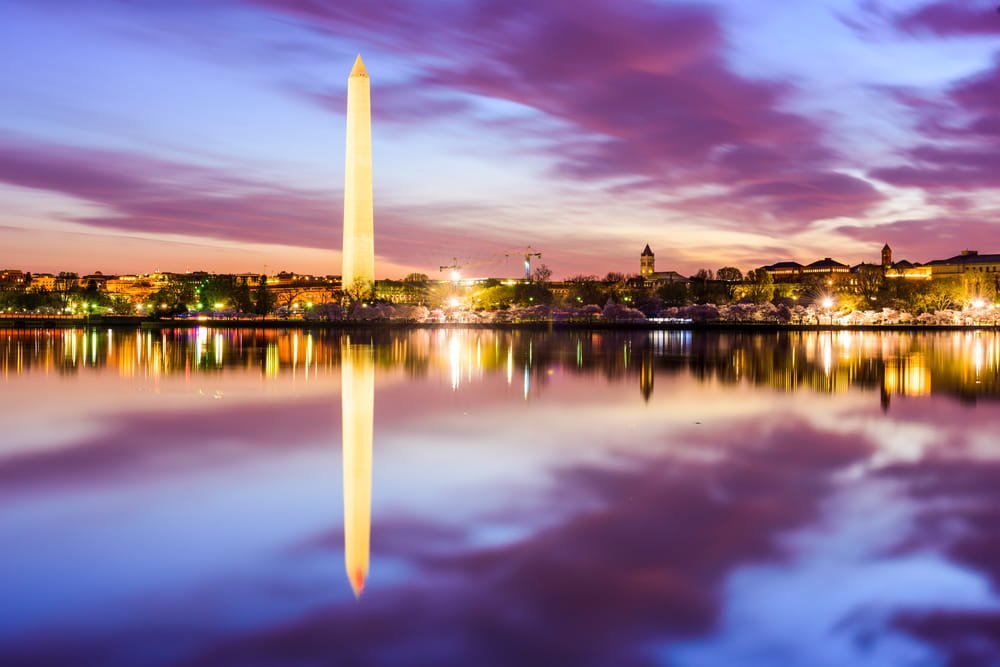
The cherry blossom window specifically — those two to three weeks in late March and early April when the city's mood lifts and the National Mall becomes the backdrop for everything — produces some of the most open-feeling Smart-Card events in the DC calendar. The seasonal warmth maps onto relational openness in DC in a way our hosts have noted consistently. The age filter loosens with the weather. The match rate goes up.
If you are single in DC and choosing your moment, the data argues for cherry blossom season or early fall. The serious professionals are present. The intern wave has passed or hasn't arrived. The intentionality in the room is at its highest. And in DC, intentionality in the room is the variable that correlates most strongly with what the Smart-Card records.
💡 What This Means If You're Single in DC Right Now
The DC data makes an argument that is specific and direct.
Washington DC has constructed the most elaborate pre-filtering system in American dating. Professional identity, career-stage assessment, political alignment check, transience evaluation, neighbourhood tribal affiliation — all of it operates before the first conversation, sorting the available pool into a version of itself that the filter approves before anyone has actually spoken.
<cite index="162-1">69.3% single residents. The loneliest city in America. A large unmarried population and a large lonely population in the same city at the same time is the predictable outcome when people are too busy, too burned out, or too guarded to form the connections they say they want.</cite>
The Smart-Card puts you in a room where none of the pre-filtering is operating. There is no professional intake form. There is no political alignment check. There is no "who do you work for" before four minutes of actual conversation have run their course.
What happens in that room, consistently, is that DC daters choose people they would never have allowed through the pre-filter. And the matches hold — at second-event return rates that challenge the city's reputation for being too guarded to connect — because the chemistry that the pre-filtering was preventing was genuine.
Across years of hosting events in Washington DC, the most consistent finding in our data is this:
DC's filters are the most sophisticated in the network. The room is better at finding the right person than any of them.
The city named the loneliest in America has 69.3% single residents. The problem was never the pool. It was the filtering architecture built around it.
The room removes the architecture.
Four minutes. No LinkedIn visible. No "what do you do and who do you work for." No political pre-screening. Just the person across the table, and whatever your actual judgment — running without the DC professional identity check for possibly the first time in a while — decides about them.
Which, in a city this full of interesting people, tends to produce something considerably better than the filters were finding.
🔁 One Last Cheeky Thought, DC Edition
Somewhere in Washington DC tonight — probably on the Red Line between Dupont Circle and Capitol South, probably scrolling through app filters during a commute that is doing double duty as personal development time — someone is updating their age preferences.
Narrowing slightly. Adjusting for political alignment. Adding a mental note about career trajectory. Applying, with the efficiency that this city prizes, the full pre-filtering apparatus that DC dating has developed across administrations.
And somewhere else in this city — a room in Shaw, or Adams Morgan, or Dupont, or the Navy Yard — the Smart-Card is recording what happens when twelve people who work in four different sectors with three different political orientations and two different career trajectories talk to each other for four minutes without any of that being visible.
The pattern, repeated across thousands of DC events, is consistent.
The filter produced the loneliest city in America.
The room produced mutual matches.
Come and find out which version of DC you prefer.
MyCheekyDate hosts real, host-led speed dating events across Washington DC — Shaw, Dupont Circle, Adams Morgan, Capitol Hill, Navy Yard, Georgetown, and more, year-round. The Smart-Card handles matching privately and mutually: you submit your selections from your phone, quietly, and a match appears only when both people independently chose each other. No "who do you work for" before the conversation begins. No political pre-screening. No career-stage assessment enforced before the four minutes run. Just twelve to fifteen people, four minutes each, and whatever the city's extraordinary concentration of serious, interesting, genuinely accomplished people produces when the pre-filtering stops. Find upcoming DC events at mycheekydate.com/speed-dating-washington-dc. Prefer a curated introduction — one person, specifically selected, a date arranged — DC matchmaking is available through the same community. No administration required.
A Note on Methodology
Age preference and selection data reflects Smart-Card interaction records from MyCheekyDate events across all Washington DC venues, weighted toward the most recent 24 months where sample size allows. Stated age preference data is drawn from guest registration form inputs. Revealed preference data reflects mutual Smart-Card selections made privately after in-person events. National baseline figures (86% mutual match rate | 2.3 average matches per event | 77% second-event improvement) reflect the full Smart-Card dataset across all markets. DC venue-level and seasonal patterns reflect qualitative and quantitative observations across our full DC event history. Population and median age figures from Neilsberg / US Census Bureau ACS 2019-2023 5-Year Estimates. Singles rate (69.3%) from US Census data via DCReport.org and Divorce.law. Household single-person figure (48.6%) from DCReport.org March 2026. Loneliest city designation from Chamber of Commerce 2024 ranking via multiple DC publications. Household growth by age from DC Policy Center. Dating culture observations from Deseret News DC dating report February 2026, Lovezoid DC singles guide 2026, and ADHD Center DC dating anxiety analysis. Seasonal dating patterns from Lovezoid DC dating guide 2026. Full Smart-Card methodology available at mycheekydate.com/smart-card.